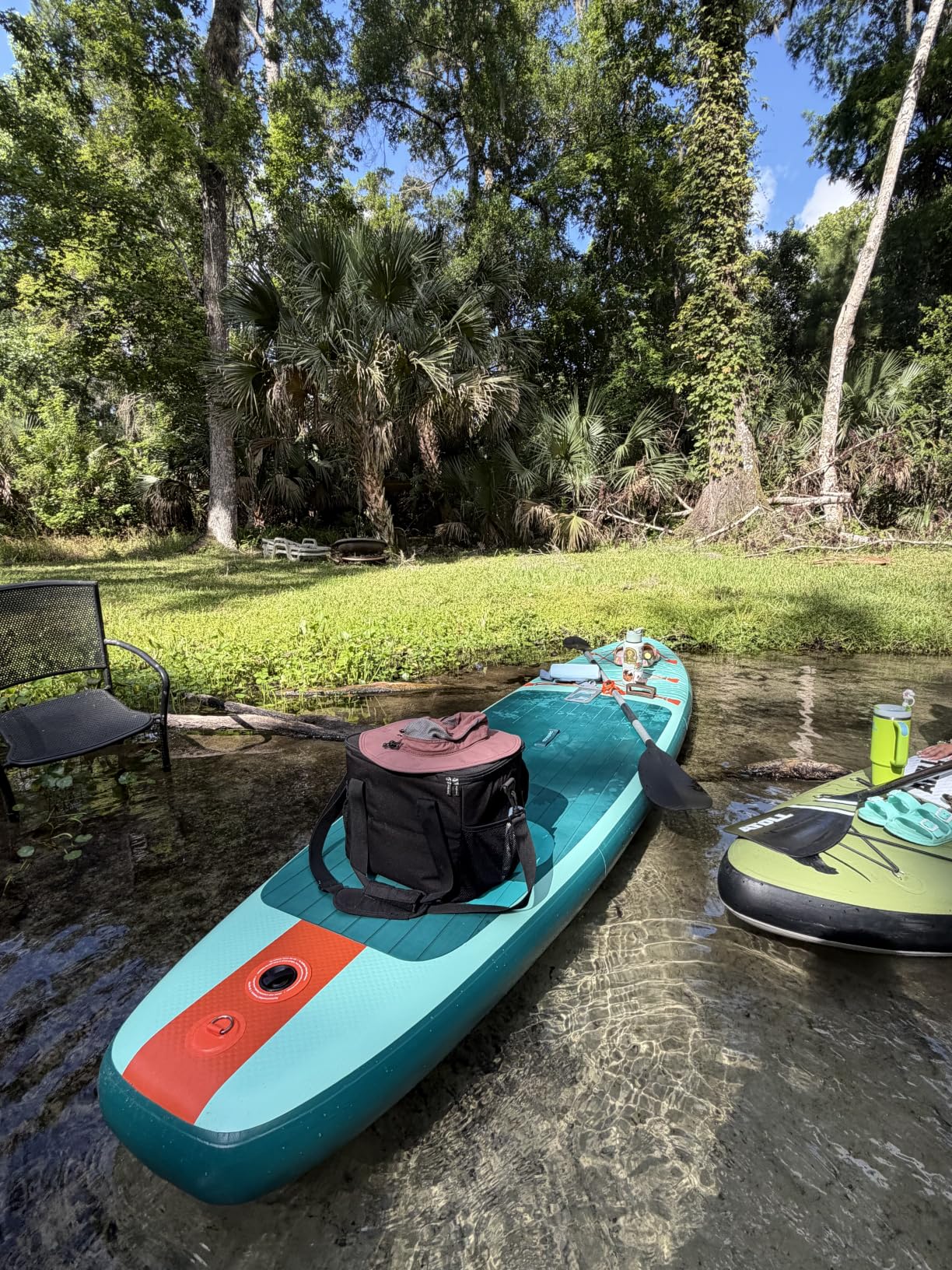
Retrospec Weekender Paddle Board Review: Is This Budget-Friendly SUP Worth Buying?
An honest, hands-on breakdown of the Retrospec Weekender inflatable paddle board — build quality, stability, accessories, and who it actually makes sense for.

Quick Facts Before You Read Further
- Best for: Beginners, casual paddlers, and anyone who wants an easy-to-store board for lakes and mellow rivers
- Board type: Inflatable all-around SUP, drop-stitch military-grade PVC construction
- What’s included: Board, adjustable paddle, hand pump, removable fin, repair kit, and a backpack-style carry bag
- Price tier: Entry-level to mid-range — one of the more affordable ways to get on the water
- Biggest strength: Stability for a first-timer, plus genuinely portable storage
- Biggest trade-off: Not built for advanced touring, racing, or serious whitewater use
1. What Is the Retrospec Weekender?
The Retrospec Weekender is an inflatable stand-up paddle board built around a simple idea: getting on the water shouldn’t require a garage, a roof rack, or a second mortgage. It’s positioned squarely in the entry-level to mid-range category, aimed at people who want to paddle around a lake on a Saturday afternoon, not chase Olympic-level touring speed. That’s an important distinction to make early in this review, because a lot of the board’s design choices only make sense once you understand who it’s built for.
Unlike a rigid, hard-shell SUP that needs a truck bed or a set of roof racks to transport, the Weekender is a drop-stitch inflatable that rolls down into a duffel-sized bag small enough to fit in a hall closet or the trunk of a compact car. That single feature — portability — is arguably the reason most people end up buying an inflatable board in the first place, and it’s worth reading our broader guide on best inflatable paddle boards if you’re still deciding whether inflatable is the right category for you at all.
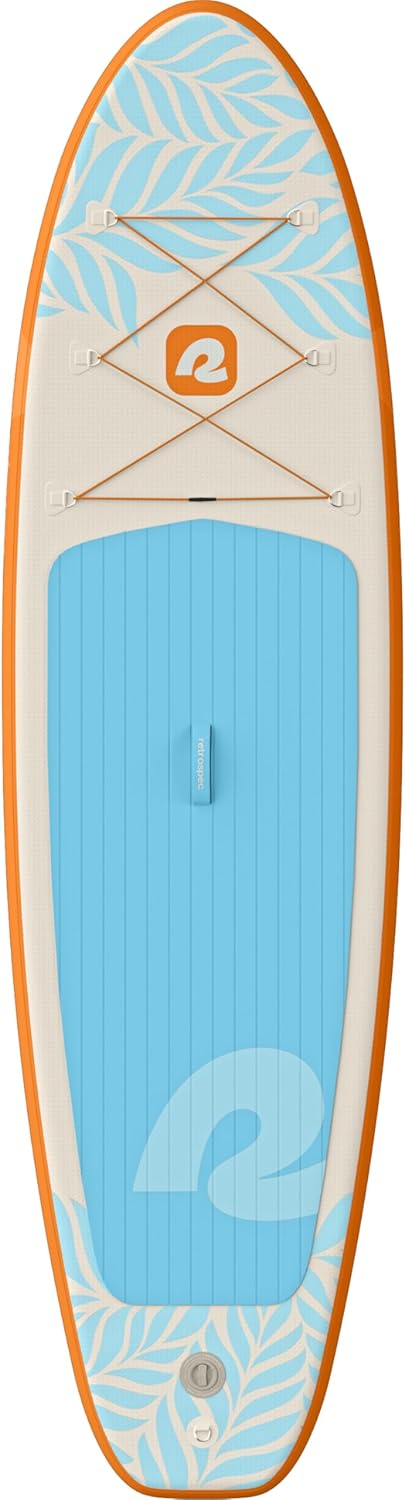
What stands out about the Weekender within its price bracket is that Retrospec didn’t cut corners on the fundamentals. The deck pad is full-length rather than a partial pad that leaves your back foot on bare PVC, the D-rings are positioned sensibly for a cooler or dry bag, and the board ships as a genuinely complete kit rather than a “board only” purchase that leaves you scrambling to buy a pump and paddle separately. We’ll break down every one of those details in the sections below, along with where the board falls short, because no board — regardless of price — is perfect for every paddler.
It also helps to understand where Retrospec sits as a brand before diving into the specifics. The company has built its reputation around accessible, entry-friendly outdoor gear — bikes, skateboards, and paddle boards that prioritize approachability over chasing performance records. That philosophy shows up clearly in the Weekender’s design choices: nothing about this board is trying to impress a sponsored athlete. Every decision, from the wide stance to the beginner-tuned fin, seems aimed at making the first hour on the water as stress-free as possible.
That’s a deliberate contrast to a lot of the paddle board market, where marketing copy leans heavily on racing pedigree, professional endorsements, and spec sheets that mean very little to someone who has never stood on a board before. If you’re a first-time buyer overwhelmed by conflicting advice about rocker profiles and rail shapes, boards like the Weekender exist precisely to cut through that noise. You inflate it, you paddle it, and it does what it says it will do without requiring you to become a gear expert first.
Of course, “beginner-friendly” doesn’t mean “low-quality,” and that distinction is really the thread running through this entire review. A board can be simple in its intended use case while still being well-engineered in its execution, and that’s the lens we’re going to apply to every component below — not whether it can compete with a $2,000 carbon touring board, but whether it delivers real, dependable value for the price and purpose it’s built for.
Curious about current pricing and availability? Check today’s listing on Amazon.
Check Price on Amazon2. Design and Build Quality
The Weekender uses a drop-stitch core, which is the same fundamental technology found in nearly every reputable inflatable SUP on the market today. Thousands of tiny polyester threads connect the top and bottom PVC layers of the board, allowing it to hold a rigid, flat shape once inflated to its recommended PSI rather than ballooning into a banana shape like a pool float would. If you’re curious about the manufacturing side of this, our deep dive on how paddle boards are made walks through the drop-stitch process in more detail.
Deck Pad and Traction
The standing area is covered by a textured EVA foam deck pad that runs nearly the full length of the board. This matters more than it sounds like on paper — a lot of budget boards skimp on deck pad coverage to save on cost, which leaves paddlers standing with one foot on foam and one foot on slick, wet PVC. The Weekender avoids that mistake, and the traction pattern is aggressive enough to grip bare feet or water shoes even when the surface is soaked.
Rail Shape and Nose Design
The rails (the side edges of the board) are rounded rather than sharply squared off, which softens the board’s interaction with chop and makes it more forgiving when you’re leaning to correct your balance. The nose has a moderate upward rocker — not aggressive enough for surf-style maneuvering, but enough to keep the board from digging into small waves or wakes from passing boats.
Color and Aesthetic
Retrospec offers the Weekender in several color and pattern options, which is a small thing but a genuinely appreciated one — a lot of budget SUPs only ship in one uninspired colorway. The graphics are printed rather than painted, so they hold up well to sun exposure without peeling, which is a common failure point on cheaper boards left out in direct sunlight for a season.
Valve and Seam Construction
The inflation valve uses a standard Halkey-Roberts-style design, which is the industry norm for inflatable SUPs and means the Weekender is compatible with most third-party electric pumps if you decide to upgrade from hand-pumping later on. This matters more than it might seem — some budget boards use proprietary valve fittings that lock you into a single pump option forever, which becomes a frustrating limitation the moment you want to speed up setup time.
Seam quality is one of those details you can’t fully evaluate from a product photo, but it’s arguably the single biggest predictor of an inflatable board’s long-term reliability. The Weekender’s seams are heat-welded rather than glued, which creates a stronger, more airtight bond that’s less prone to slow leaks developing over repeated inflation cycles. You can typically spot the difference by looking closely at the rail seam — a welded seam has a smooth, continuous look, while a glued seam often shows a slightly raised bead of adhesive.
D-Ring Placement and Bungee Storage
Toward the nose, a set of D-rings anchors a stretch bungee cargo net designed to hold a small dry bag, a water bottle, or a light cooler in place during a paddle. The placement is sensible — far enough forward that it doesn’t interfere with your stance, but close enough that you can reach down and grab something without losing balance. A rear D-ring is also typically included for attaching a leash, which we’ll cover in more detail in the accessories and safety sections below.

Get a closer look at the full build quality and current listing photos on Amazon.
See Full Details on Amazon| Build Element | What Retrospec Weekender Offers |
|---|---|
| Core construction | Military-grade drop-stitch PVC |
| Deck pad coverage | Full-length, textured EVA |
| Rail shape | Rounded, forgiving edges |
| Nose rocker | Moderate, all-around style |
| Fin setup | Removable single center fin |
The Fin System
The Weekender uses a single, removable center fin that slides into a plastic fin box and locks into place without tools — a slide-in, click-lock design that’s become the industry standard because it’s fast to attach and just as fast to remove for storage. A single center fin is the right call for an all-around board like this one: it provides enough tracking to keep the board running straight without adding the drag or complexity of a multi-fin touring setup. It also means the fin can be removed entirely for paddling in very shallow water or launching off a sandy beach where a fixed fin would risk scraping bottom.
Handle Placement and Carrying Comfort
A center carry handle is molded or stitched into the deck at the board’s balance point, which matters more than it sounds — a poorly placed handle makes a fully inflated board awkward and back-heavy to carry even a short distance from the car to the shoreline. The Weekender’s handle placement keeps the board reasonably balanced when lifted, and the handle itself has enough padding that it doesn’t dig uncomfortably into your palm during a longer carry.
3. Dimensions, Weight, and Weight Capacity
The Weekender is built in an all-around shape, meaning it’s wider and more stable than a touring or race board, but shorter than a dedicated flatwater cruiser. That width is the single biggest reason beginners tend to feel confident on it within the first ten minutes of paddling, rather than white-knuckling the paddle and falling in repeatedly.
Weight capacity is one of the most commonly searched — and most commonly misunderstood — specs on any SUP. A board’s “max weight capacity” number is a hard ceiling, not a comfortable operating range. Loading a board close to its stated maximum will noticeably reduce stability and increase how much the board sits low in the water. If you want the full explanation of why this number matters so much and how manufacturers actually calculate it, read our guide on how much weight can a paddle board hold.
For most solo riders under the board’s rated capacity, the Weekender tracks confidently and doesn’t feel sluggish. Once you start adding a passenger, a dog, and a cooler, though, you’ll notice the board sitting lower and responding more slowly to paddle strokes — which is normal for any all-around inflatable in this price range, not a defect unique to this board.
Length and width work together to define how a board behaves, and it’s worth understanding that relationship rather than fixating on either number in isolation. A wider board displaces more water at rest, which directly translates to a higher effective weight capacity and a more stable “float” even before you factor in paddling technique. That’s exactly why all-around boards like the Weekender tend to outperform narrower touring boards on stability, even when their stated capacity numbers look similar on paper.
Thickness is the third piece of that equation, and at a standard six inches, the Weekender falls right in line with the rest of the drop-stitch inflatable category. Thicker boards generally feel stiffer and more stable at higher weights, while thinner boards flex more noticeably underfoot — something you’ll rarely notice at low weight but will feel immediately once you approach the upper end of the capacity range. If you’re near the top of the recommended weight window, inflating to the higher end of the board’s PSI range (rather than the minimum) will noticeably firm up the ride.
Choosing the Right Size for Your Body Type
As a general rule of thumb across the inflatable SUP category, lighter and shorter paddlers tend to prefer slightly narrower boards for better maneuverability, while taller or heavier paddlers benefit from extra width and length for stability. The Weekender’s all-around dimensions land in a sweet spot that works reasonably well across a broad range of body types, which is part of why it’s such a commonly recommended first board rather than a niche pick for a specific paddler profile.
Interpreting the Weight Rating Correctly
It’s worth repeating a point that gets glossed over in a lot of buying guides: a board’s maximum weight capacity is not the same as its comfortable operating capacity. Manufacturers test and publish the absolute ceiling at which a board will still technically float and support a rider, not the point at which it performs well. As a practical guideline, staying at or below roughly seventy to eighty percent of a board’s stated maximum will generally preserve the stability, glide, and freeboard (how high the board sits above the water) that make an all-around SUP pleasant to paddle. Push closer to the stated max and you’ll notice the board riding low, feeling sluggish to turn, and offering less margin for error if you need to quickly shift your weight.
Accounting for Gear Weight, Not Just Body Weight
A mistake a lot of first-time buyers make is calculating capacity based on rider weight alone and forgetting to budget for gear. A cooler, a dry bag, a life jacket, water bottles, and a phone case can easily add fifteen to twenty-five pounds to your total load before you’ve even accounted for a second passenger or a dog. When you’re sizing up whether the Weekender’s capacity works for your intended use, always add your realistic gear load to your body weight rather than evaluating the board against your weight in isolation.
| Spec | Detail |
|---|---|
| Board category | All-around inflatable SUP |
| Thickness | 6 inches (standard drop-stitch thickness) |
| Fin configuration | Single removable center fin |
| Recommended use | Flatwater lakes, calm bays, slow-moving rivers |
| Ideal rider level | Beginner to intermediate |
4. Stability and On-Water Performance
Stability is where the Weekender earns most of its praise. The wide, all-around shape gives new paddlers a much more forgiving platform than a narrower touring board would, and the board doesn’t have the twitchy, tippy feeling that scares a lot of first-timers off the sport entirely. Standing up from a kneeling position feels secure rather than like a coin flip, which is precisely the confidence-building experience a beginner-focused board should deliver.
Tracking and Glide
Because it’s an all-around shape rather than a touring hull, the Weekender won’t glide as efficiently per paddle stroke as a longer, pointier board would. You’ll notice this most on longer paddles — the board requires a bit more consistent effort to maintain speed compared to a dedicated touring SUP. For casual outings under a couple of miles, this is a non-issue. For paddlers planning multi-hour touring trips, it’s worth understanding the trade-off before buying, and our comparison of paddle board types breaks down exactly how all-around, touring, and racing shapes differ in glide efficiency.
Handling Chop and Wind
Flat, glassy water is where this board is happiest. Introduce moderate wind or boat wake and the wide nose does start to catch air and push the board off-line more than a narrower design would. This isn’t unique to the Weekender — it’s an inherent trade-off of all-around boards in general — but it’s worth knowing if you regularly paddle in open, windy bays rather than sheltered coves.
Comparing the Feel to a Rigid Board
Paddlers coming from a rigid, hard-shell board sometimes notice a small amount of extra flex underfoot on any inflatable, including the Weekender, especially near the tail when standing off-center. Properly inflated to the recommended PSI, this flex is minor and doesn’t meaningfully affect performance for casual paddling, but it’s worth mentioning because a soft-feeling board is more often a sign of underinflation than a fundamental limitation of inflatable technology. If the board ever feels noticeably “bouncy” or soft underfoot, checking the PSI with the pump’s built-in gauge should be your first troubleshooting step before assuming anything is wrong with the board itself.
Turning and Maneuverability
The board turns predictably with a sweep stroke and doesn’t require an aggressive lean to redirect, which again favors beginners who aren’t yet comfortable shifting their weight dramatically. More experienced paddlers looking for sharp, responsive turning for surf-style paddling will find the Weekender a bit slow to respond compared to a shorter, more maneuverable shape.
Kneeling, Sitting, and Falling Off
New paddlers spend more time than they expect kneeling, re-balancing, and occasionally falling into the water, and the Weekender handles all three gracefully. The wide platform gives you a comfortable, stable base to kneel on while you get your bearings, and remounting from the water after a fall is straightforward thanks to the grippy deck pad — you’re not sliding around trying to find purchase on wet, bare PVC the way you might on a narrower or less-padded board.
Using It for Yoga or Fitness
SUP yoga and on-water fitness routines have become one of the most popular alternative uses for all-around boards like this one, and the Weekender’s stability makes it a reasonable candidate for gentle poses in calm, flat conditions. It won’t feel as rock-solid as a dedicated, extra-wide yoga SUP, but for basic stretching, seated poses, or simple balance work, it holds up fine — just don’t expect to attempt anything advanced without some wobble.

See real owner ratings and current stock levels on Amazon.
View on Amazon5. What’s in the Box
One of the more compelling arguments for the Weekender is that it doesn’t nickel-and-dime you into buying separate accessories just to get on the water. The included kit covers the essentials:
- Adjustable aluminum paddle — extends and collapses to fit different paddler heights
- Dual-action hand pump with a built-in pressure gauge
- Removable center fin that clips in without tools
- Backpack-style carry bag sized to hold the rolled board and remaining gear
- Repair kit with PVC patches and adhesive for small punctures
The paddle deserves a specific mention because paddle quality is an area where budget kits often disappoint — flexy shafts that waste energy on every stroke are a common complaint across the category. The Weekender’s paddle isn’t a premium carbon shaft, but it’s stiff enough that it doesn’t noticeably flex under normal paddling effort, which is really all most casual paddlers need.
What’s Not Included
A leash is sometimes bundled and sometimes sold separately depending on the exact package listing, so it’s worth double-checking the current listing details before you buy. If a leash isn’t included, treat it as a mandatory add-on purchase rather than an optional extra — more on why in our safety-focused section below.
A Closer Look at the Pump
The included dual-action hand pump is a two-stage design: it moves air on both the push and pull stroke during the early, low-resistance phase of inflation, then can be switched to single-action mode as pressure builds and the board firms up. This two-mode approach is fairly standard across the mid-range inflatable SUP category, and while it’s more effort than an electric pump, it’s genuinely manageable for most adults without leaving you exhausted before you’ve even left the shore.
A Closer Look at the Backpack
The carry bag is a padded, backpack-style design rather than a simple duffel, which makes a real difference when you’re hauling everything from a parking lot to the water’s edge. Dual shoulder straps distribute weight better than a single-strap duffel bag would, and there’s typically enough internal room to fit the rolled board alongside the pump, paddle sections, and fin without needing a second bag for accessories.
A Closer Look at the Repair Kit
The included repair kit contains PVC patch material and adhesive sized for small punctures — the kind of pinhole leaks caused by a stray twig or a sharp pebble underfoot. It’s not designed for major structural damage, but for the minor incidents that are far more common in everyday use, it’s a genuinely useful inclusion that saves you from having to source patch materials separately the first time something goes slightly wrong.

See the complete accessory kit and package options currently listed on Amazon.
View Package Options6. Inflation and Deflation Experience
Setup speed is one of the most practical, day-to-day factors in whether an inflatable SUP actually gets used regularly or ends up gathering dust in a closet. The Weekender’s dual-action hand pump inflates the board to its recommended PSI in roughly ten to fifteen minutes for a moderately fit adult, which is fairly standard for a hand pump in this price category.
Tips for Faster, Easier Inflation
- Use the dual-action setting (pushes air in on both the up and down stroke) for the first two-thirds of the fill, then switch to single-action for the final, higher-pressure stretch
- Inflate on a flat, debris-free surface to avoid puncturing the underside before the board has any internal rigidity
- Check the built-in gauge rather than guessing by feel — underinflating is the single most common cause of a “soft,” unstable-feeling board
Deflation and rolling is the flip side of this equation, and it’s just as important for long-term board health. Rolling the board tightly and evenly (rather than haphazardly stuffing it into the bag) reduces stress on the seams over repeated use cycles, which ties directly into how long the board will last you. For a full breakdown of lifespan expectations and the maintenance habits that extend them, see our guide on how long inflatable paddle boards last.
Step-by-Step Deflation Routine
Open the valve fully and let the board sit for a minute to release the bulk of the air passively before you start manually pressing it out — trying to roll a fully pressurized board wastes effort and can strain the seams unnecessarily. Starting from the nose, roll toward the tail in even sections, pressing out trapped air as you go, then close the valve only once the board is fully compressed to prevent it from re-inflating slightly inside the bag.
Should You Upgrade to an Electric Pump?
If you find yourself paddling often enough that the ten-to-fifteen-minute hand-pump routine starts to feel like a chore, a compatible electric pump is a reasonable upgrade thanks to the board’s standard valve fitting. Electric pumps typically cut inflation time to five minutes or less and remove the physical effort entirely, though they add another item to carry and charge. For occasional weekend use, most owners find the included hand pump perfectly adequate and never feel the need to upgrade.
7. Portability and Storage
This is the category where inflatable boards justify their existence over hard-shell SUPs, and the Weekender delivers on it well. Deflated and rolled, the board packs down into its included backpack to roughly the size of a large duffel bag — small enough to fit in a car trunk, an apartment closet, or checked airline luggage for paddlers willing to travel with it.
The backpack itself has padded straps and enough internal room for the pump, paddle sections, and fin alongside the rolled board, so you’re not juggling three separate bags to get everything from the car to the water. For anyone living in an apartment, a condo, or anywhere without garage storage, this is the deciding factor over a rigid board — full stop.
Weight for Carrying
Fully packed, the bag is manageable for one adult to carry a moderate distance, though it’s not feather-light. If your access point to the water involves a long walk down a trail or a steep embankment, budget a few extra minutes and consider the trip a form of exercise rather than an inconvenience.
Road Trips and Air Travel
Because the packed board fits easily into a trunk or backseat, it opens up road-trip flexibility that a rigid board simply can’t match — no roof rack installation, no worrying about wind noise or fuel economy from a board strapped to your car’s roof, and no risk of overhead clearance issues in a parking garage. Some owners even travel with boards like this as checked luggage on flights, though airline size and weight policies vary widely, so it’s worth confirming your specific airline’s baggage rules before planning that kind of trip.
Apartment and Small-Space Storage
For renters or anyone without a garage, the practical difference between an inflatable and a rigid board can’t be overstated. A rolled, bagged Weekender fits in a closet, under a bed, or in the corner of a small room — spaces that would never accommodate a ten-foot rigid board. This is genuinely the deciding factor for a large share of first-time SUP buyers, and it’s worth weighing heavily if storage space is at all limited in your living situation.
8. Materials and Durability
Retrospec markets the Weekender’s PVC as “military-grade,” a phrase that shows up across the inflatable SUP industry and is worth putting into plain terms: it generally refers to a multi-layer PVC construction reinforced with a woven drop-stitch core, designed to resist abrasion, UV degradation, and puncture better than single-layer vinyl. In practical terms, the board holds up well to the normal bumps of loading it onto a dock, dragging it a short distance over sand, or bumping a rock in shallow water.
What Can Still Damage It
No inflatable SUP — regardless of “military-grade” branding — is immune to sharp punctures. Oyster beds, barnacle-covered rocks, and sharp dock edges are the most common real-world causes of damage across the entire inflatable category, not just this board. The included repair kit handles small pinhole leaks competently, but a serious gash will need a proper patch job or a warranty claim.
UV and Sun Exposure
Leaving any inflatable SUP fully inflated in direct sun for extended periods accelerates PVC breakdown and can cause the internal pressure to rise beyond the recommended PSI as the air heats and expands. Deflating the board (or at least moving it to shade) when it’s not in active use is a simple habit that meaningfully extends the material’s working life.
Cold Weather and Off-Season Storage
PVC becomes noticeably stiffer in cold temperatures, so inflating the board in freezing or near-freezing conditions requires a bit more patience and slightly reduced target pressure to avoid over-stressing the material as it warms and expands. For long off-season storage, keep the board deflated, rolled loosely rather than tightly compressed for months at a time, and stored somewhere temperature-stable rather than an uninsulated garage or attic that swings between extreme heat and cold.
Warranty Coverage
Retrospec typically backs the Weekender with a limited manufacturer’s warranty covering defects in materials and workmanship, though the specific term length and coverage details can change between product listings and should be confirmed on the current Amazon listing or Retrospec’s own site before purchase. As with most inflatable SUP warranties, damage from misuse, sharp punctures, or improper storage generally falls outside covered claims, which is exactly why the care habits outlined above matter as much as the build quality itself.

Check current warranty terms and buyer ratings on the Amazon listing.
Check Amazon ListingDurability Strengths
- Reinforced drop-stitch core resists everyday abrasion
- UV-resistant printed graphics don’t peel or fade quickly
- Comes with a functional repair kit out of the box
Durability Limits
- Not puncture-proof against sharp rocks or barnacles
- Prolonged direct sun exposure while inflated can stress the material
- Major damage requires more than the included patch kit
9. Who This Board Is Actually Best For
Every SUP review eventually has to answer the “should I actually buy this” question honestly, so here’s the straightforward take. The Weekender is an excellent fit for:
- First-time paddlers who want a stable, forgiving platform to build confidence on
- Apartment or condo dwellers without garage space for a rigid board
- Casual weekend users paddling lakes, calm bays, or slow rivers rather than open ocean
- Budget-conscious buyers who want a complete kit without piecing together separate accessories
- Occasional travelers who want a board that can pack into a car or be checked as luggage
It’s a weaker fit for paddlers chasing serious touring distance, whitewater use, or SUP racing — those use cases call for a longer, narrower, stiffer board built specifically for efficiency over stability. If you fall into that category, it’s worth comparing against boards purpose-built for touring rather than an all-around design like this one.
Families and Kids
Families often gravitate toward boards like the Weekender because the wide, stable platform accommodates a child riding along on the deck reasonably well, provided the combined weight stays within the rated capacity and the child is old enough to sit or kneel safely without a life jacket compromise. It’s not a substitute for a dedicated kids’ board once a child is old enough to paddle independently, but as a shared family board for calm-water outings, it performs the role well.
Fitness Paddlers
Paddlers using SUP primarily as a low-impact cardio and core workout will find the Weekender adequate for that purpose, even though it’s not the most efficient shape for pure exercise mileage. The wider stance actually helps here in one respect — it lets you focus on stroke technique and core engagement without spending mental energy just staying upright, which can be a real advantage for a fitness-focused beginner still building balance and confidence.
Dog Owners
SUP has become a popular way to bring dogs along for a paddle, and the Weekender’s full-length deck pad and stable platform make it a reasonably good candidate for a calm dog accustomed to water. As with any passenger, factor the dog’s weight into your total load against the board’s capacity, and introduce a nervous dog to the board on land or in shallow water before heading out into deeper conditions.
10. How It Compares to Other Popular Boards
Context matters when you’re evaluating any single board, so here’s how the Weekender stacks up conceptually against two other well-known names in the inflatable SUP space. For full breakdowns of each, see our dedicated Bote inflatable paddle board review and iRocker paddle board review.
| Feature | Retrospec Weekender | Typical Bote Inflatable | Typical iRocker Board |
|---|---|---|---|
| Price positioning | Budget to mid-range | Mid to premium | Mid-range |
| Best use case | Casual lake paddling | Lifestyle + fishing accessories | All-around touring |
| Included kit completeness | Full starter kit | Varies by package | Full starter kit |
| Beginner-friendliness | Very high | High | High |
| Advanced/touring capability | Limited | Moderate | Moderate to high |
The short version: if your priority is the lowest-friction, most affordable way to start paddling without sacrificing basic quality, the Weekender competes well. If you want fishing-specific rigging or longer touring range, it’s worth cross-shopping the boards above before deciding.
Versus a Traditional Rigid (Hard-Shell) SUP
It’s also worth stepping back and comparing the Weekender against the broader category of rigid, hard-shell paddle boards rather than just other inflatables. Rigid boards generally offer marginally better glide efficiency and a slightly stiffer, more responsive feel underfoot, since there’s no air-pressure component to the board’s rigidity. But that performance edge comes at the cost of everything the Weekender does well: storage, transport, and price. For a full breakdown of that trade-off across every relevant factor, our comparison of SUP boards versus traditional paddle boards is a useful next read.
Where the Weekender Wins
Against nearly every competitor in its price bracket, the Weekender’s combination of a complete accessory kit, full-length deck pad, and reinforced construction gives it a strong value proposition. Plenty of budget boards cut corners on one of those three areas to hit a lower price point — the Weekender’s relative strength is that it doesn’t obviously sacrifice any of them.
Where Competitors Pull Ahead
Boards purpose-built for touring or fishing will out-perform the Weekender in their specialized categories, unsurprisingly. If your priority is maximum flatwater efficiency for long-distance paddling, or integrated rod holders and gear mounts for fishing, a specialized board will serve you better than an all-around design — that’s simply the nature of a general-purpose product competing against a specialized one.
Making the Final Call Between Similar Boards
When you’re down to comparing two or three similarly priced all-around inflatables, a few practical questions tend to matter more than any single spec on a sheet: Does the kit include everything you need, or will you be buying a paddle and pump separately? Does the deck pad cover the full standing area, or just a partial section? And does the seller offer a warranty and responsive support if something goes wrong in the first season? Running any board you’re considering through those three questions is a faster, more reliable way to make a confident decision than trying to compare every dimension and spec number in isolation.
11. Pros and Cons Summary
Pros
- Excellent stability for beginners
- Full accessory kit included — no hidden extra purchases needed to get started
- Full-length deck pad with solid wet-traction
- Packs down small enough for apartment or trunk storage
- Reinforced, UV-resistant PVC construction
- Straightforward, beginner-friendly inflation process
Cons
- Not built for serious touring distance or racing
- Wind and chop affect tracking more than a narrower board
- Paddle is functional but not a premium carbon build
- Leash inclusion varies by listing — confirm before purchase
12. Tips for First-Time Buyers and Owners
Before You Buy
- Confirm the current listing’s included accessories, since bundle contents can shift between package options
- Check your own weight plus any gear or passenger against the board’s rated capacity before assuming comfortable stability
- If you’ll paddle in open, windy water regularly, understand the wind trade-off discussed above before purchasing
After You Buy
- Always paddle with a proper Coast Guard-approved life jacket and, where required, a whistle — our guide on paddle board safety requirements covers exactly what’s legally required in most areas
- Rinse the board with fresh water after any use in saltwater or muddy lakes to prevent grit from working into the valve and seams
- Store the board deflated and rolled in a cool, dry place rather than left inflated in a garage or car trunk during hot weather
- Check the fin box and valve for debris before each inflation — a clogged valve is a common source of frustrating “slow leak” false alarms
Building Confidence as a New Paddler
If you’ve never stood on a SUP before, start in ankle-to-knee-deep water so you can practice finding your balance point with an easy bailout if you wobble. Keep your feet parallel, roughly hip-width apart, centered over the board’s handle, and your gaze fixed on the horizon rather than down at your feet — a surprising number of balance issues trace back to paddlers staring at the water instead of a fixed point ahead of them. Start on your knees if standing feels intimidating at first; there’s no rule that says you have to stand up on your very first paddle.
Basic Paddle Technique
Grip the paddle with one hand on the top handle and one on the shaft roughly shoulder-width apart, and angle the blade slightly forward — a common beginner mistake is holding the paddle backward, which reduces efficiency noticeably. Reach forward, plant the blade fully in the water, and pull back using your core and torso rotation rather than just your arms, which will save your shoulders from fatigue over a longer session.
Reading Conditions Before You Launch
Check wind speed and direction before heading out, since the Weekender’s wide nose is more wind-affected than a narrower touring board, as covered earlier. A simple rule many paddlers follow is to paddle into the wind first while you’re fresh, so the return trip with the wind at your back is the easier half of the outing rather than the harder one.
Setting a Maintenance Routine
Treat basic board care as a routine rather than an occasional afterthought and you’ll get noticeably more life out of the Weekender. After each outing, a quick freshwater rinse and a few minutes of air-drying before rolling prevents mildew and salt buildup from working into the seams over time. Roughly once a season, inspect the valve threading, the fin box, and the full length of every seam for early signs of wear — catching a small issue early is far easier to repair than waiting until it becomes a trip-ending leak on the water.
Setting Realistic Expectations for Your First Outing
Give yourself permission for the first session to be more about getting comfortable than covering distance. Most new paddlers spend the first fifteen to twenty minutes simply finding their balance, adjusting their stance, and getting a feel for how the board responds — trying to immediately paddle for miles or chase a fitness goal on day one is a common way to end a first outing frustrated rather than excited to go again. Treat the first few trips as skill-building sessions, and the enjoyable, confident paddling experience the Weekender is designed to deliver will follow naturally.
Ready to add this board to your gear closet? Check today’s availability.
Shop the Retrospec WeekenderFrequently Asked Questions
Is the Retrospec Weekender good for beginners?
Yes. Its wide, all-around shape is specifically the kind of profile that makes standing up and finding balance easier for someone who has never paddled before, and it’s one of the more consistently recommended boards for first-timers in its price range.
How much weight can the Weekender hold?
Capacity varies slightly depending on the exact model year and size variant, so always check the specific listing you’re purchasing. As a general rule, staying comfortably under the stated maximum — rather than paddling right at the limit — preserves the stability and glide the board is known for. Our guide on paddle board weight capacity explains how to interpret these numbers correctly.
How long does it take to inflate?
Using the included dual-action hand pump, most paddlers reach the recommended PSI in roughly ten to fifteen minutes. An electric pump will cut that time significantly if you plan to use the board often enough to justify the extra purchase.
Does it come with a paddle and pump?
Yes, the standard kit includes an adjustable aluminum paddle, a dual-action hand pump with a pressure gauge, a removable fin, a repair kit, and a carry backpack, so you don’t need to buy accessories separately to get started.
Is a leash included?
This varies by listing and bundle option, so confirm on the current product page before purchase. If one isn’t included, treat a leash as a required safety add-on rather than an optional extra.
Can I use this board in the ocean?
You can, but it’s best suited to calm bays and sheltered coastal water rather than open swell or serious surf. Its all-around shape isn’t optimized for handling large waves the way a dedicated surf-style SUP would be.
How does it compare to a hard, rigid paddle board?
Inflatable boards like the Weekender trade a small amount of glide efficiency for massive gains in storage and transport convenience. For a full side-by-side breakdown of that trade-off, see our comparison of SUP boards vs traditional paddle boards.
How long will the board last with regular use?
With proper care — rinsing after saltwater use, avoiding prolonged sun exposure while inflated, and storing it dry — an inflatable SUP in this category can reasonably last for several seasons of regular recreational use. See our full lifespan guide linked above for specifics on what shortens or extends that timeline.
What size cooler or dry bag fits on the D-rings?
The bungee and D-ring setup is sized for a small to medium soft cooler or dry bag rather than a large hard-shell cooler. Overloading the front bungee area can also affect how the nose sits in the water, so keep cargo modest for the best handling.
Is this board suitable for two people?
Occasionally paddling with a small child or a dog is generally fine as long as combined weight stays comfortably under the rated capacity, but it’s not designed as a true tandem board for two full-grown adults.
What’s the difference between this and other all-around inflatable SUPs?
The core differences between boards in this category usually come down to deck pad coverage, PVC layer quality, accessory completeness, and price. If you’re still comparing shapes and categories broadly, our overview of paddle board types is a useful starting point before narrowing down to a specific model.
What pressure should I inflate the board to?
Always follow the PSI range printed on the board itself or in the included manual rather than a generic number, since recommended pressure can vary slightly between models and years. Inflating to the higher end of the recommended range generally produces a stiffer, more stable ride, especially for heavier riders or choppier conditions.
Can beginners use this board without any lessons?
Yes — the Weekender’s stability is specifically suited to self-taught beginners, and most people can get comfortable standing and paddling within their first outing. That said, taking even a single introductory lesson or watching a few technique videos beforehand will shorten the learning curve and reduce unnecessary fatigue from poor paddle form.
Final Verdict
The Retrospec Weekender does exactly what a budget-friendly, beginner-focused inflatable SUP should do: it gets you on the water quickly, stably, and without a pile of extra purchases, while packing down small enough to actually store and travel with. It’s not the board for someone chasing long-distance touring speed or aggressive surf performance, but that was never really its job. For casual lake days, calm bay paddling, and building confidence as a new paddler, it’s a genuinely solid, well-rounded pick — and the complete accessory kit makes it easy to recommend to anyone starting from zero.
If you weigh the board against what it’s actually trying to be — an accessible, no-fuss entry point into paddle boarding rather than a specialized performance tool — it holds up to scrutiny far better than most budget SUPs in its price range. The full-length deck pad, complete kit, reinforced construction, and genuinely portable storage solve the real, practical problems that keep a lot of would-be paddlers from ever getting started in the first place. Weigh your own priorities against the trade-offs outlined throughout this review — flatwater versus open water, casual use versus serious touring, storage constraints versus garage space — and you’ll have a clear answer on whether this is the right board for your specific situation.

See current pricing, color options, and customer reviews on Amazon.
Check Latest Price
Pingback: iRocker Nautical Paddle Board Review