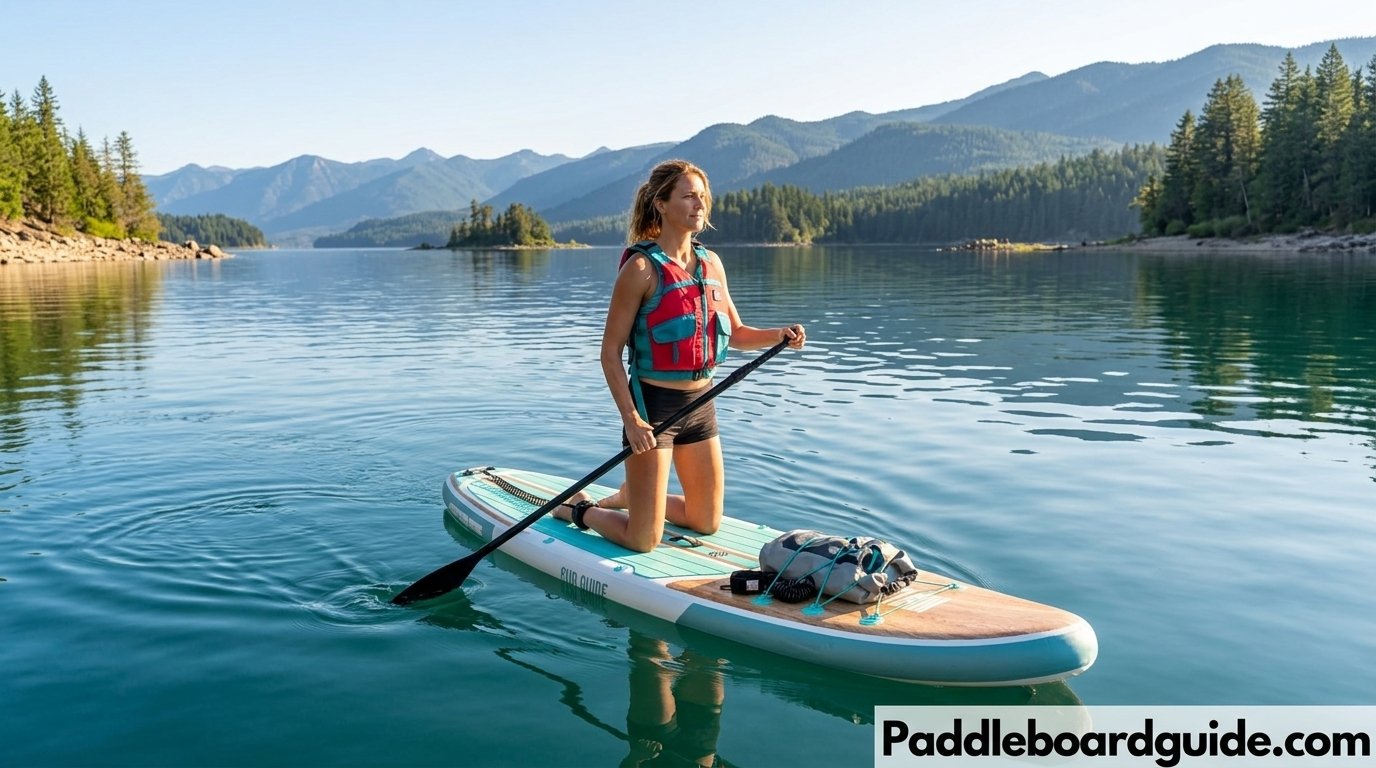
Proper safety gear is the difference between a relaxing paddle and a preventable emergency.
Paddle Board Safety Requirements: The Complete Guide to Staying Safe on the Water
Whether you’re gliding across a quiet lake at sunrise or heading out into coastal chop, paddle boarding looks effortless right up until the moment something goes wrong. Understanding the legal safety requirements, the gear you actually need, and the habits that keep paddlers out of trouble is what separates a fun afternoon from a rescue story. This guide walks through everything you need to know, from Coast Guard classification rules to emergency self-rescue techniques, so you can spend less time worrying about what could go wrong and more time actually enjoying the water.
1. Legal Safety Requirements Every Paddler Should Know
In the United States, the Coast Guard classifies a stand-up paddle board as a vessel any time it’s used beyond the boundaries of a swimming, surfing, or bathing area. That single classification is the root of almost every safety rule that follows, because it means paddle boards are legally treated the same way as canoes and kayaks the moment you paddle past a designated swim zone. Many first-time paddlers are surprised to learn this, since a paddle board feels more like a piece of recreational equipment than a boat. Legally, though, the distinction matters enormously, because it triggers requirements around flotation devices, sound signals, and even navigation lighting.
Once your board is classified as a vessel, you become responsible for carrying the same core safety equipment a small boat operator would need. That includes a wearable personal flotation device for each person on the board, a means of making an audible sound signal, and, if you’re paddling between sunset and sunrise, some form of light source that other vessels can see. These requirements aren’t suggestions; they’re enforceable, and paddlers who are stopped by marine patrol without the right equipment can be cited just like a boater would be.
Local and state agencies can add their own layers on top of the federal baseline. Some states require anyone under a certain age to wear a PFD at all times regardless of location, while others carve out exceptions for paddlers who stay within roped-off swim areas or designated surf zones. Because these rules vary so much by state, county, and even by specific waterway, it’s worth spending five minutes checking the regulations for wherever you plan to paddle before you launch, especially if you’re traveling and paddling somewhere unfamiliar.
There’s also a meaningful difference between what’s legally required and what’s actually safe. A whistle attached to your PFD satisfies the sound-signal requirement, but it does little good if you can’t reach it in an emergency. Likewise, carrying a light source technically checks a box, but a light that isn’t waterproof or bright enough to be seen from a passing boat doesn’t do much for your actual safety. Treat the legal minimum as a floor, not a target, and build your setup around what would genuinely help if things went sideways.
It also helps to understand who enforces these rules in practice. On most inland lakes and reservoirs, that’s a state parks or wildlife agency; on coastal water, it’s typically the Coast Guard alongside local harbor patrol; and on rivers that cross state lines, jurisdiction can shift depending on exactly where you are. This matters because a paddler who assumes “nobody checks this stuff” on a quiet weekday morning is often surprised the one time a patrol boat does happen by, and citations for missing safety equipment are neither cheap nor a good way to start a relaxing outing.
Age requirements are another area where the rules diverge sharply by location. Some states mandate that anyone under 13 wear a PFD on any vessel, paddle boards included, regardless of where they’re paddling, even inside a designated swim area. Others set the age cutoff at 12 or 16, and a handful have no specific youth mandate beyond the general requirement to carry a PFD on board. If you’re paddling with children, it’s worth checking your specific state’s boating safety page rather than assuming the rule that applied where you learned to paddle also applies wherever you happen to be visiting.
Rental operators and guided tour companies typically build these requirements directly into their process, handing out a PFD and a quick safety briefing before anyone touches the water. That convenience can create a false sense that the requirements are somehow optional once you own your own board and paddle independently — they aren’t, and the responsibility for compliance shifts entirely to you the moment you’re paddling on your own equipment.
Quick Legal Snapshot
- Paddle boards used outside swimming, surfing, or bathing areas are classified as vessels
- A wearable PFD is required for every person on board once you leave a designated swim area
- A sound-producing device (typically a whistle) must be readily accessible
- Navigation lights are required for paddling between sunset and sunrise
- Local age-based and location-based rules can add stricter requirements

Coast Guard–Approved PFDs for Paddle Boarding
Browse belt-pack and vest-style life jackets built specifically for SUP paddlers.
Shop PFDs on Amazon2. Personal Flotation Devices: Types, Fit, and Requirements
The personal flotation device is the single most important piece of safety equipment on a paddle board, and yet it’s the one most paddlers skip. That’s partly because standard foam vests feel bulky and restrictive for a sport built around balance and freedom of movement, and partly because paddling on a calm lake doesn’t feel dangerous. The problem is that most paddle board incidents happen exactly in those conditions: calm water, no wind, a paddler who feels perfectly in control right up until a sudden gust, a passing boat wake, or an unexpected drop-off in depth changes everything in seconds.
Not all PFDs are created equal, and understanding the categories helps you choose one you’ll actually wear. Type III flotation aids are the most common choice for paddle boarding because they’re designed for conscious paddlers in calm, inland water and prioritize freedom of movement over maximum flotation. Inflatable belt packs have become especially popular in this category because they sit almost unnoticed around your waist until you pull the manual inflation cord, at which point they deploy into a wearable flotation collar. The tradeoff is that belt packs require you to be conscious and able to activate them, which makes them a poor choice for young children or weak swimmers.
Vest-style PFDs, by contrast, provide constant flotation whether or not the wearer is conscious, which is why they’re the right choice for kids, non-swimmers, and anyone paddling in conditions where a hard fall or collision is a real possibility. Modern SUP-specific vests are cut short at the waist and have low-profile arm openings so they don’t interfere with your paddle stroke, closing the gap between “technically compliant” and “comfortable enough to actually wear the whole session.”
| PFD Type | Best For | Pros | Cons |
|---|---|---|---|
| Inflatable belt pack | Confident adult swimmers, warm calm water | Barely noticeable, doesn’t restrict paddling | Manual activation required, not for kids |
| SUP-specific vest | Kids, beginners, rough or cold water | Always-on flotation, no activation needed | Bulkier, warmer to wear |
| Standard foam Type III | General recreational paddling | Widely available, reliable, affordable | Can restrict stroke range if poorly fitted |
| Hybrid inflatable vest | Touring and long-distance paddlers | Low bulk with automatic backup inflation | Higher cost, needs regular CO2 cartridge checks |
Fit matters as much as type. A PFD that’s too loose can ride up over your head in the water or fail to keep your airway clear, while one that’s too tight restricts breathing and paddle-stroke range. The best way to check fit is to put it on, tighten every strap, then have someone pull up firmly on the shoulders — a properly fitted PFD shouldn’t ride up past your chin. Buoyancy also matters more for larger paddlers; someone over 200 pounds typically needs a PFD rated for at least 22 pounds of buoyancy to float comfortably, while lighter paddlers can usually get by with less.
If you’re new to the sport, it’s worth reading through our guide to paddle board types to understand how the board you choose interacts with the flotation gear you’ll need, since touring boards, all-around boards, and surf-style boards each come with different stability profiles that affect how likely you are to end up in the water in the first place.
Inflatable belt-pack PFDs need periodic maintenance of their own. The CO2 cartridge that powers automatic or manual inflation has a shelf life, and a corroded or previously fired cartridge won’t work when you need it most, so checking the indicator window before every season, and after any accidental deployment, is a habit worth building. Rinsing any PFD in fresh water after a session in salt water, then letting it air dry fully before storage, prevents the kind of material breakdown that shortens a PFD’s usable life and can compromise its flotation performance over time.
It’s also worth actually testing a new PFD in the water, in a controlled, shallow setting, before relying on it in open conditions. Floating on your back with the PFD on shows you how it sits, whether it rides up, and how it feels to swim in, which builds the kind of confidence that makes you far more likely to keep it on for the whole session rather than taking it off “just for a few minutes” once you’re already out on the water.
3. Leashes: Types, Uses, and When They’re Required
A paddle board leash connects you to your board, and its purpose is simple but critical: without one, a fall in choppy water or wind can separate you from your board faster than you can swim, turning a minor spill into a genuine emergency. Wind pushes an unweighted board far more efficiently than it pushes a swimming human, and a strong gust can put ten or twenty feet between you and your only flotation device within seconds. A board is buoyant enough to keep you above water even when you’re exhausted; without it, you’re relying entirely on your swimming ability and your PFD.
There isn’t a single universal leash for every environment, and using the wrong type can actually be dangerous. Straight leashes, which run in a coiled or straight line from your ankle to the tail of the board, are the standard choice for flatwater paddling on lakes, bays, and slow rivers. Coiled leashes reduce drag by staying close to the board rather than dragging in the water behind you, which also reduces the chance of the leash snagging on obstacles.
Surf conditions call for a different setup. In waves, a straight ankle leash can wrap around your legs or the board in a wipeout, and in some coastal breaks, quick-release waist leashes are strongly recommended so you can detach instantly if needed. River paddling introduces its own hazard entirely: in moving water with submerged obstacles, a leash can snag on a rock or branch and hold a fallen paddler underwater, which is why river paddlers typically use a quick-release chest harness leash system designed specifically to be shed in an instant. Wearing a standard ankle leash in fast-moving river water is considered a serious safety mistake by most paddling safety organizations.
When a Leash Helps
- Keeps your board within reach after a fall
- Prevents a board from becoming a hazard to other water users
- Essential in wind, current, or open water
When a Leash Can Be Risky
- Standard ankle leashes can snag in river currents
- Wrong leash type in surf can wrap around legs
- Should be swapped for quick-release systems in moving water
Whichever leash you use, check it before every session for cracks in the urethane cord, a stretched-out coil, or a cuff velcro strap that’s lost its grip. A leash is inexpensive to replace and expensive to need and not have working properly.
4. Sound Signals and Lighting Requirements
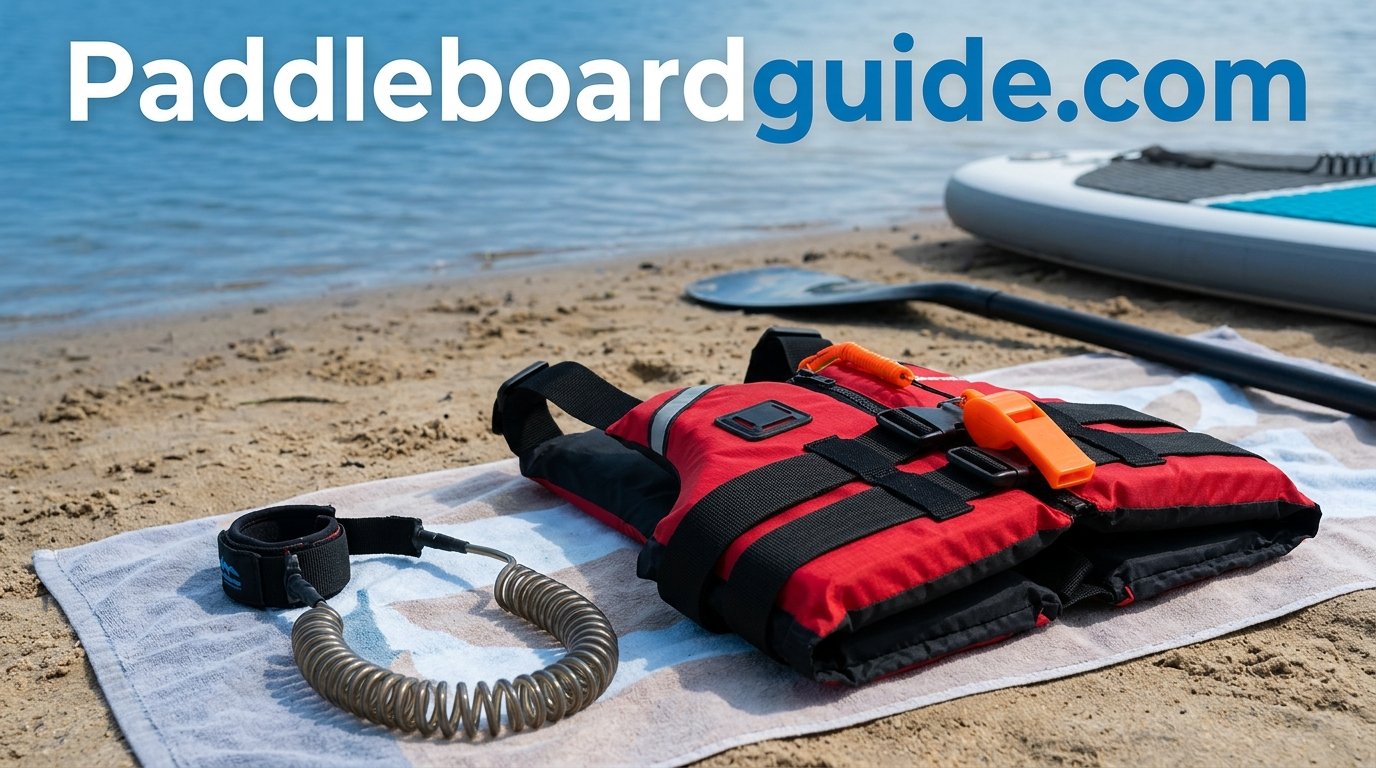
Two of the least glamorous safety requirements are also two of the most overlooked: sound-producing devices and lighting. A whistle satisfies the audible signal requirement in most jurisdictions and should be clipped directly to your PFD, not stashed in a dry bag where you’d have to dig for it during an emergency. In an actual distress situation, three short blasts is the internationally recognized signal for help, and a whistle carries far better across open water than a shouting voice, especially in wind.
Lighting requirements apply any time you’re paddling from sunset to sunrise, and they exist because a paddle board sits extremely low in the water and is nearly invisible to boat operators at night, even with a bright moon. The standard requirement is a white light visible from all directions, bright enough to be seen from a reasonable distance, displayed in time to prevent a collision. Waterproof clip-on LED lights designed for kayaks and paddle boards are inexpensive and can be mounted to a PFD strap or a deck bungee.
Night paddling introduces enough additional risk that many experienced paddlers avoid it altogether unless they’re on very familiar, well-lit water. If you do paddle near dusk or dawn, treat the lighting requirement as a bare minimum and consider adding reflective tape to your board’s rails and paddle blade, since reflective surfaces catch a boat’s spotlight far more reliably than a single point light source.
5. Reading Weather and Water Conditions Before You Launch
More paddle board incidents trace back to weather and water conditions than to any single piece of missing gear. Wind is the biggest factor, because a paddle board’s large surface area and shallow draft make it act almost like a sail. What feels like a gentle breeze on shore can become a serious headwind fight once you’re a quarter mile offshore and tired. A widely used rule of thumb among experienced paddlers is to avoid launching in sustained winds above 15 miles per hour unless you’re an advanced paddler who’s specifically trained for those conditions, and to always paddle out against the wind first so the return trip, when you’re more fatigued, has the wind at your back rather than against you.
Offshore winds deserve special caution. A wind blowing from land out to sea can push an unprepared paddler steadily away from shore without them noticing until they’re already far out, at which point paddling back against that same wind becomes exhausting or even impossible for less experienced paddlers. Checking wind direction, not just wind speed, before you launch is one of the simplest habits that prevents serious trouble.
Water temperature matters just as much as air temperature, and it’s frequently ignored. Cold water dramatically increases the risk of cold water shock, a physiological response that can cause involuntary gasping and rapid loss of muscle control within the first minute of immersion, even for strong swimmers. If water temperature is below about 60°F, a wetsuit isn’t a comfort item; it’s a safety requirement, because hypothermia and cold shock can incapacitate a paddler long before exhaustion would.
Storms and lightning are an automatic no-paddle condition. Open water offers zero shelter and a standing paddler holding a carbon paddle is, functionally, the tallest conductive object around. If thunder is audible, get off the water immediately and wait at least 30 minutes after the last rumble before heading back out. Checking a marine forecast rather than a general weather app is worth the extra minute, since marine forecasts include wave height, wind gust data, and small craft advisories that general forecasts often omit.
Open Water vs. Calm, Protected Water
Not all “flat” water carries the same risk profile, and it’s worth separating truly protected water — small ponds, narrow coves, calm rivers with no boat traffic — from open water like large lakes, bays, and coastal shoreline, even on days when both look equally still. Open water has more room for wind to build fetch, the distance over which wind can act on the water’s surface to generate chop, which means conditions on a large lake can deteriorate far more dramatically over the course of an hour than they would on a sheltered pond of similar size. A gentle ripple at 9 a.m. on a big open lake can become a genuine two-foot chop by early afternoon once thermal winds pick up, a pattern common enough in mountain and desert lake regions that local paddlers plan entire outings around it, launching at dawn and being back on shore before the afternoon wind arrives.
Open water also means a longer swim back to shore if something goes wrong, and a longer window during which weather can change while you’re out. Beginners are generally better served sticking to protected water — marinas, coves, calm river stretches — until they’ve built enough comfort with balance, falls, and re-boarding that open water’s added variables don’t compound an already-challenging situation. Even experienced paddlers benefit from a simple mental rule: the more open the water, the more conservative your weather and gear decisions should be.
Conditions Checklist Before You Launch
- Check wind speed and direction, not just the general forecast
- Confirm water temperature and dress accordingly (wetsuit below ~60°F)
- Scan for storm cells or lightning in the forecast window
- Note tide and current schedules for coastal or river paddling
- Tell someone your planned route and expected return time

Waterproof Whistles and Signal Kits
A loud, PFD-mounted whistle is one of the cheapest safety upgrades you can make.
Shop Safety Whistles6. Essential Safety Gear Checklist
Beyond the legally required PFD, leash, whistle, and light, a well-prepared paddler carries a short list of additional items that dramatically improve the odds of a small problem staying small. None of this gear is expensive or heavy, and most of it fits into a single small dry bag strapped to the deck.
- A properly fitted PFD, worn rather than stowed
- A leash matched to the water type you’re paddling (flat, surf, or river)
- A whistle clipped to your PFD strap
- A waterproof phone case or dry bag with your phone inside
- Sun protection: reef-safe sunscreen, a hat, polarized sunglasses
- A small first-aid kit in a waterproof pouch
- A signaling mirror or brightly colored flag for open-water paddling
- Drinking water, especially on hot days or longer sessions
- A change of dry clothes left in your vehicle for after the paddle
Dry bags deserve special mention because they solve two problems at once: they keep your phone, keys, and first-aid supplies dry, and a bright-colored dry bag doubles as a visibility aid if it’s floating near you in the water. Choose a bag rated for full submersion rather than just splash resistance, since a capsized board will fully dunk anything strapped to the deck.
Your phone, kept dry and charged, is arguably the single most valuable piece of “safety gear” you can carry, since it allows you to call for help, share your location, or check a live weather radar mid-session. Many paddlers underestimate how quickly conditions can shift and only think to check the radar once the sky has already darkened.
For paddlers who spend significant time far from cell coverage — remote lakes, backcountry rivers, or extended coastal tours — a personal locator beacon or satellite messenger is worth the investment on top of a phone. These devices work outside normal cell networks and can trigger an emergency response even in areas with zero bars, which makes them one of the few pieces of gear that genuinely changes the outcome of a worst-case scenario rather than just making a bad situation slightly more manageable.
It’s also worth thinking through storage, not just the list itself. Deck bungees near the nose of the board are the standard place to strap a dry bag, and keeping the load low and centered helps preserve stability rather than adding top-heavy weight that makes the board feel tippier than it otherwise would. A bag that shifts or drags in the water mid-paddle is more than an annoyance; it can throw off your balance at exactly the wrong moment, so a few extra seconds spent securing gear properly before you push off pays for itself many times over.
7. How Board Type Affects Safety
Not every paddle board is built for the same conditions, and choosing the wrong type for your environment is one of the more common ways paddlers end up in trouble. All-around boards, the most common style sold to beginners, are wide and stable, forgiving of imperfect balance, and generally the safest starting point for anyone new to the sport. Their width sacrifices some speed and glide, but the tradeoff is worth it while you’re still building core balance and reading how your body responds to movement on the water.
Touring boards are longer and narrower, designed to track straighter and cover distance more efficiently, but that narrower profile also means less side-to-side stability, which makes them a poor choice for a first-time paddler heading into open or choppy water. Surf-style boards are shorter and more maneuverable but are also the least stable of the common categories and are meant to be used specifically in wave conditions by paddlers who already have strong balance and swimming skills. Choosing a surf-style board for a flatwater lake outing, or a touring board for a first lesson, sets a paddler up for more falls than necessary, which compounds every other safety risk on this list.
Our detailed breakdown of paddle board types goes deeper into the tradeoffs between all-around, touring, surf, racing, and yoga-style boards if you’re still deciding which category fits your paddling plans. Matching your board to your actual conditions, rather than to what looks best online, is one of the highest-leverage safety decisions you’ll make before you ever leave shore.
Fin setup also plays a bigger role in safety than most beginners expect. A single large center fin improves tracking and helps a board hold a straight line, which is useful on open water but can catch on shallow rocks, sandbars, or riverbed obstacles in skinny water. Paddlers who spend time in rocky rivers or shallow tidal flats often switch to a smaller, more flexible fin, or a thruster setup with multiple smaller fins, specifically to reduce the chance of a hard fin strike that can throw a paddler off balance or damage the board’s fin box.
Board color and deck pad contrast are minor but genuinely useful safety details, particularly for visibility. A bright-colored deck or rail makes a paddler and board easier to spot from a distance, whether that’s a boat operator scanning the water ahead or a rescuer searching for someone who’s fallen in. It’s a small factor compared to wearing a PFD, but it’s one more layer in a system where every layer reduces risk a little further.
8. Weight Capacity and Stability
Every paddle board has a maximum weight capacity, and exceeding it doesn’t just reduce comfort — it directly undermines stability and freeboard, the distance between the water line and the top of the board. An overloaded board rides lower in the water, which makes it both slower and considerably more tippy, since less of the board’s flat surface remains above the waterline to resist rocking. Paddlers frequently overlook that “weight capacity” needs to include the paddler’s own body weight plus any gear, a cooler, or a passenger such as a child or dog riding along.
A good practical rule is to stay comfortably under a board’s stated maximum, rather than treating that number as a target. Many experienced paddlers aim to use no more than 70 to 80 percent of a board’s rated capacity for everyday paddling, reserving the full rating for calm, short, close-to-shore outings only. Our full guide on how much weight a paddle board can hold walks through how capacity ratings are calculated and how to choose the right board length and width for your weight range.
Volume, measured in liters, is often a more useful stability indicator than weight capacity alone, since two boards with similar weight ratings can behave very differently on the water depending on their overall volume and hull shape. Wider, higher-volume boards generally offer more forgiving stability for heavier paddlers or anyone carrying extra gear, while narrower, lower-volume boards prioritize speed at the cost of that same stability margin.
9. Inflatable vs. Solid Boards: Safety Tradeoffs
The choice between an inflatable and a solid (hardshell) board isn’t purely about convenience or storage; it comes with real safety tradeoffs worth understanding. Inflatable boards, when properly inflated to their recommended PSI, are remarkably rigid and can be just as stable as a solid board, but under-inflation is a genuine safety issue: a soft, under-inflated board flexes noticeably underfoot, which saps stability and can make balance far more difficult, especially in choppy water. Always inflate to the manufacturer’s recommended PSI and check pressure before every session, since temperature changes and small pinhole leaks can slowly drop pressure over time.
Solid boards don’t have an inflation variable to manage, and their rigid construction gives slightly more predictable performance in waves and chop, which is part of why more advanced surf-style paddling favors hardshell construction. The tradeoff is that a solid board is far less forgiving in a collision, whether that’s with a submerged rock, a dock, or another paddler, since there’s no give in the material the way there is with an air-filled inflatable hull.
| Factor | Inflatable Board | Solid Board |
|---|---|---|
| Stability if properly maintained | Excellent | Excellent |
| Impact forgiveness | Higher (softer hull) | Lower (rigid hull) |
| Risk if under-inflated | Significant flex, reduced stability | Not applicable |
| Transport and storage | Easy, rolls into a bag | Requires roof rack or large storage space |
| Puncture risk | Present but usually repairable | Can crack or delaminate on hard impact |
For a deeper side-by-side comparison, our article on SUP board vs. paddle board differences and our roundup of the best inflatable paddle boards both go further into how construction style affects real-world performance and safety.
A repair kit is worth carrying regardless of which construction type you choose. Inflatable boards typically ship with a patch kit designed for quick field repairs to small punctures, and knowing how to use it before you’re stranded with a slow leak far from shore is far better than reading the instructions for the first time in the moment. Solid boards benefit from a small tube of marine-grade epoxy or a repair kit designed for the board’s specific shell material, since even a minor rail ding left unaddressed can let water seep into the foam core and add unwanted weight over time, gradually changing how the board handles and floats.
10. Maintenance and Inspection for Long-Term Safety
A board that’s falling apart is a safety hazard no matter how much protective gear you’re wearing around it. Regular inspection catches small problems before they become on-the-water emergencies. For inflatable boards, that means checking seams for separation, valves for slow leaks, and the overall shell for any soft spots that suggest an internal drop-stitch failure. For solid boards, it means checking for hairline cracks, especially around the fin box and rails, since a crack that seems cosmetic on land can widen and take on water once it’s under load in the surf.
Understanding how paddle boards are made actually helps here, because knowing which parts of the construction are load-bearing versus purely cosmetic makes it easier to judge whether a scratch is meaningless or a sign of a real structural issue. Fin attachments, D-rings, and handle stitching are all worth a quick tug-test before every outing, since these are the components most likely to fail under stress at the worst possible moment.
Board lifespan also plays into safety planning, since an aging board is statistically more likely to develop the kind of structural weakness that leads to failure mid-session. Our guide to how long inflatable paddle boards last covers the warning signs that a board has reached the end of its safe service life and should be retired rather than patched one more time.
11. Paddling with Kids, Pets, and in Groups
Bringing children along changes the safety calculation significantly. Kids should always wear a properly sized, always-buoyant vest-style PFD rather than an inflatable belt pack, since a young child may not be able to activate manual inflation in an emergency. It’s also worth choosing calmer, shallower water for any outing involving kids, and keeping trips short enough that fatigue doesn’t become a factor, since a tired child is far more likely to slip or lose balance.
Dogs are increasingly common paddle board companions, and while most dogs adapt quickly, a canine-specific flotation vest is a smart addition, particularly for larger dogs whose weight can meaningfully affect board stability, or for breeds that aren’t strong natural swimmers. Trim the board so weight is balanced, keep first outings short, and always paddle close to shore until you know how your dog reacts to the motion and to falling in.
Group paddling introduces its own safety logic: staying within sight and shouting distance of each other means a problem with one paddler is noticed immediately rather than after they’ve drifted out of view. Assigning an informal “sweep” paddler to stay at the back of the group, and a “lead” paddler at the front who sets a pace the whole group can sustain, keeps everyone together and makes it far easier to account for each person at regular intervals.
Mixed-experience groups deserve a specific note: the group’s actual safety margin is set by its least experienced or least confident paddler, not its average skill level. Planning a route, distance, and turnaround time around that person, rather than around what the strongest paddler in the group could comfortably handle, keeps the whole outing from turning into a situation where someone feels pressured to push past their comfort level just to keep up.
State and Local Variations Worth Checking
Because paddle board regulation sits at the intersection of federal vessel classification and state or local enforcement, the practical rules can shift noticeably depending on where you launch. Some states require paddle boards to be registered like small boats if they’re used beyond a certain distance from shore; others have no registration requirement at all. Certain protected marine sanctuaries and wildlife refuges add their own layered rules around wake zones, no-wake buffers near wildlife, or seasonal closures that have nothing to do with general boating law but matter enormously if you happen to be paddling through one. A quick search for “[your state] paddle board regulations” before a trip, especially in an unfamiliar area, takes only a couple of minutes and can save you from an avoidable citation or, worse, paddling into a restricted or genuinely hazardous zone without realizing it.
12. Emergency Preparedness and Self-Rescue
Even with every precaution in place, knowing what to do in the moment something goes wrong is what actually keeps a bad situation from becoming a dangerous one. The single most important instinct to build is this: if you fall and can’t immediately get back on your board, stay with the board. It floats, it’s visible, and swimming away from it to “save time” getting to shore is one of the most common mistakes that turns a manageable situation into a serious one.
Re-boarding technique is worth practicing in calm, shallow water before you ever need it in an emergency. The most reliable method for most paddlers is to approach the board from the side, grab the far rail with both hands, kick hard to get your hips up onto the deck, and roll your body onto the board rather than trying to climb up like a ladder, which tends to just flip the board back over. Practicing this a few times in waist-deep water builds the muscle memory that matters far more once you’re tired, cold, or in less forgiving conditions.
If conditions deteriorate and you can’t safely return to your launch point, the safest move is usually to kneel or lie prone on the board rather than stand, which lowers your center of gravity and reduces wind resistance while you paddle with your hands or the paddle shaft toward the nearest safe shoreline. Kneeling paddling is slower but dramatically more stable in wind or chop, and it’s a technique worth practicing occasionally even when conditions are calm, so it’s second nature if you ever need it.
If You Fall In: Quick Response Order
- Stay with your board — do not swim away from it
- Signal with your whistle if other people or boats are nearby
- Re-board from the side, kicking your hips up before rolling on
- If conditions are rough, kneel or lie prone rather than standing to paddle back
- Head for the nearest safe shoreline, not necessarily your launch point
Telling someone on land your paddling route and expected return time, before you launch, remains one of the simplest and most effective safety habits available. It costs nothing, takes thirty seconds, and means that if you don’t check in, someone knows roughly where to start looking.
Cramps and fatigue deserve their own mention, since they’re a far more common cause of trouble than dramatic capsizes or collisions. If a leg or foot cramp hits mid-session, the safest response is usually to drop to your knees rather than trying to fight through it while standing, since kneeling lowers your center of gravity and takes the load off the cramping muscle while you stretch it out. Pushing through fatigue rather than acknowledging it early is a common pattern among paddlers who end up needing assistance, and building in a turnaround point well before you feel tired — not once you already do — keeps a long return paddle from becoming a genuine struggle.
Finally, it’s worth rehearsing, at least mentally, what you’d actually do if you saw another paddler in distress nearby. Approaching from downwind, offering your own board or a flotation item rather than jumping in to physically grab someone in a panic, and calling for help immediately rather than waiting to see if the situation resolves on its own are all standard guidance from water safety organizations, and they apply just as much to paddle boarders assisting each other as they do to lifeguards.
13. Common Safety Mistakes to Avoid
Most paddle board incidents share a small number of root causes, and recognizing them in your own habits is often enough to avoid them entirely. Paddling alone in unfamiliar or open water without telling anyone your plan tops the list, followed closely by skipping the PFD because the water “looks calm.” Underestimating wind, especially offshore wind, causes more rescues than almost any other single factor, since it can turn a return paddle from easy to exhausting in a matter of minutes.
Using the wrong leash for the environment, particularly wearing a standard ankle leash in moving river water, is a mistake experienced paddlers watch for specifically because it’s so easy to make without realizing the risk. Overestimating personal swimming ability in cold water is another frequent factor, since cold water shock can incapacitate even a strong swimmer within the first minute of immersion, well before exhaustion would normally be a concern.
Finally, ignoring gear maintenance — a slowly deflating board, a fraying leash cord, a PFD with a torn buckle — tends to compound during exactly the moment you need that gear to perform. None of these mistakes require expensive fixes; they require a five-minute pre-launch habit of checking gear, checking weather, and telling someone your plan.
A less obvious mistake worth naming is treating every paddling session the same regardless of how familiar the location is. A route you’ve paddled dozens of times can breed a kind of complacency that leads to skipped checks — no gear inspection, no weather glance, no one told about the plan — precisely because nothing has ever gone wrong there before. Familiar water absolutely does carry lower risk on average, but it isn’t risk-free, and the handful of minutes a proper pre-launch routine takes stays worth it even on the hundredth trip to the same put-in spot.
14. Recommended Paddle Boards Built with Safety Features in Mind
Some boards are simply designed with more safety-conscious features than others: reinforced D-rings, non-slip deck pads that extend further toward the rails, sturdier handle stitching, and included accessory kits with a proper leash and repair patch. If you’re shopping for a new setup, it’s worth reading full reviews rather than relying on marketing copy alone, since real-world testing tends to reveal how a board actually performs when it’s fully loaded and pushed into choppier conditions.
Our in-depth Retrospec Weekender review covers how that all-around board performs for beginners prioritizing stability, while our Bote inflatable paddle board review looks at a premium option with reinforced construction well suited to families and pet owners. For paddlers who want a touring-capable board with strong stability at a mid-range price, our iRocker paddle board review breaks down how it holds up in wind and chop compared to similar boards in its class.

Leashes, Dry Bags, and Safety Bundles
Round out your setup with a matched leash and a fully submersible dry bag.
Shop Safety BundlesFrequently Asked Questions About Paddle Board Safety
Is a life jacket legally required for paddle boarding?
Yes, in most cases. Once you paddle outside a designated swimming, surfing, or bathing area, a paddle board is classified as a vessel, which means a wearable personal flotation device is required for every person on board. Some states add stricter rules on top of this, particularly for paddlers under a certain age.
Do I need a whistle if I’m just paddling near the shore?
If you’re within a marked swimming or bathing area, the sound-signal requirement generally doesn’t apply. The moment you paddle beyond that boundary, though, a whistle or other sound-producing device is typically required and should be attached directly to your PFD for quick access.
What’s the safest type of leash for beginners?
A coiled ankle leash is the standard, safest choice for flatwater paddling on lakes and calm bays. If you’ll be paddling in moving river water, switch to a quick-release waist or chest leash instead, since a standard ankle leash can snag on submerged obstacles in current.
How windy is too windy for paddle boarding?
Many experienced paddlers treat sustained winds above 15 miles per hour as a signal to stay closer to shore or postpone the outing, especially for beginners. Offshore winds deserve extra caution regardless of speed, since they can push a paddler steadily away from shore.
Can I paddle board at night?
You can, but it requires a visible white light in most jurisdictions, and it comes with meaningfully higher risk since a low-profile board is hard for boat operators to see. Many experienced paddlers avoid night paddling except on very familiar, well-lit water.
What should I do if I fall off my paddle board?
Stay with your board rather than swimming away from it, since it’s your most reliable flotation source. Signal with your whistle if needed, then re-board from the side by kicking your hips up onto the deck and rolling your body on rather than climbing like a ladder.
Is it safe to paddle board with my dog?
Yes, with a few precautions. Use a canine flotation vest for larger dogs or weaker swimmers, keep early outings short and close to shore, and balance the board’s trim so the added weight doesn’t affect stability too much.
How do I know if my paddle board is properly inflated?
Check the recommended PSI printed on the board or in the manual, and use a pressure gauge pump to confirm you’ve hit that number before every session. An under-inflated board will flex noticeably underfoot and feel less stable than usual.
What weight capacity margin should I leave for safety?
A common guideline is to stay within about 70 to 80 percent of a board’s stated maximum weight capacity for everyday paddling, reserving the full rating for short, calm, close-to-shore outings only.
Do kids need a different PFD than adults?
Yes. Kids should wear a properly sized, always-buoyant vest-style PFD rather than an inflatable belt pack, since young children may not be able to manually activate an inflatable device in an emergency.
What’s the biggest weather mistake paddlers make?
Underestimating offshore wind is one of the most common and most dangerous mistakes. A breeze blowing from land toward open water can push a paddler steadily further from shore without them noticing, making the return trip far harder than the trip out.
Should I paddle board alone?
Paddling with a partner is always safer, but if you do paddle alone, stick to familiar, protected water, tell someone your route and expected return time, and carry a fully charged phone in a waterproof case.
Final Thoughts: Build Safety Into Every Paddle
Paddle board safety isn’t a single piece of gear or a one-time checklist — it’s a habit built from small, repeatable decisions: wearing your PFD instead of stashing it, checking wind direction before you launch, matching your leash to the water you’re actually paddling, and telling someone your route before you leave shore. None of these habits cost much time or money, and together they cover the overwhelming majority of situations that turn a good day on the water into an emergency.
If you’re still building out your setup, start with the fundamentals covered here — a properly fitted PFD, the right leash for your conditions, a whistle you can reach without looking, and a board matched to your skill level and the water you paddle most often. Everything else is refinement.
Shop Paddle Board Safety Essentials