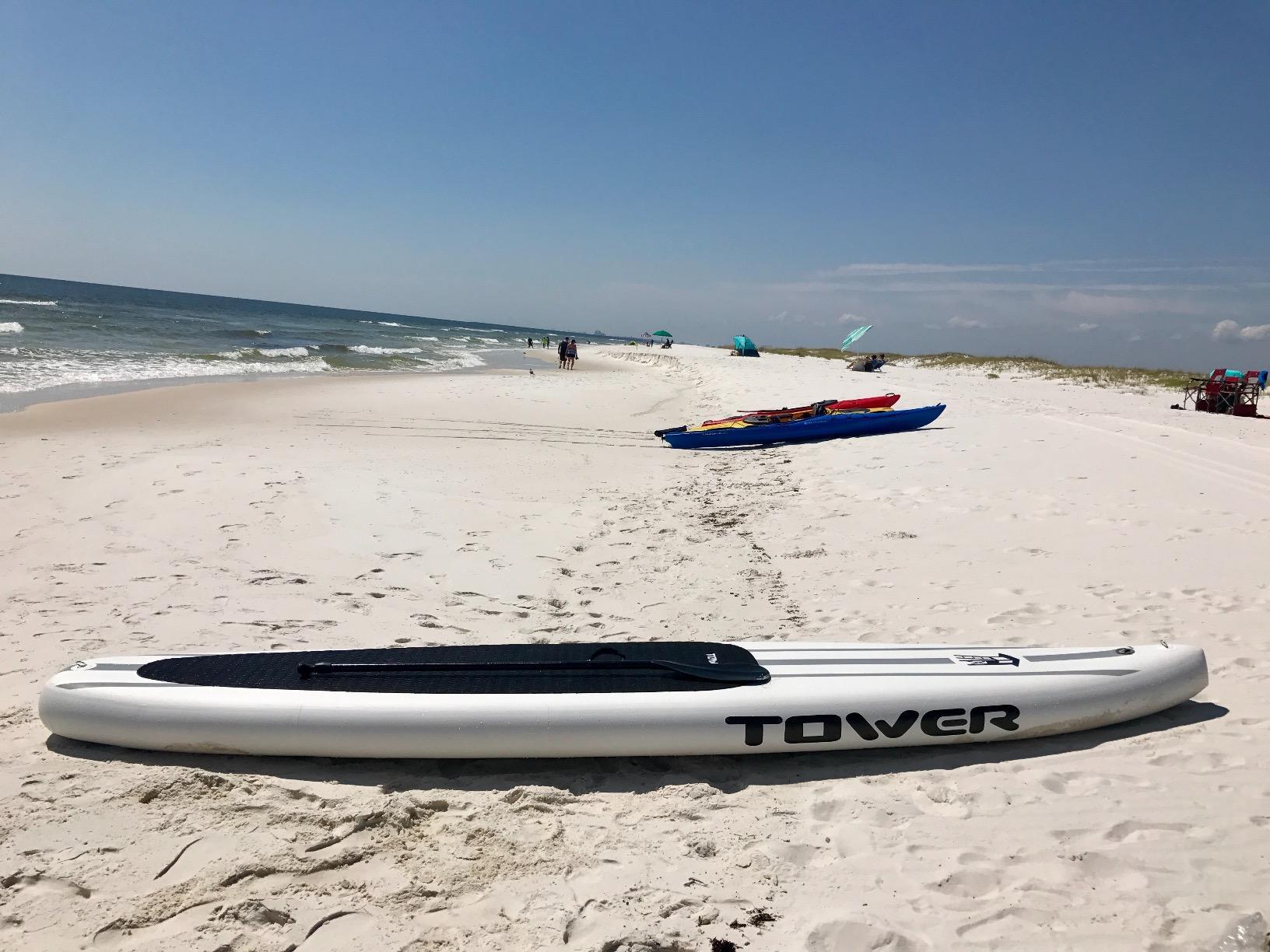
Tower Paddle Board Review: Is This Inflatable SUP Worth Your Money?
A thorough, no-fluff look at how Tower inflatable paddle boards are built, how they feel on the water, who they suit best, and how they stack up against the other popular names in the category.

Transparency note: this page contains affiliate links. If you buy through them, we may earn a small commission at no extra cost to you. It helps keep this site running and never changes our opinion of a product.
There is a moment every new paddler hits. You have watched a few people glide across a calm lake, you have priced out boards, and suddenly the choices feel endless. Hard boards are hard to store. Cheap boards feel like pool toys. Premium boards cost as much as a used scooter. Somewhere in the middle sits Tower, a brand that built its reputation by making inflatable stand up paddle boards that are approachable, packed with accessories, and priced so that trying the sport does not feel like a gamble.
This Tower paddle board review goes through everything a buyer actually cares about: the way the board is constructed, how stable it feels when you first stand up, how quickly it inflates, how it handles chop, how much weight it carries, and whether it is still going to be in good shape after a few seasons of use. We also compare it with other well-known inflatable boards we have covered, so you can see where it wins and where you might want to look elsewhere.
Quick answer: Tower boards are a smart pick for beginners, families, and casual paddlers who want a stable, complete, easy-to-store package without paying premium prices. If you plan to race, surf big waves, or tour long distances every weekend, you will outgrow it sooner than you would outgrow a higher-end board.
Because Tower sells several shapes and sizes, the exact numbers differ from one listing to the next. Where we mention measurements or capacities below, treat them as typical for the brand’s all-around models and always confirm the final figures on the product page before you order.
1. The Tower Brand and Who It Is For
Tower Paddle Boards started in Southern California and built its identity around one idea: stand up paddling should be easy to get into. Instead of chasing racing performance, the company leaned into wide, stable, all-around inflatable boards with generous deck pads, simple fin setups, and complete accessory kits. That philosophy shows in almost every design decision, and it explains both the board’s biggest strengths and its limits.
If you are brand new to the sport, that matters. A beginner does not need a razor-thin race hull. A beginner needs a platform that forgives wobbly knees, carries a dog or a kid, and does not require a separate shopping trip for a pump, leash, or bag. Tower sells that experience in one box. If you are still working out whether an inflatable is right for you in the first place, our guide on whether inflatable paddle boards are good for beginners walks through the trade-offs in detail.
Who Tower boards suit best
- First-time paddlers who want a stable, forgiving board and a complete kit.
- Families and casual groups who share a board across different skill levels and body sizes.
- Apartment dwellers and travelers who cannot keep a hard board in a garage or on a roof rack.
- Lake, bay, slow-river, and calm ocean paddlers who mostly stay in easy water.
- Fitness paddlers who want a low-impact workout. If that sounds like you, you may also enjoy reading about how hard paddle boarding really is.
Who should look elsewhere
Racers, surfers who want a responsive wave board, and anyone planning multi-day tours with heavy gear may find an all-around inflatable too slow or too limited. That is not a flaw in the Tower design. It is simply a board built for a different purpose. For a wider view of the options, take a look at our breakdown of paddle board types and our ranked list of the best inflatable paddle boards.

Ready to see current pricing and available Tower models?
Check Tower Paddle Board Price on Amazon2. What Comes in the Box
One of the first things you notice about a Tower package is how little else you need to buy. The brand bundles the extras that many companies sell separately, and while individual kits vary slightly between models, a typical complete package includes the following.
- 🛶 Inflatable paddle board with full-length EVA deck pad
- 🏓 Adjustable, lightweight paddle (often a three-piece design)
- 💨 Manual hand pump with pressure gauge
- 🎒 Wheeled or standard carry backpack
- 🪢 Ankle leash (coiled or straight)
- 🔧 Removable center fin or fin set
- 🩹 Basic repair kit with patch material
- 📘 Quick-start instruction sheet
The practical upside is obvious: you can unbox it on a Friday and paddle on Saturday. The less obvious upside is that the included gear is matched to the board. The pump connects with the right valve, the backpack is sized to hold the rolled board with enough room for a few extras, and the fin fits the board’s box without fiddling.
How the bundle compares to buying piece by piece
Buying a board, paddle, pump, leash, and bag separately is almost always more expensive and more confusing for a beginner. That said, the included extras are entry-level. The pump will do the job, but it is a workout. The paddle is serviceable, but it will feel heavier than a carbon or fiberglass blade. Many owners eventually upgrade one or two pieces, and that is a perfectly sensible path. When you are ready, our guides to the best paddle board paddles and best paddle board pumps will help you choose upgrades that fit your budget.
Tip: Before your first launch, lay out every item, check the pump hose and valve adapter, and make sure the fin slides in smoothly. Finding a missing piece in a parking lot is a great way to ruin a morning.
Want to compare what is included across Tower bundles?
See What’s Included on Amazon3. Design and Build Quality
Inflatable boards live or die by their construction, so this is where it is worth slowing down. Tower uses what is commonly called drop-stitch technology, in which thousands of fine polyester threads connect the top and bottom layers of the board. When you pump the board up to its rated pressure, those threads pull tight and the board turns from a floppy bag into a stiff platform. If you are curious about the manufacturing side of this, we explain the process in our article on how paddle boards are made.
Layers, seams, and rails
Most Tower boards use a multi-layer PVC construction, with reinforcement along the rails where the board takes the most stress. Better inflatables fuse these layers together with heat, and the seams on Tower boards generally look clean and consistent. The rails are rounded rather than knife-sharp, which helps with stability and also makes the board more comfortable if you decide to sit or kneel.
Deck pad and grip
The deck pad is one of the nicest touches. It is thick enough to cushion your feet, textured enough to grip when wet, and long enough that you can reposition without stepping onto bare PVC. A diamond-groove pattern is typical, and many paddlers find it comfortable even for sessions that run longer than an hour. The raised handle at the center makes carrying easy, and a few extra grab points make loading and unloading simpler.
Bungee storage and D-rings
Up front you will find a bungee cord system for stashing a dry bag, a jacket, or a small cooler. Behind the deck pad there are D-rings for attaching the leash and, on some models, accessories like a seat or a camera mount. These are small details, but they are the details that make a day on the water feel organized instead of chaotic.
Fins
Tower boards typically ship with a removable fin or a small fin set that pops into a standard box. Removable fins mean the board rolls up flatter and cannot be snapped off in a shallow landing. The trade-off is that you need to remember to attach it before launching. A board without a fin will spin and wobble in a way that makes beginners think something is wrong with their balance.
| Feature | What to Expect | Why It Matters |
|---|---|---|
| Construction | Drop-stitch core with layered PVC | Stiffness when inflated, resistance to dings |
| Deck Pad | Full-length EVA foam, grooved texture | Comfort, traction, and room to move |
| Shape | Wide all-around outline, rounded rails | Stability for beginners and casual paddlers |
| Fins | Removable center fin or fin set | Tracking in a straight line, easier storage |
| Hardware | D-rings, bungee storage, center handle | Carrying, securing gear, leash attachment |
| Valve | Standard one-way valve | Works with most universal pumps |
Overall, build quality lands where you would hope for a brand aimed at everyday paddlers: solid, tidy, and well thought out, without the premium materials you would find on boards costing twice as much.
Want a closer look at the construction details and customer photos?
View Tower Board Details on Amazon4. Inflation and Setup
Setting up an inflatable board for the first time can feel intimidating, but it quickly becomes routine. With a Tower board the process is straightforward, and most people go from a rolled-up bag to a launch-ready board in about ten to fifteen minutes with the included hand pump.
A simple setup routine
- Unroll the board on a flat, clean surface such as grass or a towel, not on sharp gravel.
- Open the valve by pushing it down and turning it so it locks in the up position for inflation.
- Attach the hose and pump steadily. The first half goes quickly, and the last stretch is where your arms will feel it.
- Watch the gauge and stop at the recommended pressure range printed on the board.
- Slide in the fin, attach the leash, and snap together the paddle.
That last stretch of pumping is the only real complaint people raise about hand pumps. The pressure needed to make a drop-stitch board properly rigid is much higher than a bicycle tire, and it takes effort. If you paddle often, an electric pump is one of the best upgrades you can make. We compare the strongest options in our paddle board pump roundup.
Why pressure matters so much
Under-inflating is the most common beginner mistake. A soft board sags in the middle, drags through the water, and feels far less stable than it should. If your Tower board feels mushy, check the gauge before you blame the design. Pressure also changes with temperature, so a board that felt perfect in a cool morning garage may feel tighter after sitting in the sun. Release a little air if it feels rock-hard on a hot day.
Deflation and packing
Packing up is easier than setting up. Open the valve, let the air out, then fold the board lengthwise and roll from the tail toward the nose to push out the remaining air. Dry the board before you store it. A damp board in a closed bag can develop mildew in a surprisingly short time, and that smell is stubborn.
Pro tip: Keep a small towel in your bag. Wiping down the board and the valve area before rolling it up takes thirty seconds and extends the life of the board more than you might expect.
Looking to upgrade your inflation setup with a faster pump?
Browse Paddle Board Pumps on Amazon5. On-Water Performance
Specs are useful, but the real question is what the board feels like once you push off from the shore. In short: Tower boards feel calm, predictable, and friendly. They are designed to make you feel secure, and they succeed.
Stability
The wide outline and rounded rails give you a stable footing, even for people who have never stood on a board before. You can shift your weight, turn your head, and pick up a dropped water bottle without feeling like you are about to swim. For first sessions, that confidence is worth more than any performance number. If you are still working on your technique, our walkthrough on how to paddle board covers stance, grip, and basic strokes in plain language.
Tracking
Tracking is a board’s ability to hold a straight line. With the fin installed, a Tower board tracks well for its class. It will not slice through the water like a long touring hull, and in a crosswind you will need to correct with a few strokes on alternating sides, but it is perfectly pleasant for lake loops, bay exploring, and relaxed river floats.
Speed and glide
All-around inflatables trade some speed for stability, and Tower is no exception. The board is not slow in any way that will bother a recreational paddler, but a fit paddler on a longer, narrower board will outpace you with the same effort. Think of it as a comfortable cruiser rather than a sports car. If speed is what you crave, our guide to SUP boards versus paddle boards explains which shapes lean toward performance.
Handling chop and wind
In light chop, the board holds steady and the rails shed small waves nicely. When the wind picks up and the water turns lumpy, any inflatable all-around board will start to feel like it is being pushed around, and Tower is no different. Pick calm mornings when you can. Mornings and early evenings generally offer the smoothest water, and you can read more about timing in our piece on the best time to paddle board.
Turning
Turning is easy with a simple sweep stroke. Step back slightly, plant the paddle at the rail, and the nose swings around. Beginners often find this satisfying because it feels like control without drama.
Getting up, and getting back on
The first time you stand is the moment of truth. Start on your knees near the center of the deck, where the handle sits, and hold the paddle across the board for balance. Place one foot, then the other, about where your knees were, and rise slowly while keeping your gaze forward. On a Tower board this usually feels secure because the deck is broad and the pad grips well. Falling in is almost a rite of passage, and climbing back on is simple: swim to the side, grab the center handle, kick, and slide onto the deck on your belly before returning to your knees. Practicing that re-entry in shallow water on day one removes most of the anxiety later.
Kneeling, sitting and paddling with a partner
Not every session has to be a standing one. The generous deck pad is comfortable enough for kneeling, and many owners enjoy sitting with legs crossed or stretched out when they just want to drift and take in the view. Because the board stays stable at rest, it makes a good platform for fishing from a seated position, reading, or simply sunbathing in a quiet cove. If you share the board, one person can sit near the center while the other paddles, and swapping places mid-trip is easy as long as you move one at a time and keep your weight low.
| Performance Area | Experience | Best Conditions |
|---|---|---|
| Stability | Excellent for beginners | Flat water, lakes, calm bays |
| Tracking | Good with fin installed | Light wind, slow rivers |
| Speed | Comfortable cruising pace | Casual and fitness paddling |
| Chop Handling | Fair; stays upright but gets pushed | Light ripples only |
| Maneuverability | Easy and predictable | Everywhere from coves to marinas |
Curious how real paddlers rate Tower’s stability on the water?
Read Tower Customer Reviews on Amazon6. Weight Capacity and Fit
Weight capacity is one of those numbers people skim past until they realize it decides whether a board feels stable or sluggish. Tower’s popular all-around boards are generally rated to support a generous load, often well above what a single average adult weighs, which leaves room for gear, a small child, or a dog. Always check the exact rating for the model in front of you, because capacities vary between sizes.
Rated capacity vs. comfortable capacity
Here is a trick experienced paddlers use: the maximum rating tells you what the board can float, not what it will float well. If you are near the upper limit, the board will sit lower in the water, drag more, and feel slower. For the best experience, aim to keep your total load comfortably below the maximum. Our deep dive on how much weight a paddle board can hold explains the math and gives practical examples.
Paddling with a dog, a child, or gear
The wide deck is a real advantage when you bring a passenger. Place a dog or small child toward the center and slightly forward of your feet so the board stays level. Use the bungees for your bag and keep heavier items low and centered. If a child is going to ride along, make sure they wear a properly fitted vest. Our guide to the best paddle board life jackets is a good place to start.
How the load affects handling
A lightly loaded board rides high and responds quickly. As you add weight, the hull sits deeper, the wetted surface grows, and the board becomes slightly slower to accelerate but often steadier in a straight line. Heavier paddlers may notice the nose dipping on a wide board if the weight sits too far forward, so stand near the handle and adjust your feet by a few inches until the nose rides level. Lighter paddlers, on the other hand, may feel the board get pushed around by wind, since there is less mass holding it down. Neither situation is a flaw. It is simply physics, and a little experimentation with foot position solves most of it.
Height and body size
Taller paddlers sometimes wish for a bit more length, and shorter paddlers sometimes feel that a wide board makes reaching the water awkward. The adjustable paddle that comes with Tower kits helps with the second problem. For the first, simply choose the longer model in the lineup if there is one.
Rule of thumb: Add your body weight, the weight of gear, and the weight of any passenger. If that number sits well under the rated capacity, you will get the stable, glidey ride the board is capable of.
Need a vest for your paddling partner before you launch?
Shop Paddle Board Life Jackets on Amazon7. Portability, Storage and Transport
The entire reason inflatable boards exist is portability, and this is where Tower shines. A rolled Tower board fits inside a backpack that you can put in a trunk, a closet, a hotel room, or the overhead space of a small boat. For apartment dwellers, it is transformative.
Carrying the pack
The included backpack is designed to carry the board, paddle sections, pump, and a few extras. Fully loaded it is not light, so a wheeled bag is a welcome feature on models that include one. Shoulder straps are padded and adjustable, which makes a short walk to the water pleasant rather than punishing. If you find yourself wanting a roomier or more rugged option, check our review of the best paddle board bags.
Driving with an inflatable
You do not need a roof rack. That alone saves hundreds of dollars and countless hours of strapping. The rolled board rides in the back seat or trunk. If you ever do carry it inflated, secure it properly and avoid leaving it in a hot car, because air expands in heat. Our article on how to transport a paddle board covers both rolled and inflated options, and if you prefer to carry it fully inflated, our list of best paddle board roof racks is worth a look.
Storing it between trips
For short breaks between outings, a deflated and rolled board in a cool, dry closet works well. For longer breaks, many owners store the board partially inflated or loosely rolled to reduce crease stress. The key is to keep it dry, out of direct sunlight, and away from sharp objects and rodents. We collected clever space-saving solutions in our guide to inflatable paddle board storage ideas.
- ✅ Fits in a standard car trunk when rolled
- ✅ No roof rack required
- ✅ Easy to bring on trips and flights (check airline rules)
- ✅ Stores in a closet or under a bed
Looking for a bigger, tougher bag or a better carry setup?
Browse Paddle Board Bags on Amazon8. Paddle, Pump and Accessories
A board is only part of the experience. The paddle, leash, fin, and pump determine how enjoyable each session feels, and Tower’s included versions are best described as capable starter gear.
The paddle
Most Tower kits include an adjustable aluminum or fiberglass-blend paddle that breaks down into pieces for easy packing. It is lightweight enough for casual sessions, and the adjustment lock lets you quickly set the right height. A common rule is to set the paddle roughly a hand’s width above your head when standing it on its blade. Over a long paddle, a lighter carbon blade will reduce fatigue, but for typical weekend use the stock version is fine. If you are curious about buoyancy, you will be glad to know that most paddles float, though not all of them do. We explain which ones do in do paddle board paddles float?
The leash
Never skip the leash. A board blown away by wind is a long swim, and a leash keeps it attached to you. Coiled leashes stay out of the water and are great for flat water, while straight leashes are more common in surf. Whichever you use, attach it to your ankle or calf and check the cuff before every launch. For deeper safety guidance, our overview of paddle board safety requirements covers the gear that is legally and practically important in many areas.
The pump
The included hand pump is dependable, but it is the item most owners eventually replace. Dual-action pumps move air on both the push and the pull stroke and make the process much more pleasant. Electric pumps do it with the push of a button, which makes a real difference if you paddle several times a week.
Fin and repair kit
The fin that comes with a Tower board is a practical all-around design. The repair kit is a worthwhile inclusion, and it is a great reminder that small punctures are fixable. If you ever need it, our step-by-step guide to how to patch a paddle board walks through the entire process.
Accessories worth adding
- A dry bag for your phone, keys, and snacks.
- A removable seat or kayak conversion for relaxed trips.
- A waterproof phone pouch so you can take photos without worry.
- A floating cooler or bungee-compatible soft cooler for longer outings.
Want to upgrade your paddle for lighter, smoother strokes?
Shop Paddle Board Paddles on Amazon9. Durability and Long-Term Use
A board that feels great on day one but falls apart after a season is no bargain. Fortunately, well-made inflatable boards are far tougher than their reputation suggests. The layered PVC skin shrugs off scrapes against docks, brushes with rocks in shallow water, and the occasional dropped paddle. Tower boards fit that pattern, and owners generally report that the board holds air well and keeps its shape through regular use.
What affects lifespan the most
Most inflatable boards fail because of how they are treated, not because of how they are built. Four habits make the biggest difference.
- Avoid over-inflation. Stay within the recommended pressure range, especially in hot weather.
- Rinse and dry. Salt, sand, and sunscreen all wear on the surface over time.
- Protect from sun. Prolonged exposure weakens adhesives and fades the deck pad.
- Handle the valve gently. Keep it clean and avoid cross-threading the pump connector.
With sensible care, an inflatable board commonly lasts for many seasons. Our detailed breakdown of how long inflatable paddle boards last explains typical lifespans and the warning signs that a board is nearing the end.
Warranty and support
Brands that sell complete packages tend to back them with a limited warranty, and this is worth checking before you buy. Look for terms covering manufacturing defects such as seam failures or valve problems, and keep your receipt and order information handy. Warranty details change from model to model, so confirm them on the listing.
Real-world wear: what to watch for
Over time, a few areas deserve a quick look every month or so. Check the seam along the rails for any lifting edges, inspect the valve base for hairline cracks or grit, and press along the deck pad to make sure the adhesive is still holding firmly at the corners. Faded color on the pad is cosmetic, but peeling edges mean moisture can creep underneath, so address that early. Check the stitching and zippers on the carry bag as well, since the bag takes plenty of abuse in trunks and on sandy trails. Catching small issues early is what separates a board that lasts four seasons from one that lasts ten.
Hot cars, cold garages and other hidden stressors
Temperature swings are the quiet killer of inflatable gear. A fully pumped board baking in a parked car can climb well past its safe pressure, which stresses seams and valves. On the other end, storing a board in a freezing garage can make the PVC stiff, and unrolling it cold can cause creasing. Let the board come to a moderate temperature before you unfold it, and always release some air when it will sit in direct sun, even for a short lunch break on the beach.
Small leaks and what to do
Slow leaks are almost always the valve or a tiny puncture. Mix a little soapy water, brush it over the valve and the suspect area, and watch for bubbles. Tightening the valve fixes the majority of cases, and the included patch kit handles the rest.
Check the current warranty details and customer feedback on durability.
See Tower Warranty Info on Amazon10. Tower vs. the Competition
No review is complete without context. Plenty of respected brands compete in the all-around inflatable space, and each one has a slightly different personality. We have reviewed several of them in detail, so here is how Tower stacks up against the names shoppers most often cross-shop.
Tower vs. iRocker
iRocker is a popular pick with a loyal following. Both brands sell complete bundles and target beginners, so the decision often comes down to model specifics, deck shape, and price on the day you shop. Read our iRocker paddle board review and our look at the iRocker Nautical if you want a head-to-head feel.
Tower vs. Bote
Bote is known for bold styling and a premium feel, usually at a higher price point. If design and distinctive features matter to you, take a look at our Bote inflatable paddle board review. Tower tends to win on value, while Bote leans into style.
Tower vs. Retrospec
Retrospec sells approachable boards that are friendly to newcomers. Our Retrospec Weekender review goes deep on one of its best-known models, and the comparison with Tower comes down to deck pad comfort, kit contents, and price.
Tower vs. Isle and Gili
Isle and Gili both offer well-regarded all-around boards with thoughtful features. You can see how they perform in our Isle paddle board review and our Gili paddle board review. They are close competitors, and the best choice often depends on which model fits your height, weight, and paddling style.
| Brand | Best For | Strength | Trade-Off |
|---|---|---|---|
| Tower | Beginners and families | Stability and complete bundle | Not built for racing |
| iRocker | New and casual paddlers | Wide model range and strong accessory kits | Model choices can feel overwhelming |
| Bote | Style-focused paddlers | Distinctive design and features | Generally higher price |
| Retrospec | Weekend recreational use | Beginner-friendly platform | Fewer premium touches |
| Isle | Everyday all-around paddling | Well-rounded performance | Kit contents vary by model |
| Gili | Lightweight, travel-friendly setups | Thoughtful design and portability | Premium pricing on some models |
The takeaway is that you cannot go far wrong with any of these brands if you pick the right shape for your weight and goals. Tower’s calling card is its mix of stability, completeness, and value. For a wider overview of the whole category, our main hub page on the paddle board is a helpful starting point.
Want to compare Tower with other inflatable boards side by side?
Compare Inflatable Paddle Boards on Amazon11. Pros, Cons and Who Should Buy
After going through the board feature by feature, here is the plain-English summary. Every board makes trade-offs, and the right question is not whether Tower is perfect. It is whether Tower’s trade-offs match what you want.
👍 Pros
- Very stable platform that builds confidence fast
- Complete kit with paddle, pump, leash, fin, and bag
- Comfortable, grippy full-length deck pad
- Packs down small and needs no roof rack
- Handy bungee storage and attachment points
- Good value compared with premium inflatables
- Suitable for riders with a dog or child
👎 Cons
- Included hand pump takes real effort
- Stock paddle is functional rather than premium
- Slower than narrow touring or race boards
- Wind and chop can push it around
- Capacity and size options vary between models
Buy it if…
- You are new to paddle boarding and want a forgiving board.
- You need something you can store in a closet and carry in a car trunk.
- You want a complete package so you do not have to shop for extras.
- You mostly paddle on lakes, bays, calm coastlines, and gentle rivers.
Skip it if…
- You want a high-speed race or long-distance touring board.
- You plan to surf waves regularly.
- You expect to paddle in rough, windy water most of the time.
If Tower sounds like the right fit, check today’s price and availability.
Get the Tower Paddle Board on Amazon12. Tips for Getting the Most Out of Your Tower Board
Once you own the board, a few habits will make every session smoother, safer, and more fun. None of these are complicated, but together they make a big difference.
Start in calm water
Pick a flat, sheltered spot for your first sessions, ideally with an easy entry and exit. Kneel first, get comfortable, then stand one foot at a time. Falling in is part of learning, and a warm day with shallow water makes it fun instead of stressful.
Stand with good posture
Keep your feet about shoulder-width apart, knees slightly bent, and eyes on the horizon rather than your toes. The most common beginner mistake is staring down, which pulls your balance forward and makes the board feel twitchy.
Use your whole body, not just your arms
A good stroke comes from rotating your torso and pushing through your legs, with the arms mostly acting as connectors. That is how you paddle farther without tiring out, and it is why paddle boarding can be such an effective full-body workout.
Respect the weather
Check wind and weather before you leave. Offshore winds in particular can push a paddler away from shore much faster than you would expect. When in doubt, stay close to land and paddle into the wind on the way out so the return trip is easy.
Wear the right gear
A leash and a personal flotation device are the basics. Add sun protection, a hat, and water, and you are set for a comfortable outing. Always follow local rules, which can vary by waterway.
Plan your route like a pro
Beginners often paddle straight out until they feel tired, then realize the return leg is harder. A smarter approach is to plan loops or out-and-back routes that start into the wind and finish with it at your back. Stay within a distance you could comfortably swim while towing the board if something went wrong, and let someone on shore know roughly where you are headed. Scouting a shoreline with calm coves, easy landing spots, and gentle current turns a decent outing into a great one. For many paddlers, the planning is half the fun.
Build up your fitness gradually
Paddling uses the core, shoulders, back, and legs, and sore muscles after the first few sessions are completely normal. Begin with short outings of thirty to forty-five minutes, stretch afterward, and extend your time as your endurance improves. Within a few weeks most people notice smoother strokes, better balance, and a lot more confidence on the water.
Care for the board after each trip
- Rinse with fresh water if you paddled in salt or muddy water.
- Wipe the deck and valve and let the board dry fully.
- Release some pressure before leaving it in a hot car.
- Roll it loosely and store it in a cool, dry spot.
Treat it well and it will return the favor with years of easy, enjoyable paddling.
Gear up with essentials like leashes, dry bags, and repair supplies.
Shop Paddle Board Accessories on AmazonFrequently Asked Questions About Tower Paddle Boards
Are Tower paddle boards good for beginners?
Yes. Tower boards are built around a wide, stable design that suits first-time paddlers, and the included kit means you do not have to piece together gear on your own. Most beginners find them easy to stand on and easy to steer.
How long does it take to inflate a Tower paddle board?
With the included hand pump, most people finish in about ten to fifteen minutes, depending on fitness and the model. An electric pump can cut the time down significantly and spare your arms.
How much weight can a Tower paddle board hold?
Capacity depends on the specific model, but the popular all-around boards are rated for a generous load that covers most adults plus a bit of gear. Check the listing for your size, and remember that staying below the maximum keeps the board gliding better.
Can two people ride a Tower paddle board?
Some larger models can carry two lighter adults or an adult with a child, but it is a tighter fit and performance drops. Staying seated or kneeling and keeping the combined weight well under the limit is the safest approach.
Is a Tower paddle board good for ocean use?
It can handle calm coastal water and sheltered bays. In big swell, strong wind, or surf, an all-around inflatable is not ideal, so pick your days carefully and always wear a leash and flotation device.
What PSI should I inflate my Tower board to?
Follow the pressure range printed on the board itself. Most all-around inflatable boards fall within a moderate-to-high range, and reaching the recommended level is what gives the board its stiffness.
Do I need a roof rack to transport it?
No. The board deflates, rolls up, and fits in a backpack that goes in a trunk or back seat. A rack is only necessary if you want to drive with the board fully inflated.
Does the paddle float if I drop it?
Many paddles do, but not every one is guaranteed to. Check your paddle’s specs, and consider attaching a float if you paddle in deep or moving water.
How do I fix a leak in my Tower board?
First check the valve with soapy water. If the bubbles come from the board surface, clean and dry the area, apply the patch from the repair kit, and let it cure fully before reinflating.
How long will a Tower paddle board last?
With proper care, such as avoiding over-inflation, rinsing after use, and storing it dry, an inflatable board can last for many seasons. Heavy sun exposure and rough handling shorten that lifespan.
Is a Tower board suitable for yoga or fitness?
Its wide, stable deck and padded surface make it a good platform for yoga, core work, and general fitness. Calm water and a well-inflated board are the key ingredients.
Is it worth upgrading the included pump and paddle?
If you paddle often, yes. An electric pump saves effort and a lighter paddle reduces fatigue. If you paddle occasionally, the included gear is perfectly serviceable and you can upgrade later.
Final Verdict: Should You Buy a Tower Paddle Board?
After looking at every angle, the picture is clear. Tower inflatable paddle boards deliver exactly what the brand promises: a stable, comfortable, easy-to-store platform with the accessories you need to get started right away. The build quality is solid for the price, the deck pad is comfortable, and the portability is a genuine lifestyle upgrade for anyone without garage space.
Are there compromises? Of course. The pump is basic, the paddle is entry-level, and you will not win any races. But those are small trade-offs for a board that makes the sport feel welcoming. For beginners, families, travelers, and casual paddlers on lakes and calm coastlines, it is an easy recommendation.
If you are ready to get out on the water, the best next step is to check the current price and model options. Your first calm morning session is closer than you think.

Ready to start paddling? See the latest Tower deals now.
Shop the Tower Paddle Board on Amazon