Do Paddle Board Paddles Float? The Complete Guide to Paddle Buoyancy
Do paddle board paddles float? Usually, yes—but not every paddle behaves the same way in the water. Construction materials, hollow shafts, foam cores, blade design, damage, and even the way a paddle enters the water can affect whether it floats, sinks slowly, or becomes difficult to recover. This guide explains what happens when a SUP paddle goes overboard and how to choose, test, and use one with confidence.
1. Do Paddle Board Paddles Float?
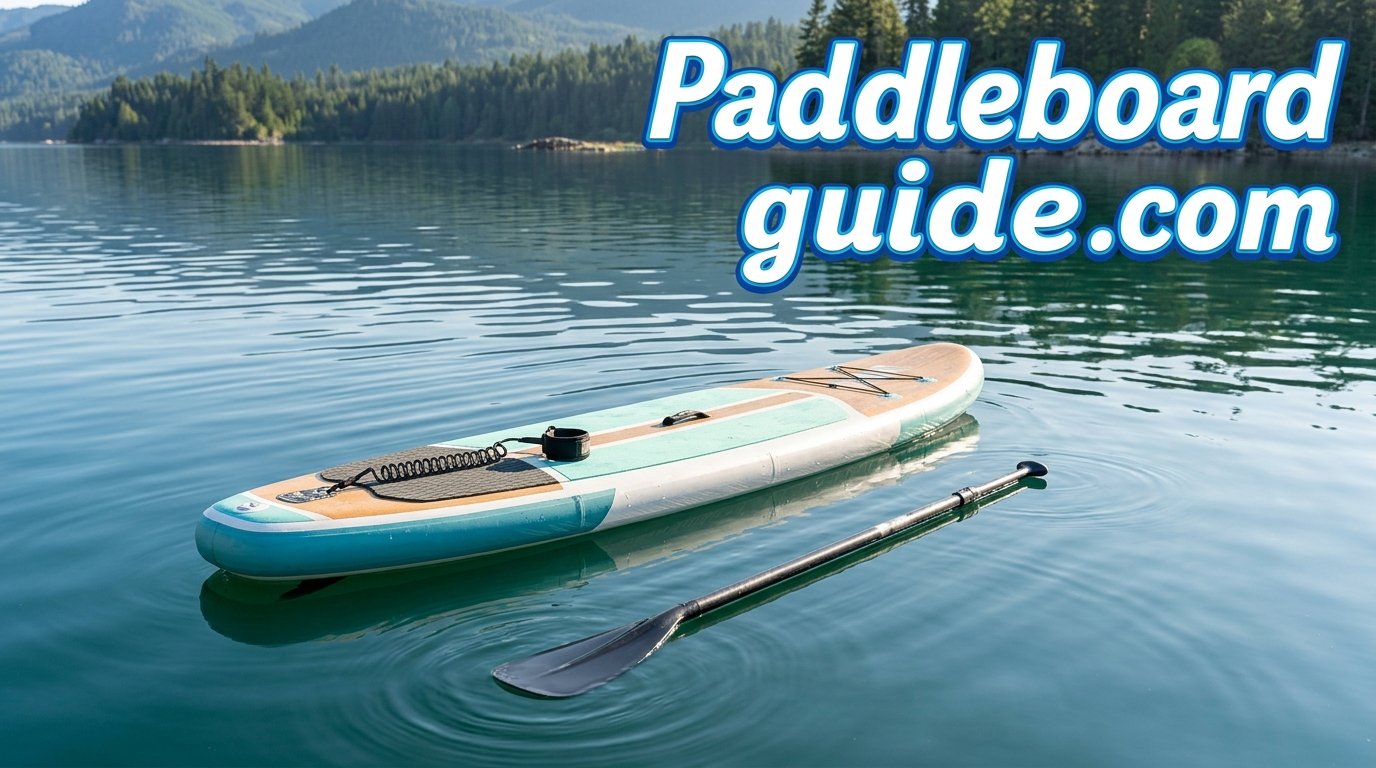
In most cases, paddle board paddles are designed in a way that allows them to float or remain near the surface, especially when they are made from lightweight materials such as fiberglass, carbon fiber, reinforced plastic, or composite materials. However, “paddles float” is not a universal rule that applies to every SUP paddle.
This distinction matters because paddle boarders sometimes assume that dropping a paddle is harmless because it will automatically pop back to the surface. That assumption can be risky. Wind, current, waves, boat traffic, murky water, and the paddle’s color can make recovery difficult even when the paddle itself is technically floating.
The paddle also does not have to float completely above the water to be recoverable. Some paddles sit low in the water, with part of the blade or shaft below the surface. From a distance, especially in choppy conditions, that can make the paddle surprisingly hard to see.
Why buoyancy matters for SUP paddlers
A paddle is one of the most important pieces of equipment on a stand up paddle board. It is your primary propulsion tool and, in many situations, your steering and balance aid. Losing it can turn a relaxed outing into a difficult recovery situation.
This is particularly important for beginners. Someone who falls off a board may instinctively reach for the paddle first. If the paddle is floating nearby, it can usually be retrieved quickly. If it sinks, drifts away, or becomes hidden by waves, the paddler may have to decide whether to swim after it, return to the board, or use another recovery strategy.
If you are still learning basic technique, our guide to how to paddle board can help explain how to maintain control of both the board and paddle during normal paddling and falls.

Check SUP Paddles on Amazon
2. Why Do Some Paddle Board Paddles Float?
The basic science behind paddle flotation is straightforward. An object floats when the upward buoyant force from the water is sufficient to support its weight. In practical terms, a paddle’s overall density relative to water matters more than any single material used to build it.
A paddle can contain materials that are individually dense and still float if the complete structure contains enough low-density material or trapped air. This is one reason you should not assume that a carbon fiber paddle will automatically sink simply because carbon fiber itself is not “foam-like.”
Density is the key factor
Water has a density that provides the reference point for buoyancy. If the average density of a paddle is lower than the surrounding water, the paddle tends to float. If the average density is higher, it tends to sink.
The word average is important. A paddle is not a solid block of one material. It can include a shaft, blade, grip, adhesive, reinforcement, internal core, ferrule, adjustment mechanism, and other components.
| Paddle characteristic | Potential effect on flotation | What paddlers should know |
|---|---|---|
| Lightweight shaft | Can improve overall buoyancy | Common in performance-oriented paddles |
| Hollow shaft | May trap air and reduce average density | Water intrusion can change behavior if construction is compromised |
| Foam-core blade | Can add buoyancy | Construction varies considerably between paddles |
| Heavy solid components | Can reduce buoyancy | Overall construction matters more than one component |
| Water inside a damaged cavity | May make the paddle heavier | Damage should be inspected promptly |
Floating does not mean “completely above water”
One of the most common misunderstandings is that a floating paddle should lie completely on top of the water. That is not necessary. An object can float while being mostly submerged.
Imagine a paddle with a blade that sits just beneath the surface while the shaft remains partially visible. The paddle is still floating, but it may look as though it is slowly sinking. A similar thing can happen when the paddle becomes coated with water after being dropped.
The practical difference is important: if your paddle floats low in the water, it can be much harder to spot from your board.

Shop Lightweight Options
3. How Paddle Materials Affect Buoyancy
The materials used in a paddle influence its weight, stiffness, durability, price, and buoyancy characteristics. This is why two paddles that look almost identical can behave differently after being dropped in the water.
Plastic and reinforced composite paddles
Many recreational SUP paddles use molded plastic or reinforced polymer components. These materials can be relatively lightweight and durable, making them suitable for beginners, families, rental fleets, and casual paddling.
A plastic blade does not automatically guarantee flotation. The shape, thickness, shaft, internal construction, and other components all contribute to the final result.
Fiberglass paddles
Fiberglass is commonly used in performance-oriented paddle construction because it can offer a useful balance between weight, stiffness, durability, and cost.
Fiberglass components can be lightweight enough for a paddle to remain at or near the surface. However, once again, the entire paddle must be considered rather than judging buoyancy solely from the shaft material.
Carbon fiber paddles
Carbon fiber is popular among paddlers who want a light, stiff paddle. Because the material can deliver high stiffness without requiring a very heavy structure, carbon paddles may have favorable overall weight characteristics.
That does not mean every carbon paddle has identical buoyancy. A carbon paddle can contain other materials, hardware, adhesives, grips, and blade components that change its overall density.
Foam-core blades
Some paddle blades use internal foam or sandwich-style construction. A lightweight core can reduce mass while providing structural support. In a properly sealed paddle, this type of construction can contribute to positive buoyancy.
Potential advantages of lightweight construction
- Less fatigue during long paddles
- Comfortable repeated strokes
- Often easier to handle for beginners
- Can contribute to better surface flotation
- Easy to transport and carry
Potential limitations
- Some lightweight paddles cost more
- Thin components may require careful handling
- Construction varies significantly between models
- Damage can change the paddle’s behavior
- Buoyancy cannot be predicted from material name alone
If you are comparing paddles before purchasing, our guide to the best paddle board paddles is a useful place to consider the broader differences between paddle designs.

Compare Paddles on Amazon
4. Does a Hollow Paddle Shaft Help It Float?
A hollow shaft can contribute to buoyancy because air takes up space without adding much mass. However, the important detail is that the shaft is part of the complete paddle assembly. A hollow tube by itself does not guarantee that the finished paddle will float.
Many paddle shafts are engineered as lightweight tubes rather than solid rods. This reduces unnecessary mass while maintaining the stiffness required for efficient strokes.
What happens when the shaft is sealed?
A properly sealed hollow shaft can contain air. That trapped air contributes to the paddle’s overall displacement and can help the paddle remain near the surface.
The same principle applies to other hollow sporting equipment. The water does not care that the shaft is “carbon” or “fiberglass”; what matters is the average density of the complete structure.
What if water enters the shaft?
If a shaft is damaged and water enters an internal cavity, the paddle may become heavier. Depending on its design, this could reduce its buoyancy or change how it sits in the water.
Adjustable paddles deserve particular attention because they contain additional hardware and connection points. A loose fitting, cracked component, or compromised seal should not be ignored.
Three common shaft designs
| Design | Typical characteristic | Buoyancy consideration |
|---|---|---|
| Fixed shaft | Simple construction and fixed length | Fewer moving parts may simplify inspection |
| Adjustable shaft | Length can be changed | Inspect adjustment hardware and connections |
| Multi-piece shaft | Designed for transport and storage | Connection points should be kept clean and secure |
If you use an inflatable SUP, paddle storage is especially important because the paddle is often transported with the board. Our guide to best inflatable paddle boards covers the broader equipment considerations that come with inflatable setups.
Shop Adjustable Paddles
5. Does the Paddle Blade Float?
The blade is usually the largest part of a SUP paddle, so it has a major influence on how the complete paddle behaves in the water. A blade can contain lightweight materials, reinforcement layers, foam, molded polymer, or composite construction.
When a paddle is dropped, the blade may enter the water first. This can cause the paddle to rotate or settle into a particular orientation. Depending on its construction, you may see the blade partly submerged while the shaft sticks upward.
Why blade shape matters
Blade shape primarily affects paddling performance rather than flotation, but it also affects how the paddle sits in the water. A wide blade displaces more water than a narrow blade, while a thick or reinforced blade may contain more material.
A larger blade does not automatically mean a paddle will sink. The overall mass and volume remain the deciding factors.
What you may see after dropping a paddle
- The paddle may lie nearly flat on the surface.
- The shaft may rise while the blade sits lower.
- The paddle may float diagonally.
- Waves can temporarily submerge the paddle.
- Wind can move the paddle away from the board.
- Dark or thin paddles can be difficult to see against the water.
This is one reason equipment selection should not be based entirely on weight. A paddle that is extremely light may feel excellent in the hands, but a visible, durable, appropriately sized paddle can also provide practical advantages.
The blade also matters when comparing paddles for different users. A large blade can generate more resistance during a stroke, while a smaller blade may feel smoother for a lighter paddler or someone who prefers a higher cadence.
6. Do Paddle Board Paddles Float Better in Saltwater?
Saltwater is denser than freshwater, which means it generally provides greater buoyant force for the same displaced volume. As a result, an object that is close to neutral buoyancy can behave slightly differently in saltwater compared with freshwater.
For a typical SUP paddle that already floats, this difference is unlikely to be something you notice dramatically. If a paddle has strongly positive buoyancy, it should remain at the surface in either environment.
The distinction becomes more relevant for equipment that is very close to neutral buoyancy. A paddle may sit slightly higher in saltwater than freshwater, but that does not mean a sinking paddle will suddenly become highly buoyant.
Freshwater considerations
Lakes, rivers, reservoirs, and calm inland waterways can provide excellent paddling conditions. However, freshwater is less dense than seawater, so equipment with marginal buoyancy may sit somewhat lower.
Saltwater considerations
Oceans, bays, and coastal environments introduce additional factors beyond water density. Waves, wind, currents, tide movement, and boat traffic can make recovering a paddle more difficult.
A paddle that floats perfectly well in a calm swimming pool can be surprisingly hard to recover from an ocean surface because the problem is no longer simply buoyancy. The paddle may be moving relative to the board, hidden between waves, or drifting downwind.
| Environment | Buoyancy factor | Recovery challenge |
|---|---|---|
| Swimming pool | Predictable water conditions | Usually low |
| Calm lake | Freshwater density | Usually manageable |
| River | Freshwater plus current | Current can carry equipment away |
| Ocean | Denser saltwater | Waves, wind, tide, and current increase difficulty |
Regardless of water type, it is useful to understand basic equipment safety. If you regularly paddle in unfamiliar environments, review the guidance in our paddle board safety requirements guide before heading out.
7. What Happens If a Paddle Is Damaged?
A new paddle may float well, but damage can change its behavior. This is especially relevant for paddles with hollow shafts, sealed cores, composite skins, or multiple internal components.
Not every crack will cause immediate loss of buoyancy. A cosmetic scratch may have no meaningful effect on flotation. More serious damage, however, can allow water into areas that were designed to remain dry.
Types of damage worth inspecting
- Cracks: Look for cracks along the shaft, blade, or connection points.
- Delamination: Composite surfaces can sometimes separate or develop soft areas.
- Loose fittings: Adjustable components should lock securely.
- Blade damage: Chips or cracks can affect structural integrity.
- Separated joints: Multi-piece paddles should fit together correctly without excessive movement.
- Unusual weight: A paddle that suddenly feels heavier deserves inspection.
Could a damaged paddle sink?
It is possible for damage to alter a paddle’s buoyancy, but the exact result depends on the construction. If water enters an enclosed space, the paddle can gain mass. If a component breaks away, the balance and orientation can also change.
Even if the paddle continues to float, structural damage can make it unsafe or unreliable. Buoyancy should therefore never be treated as the only test of paddle condition.
Paddle durability also connects with the type of SUP you use. For example, paddlers comparing inflatable and rigid boards may have different transportation and storage routines. Our article on how long inflatable paddle boards last discusses equipment longevity from a broader perspective.

Shop Replacement Paddles
8. How to Test Whether Your Paddle Floats
The safest way to find out how your particular paddle behaves is to test it under controlled conditions rather than discovering the answer unexpectedly in deep or moving water.
Step 1: Choose a controlled test location
Use a calm, shallow environment where you can easily retrieve the paddle. A clean pool or shallow protected water area is preferable to a river, surf zone, or deep lake.
Step 2: Inspect the paddle first
Check the shaft, blade, grip, adjustment mechanism, and connections. Do not test a paddle that appears structurally damaged.
Step 3: Lower it gently into the water
Instead of throwing the paddle into the water, lower it gently and observe what happens. Watch whether it remains on the surface, floats at an angle, or sinks.
Step 4: Observe the paddle’s orientation
Pay attention to which component stays visible. Some paddles may float with the shaft high and the blade low. Others may lie almost horizontally.
Step 5: Repeat in realistic conditions
If you paddle in both freshwater and saltwater, you can observe the paddle in each environment when it is safe and practical to do so. The goal is not to perform laboratory testing but to understand your equipment.
| Observation | What it may mean | Recommended response |
|---|---|---|
| Floats high | Strong positive buoyancy | Still consider visibility and wind |
| Floats partially submerged | Nearer to neutral buoyancy | Learn its orientation before open-water use |
| Sinks slowly | Overall density may exceed water | Do not assume it will be recoverable |
| Sinks after being damaged | Possible water intrusion or structural change | Inspect or replace the paddle |
Testing is particularly useful when purchasing a used paddle. A seller may know the model but not necessarily the paddle’s history. If it has experienced an impact, prolonged water exposure, or a previous repair, its behavior may differ from a new example.
9. What Should You Do If You Drop Your Paddle?
Knowing that a paddle probably floats is helpful, but knowing how to respond when it leaves your hands is even more important.
Your first priority should normally be maintaining control of yourself and the board. A paddle is replaceable. Your safety is not.
If you are still on the board
Stay balanced and look around before attempting recovery. If the paddle is close enough to retrieve safely, use a controlled movement rather than making a sudden reach that could cause another fall.
If the paddle is drifting away, consider the wind and current. A floating paddle can travel surprisingly quickly, especially when the blade catches the wind.
If you have fallen into the water
Regain control of your body and locate the board first. The board provides significantly more flotation and visibility than a paddle. Once you are stable, assess where the paddle is.
If the paddle is farther away than the board, swimming after it may create unnecessary risk. In moving water, the paddle can also be carried downstream faster than you can swim.
What about a paddle leash?
Paddle leashes exist, but their suitability depends heavily on the paddling environment and equipment. A leash that becomes entangled around the paddler can introduce hazards, particularly in moving water or surf.
Do not automatically add a leash simply because you are worried about losing your paddle. Consider the specific environment, manufacturer guidance, and local safety recommendations.
For a broader discussion of safe SUP practices, see our paddle board safety requirements guide.

Browse SUP Safety Gear
10. How to Choose a Paddle That Is Easy to Recover
If paddle flotation is important to you, do not shop based on buoyancy alone. Think about the entire recovery problem: whether the paddle floats, how visible it is, how quickly it drifts, how durable it is, and whether you can control it comfortably.
1. Look for lightweight construction
A lightweight paddle is often pleasant to use and may have favorable buoyancy characteristics. It can also reduce fatigue, especially when you paddle for several hours.
2. Consider paddle visibility
A brightly colored shaft or blade can be easier to spot. This is especially helpful in open water, where a low-floating paddle can disappear visually among reflections and waves.
3. Check the construction quality
Look for secure joints, a well-finished blade, reliable adjustment hardware, and construction appropriate for your intended use.
4. Match the paddle to your board and paddling style
Paddle length, blade area, shaft stiffness, and weight all affect comfort. A paddle that technically floats but is poorly matched to the paddler can still make an outing less enjoyable.
5. Consider transport
If you use an inflatable SUP, a multi-piece or adjustable paddle may be convenient because it can be packed with the board. If you use a rigid board stored at home, a fixed paddle may be perfectly practical.
| Feature | Why it matters | What to look for |
|---|---|---|
| Weight | Comfort and possible buoyancy benefits | Light enough for your strength and session length |
| Visibility | Easier recovery | Color or finish that contrasts with the water |
| Construction | Durability and reliability | Secure joints and quality materials |
| Length adjustment | Fit and transport | Reliable adjustment mechanism |
| Blade size | Stroke feel and resistance | Appropriate for your paddling style |
| Warranty/support | Long-term ownership | Clear manufacturer support |
Fixed vs adjustable paddles
Fixed Paddle
- Simple construction
- No length-adjustment mechanism
- Can provide a clean, rigid feel
- Good choice when one paddler uses the board
Adjustable Paddle
- Easy to share between paddlers
- Convenient for transport
- Useful for families
- Length can be tuned to different conditions
If you are still deciding what type of board and paddle combination makes sense, our broader paddle board types guide can help you understand the different categories before choosing accessories.

Compare Paddle Designs
11. Paddle Maintenance, Storage, and Long-Term Buoyancy
Paddle flotation is not something you should think about only when the paddle falls into the water. Good maintenance helps preserve the construction that gives the paddle its intended characteristics.
Rinse after saltwater use
Salt and sand can work their way into adjustment mechanisms and connection points. Rinsing the paddle with fresh water after coastal use helps remove residue.
Inspect the shaft
Run your hands and eyes along the shaft and check for cracks, dents, unusual flex, or separation. A damaged shaft should be evaluated before the next outing.
Check the blade edge
The blade can be exposed to rocks, docks, shallow bottoms, and other hard surfaces. Small scratches are not necessarily serious, but major chips, cracks, or separation deserve attention.
Dry the paddle before storage
Drying your equipment before long-term storage helps keep connection points clean and reduces the chance of persistent moisture around components.
Store it away from extreme heat
Composite materials, adhesives, plastics, and other paddle components can be affected by prolonged exposure to harsh environmental conditions. Follow the manufacturer’s storage recommendations.
Paddle maintenance becomes especially important when you invest in a higher-end paddle. A lightweight performance paddle may provide an excellent paddling experience, but it still benefits from careful handling.
Your paddle also works as part of a larger system. The board’s construction, weight capacity, accessories, and intended use all influence the overall experience. If you’re comparing boards, you may also want to read our guide on how much weight a paddle board can hold.
12. Paddle Buoyancy, Board Safety, and Real-World Recovery
The question “Do paddle board paddles float?” sounds simple, but the real-world answer involves much more than buoyancy. A paddle that floats is helpful, yet a floating object can still become lost.
Imagine dropping your paddle from the middle of a large lake. The paddle floats. That sounds reassuring. But suppose the wind is pushing it away from you, the water is choppy, and you are still trying to climb back onto your board. In that situation, flotation alone does not solve the problem.
This is why experienced paddlers think about equipment recovery as part of overall safety rather than treating buoyancy as a guarantee.
Keep the board as your primary flotation platform
Your SUP is much larger and easier to see than your paddle. If you fall, prioritize regaining contact with the board and stabilizing yourself.
Know your environment
A calm pond and a tidal coastal inlet are completely different paddling environments. Wind, current, waves, temperature, visibility, boat traffic, and distance from shore can all change the consequences of losing a paddle.
Understand your limits
If recovering a paddle would require you to swim farther than you can comfortably manage, it may be safer to stay with the board and abandon the equipment.
Think about redundancy
For longer or more remote trips, paddlers may consider carrying appropriate backup equipment. What makes sense depends on the trip length, board type, environment, and local safety practices.
A paddle is not just a propulsion tool. It can help maintain balance, steer, maneuver, and return to shore. That is why a lost paddle can become more than a minor inconvenience.
For readers comparing different boards, our guides to the paddle board category, iRocker Nautical, iRocker paddle boards, BOTE inflatable paddle boards, and Retrospec Weekender provide additional equipment context.
It can also be useful to understand how boards are built. Our guide on how paddle boards are made explains the construction side of SUP equipment in more detail.

Shop SUP Paddles on Amazon
Frequently Asked Questions About Paddle Board Paddle Buoyancy
1. Do all paddle board paddles float?
No. Many modern SUP paddles are designed with lightweight construction and may float, but flotation is not guaranteed for every paddle. Construction, weight, internal cavities, blade design, and damage can all affect buoyancy. The most reliable way to know is to test your specific paddle safely in shallow, calm water.
2. Why does my paddle float with the blade underwater?
A floating object does not have to remain completely above the surface. Your paddle may be positively buoyant while still being mostly submerged. The shaft, blade, and other components distribute weight and volume differently, which can cause the paddle to float at an angle.
3. Will a carbon fiber SUP paddle float?
It may. Carbon fiber alone does not determine whether a complete paddle floats. The shaft, blade, internal construction, grip, hardware, and other materials all contribute to the finished paddle’s average density.
4. Do inflatable SUP paddles float?
The fact that a paddle is used with an inflatable SUP does not determine its buoyancy. Inflatable boards are commonly paired with lightweight adjustable paddles, but the individual paddle’s construction determines how it behaves in water.
5. Does saltwater make a paddle float better?
Saltwater is denser than freshwater, so it provides greater buoyant force for a given displaced volume. A paddle that is already floating may sit slightly higher in saltwater, although the difference is usually less important than wind, waves, current, and visibility.
6. Can a paddle sink if it gets damaged?
Damage can change a paddle’s weight and internal construction. If water enters a previously sealed cavity, the paddle may become heavier and behave differently. Serious cracks, separation, or structural damage should be inspected before continued use.
7. How can I test my paddle’s buoyancy?
Test it in a safe, shallow, calm environment. Inspect the paddle first, gently place it in the water, and observe whether it floats, partially submerges, or sinks. Never conduct the test in strong current, surf, deep water, or another environment where retrieval could be dangerous.
8. Why is my floating paddle difficult to see?
A paddle may sit low in the water, blend into reflections, become hidden by waves, or drift away from the board. Bright colors and high-contrast equipment can make recovery easier, but visibility is never guaranteed.
9. Should I swim after a floating paddle?
Not automatically. Your safety and control of the board should come first. Wind, current, cold water, boat traffic, distance, and weather can make paddle recovery unsafe. If recovery presents significant risk, stay with the board and prioritize returning to a safe location.
10. Is a lighter paddle better?
A lighter paddle can reduce fatigue and may be more comfortable during longer sessions. It can also contribute to favorable buoyancy characteristics. However, weight should be considered alongside paddle length, blade size, stiffness, durability, fit, and intended use.
11. Does a hollow paddle shaft make it float?
A hollow shaft can contain air and therefore contribute to the paddle’s overall buoyancy. However, the entire paddle must be considered. A hollow shaft does not guarantee that the finished paddle will float, particularly if other components add substantial weight or if the structure has been damaged.
12. Should I buy a paddle specifically because it floats?
Flotation can be a useful feature, but it should not be your only purchasing criterion. Also consider weight, paddle length, blade shape, materials, durability, adjustability, visibility, comfort, and compatibility with your paddling style. If possible, confirm how the exact model behaves in water rather than relying on a general assumption.
Conclusion: Do Paddle Board Paddles Float?
So, do paddle board paddles float? Many do, but you should not assume every paddle will float in exactly the same way.
Lightweight shafts, composite materials, hollow construction, foam-core components, and other design choices can give a paddle positive or near-neutral buoyancy. A paddle may float high, float at an angle, or remain partially submerged while still technically staying at the surface.
The bigger lesson is that flotation and recoverability are not the same thing. A paddle can float and still be difficult to find. Wind can push it away, currents can carry it downstream, waves can hide it, and reflections can make it almost invisible.
Before taking a paddle into unfamiliar water, inspect it for damage and, if practical, learn how it behaves in a controlled environment. Think about visibility as well as buoyancy. If you are purchasing a new paddle, consider its weight, construction, blade size, shaft design, adjustment system, and intended use rather than choosing based on one characteristic.
Most importantly, never put yourself at risk to recover a piece of equipment. Your board and your personal safety come first. A paddle can be replaced; a dangerous situation can become much more serious.
Shop Paddle Board Paddles