
Best Paddle Board Paddles: The Complete Buyer’s Guide
Why Your Paddle Matters More Than You Think
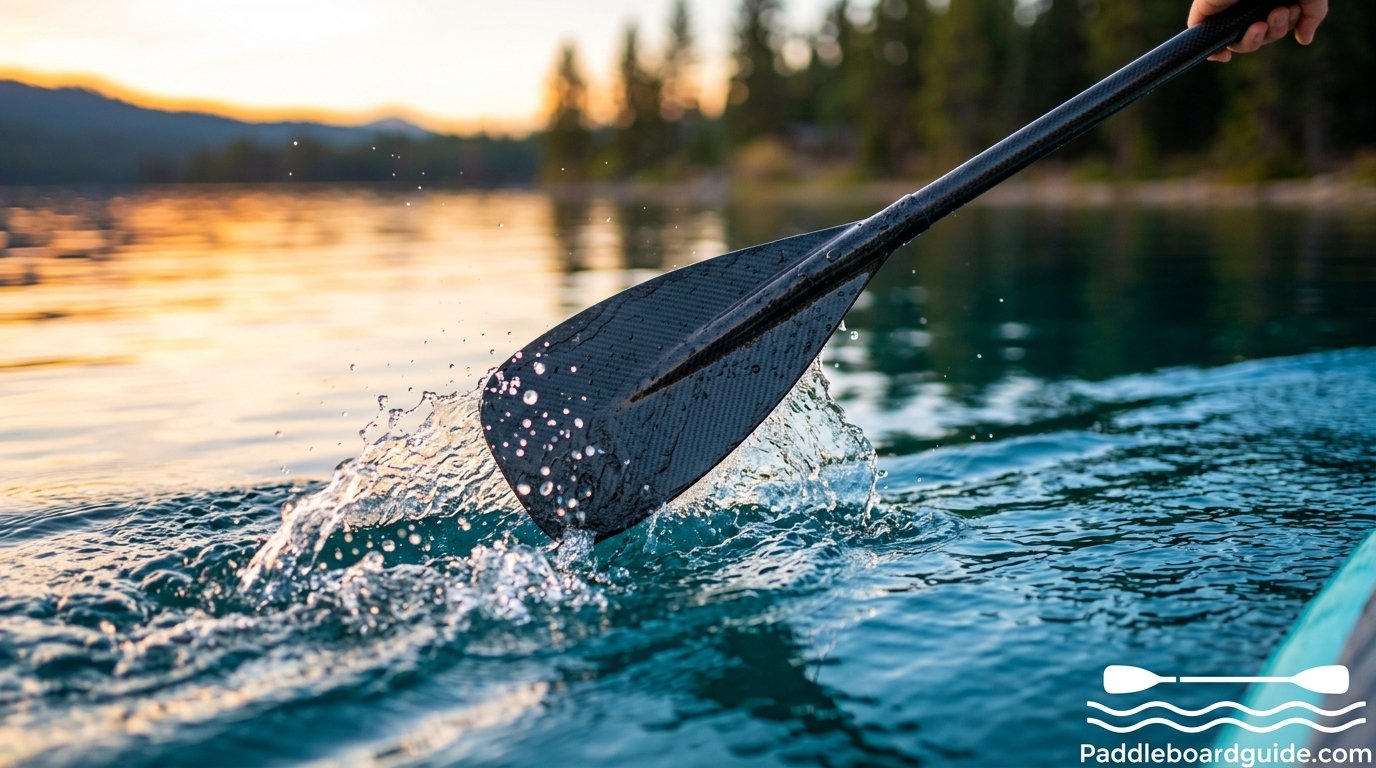
Most new paddlers spend weeks agonizing over which paddle board to buy, then grab whatever paddle happens to be bundled in the box. That’s a mistake. The paddle is the single piece of gear that touches your hands on every single stroke, and a poorly matched paddle can turn a relaxing afternoon on the water into a shoulder-aching slog. The right one, on the other hand, makes paddling feel almost effortless — you glide instead of fight.
A paddle affects three things directly: how efficiently you move through the water, how much fatigue you accumulate over a long session, and how much control you have when conditions get choppy. Weight, shaft material, blade shape, and length adjustability all play a role, and none of them are one-size-fits-all. A 6’2″ paddler cruising flatwater lakes has completely different needs than a 5’4″ paddler racing through chop, and both of them need something different than someone who mostly uses their board for yoga or fishing.
This guide breaks down seven of the most popular paddle options on the market today, compares them head-to-head, and walks through exactly how to pick the right one for your height, paddling style, and budget. If you’re still deciding between a hard board and an inflatable, it’s worth reading our comparison of SUP boards versus paddle boards first, since board type can influence which paddle style suits you best.

Shop SUP Paddles on Amazon
How We Chose & Evaluated These Paddles
Every paddle on this list was evaluated against the same core criteria that actually matter once you’re standing on the water rather than reading a spec sheet in a store aisle. We looked at build material and how it affects swing weight, adjustability range and how easily the collar locks hold under real paddling pressure, blade shape and surface area relative to intended use, packability for anyone who needs to travel or store gear in a small space, and overall value relative to comparable options in the same price tier.
We also paid close attention to customer feedback patterns across hundreds of verified purchases — specifically looking for recurring complaints about clamp slippage, blade flex under load, or shaft creaking, since those are the three most common failure points on budget and mid-range paddles. A paddle that looks great in a product photo but loosens after ten sessions isn’t a good recommendation, no matter how affordable it is.
Finally, we grouped these paddles by who they’re actually built for. Some are ideal all-around choices for beginners and casual weekend paddlers. Others lean toward lightweight touring and long-distance efficiency. A couple are aimed squarely at anyone paddling on a budget who still wants a dependable, no-drama paddle. Keep your own priorities in mind as you read through each review — the “best” paddle here depends entirely on how and where you plan to paddle.
1. LEDONNE SUP Paddle (4-Piece Adjustable)
The LEDONNE 4-piece adjustable paddle has become one of the best-selling stand up paddle paddles on Amazon for a simple reason: it does everything a beginner or casual paddler needs without asking them to spend touring-paddle money. The aluminum alloy shaft is sturdy enough to handle repeated flexing without developing the creaks that plague cheaper paddles, and the nylon-reinforced blade holds its shape stroke after stroke instead of fluttering or bending under load.
What really sets this paddle apart is the 4-piece breakdown design. Most paddles in this price range only split into two or three sections, which still leaves you with an awkward 4-foot-plus piece to fit into a car trunk or travel bag. The LEDONNE collapses down small enough to tuck into a backpack alongside an inflatable board, making it a genuinely travel-friendly option rather than one that’s merely “adjustable” on paper.
The adjustment collars use a reliable clip-lock mechanism rather than a twist-lock, which matters more than it sounds. Twist-lock paddles are notorious for slowly loosening mid-session as the shaft heats up in the sun; clip-locks stay put once you’ve set your length and don’t require a mid-paddle re-tightening ritual.
Pros
- Excellent value for the price point
- 4-piece breakdown packs unusually small
- Reliable clip-lock adjustment collars
- Comfortable ergonomic grip for long sessions
Cons
- Heavier than carbon or fiberglass options
- Blade can flutter slightly during aggressive sprint strokes

Check Price on Amazon
2. Niphean 3/4-Piece Kayak/SUP Paddle
The Niphean paddle earns its spot on this list by being one of the few genuinely dual-purpose options — it converts between a single-bladed SUP paddle and a two-bladed kayak paddle, which is a huge advantage for anyone who owns an inflatable that doubles as both a paddle board and a sit-on-top kayak. Instead of buying and storing two separate paddles, you carry one detachable unit that handles both.
Build-wise, the lightweight aluminum shaft keeps swing weight low, while the fiberglass blade adds a noticeable stiffness upgrade over pure nylon blades at a similar price. That stiffness translates directly into more forward propulsion per stroke rather than energy lost to blade flex.
The detachable design also makes this one of the easiest paddles on the list to store in tight apartments or boat lockers, since each section is short enough to lay flat in a duffel bag or under a car seat.
Pros
- Converts between SUP and kayak paddle configurations
- Fiberglass blade adds stiffness and efficiency
- Lightweight aluminum shaft
- Compact, detachable storage
Cons
- Conversion hardware adds a small learning curve
- Not ideal if you only ever need a single-blade SUP paddle

Check Price on Amazon
3. OCEANBROAD SUP Paddle
If you’re outfitting a family with multiple boards or you just want a dependable backup paddle without spending big, the OCEANBROAD is the clear budget standout. The adjustable aluminum alloy shaft covers a wide enough length range to fit most adult paddlers, and the reinforced nylon blade is noticeably sturdier than the ultra-cheap paddles that tend to crack after a season of use.
What OCEANBROAD gets right is not over-promising. This isn’t a paddle marketed as “carbon performance” that quietly ships an aluminum shaft — it’s an honest, no-frills aluminum paddle sold at an honest, no-frills price. For beginners who aren’t sure paddle boarding is going to become a regular hobby yet, that honesty is exactly what you want before committing more money to premium gear.
It’s also a smart choice as a spare paddle to keep in the car or garage for guests, since losing or damaging it isn’t a financial gut-punch the way it would be with a carbon fiber paddle.
Pros
- Lowest price point on this list
- Reinforced blade holds up well for the price
- Wide adjustable length range
- Great as a spare or guest paddle
Cons
- Noticeably heavier swing weight than carbon options
- Not built for serious distance touring

Check Price on Amazon
4. METER STAR 3-Piece Adjustable Paddle
The METER STAR paddle sits comfortably in the middle of the pack, and that’s precisely its appeal — it’s an all-rounder built for paddlers who don’t want to think too hard about which paddle to buy. The PU-coated aluminum alloy shaft adds a slightly better grip texture than bare aluminum, which matters once your hands are wet or sunscreen-slick halfway through a session.
Its 67″–83″ adjustable range covers nearly every adult height comfortably, making it a solid shared-household option if multiple family members of different heights will be using the same board and paddle. The 3-piece breakdown is a reasonable middle ground between the ultra-compact 4-piece designs and the simpler, sturdier 2-piece paddles — you get decent packability without adding an extra connection point that could eventually wear loose.
This is the paddle we’d recommend to someone who just wants something that works reliably, doesn’t require research into carbon layup or blade rake angle, and won’t need replacing after a single season of casual weekend use.
Pros
- Wide 67″–83″ adjustable range fits most households
- PU coating improves grip when wet
- Balanced 3-piece breakdown
- Dependable, no-fuss all-around performance
Cons
- Aluminum swing weight still noticeable on long paddles
- Not a standout in any single category

Check Price on Amazon
5. Abahub 3-Piece Carbon Fiber SUP Paddle
Anyone who’s paddled for more than an hour with a heavy aluminum shaft knows exactly why carbon fiber commands a price premium — it’s the difference between your forearms feeling fine after a five-mile paddle and feeling wrecked. The Abahub’s carbon shaft cuts a meaningful amount of weight off the swing compared to every aluminum paddle on this list, and that weight savings compounds stroke after stroke over a long session.
The plastic blade is a reasonable compromise to keep the price accessible — full carbon blades exist, but they cost significantly more and are arguably overkill for anyone who isn’t racing competitively. Pairing a carbon shaft with a durable plastic blade gives most of the performance benefit at a fraction of the cost of a full-carbon setup.
The included carry bag is a nice touch that’s easy to overlook until you actually need to transport the paddle without scratching a car interior or tangling it with other gear. Combined with the 67″–86″ adjustable range, this is an easy recommendation for anyone planning longer tours or fitness paddling sessions rather than short recreational floats.
Pros
- Noticeably lighter swing weight than aluminum paddles
- Reduces fatigue on long-distance sessions
- Wide 67″–86″ adjustable range
- Comes with a padded carry bag
Cons
- Plastic blade flexes slightly more than fiberglass under hard strokes
- Priced above aluminum-only competitors

Check Price on Amazon
6. Freein Fiberglass SUP Paddle
The Freein paddle stands out for one specific feature: its lever-lock adjustment system. Instead of the twist-and-click collars most paddles use, Freein’s lever mechanism snaps the shaft into place with a single motion, which is a genuine upgrade if you frequently paddle with multiple people who each need a different length, or if you’re adjusting length on the water rather than on land.
The fiberglass shaft-and-blade combination lands in a sweet spot between aluminum’s affordability and carbon’s premium weight savings. Fiberglass flexes slightly under load, which some paddlers actually prefer because it absorbs a bit of shock through the stroke rather than transferring every bit of resistance straight into your shoulders.
This is a strong pick for anyone paddling with kids or a partner who’ll be swapping the paddle back and forth throughout the day, since re-adjusting length takes seconds rather than the fumbling that twist-lock collars sometimes require with wet or cold hands.
Pros
- Fast, secure lever-lock length adjustment
- Fiberglass build balances weight and durability
- Comfortable slight flex absorbs stroke shock
- Great for shared use between multiple paddlers
Cons
- Lever mechanism has more exposed moving parts than clip collars
- Slightly heavier than comparable carbon shafts

Check Price on Amazon
7. 4-Piece Carbon/Aluminum Telescoping SUP Paddle
This hybrid paddle pairs a carbon-and-aluminum shaft blend with a telescoping 4-piece breakdown, aiming to split the difference between a full-carbon paddle’s weight savings and an all-aluminum paddle’s lower price tag. The result is a paddle that feels noticeably lighter in the hand than a pure aluminum shaft, without asking you to pay full carbon prices.
The telescoping design combined with the 4-piece breakdown makes this one of the most travel-friendly paddles on the list. It collapses down small enough for backpacking trips, airline travel with an inflatable board, or simply storing in a small apartment closet without needing a dedicated paddle rack.
The 67″–83″ adjustable range is standard for the category and covers the vast majority of adult heights, from shorter recreational paddlers to taller touring paddlers who prefer a slightly longer shaft for extra reach.
Pros
- Hybrid shaft trims weight versus pure aluminum
- Highly packable 4-piece telescoping design
- Standard 67″–83″ range fits most paddlers
- Good value between budget and premium tiers
Cons
- More connection points than a 2 or 3-piece paddle
- Not as light as a full carbon shaft

Check Price on Amazon
Side-by-Side Comparison
Here’s how all seven paddles stack up across the specs that matter most: shaft material, blade material, adjustable length, and breakdown style.
| Paddle | Shaft Material | Blade Material | Adjustable Range | Breakdown | Best For |
|---|---|---|---|---|---|
| LEDONNE | Aluminum alloy | Nylon | Standard adult range | 4-piece | Overall value |
| Niphean | Aluminum | Fiberglass | Standard adult range | 3/4-piece | SUP + kayak dual use |
| OCEANBROAD | Aluminum alloy | Reinforced nylon | Standard adult range | Adjustable | Budget / spare paddle |
| METER STAR | PU-coated aluminum | Composite | 67″–83″ | 3-piece | All-around household use |
| Abahub | Carbon fiber | Plastic | 67″–86″ | 3-piece | Distance & touring |
| Freein | Fiberglass | Fiberglass | Standard adult range | Lever-lock adjustable | Shared / multi-user paddling |
| 4-Piece Hybrid | Carbon/aluminum | Composite | 67″–83″ | 4-piece telescoping | Travel & packability |
Browse SUP Paddles on Amazon
How to Choose the Right Paddle Board Paddle
Length & Height
Paddle length is the single most important fit factor, and it’s tied directly to your height rather than your board length. A general rule of thumb is to add roughly 8–10 inches to your own height for flatwater cruising, and slightly less for surf-style paddling where a shorter paddle improves maneuverability. Every paddle on this list is adjustable specifically because paddle height needs vary not just by paddler, but by paddling style and stance on any given day.
Shaft Material
Shaft material is the biggest driver of both price and swing weight. Aluminum is the most affordable and most durable against impacts, but it’s also the heaviest option, which matters most on longer sessions. Fiberglass splits the difference, offering a lighter feel with a small amount of flex that some paddlers find easier on the joints. Carbon fiber is the lightest and stiffest option, transferring the most energy from your stroke directly into forward motion, but it commands a real price premium and can be more prone to cracking on a hard impact against rocks or a dock.
Blade Shape & Size
Larger blades move more water per stroke, which means more power but also more fatigue over a long session — this trade-off matters most for racing or sprinting. Smaller blades favor a higher stroke cadence with less per-stroke fatigue, which tends to suit recreational and touring paddlers better. If you’re unsure which style fits your board best, our breakdown of paddle board types explains how board shape and intended use typically pair with blade size.
Weight Capacity & Board Pairing
Your paddle doesn’t operate in isolation — it works alongside your board’s stability and your own body weight. If you’re paddling a heavily loaded board, whether that’s from your own body weight or gear, it’s worth checking how much weight a paddle board can hold before assuming a lighter carbon paddle will automatically make up for an overloaded, less stable board.
Number of Pieces
Two-piece paddles are the sturdiest since they have the fewest connection points to loosen over time, but they’re the least packable. Three and four-piece paddles trade a small amount of rigidity for dramatically better storage and travel convenience — a worthwhile trade for most inflatable SUP owners who are already used to packing gear down small.
Shop Inflatable SUP Boards
Paddle Anatomy: Blade, Shaft & Handle Explained
Before you can compare paddles intelligently, it helps to know the three parts that make one up and what each part actually does. A stand up paddle breaks down into the blade (the flat portion that enters the water and moves you forward), the shaft (the long pole connecting the blade to your top hand), and the handle or grip (the part your upper hand wraps around to drive the stroke). Every spec you’ll see on a product listing — length, material, weight, flex — describes how these three pieces are built and how they work together.
The blade itself has its own set of landmarks worth knowing. The power face is the side of the blade that pushes against the water during the stroke; it’s usually the concave or textured side. The back face is the smooth side that slices forward through the air on the recovery. The throat is the narrow transition point where the blade meets the shaft, and the tip is the bottom edge that enters the water first. Manufacturers spend a surprising amount of engineering effort on the throat area specifically, since it’s the point of greatest stress on every single stroke.
Where the blade meets the shaft, most paddles include a slight forward lean called the blade angle, along with raised ridges on the power face called dihedral. Both of these features exist to solve the same problem: keeping the blade tracking straight through the water instead of twisting, fluttering, or wobbling under load. We cover both in detail further down this guide, since they’re two of the most misunderstood specs on any paddle listing.
The shaft is more than just a straight tube. Diameter, wall thickness, and stiffness all affect how much of your stroke energy actually reaches the blade versus how much gets absorbed as flex. A shaft that flexes too much under a hard stroke is sometimes described as feeling “noodly,” while an overly stiff shaft can feel harsh on the joints, especially on rocky, choppy water. Breakdown paddles add ferrule joints — the connection points where sections slide and lock together — and every additional ferrule is one more spot where play, rattle, or eventual looseness can develop over years of use.
Finally, the handle is the part paddlers tend to underrate until they’ve spent a full day with a poorly shaped one. A handle that digs into your palm or forces an awkward wrist angle will announce itself with blisters and hand fatigue long before your shoulders or core start to tire. The next section breaks down the two dominant handle styles in detail, since this single component quietly determines a lot of your comfort on the water.
T-Grip vs. Palm Grip: Which Handle Style Fits Your Hand?
Nearly every SUP paddle on the market ships with one of two handle styles: the palm grip or the T-grip. They look similar from a distance, but the way each one transfers force from your hand to the blade is genuinely different, and picking the wrong one for your paddling style can leave you fighting the paddle instead of working with it.
Palm Grip
A palm grip is a rounded, roughly triangular handle shaped to cradle the inside of your palm, with your fingers curling naturally underneath the front lip. Most recreational, touring, and beginner-oriented paddles use a palm grip because it’s comfortable across long sessions, forgiving of imperfect hand placement, and easy for almost any hand size to hold securely without needing to grip too tightly. The trade-off is a slightly less precise feel for the exact rotational position of the blade, which matters more in racing or technical whitewater situations than it does for cruising a calm lake.
T-Grip
A T-grip, as the name suggests, forms a distinct T-shape — a short horizontal bar sitting on top of the shaft. Racers, surfers, and whitewater paddlers tend to prefer T-grips because the flat top gives your palm a clear, unmistakable reference point for exactly where the blade is angled at any moment during the stroke, even without looking down at it. That precision comes at a small cost: gripping a T-grip too tightly over a long session is a common cause of blister formation on the fleshy part of the palm, so paddlers who choose this style usually need to consciously relax their grip between strokes.
Which One Should You Choose?
If most of your paddling is recreational cruising, fitness paddling, paddle board yoga, or fishing, a palm grip will almost always feel more comfortable over a multi-hour session, and it’s what you’ll find on the majority of paddles reviewed in this guide. If you’re paddling competitively, surfing waves where split-second blade control matters, or running whitewater where precise bracing strokes are non-negotiable, a T-grip’s extra feedback is worth the slightly steeper learning curve. Some higher-end touring and racing paddles also offer interchangeable grips, letting serious paddlers switch styles without buying an entirely new paddle.
Beyond the basic shape, pay attention to surface texture too. Smooth, glossy grips look nice in product photography but can become genuinely slippery once your hands are wet or coated in sunscreen. A lightly textured or rubberized grip surface — something several paddles on this list include — makes a bigger real-world difference to control than most buyers expect before their first session.
Blade Shape Explained: High-Aspect, Low-Aspect & Rectangular
Blade shape is arguably the single most misunderstood spec on any paddle listing, yet it has a bigger effect on how a stroke actually feels than shaft material does. Blade shapes fall into three broad families, and each one trades power for cadence in a slightly different way.
High-Aspect Blades
A high-aspect blade is long and narrow, with most of its surface area concentrated close to the shaft rather than spread out toward the tip. Because the blade buries fully in the water almost immediately at the start of the stroke, high-aspect designs favor a quick, high-cadence stroke rhythm that’s efficient for racing, fitness paddling, and long-distance touring where conserving energy over many miles matters more than raw per-stroke power. Most premium carbon touring and racing paddles use a high-aspect shape for exactly this reason.
Low-Aspect Blades
A low-aspect blade is shorter and noticeably wider, often described as a teardrop shape. The extra surface area near the tip delivers more raw power per stroke and a more forgiving, slower cadence, which makes low-aspect blades a popular choice for surf SUP, whitewater paddling, and anyone who prefers fewer, stronger strokes over many quick ones. The trade-off is that a wider blade catches more water resistance on the recovery and tires the shoulders faster over a long flatwater session.
Rectangular Blades
Rectangular blades sit between the two extremes and are extremely common on beginner and mid-range recreational paddles, including several models reviewed in this guide. Their uniform width produces a gentle, predictable, forgiving stroke that’s easy to learn on, which is exactly why manufacturers default to this shape for paddles aimed at newcomers rather than competitive paddlers chasing marginal efficiency gains.
For the vast majority of recreational and fitness paddlers, the practical difference between these shapes is smaller than marketing copy suggests — technique, paddle length, and stroke rate matter more day-to-day than blade geometry alone. But if you’re upgrading from a beginner paddle and know your paddling style has settled into either long-distance touring or short, powerful surf sessions, matching blade shape to that style is one of the more meaningful upgrades you can make.
Blade Angle, Offset & Dihedral: What These Specs Actually Mean
Scroll through enough paddle listings and you’ll eventually run into three specs that sound technical but are worth understanding: blade angle (sometimes called offset), dihedral, and blade curve. None of these show up in the seven paddles compared above in a way that changes our recommendations, but they matter enough on premium paddles that it’s worth knowing what you’re paying for.
Blade Angle (Offset)
Blade angle describes how many degrees the blade tilts forward relative to the shaft, typically somewhere between 7 and 12 degrees on most SUP paddles. A forward-angled blade is designed to be fully vertical and buried in the water at the moment of the catch — the point in the stroke where the blade first grips the water — which is the most efficient position for transferring power forward rather than lifting water upward. A completely straight, unangled blade has to compensate with a more awkward wrist and body position to achieve the same vertical catch, which is more tiring over a long session even if it’s not obvious on a showroom floor.
Dihedral
Dihedral refers to a raised ridge, or sometimes a pair of ridges, running down the center of the blade’s power face. Its job is to split water flow evenly toward both edges of the blade as it moves through the stroke, which reduces the side-to-side wobble paddlers call “flutter.” A single dihedral splits water in one direction; a double dihedral creates a shallow pocket down the centerline that increases both hold and stability, which is why you’ll see double-dihedral designs marketed on higher-end touring and racing blades specifically.
Blade Curve
Blade curve describes how much the blade bows from the throat down to the tip rather than staying perfectly flat. A gentle curve helps the blade grip the water cleanly at the catch, but too much curve can cause splashing and turbulence as the blade exits the water at the end of the stroke. Most recreational paddles use a conservative, mild curve specifically to avoid this trade-off, which is part of why cheaper paddles aren’t necessarily worse performers for casual use — they’re simply optimized for forgiveness rather than outright efficiency.
None of these specs will make or break a purchase for a casual weekend paddler. But if you’ve outgrown a beginner paddle and started noticing blade flutter during harder strokes or found yourself wanting more efficient forward glide, these are the specs to research on your next, more performance-oriented purchase.
Shaft Diameter: Standard vs. Slim Fit
Shaft diameter is a spec that rarely appears on budget paddle listings but makes a real difference in hand comfort, especially for paddlers with smaller hands or anyone dealing with early-stage grip fatigue or hand strain. Most SUP paddle shafts fall into one of two rough categories: a standard diameter around 29mm, and a slim-fit diameter closer to 26mm.
A standard 29mm shaft is the more common choice and tends to feel stiffer and more confidence-inspiring under a hard stroke, since there’s simply more material resisting flex. It suits paddlers with average to larger hand sizes and anyone who prioritizes stroke power over all-day comfort. A slim 26mm shaft, by contrast, is noticeably easier to close your fingers fully around, which reduces forearm and grip fatigue on long sessions — a detail that matters more than it sounds for anyone paddling multiple hours at a time or dealing with smaller hands, whether that’s a shorter adult, a teenager, or a partner sharing gear with someone larger.
None of the seven paddles compared in this guide advertise a slim-fit shaft specifically, which is typical for the mid-range aluminum, fiberglass, and hybrid category — slim shafts show up almost exclusively on premium carbon touring and racing paddles where shaving every gram and every bit of hand fatigue is part of the pitch. If shaft diameter comfort is a priority for you specifically, it’s worth checking the fine print on any paddle before buying, since manufacturers don’t always list it prominently even when it’s a genuine differentiator.
Fixed-Length vs. Adjustable Paddles
Every paddle reviewed in this guide is adjustable, and for good reason — adjustability is simply the more practical choice for the overwhelming majority of buyers. But it’s worth understanding what you’re trading away, since fixed-length paddles still dominate the competitive and premium touring segment of the market.
The Case for Adjustable Paddles
An adjustable paddle lets you dial in the exact length for your height and paddling stance, share one paddle across multiple household members of different heights, and switch lengths on the fly based on conditions — a slightly shorter setting for surf-style maneuvering, a slightly longer one for flatwater cruising. For anyone who hasn’t fully settled into a single paddling discipline yet, or who’s buying one paddle to serve an entire family, adjustability is close to a non-negotiable feature.
The Case for Fixed-Length Paddles
A fixed-length paddle has no collar, lever, or clip mechanism at all — it’s a single continuous shaft cut to a specific length. That simplicity removes every possible point of failure: no collar to loosen, no clip to wear out, no telescoping joint to develop play over years of use. Fixed paddles are also marginally lighter than an equivalent adjustable paddle, since they don’t need the extra hardware, and many serious racers and long-distance tourers who’ve already dialed in their exact preferred length choose a fixed paddle specifically to shave that last bit of weight and eliminate any flex at the joint.
For nearly everyone reading a buyer’s guide rather than shopping for competition gear, adjustable is the right call, and it’s why every paddle in our comparison table above uses some form of adjustable collar or lever system. Fixed-length paddles are worth considering only once you’ve paddled enough to know your exact ideal length and you’re optimizing for competitive performance over convenience.
How to Properly Size Your Paddle: Height Formulas & the Shaka Method
The buying guide above covers the basic height-plus-inches formula, but there’s a second, more hands-on method worth knowing, especially once you already own a paddle and want to double-check your current length is actually dialed in correctly.
The Height Formula
As a starting point, add roughly 8 to 10 inches to your height for flatwater touring and recreational cruising, 6 to 8 inches for surf-style paddling where maneuverability matters more than reach, and closer to 10 to 12 inches if you’re paddling a wider, more stable board where you’re standing slightly taller relative to the water. This formula gets most paddlers into a reasonable starting range, which is exactly why it’s the most commonly cited method across paddle manufacturer sites.
The Shaka Method
The more hands-on approach, often called the shaka method, involves standing upright with one arm extended straight overhead, hand in a loose “shaka” or “hang loose” shape — thumb and pinky extended, middle fingers curled in. The ideal paddle handle should reach to roughly the width of that shaka shape above your extended hand, which typically lands within an inch or two of the height-formula result but accounts for individual arm-length and torso proportions the height formula alone can’t capture. This is a genuinely useful sanity check if you’re between two length settings on an adjustable paddle and not sure which one to lock in.
Adjusting for Paddling Stance
Neither formula is the final word, because your actual paddling stance changes the ideal length in practice. A paddler who stands with a wider stance and a slight knee bend, which is the recommended stable stance for most flatwater and touring paddling, typically wants a paddle on the slightly longer end of their calculated range. A paddler who surfs or maneuvers aggressively, standing more upright with feet closer together, usually prefers the shorter end. This is exactly why adjustable paddles remain the practical default — even paddlers who’ve calculated their “ideal” length often end up shifting it half an inch to an inch in either direction once they’ve spent real time on the water.
Correct Paddling Technique & Common Beginner Mistakes
Even the best paddle on this list will feel underwhelming if it’s being used with poor technique, and conversely, a modest budget paddle feels dramatically better once technique improves. A handful of common mistakes account for the vast majority of the fatigue and inefficiency new paddlers experience.
Paddling With Arms Instead of Core
The single most common beginner mistake is powering the stroke entirely from the arms and shoulders, which tires the upper body within minutes and produces a weak, short stroke. Efficient paddling comes from rotating the torso and engaging the core with each stroke, using the arms mainly to hold the paddle’s position rather than to generate power. Think of the stroke as pulling your board past a planted paddle, rather than pulling the paddle back through the water — the mental shift alone often improves technique immediately.
Gripping the Blade Backwards
It’s a surprisingly common mistake, especially with paddles that have a slight blade angle: holding the paddle with the blade angled toward you instead of away from you. The angled face should always tilt forward, away from your body, so the blade is closest to vertical at the moment it catches the water. Paddling with the angle reversed dramatically reduces efficiency and is one of the most common reasons beginners describe a paddle as feeling “weak” when the real issue is orientation, not the paddle itself.
Gripping Too Tightly
New paddlers often white-knuckle both the top handle and the shaft throughout the entire stroke, which fatigues the forearms far faster than necessary and is a leading cause of blisters, particularly with T-grip handles. A relaxed grip that only tightens briefly during the power phase of each stroke conserves noticeably more energy over a multi-hour session.
Paddling Only on One Side
Beginners frequently favor their dominant side and end up zig-zagging across the water instead of tracking a straight line, then over-correct with wide, inefficient steering strokes. Alternating sides every three to five strokes, or learning a simple J-stroke to correct your line without switching sides, keeps the board tracking straighter with far less wasted effort.
Standing Too Far Back or Forward on the Board
Paddle efficiency is also affected by board trim. Standing too far back digs the tail into the water and creates drag; standing too far forward can cause the nose to plow. Most boards mark a rough center standing position near the carry handle — that’s usually the best starting reference point before adjusting slightly based on your own weight distribution and the board’s specific length and volume.
Choosing a Paddle by Paddling Discipline
The seven paddles compared in this guide are all built for general recreational and touring use, which covers the vast majority of buyers. But if you already know your paddling has settled into a more specific discipline, it’s worth understanding how paddle specs shift for each one.
Touring & Fitness Paddling
Touring paddlers prioritize efficiency over many miles, which typically means a high-aspect blade, a lighter carbon or fiberglass shaft, and a length on the longer end of the calculated range to maximize reach per stroke. The Abahub carbon paddle reviewed above leans closest to this profile among our seven picks.
Racing
Competitive racers push every spec toward minimizing weight and maximizing catch efficiency: fixed-length carbon shafts, slim-diameter grips, high-aspect blades with aggressive offset angles, and often a T-grip for precise blade-angle feedback. Racing paddles sit well outside the price and use case of a typical recreational buyer, which is why none of the seven paddles above are marketed specifically for competition.
Surfing
SUP surfers want the opposite profile from touring paddlers: a shorter length for quick, tight maneuvering in waves, a low-aspect or teardrop blade for immediate power on short, punchy strokes, and often a T-grip for the precise control needed during quick direction changes and bracing strokes.
Whitewater
Whitewater SUP paddling demands a shorter, more durable paddle with a smaller, low-aspect blade for quick, powerful strokes and bracing, plus a T-grip for control. Durability matters more than weight savings here, since impacts against rocks are a routine hazard rather than an occasional risk.
Yoga, Fitness Classes & Fishing
For paddle board yoga, low-impact fitness classes, or fishing trips where the paddle spends as much time strapped to the board as it does in the water, none of the performance specs above matter much. Durability, an easy-to-adjust length for sharing between users, and a comfortable palm grip for occasional light paddling are the priorities — which is exactly the profile the budget and all-around paddles reviewed earlier in this guide are built for.
Kayak Conversion
Anyone who owns an inflatable that doubles as both a stand up paddle board and a sit-on-top kayak should prioritize a convertible design like the Niphean paddle reviewed above, which splits into a two-bladed kayak configuration rather than requiring a completely separate kayak paddle purchase and separate storage.
Wood Paddles: Where They Fit In
Wood is a less common but still available paddle material worth a brief mention, since it shows up occasionally in searches even though none of the seven paddles compared in this guide use it. Wood paddles, typically built from laminated strips of cedar, ash, or bamboo, have a genuinely attractive natural look and a warm, classic feel that appeals to paddlers who value aesthetics and craftsmanship as much as raw performance.
The trade-offs are real, though. Wood paddles tend to be heavier than aluminum and significantly heavier than fiberglass or carbon, which matters over a long session. They also require more maintenance than synthetic materials — periodic resealing or revarnishing to prevent water intrusion and warping — and they’re generally priced at a premium closer to carbon fiber despite not matching carbon’s weight savings. For most buyers, wood is a style and craftsmanship choice rather than a performance one, and it tends to appeal most to paddlers who display their gear as much as they use it, or who specifically want a paddle that doesn’t look like everyone else’s on a crowded beach launch.
Paddle Weight Comparison: Why Grams Matter More Than You’d Think
Paddle weight rarely gets top billing on a product listing, but it’s one of the specs with the most cumulative impact on a long session. A difference of even 200 to 300 grams between two paddles sounds trivial in isolation, but multiplied across hundreds of strokes on a multi-hour paddle, that difference adds up to real, measurable fatigue in your shoulders and forearms by the end of the day.
| Shaft Material | Typical Weight Range | Feel Over a Long Session |
|---|---|---|
| Aluminum alloy | Heaviest of the common materials | Noticeable fatigue builds after 60–90 minutes of continuous paddling |
| Fiberglass | Moderate, meaningfully lighter than aluminum | Comfortable for multi-hour sessions with occasional breaks |
| Carbon/aluminum hybrid | Moderate to light, depending on the carbon ratio | Reduced fatigue versus pure aluminum, without full carbon pricing |
| Full carbon fiber | Lightest common option | Minimal fatigue impact even across several hours of continuous paddling |
Weight savings matter most in two specific scenarios: long-distance touring, where the cumulative stroke count is high, and repeated day-after-day use, where cumulative fatigue across multiple sessions compounds. For a casual paddler who’s out for thirty to forty-five minutes at a time a few weekends a month, the weight difference between an aluminum paddle like the OCEANBROAD and a carbon paddle like the Abahub is real but not decisive. For anyone paddling several hours at a stretch or several days in a row, it’s one of the most worthwhile upgrades available, often mattering more than blade shape or grip style.
Blade weight matters too, and it’s a separate consideration from shaft weight. A heavier blade increases what paddlers sometimes call “swing weight” — the effort required to move the paddle from the recovery phase back into the next stroke, distinct from the effort of the stroke itself. This is part of why several paddles on this list pair a lighter shaft material with a plastic or nylon blade rather than going full carbon on both ends: it’s a deliberate trade-off to keep overall swing weight and price reasonable without sacrificing shaft-side comfort.
What You Get at Each Price Tier
Paddle pricing correlates fairly predictably with material and features, and understanding what changes at each tier makes it much easier to avoid both overpaying for features you won’t use and underbuying a paddle that won’t hold up to how often you actually paddle.
| Price Tier | Typical Build | Best Suited For |
|---|---|---|
| Budget | Aluminum shaft, nylon or plastic blade, twist-lock or clip-lock collar | First-time buyers, spare/guest paddles, occasional recreational use |
| Mid-range | Aluminum, fiberglass, or hybrid shaft, fiberglass or composite blade, reinforced collar | Regular weekend paddlers, shared household paddles, casual touring |
| Premium | Full carbon shaft, fiberglass or carbon blade, slim-diameter grip options, fixed or high-end adjustable collar | Frequent paddlers, long-distance touring, fitness-focused paddling |
| Competition | Full carbon, fixed length, high-aspect blade, aggressive offset angle | Racing, competitive training, paddlers who’ve already dialed in exact preferred length |
Most buyers reading a general comparison guide like this one fall squarely into the budget or mid-range tier, which is exactly why six of the seven paddles reviewed above use aluminum, fiberglass, or a hybrid shaft rather than full carbon. Jumping straight to a premium or competition-tier paddle before you know how often you’ll actually use it is one of the more common overspending mistakes new paddlers make — it’s usually smarter to start mid-range, put a season of real use on the paddle, and then upgrade with a clear sense of exactly which spec (weight, blade shape, grip style) would improve your specific paddling the most.
Buying a Paddle for Kids or Multiple Skill Levels
Households outfitting more than one paddler, especially with kids or a mix of skill levels, have slightly different priorities than a single buyer shopping for themselves. Adjustability becomes even more important, since a paddle that needs to fit a child one weekend and an adult the next needs a length range wide enough to cover both comfortably rather than just adequately.
For younger or smaller paddlers, look specifically for a paddle whose shortest adjustable setting comes in well under the wide adult-range paddles reviewed in this guide, since even the most compact setting on a paddle built primarily for adults can be too long for a smaller child to control comfortably. A slimmer shaft diameter also matters more here than it does for an adult buyer, since a child’s hand may struggle to close fully around a standard 29mm shaft.
Durability should generally be weighted above weight savings for a paddle that’s going to see rougher handling, more dock and rock contact, and less careful storage than a paddle used exclusively by an experienced adult paddler. This is exactly the scenario where a budget aluminum paddle like the OCEANBROAD or LEDONNE reviewed above tends to outperform a premium carbon paddle in practical terms — not because it’s a better paddle in isolation, but because it’s a far less expensive mistake if it gets dropped on a dock, left out in the sun, or knocked against a rock by a less experienced paddler still learning proper technique.
Glossary of Paddle Terms
| Term | What It Means |
|---|---|
| Blade | The flat portion of the paddle that enters the water and generates forward propulsion |
| Shaft | The long pole section connecting the handle to the blade |
| Handle/Grip | The top portion of the paddle gripped by the upper hand; typically a T-grip or palm grip |
| Power Face | The side of the blade that pushes against the water during the power phase of the stroke |
| Throat | The narrow transition point where the blade meets the shaft |
| Blade Angle / Offset | The forward tilt of the blade relative to the shaft, typically 7–12 degrees |
| Dihedral | Raised ridge(s) on the power face that direct water flow and reduce flutter |
| High-Aspect Blade | A long, narrow blade shape favoring a quick, efficient, high-cadence stroke |
| Low-Aspect Blade | A short, wide (teardrop) blade shape favoring fewer, more powerful strokes |
| Swing Weight | The effort required to move the paddle through the recovery phase between strokes, distinct from stroke effort itself |
| Ferrule | The connection joint where sections of a breakdown paddle slide and lock together |
| Catch | The moment in the stroke where the blade first grips the water |
| Flutter | Side-to-side wobble of the blade under load, usually reduced by dihedral ridges |
How to Test a Paddle Before Committing to a Purchase
Buying a paddle online without ever holding one is completely normal and works out fine for the vast majority of buyers, but if you have the option to test a paddle in person first — through a local paddle shop, a board rental outfit, or a friend’s gear — a few simple checks can save you from an expensive mismatch.
Start by checking the grip in a dry setting before you’re even near water. Wrap your top hand around the handle and your lower hand around the shaft at roughly your calculated length, and hold that position for thirty seconds. A handle or shaft diameter that starts to feel uncomfortable that quickly on dry land will feel considerably worse after an hour of real strokes. Next, check the collar or lever mechanism by extending and locking the paddle several times in a row, then apply firm downward pressure on the handle while the blade is braced against the ground. Any perceptible slip or give at the joint is a preview of what will happen under real paddling load, particularly on a hard sprint stroke.
If you do get the paddle on the water, pay attention to blade flutter during a few hard, fast strokes rather than gentle cruising strokes — flutter is far more noticeable and far more fatiguing at higher effort, and it’s the single most common complaint that shows up in verified customer reviews for budget paddles. Finally, notice how the paddle feels during the recovery phase, when you’re lifting it out of the water and moving it forward for the next stroke — this is where swing weight becomes obvious, often more obvious than it is during the power phase of the stroke itself.
Traveling With Your Paddle: Airline Rules & Packing Tips
Anyone planning to fly with an inflatable board and paddle combo should know that most airlines treat a breakdown paddle as sporting equipment rather than standard checked luggage, which sometimes means a separate sporting-equipment fee even when the total weight and size fall within normal baggage limits. Policies vary meaningfully by airline and even by route, so it’s worth checking directly with your specific carrier before a trip rather than assuming a paddle will simply count as part of your regular checked bag.
This is exactly where the piece count discussed earlier in this guide becomes a genuinely practical concern rather than just a spec-sheet number. A 4-piece paddle like the LEDONNE or the hybrid telescoping paddle reviewed above breaks down small enough to fit diagonally inside a standard checked duffel or a dedicated board travel bag alongside a rolled inflatable, while a 2 or 3-piece paddle often needs its own separate hard case or a board bag with a dedicated paddle sleeve built in.
A few practical packing habits go a long way toward protecting your paddle on the way to the water. Wrap the blade in a towel or the included carry bag before it goes anywhere near a checked bag’s other contents, since blade tips — especially fiberglass and carbon ones — are more prone to chipping from impact than from flex. Pack the paddle sections so the ferrule joints aren’t bearing the weight of other gear stacked on top of them, and if you’re flying rather than driving, loosen any twist-lock collars slightly before travel so temperature and pressure changes in the cargo hold don’t cause them to seize.
Does Hand Dominance Affect Which Paddle to Buy?
A question that comes up often from newer paddlers: does being left-handed or right-handed change which paddle to buy, the way it does for something like golf clubs? For the vast majority of SUP paddles, including every model reviewed in this guide, the answer is no. Because paddlers switch sides regularly throughout a session — alternating strokes to keep the board tracking straight rather than committing to one side the way a kayaker with a feathered paddle does — a standard SUP paddle works identically well regardless of hand dominance.
Where hand dominance can matter slightly is grip comfort during extended single-side paddling, such as when fighting a crosswind or compensating for an injury on the opposite side. In those situations, a paddler’s dominant hand naturally ends up doing more of the fine motor control at the top handle, which is one more reason a comfortable, well-textured grip matters more than most buyers initially assume when comparing specs on a listing page.
Buying a Used or Secondhand Paddle: What to Check
A secondhand paddle can be a smart way to get into a higher material tier than your budget would otherwise allow, particularly for carbon fiber paddles that carry a steep new-condition premium. Before buying used, inspect the shaft closely for hairline cracks, especially near the ferrule joints, since this is the highest-stress area on any breakdown paddle and the most common failure point on an older unit. Flex the blade gently by hand and compare it side to side; uneven flex or visible delamination — where layers of fiberglass or carbon separate slightly — is a sign of fatigue that will only get worse with continued use.
Test every adjustment collar or lever through a full range of motion multiple times, checking specifically for slippage under pressure the way you would with a new paddle, since worn collar mechanisms are one of the most common reasons paddles get resold in the first place. Finally, ask about storage history if possible. A paddle that spent years in direct sun or was regularly stored wet inside a car trunk will show accelerated material degradation compared to one that was rinsed and stored properly, even if both are the same age and the same model.
Materials Explained: Aluminum vs. Fiberglass vs. Carbon
It’s worth understanding how these shafts are actually manufactured, since it explains a lot about why prices vary so widely between paddles that otherwise look nearly identical in product photos. Aluminum shafts are extruded from a single tube, which keeps manufacturing costs low and makes the shaft extremely resistant to cracking, though it adds weight. Fiberglass shafts are built from woven fiberglass cloth set in resin, giving manufacturers more control over flex characteristics at a moderate cost increase. Carbon fiber shafts use the same woven-and-resin process but with carbon strands instead of glass, resulting in a stiffer, lighter shaft at a meaningfully higher manufacturing cost.
This same materials logic extends to the boards these paddles are used with — if you’re curious how the boards themselves are constructed, our guide on how paddle boards are made walks through the manufacturing side of inflatable and hard boards in more detail.
Blades follow similar logic: nylon and plastic blades are injection-molded and inexpensive to produce, fiberglass blades are laid up in molds for added stiffness, and full carbon blades are the most labor-intensive and expensive to manufacture, which is why they’re rarely bundled with anything but premium racing paddles.
Care & Maintenance Tips for Your Paddle
Rinsing your paddle with fresh water after every session, especially after saltwater use, is the single most effective way to extend its lifespan. Salt crystals that dry inside adjustment collars are the leading cause of stuck or seized locking mechanisms, and a quick freshwater rinse takes less than a minute.
Store your paddle out of direct sunlight when it’s not in use. UV exposure degrades nylon and plastic blades over time, making them more brittle and prone to cracking, and it can also fade or weaken fiberglass and carbon resin over years of storage.
Before every trip, check that your adjustment collar or lever is fully engaged and that the shaft doesn’t rotate or slide under moderate pressure. This takes ten seconds and prevents the frustrating experience of your paddle length shifting mid-stroke. It’s also worth reviewing general paddle board safety requirements before heading out, since paddle failure combined with being far from shore is a preventable but real risk.
Finally, avoid using your paddle blade to push off rocks, docks, or the lake bottom. It’s a tempting shortcut, but it’s one of the fastest ways to chip or crack a blade — use your hands or feet for pushing off whenever possible instead.
Pairing Your Paddle With the Right Board
A great paddle still performs best when it’s matched to a board suited to your skill level and paddling goals. If you’re shopping for a new board alongside a paddle upgrade, a few boards consistently come up in our reviews as strong all-around choices. The iRocker Nautical is a popular touring-oriented pick worth reading about in our iRocker Nautical review, while the standard iRocker paddle board review covers their more general all-around lineup.
For paddlers who want a well-known name with strong stability, the BOTE inflatable paddle board review breaks down one of the more premium options on the market, while the Retrospec Weekender review covers a more budget-conscious alternative that pairs nicely with any of the aluminum paddles above.
If you’re still comparing boards broadly rather than a specific model, our roundup of the best inflatable paddle boards is a good next stop before finalizing your paddle purchase.
Frequently Asked Questions
What length paddle do I need for my height?
As a starting point, add about 8–10 inches to your height for flatwater paddling. Most adjustable paddles, including every model reviewed above, cover a wide enough range that you can fine-tune from there based on your paddling stance and style.
Is carbon fiber worth the extra cost over aluminum?
If you paddle regularly or plan longer sessions, yes — the reduced swing weight noticeably cuts fatigue over time. For occasional recreational use, an aluminum paddle like the LEDONNE or OCEANBROAD is a perfectly capable and more budget-friendly choice.
Do paddle board paddles float if I drop them?
Most modern SUP paddles are designed to float, though buoyancy varies by material and blade design. For a full breakdown of which paddle types float best and what to do if yours doesn’t, see our dedicated guide on whether paddle board paddles float.
Can I use a kayak paddle on a stand up paddle board?
Not directly — a standard kayak paddle is designed for a seated, two-bladed stroke. Dual-purpose paddles like the Niphean model reviewed above are specifically built to convert between kayak and SUP configurations, which is the correct way to get both functions from one paddle.
How do I know what adjustment range I need?
Check the paddle’s listed range against your calculated ideal length from the height formula above. Most paddles on this list cover roughly 67″–86″, which comfortably fits the vast majority of adult paddlers regardless of board type.
What’s the difference between a 3-piece and 4-piece paddle?
A 4-piece paddle breaks down into smaller sections, making it more travel-friendly and easier to pack into a backpack or small bag, at the cost of one extra connection point that could theoretically loosen over time. A 3-piece paddle is a middle ground between packability and structural simplicity.
How long do inflatable paddle boards typically last?
With proper care, a quality inflatable board can last several years of regular use. For a detailed look at lifespan factors and how to extend yours, read our guide on how long inflatable paddle boards last.
Should beginners buy a carbon paddle right away?
Not necessarily. Beginners often benefit more from spending their budget on board quality first and starting with a dependable aluminum paddle like the METER STAR or OCEANBROAD, then upgrading to carbon once they know how often they’ll actually be paddling.
Can one paddle work for multiple family members of different heights?
Yes, as long as it has a wide adjustable range and a fast, reliable locking mechanism. The Freein’s lever-lock system and the METER STAR’s 67″–83″ range are both strong choices for households sharing one paddle among different-height users.
How do I properly maintain and store my paddle?
Rinse it with fresh water after every use, dry it before storing, keep it out of direct sunlight for long-term storage, and avoid using the blade to push off rocks or docks. See our full maintenance section above for more detail.
What’s the correct paddling technique for beginners?
Proper technique matters as much as paddle choice. Our step-by-step guide on how to paddle board covers stance, stroke mechanics, and turning technique for new paddlers.
Do I need a leash and PFD in addition to a paddle?
In most regions, yes — a leash and a personal flotation device are considered standard safety equipment alongside your paddle. Check our full rundown of paddle board safety requirements for what’s required in your area.
Is a heavier paddle always worse than a lighter one?
Not necessarily. A heavier aluminum paddle is often more impact-resistant and more affordable, which makes it a smarter choice for beginners, kids, or spare paddles that will see rougher handling. Weight savings matter most for paddlers doing long, frequent sessions where cumulative fatigue is the primary concern.
What’s the difference between a T-grip and a palm grip?
A palm grip is a rounded handle that cradles the palm and suits long, comfortable recreational sessions. A T-grip gives more precise feedback on blade angle, which racers, surfers, and whitewater paddlers tend to prefer, though it can cause blisters if gripped too tightly.
Does blade shape really make a noticeable difference for casual paddling?
For most recreational paddlers, blade shape matters less than paddle length and technique. High-aspect blades favor efficient, high-cadence touring strokes, while low-aspect blades favor fewer, more powerful strokes better suited to surf or whitewater paddling.
Can I fly with a paddle board paddle in checked luggage?
Usually yes, though airlines often classify it as sporting equipment, which can mean a separate fee even within normal size and weight limits. A compact 3 or 4-piece breakdown paddle is easier to pack safely than a 2-piece paddle when traveling.
Should I buy a used carbon fiber paddle to save money?
It can be a smart way to access carbon’s weight savings at a lower price, as long as you inspect the shaft and ferrule joints closely for hairline cracks and check every adjustment collar for slippage before buying.
What does “swing weight” mean and why does it matter?
Swing weight describes how heavy a paddle feels during the recovery phase of the stroke, when you lift the blade out of the water and move it forward again, as distinct from how heavy the paddle feels during the actual power phase. A lighter blade combined with a slightly heavier shaft can still feel fatiguing if most of that weight sits far from your hands, which is why overall balance matters as much as total weight on a spec sheet.
Final Verdict
If you want the safest all-around pick, the LEDONNE 4-Piece Adjustable Paddle delivers the best mix of durability, value, and packability for the vast majority of paddlers. If distance and long sessions are your priority, the Abahub Carbon Fiber Paddle is worth the upgrade in cost for the fatigue savings alone. And if you’re outfitting more than one paddler or want a reliable backup, the OCEANBROAD remains the smartest budget buy on this list.
Whichever you choose, pick the length range and material that matches how you actually paddle — not just the paddle with the flashiest spec sheet.
Compare All Paddles on Amazon
Pingback: Inflatable Paddle Board Storage Ideas for Small Spaces