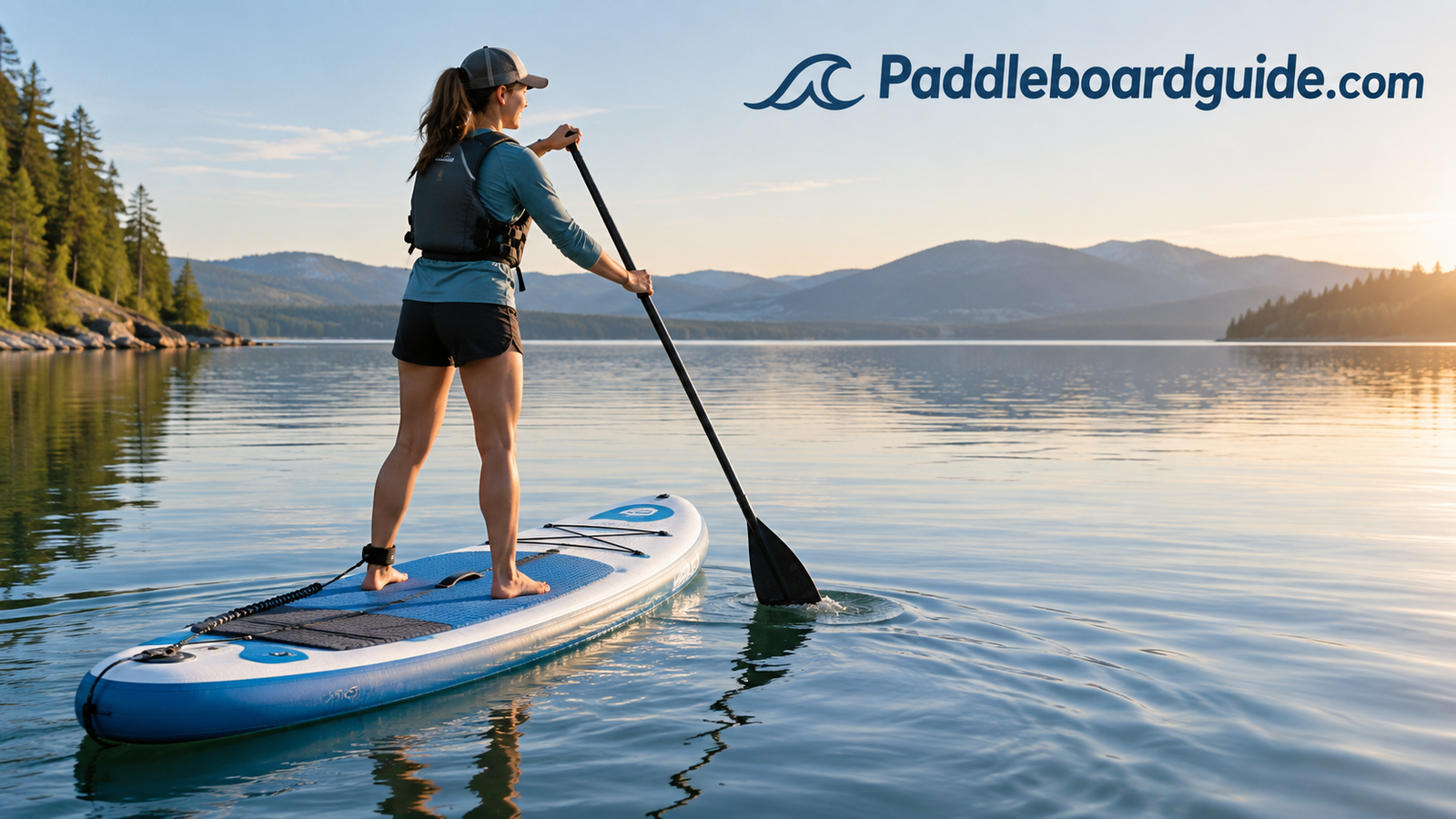
Are Inflatable Paddle Boards Good for Beginners? What New Paddlers Really Need to Know
A practical, no-fluff breakdown of stability, durability, price, and real-world performance so you can decide with confidence.
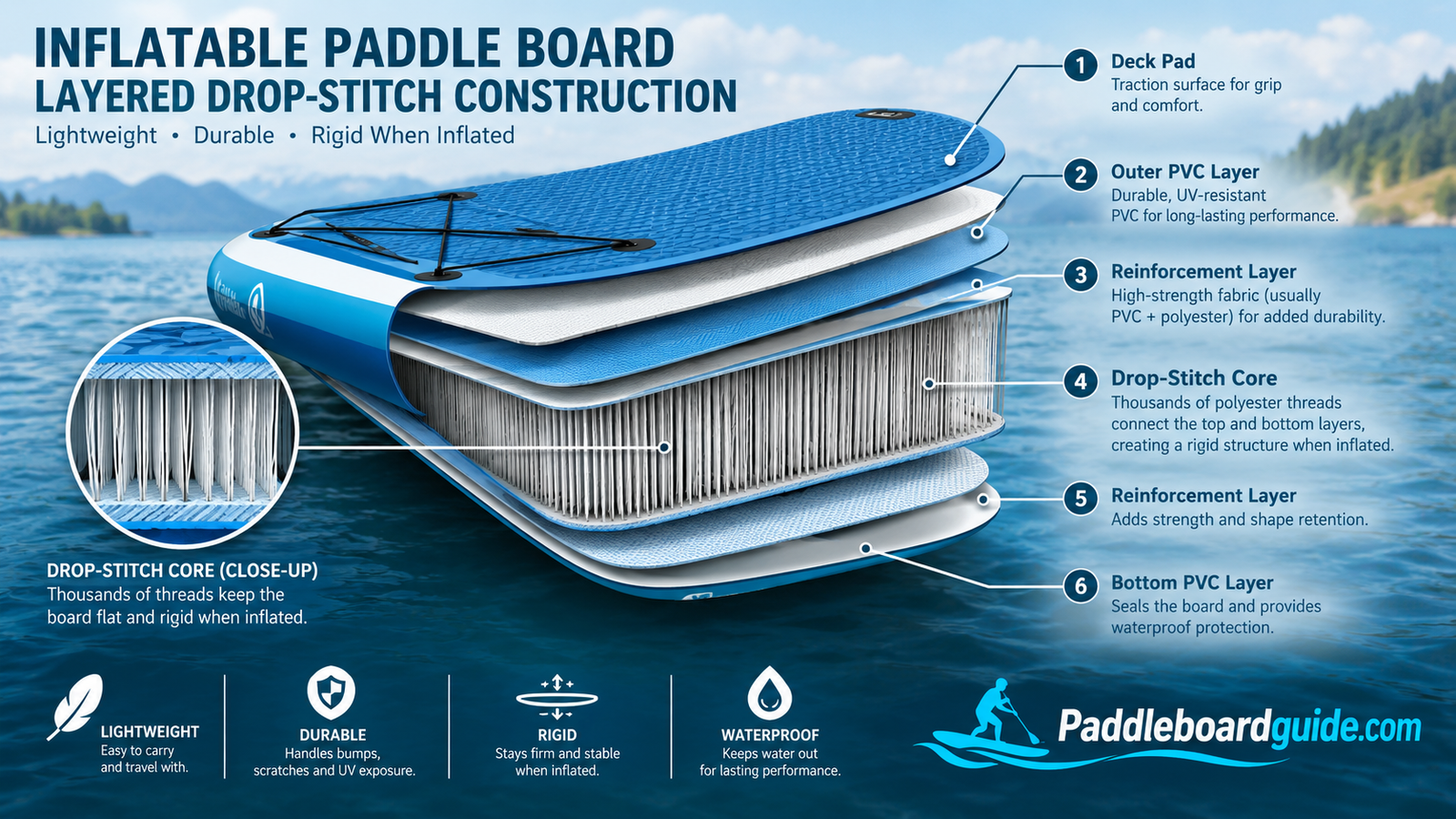
Modern inflatable SUPs use military-grade drop-stitch cores, not pool-toy vinyl.
If you have spent any time browsing paddle sports gear, you have probably noticed that inflatable stand up paddle boards now dominate the market, especially for people who are just getting started. That popularity raises an obvious question: are inflatable paddle boards actually good for beginners, or are they simply the boards that are easiest to sell online because they ship in a small box?
The short version is that for the vast majority of new paddlers, an inflatable board is not a compromise. It is genuinely the better choice, and in several ways it outperforms a traditional hard board for someone who has never stood on the water before. That said, “good for beginners” does not mean “good at everything,” and there are specific situations where an inflatable board’s characteristics matter more than others.
In this guide, we will walk through exactly how inflatable boards are built, how they compare to hard boards on the water, where they genuinely shine, where they fall a little short, and how to pick the right size and features for your first purchase. If you want a broader look at the different board categories available before committing to inflatable specifically, our guide to the different types of paddle boards is a useful companion piece.
What Is an Inflatable Paddle Board?
An inflatable stand up paddle board, often shortened to iSUP, is a paddle board built around a core of thousands of tiny polyester threads woven vertically between the top and bottom layers of the board. This technique, called drop-stitch construction, is the same basic technology used in some inflatable boats and military pontoons. When the board is pumped up to its rated pressure, usually somewhere between 12 and 20 PSI, those internal threads pull taut and lock the top and bottom skins into a rigid, flat plane, similar in stiffness to a firm gymnastics mat rather than a floppy pool toy.
The drop-stitch core is then wrapped in layers of military-grade PVC, and in higher-end boards, reinforced with additional fabric layers or fused seams rather than glued ones. This is a very different animal from the vinyl beach toys most people picture when they hear the word “inflatable.” A quality board, once inflated, can be stood on, dropped, dragged over rocks, and even used as an impromptu dock without losing its shape. For a deeper technical breakdown of how these layers come together on the manufacturing floor, see our article on how paddle boards are made.
Most inflatable boards also include a set of D-rings for bungee cargo straps, a center fin box for a removable skeg, an adjustable three-piece paddle, a hand pump, a repair kit, and a rolling backpack, all bundled into one purchase. That all-in-one nature is part of why they have become the default recommendation for people buying their very first board.

Ready to see full board packages? Compare beginner-friendly inflatable SUP bundles, pumps, and paddles on Amazon.
Check Prices on AmazonAre Inflatable Paddle Boards Actually Good for Beginners?
Yes, and the reasoning holds up under scrutiny rather than just being marketing language. Beginners generally need three things from their first board: forgiveness, convenience, and durability while the learning curve plays out. Inflatable boards score well on all three.
Forgiveness comes from thickness and volume. Most beginner-oriented inflatable boards run 5 to 6 inches thick, which adds significant buoyancy compared to a 4 to 4.5 inch hard board of the same length. That extra float translates into a platform that sits higher in the water and reacts less dramatically to small shifts in your weight, which is exactly what a nervous first-time paddler needs.
Convenience comes from the fact that the board rolls up into a duffel-sized bag that fits in a closet, the trunk of a sedan, an airline checked bag, or the overhead bin of a bus. New paddlers rarely have roof racks, dedicated storage space, or a truck bed, and an inflatable board removes that entire logistical barrier to actually getting out on the water regularly, which is the single biggest factor in how quickly someone improves.
Durability matters because beginners drop boards on driveways, bump them into docks, drag them across parking lots, and occasionally run them into rocks. A quality inflatable board shrugs off abuse that would chip or crack a fiberglass hard board, and if it does get punctured, most repairs take fifteen minutes with the included patch kit rather than a trip to a repair shop.
Inflatable vs. Hard Paddle Boards: Which Is Better for New Paddlers
The inflatable-versus-hard debate is really a question of what you are optimizing for. Hard boards, typically built from an EPS foam core wrapped in epoxy and fiberglass, hold a performance edge in a few specific categories, while inflatable boards win decisively on accessibility. For a full side-by-side breakdown of the category as a whole, including where each option is used competitively, take a look at our dedicated comparison of SUP boards versus traditional paddle boards.
| Factor | Inflatable Board | Hard (Epoxy) Board |
|---|---|---|
| Stability for beginners | Generally higher due to added thickness and volume | Can be stable, but usually thinner at the same length |
| Transport | Rolls into a backpack; fits in most cars | Requires roof rack or truck bed |
| Storage | Closet, garage shelf, or under a bed | Needs wall racks or dedicated space |
| Durability against impact | Very high; flexes rather than cracks | Can dent, crack, or delaminate on impact |
| Glide and top speed | Good, slightly softer flex reduces efficiency | Excellent; stiffer, faster through the water |
| Tracking in wind or chop | Solid, though wider rails catch more wind | Generally sharper tracking |
| Setup time | 5 to 10 minutes to inflate | Ready immediately |
| Typical beginner price | Usually more value packed per dollar | Often pricier for comparable volume |
For a beginner who is not racing or surfing double-overhead waves, the performance gap in glide and tracking is small enough that it rarely affects the actual learning experience. What does affect the experience is whether the board is easy enough to get to the water in the first place, and that is where inflatable boards pull ahead.
The Real Advantages of Inflatable SUPs for Beginners
Beyond the general case for inflatable boards, there are several specific advantages that matter disproportionately during the first season of paddling, when confidence and consistency are everything.
Why Beginners Benefit
- Thicker profile adds forgiving buoyancy
- Softer surface is easier on falls and knees
- Rolls up small for apartments and small cars
- Shrugs off dock bumps and driveway drops
- All-in-one packages include paddle, pump, and bag
- Lower cost of entry for a full kit
Trade-offs to Expect
- Slightly less glide efficiency than a hard board
- Requires 5 to 10 minutes of pumping before each session
- Wider rails can catch more wind
- Needs periodic air top-ups on hot or cold days
- High-end models cost as much as entry hard boards
The softer top deck deserves special mention. Most inflatable boards ship with a textured foam deck pad bonded directly to the PVC skin, which is considerably more comfortable to kneel or fall on than the harder EVA pads found on many entry-level hard boards. For a beginner who is going to spend a lot of time on their knees before finding their balance standing up, that cushioning genuinely reduces bruising and discomfort during the learning process.
The all-in-one nature of most inflatable packages also removes a common beginner pitfall: buying a board and then discovering the paddle, pump, or leash are sold separately and cost more than expected. If you do want to upgrade your paddle later, our guide to the best paddle board paddles covers what to look for once you have a season of experience under your belt.

Want a complete beginner bundle that includes the board, paddle, pump, and backpack in one box?
Browse Beginner BundlesDownsides and Limitations to Know Before Buying
Being fair to the category means being honest about where inflatable boards are not the best tool for the job. None of these are dealbreakers for most beginners, but they are worth knowing before you commit to a specific model.
Setup Time Adds Friction
Inflating a board to 15 PSI with a hand pump takes most people somewhere between 5 and 10 minutes, and doing it in direct sun on a hot day is genuinely tiring the first few times. An electric pump solves this almost entirely but adds cost and another item to carry.
Performance Ceiling in Advanced Conditions
In strong wind, ocean chop, or when trying to cover long distances quickly, a rigid board’s stiffness translates paddle strokes into forward motion more efficiently. Inflatable boards flex slightly under load, which softens that transfer. Beginners rarely push hard enough to notice this, but it becomes relevant as skill increases.
Air Pressure Sensitivity
Air expands in heat and contracts in cold, so a board pumped to 15 PSI in the morning may read differently by afternoon. Leaving a board fully inflated in a hot car or direct sun for hours can over-pressurize the valve area, so most manufacturers recommend deflating slightly or storing in shade between sessions.
Long-Term Wear Points
The valve, seams, and fin box are the most common failure points over years of use. Quality boards use fused or welded seams rather than glued ones, which matters enormously for how the board holds up after dozens of sessions. We cover this in more detail in our breakdown of how long inflatable paddle boards actually last.
Stability 101: What Makes a Beginner Board Stable
Stability is the single factor beginners care about most, and it is determined by a combination of three measurements working together rather than any one number in isolation.
Width
Width is the single biggest lever for stability. Beginner boards typically range from 32 to 36 inches wide. Anything under 30 inches is aimed at experienced paddlers who prioritize speed, and most first-time buyers should stay at 32 inches or wider.
Thickness and Volume
Thickness drives buoyancy. A 6-inch-thick board displaces more water and sits higher, which reduces how much it dips and wobbles under an unsteady beginner’s weight shifts. Volume, measured in liters, combines length, width, and thickness into a single number that correlates closely with how much weight a board can carry while still feeling stable rather than sluggish or tippy.
Length
Longer boards, generally 10.5 to 11.5 feet for beginners, track straighter and feel more planted than short boards, though they are slightly harder to turn. Most all-around beginner boards land in this range as a sensible middle ground between stability and maneuverability.
| Rider Weight | Recommended Length | Recommended Width | Recommended Volume |
|---|---|---|---|
| Under 150 lbs | 10′ to 10’6″ | 30″ to 32″ | 230 to 260L |
| 150 to 200 lbs | 10’6″ to 11′ | 32″ to 34″ | 260 to 320L |
| 200 to 250 lbs | 11′ to 11’6″ | 33″ to 35″ | 320 to 380L |
| Over 250 lbs | 11’6″+ | 34″+ | 380L+ |
Weight Capacity, Sizing, and Board Dimensions Explained
Every inflatable board is rated for a maximum weight capacity, usually printed on the deck near the fin box, and it is one of the most misunderstood specs in the category. That number represents the absolute ceiling at which the board will still float, not the weight at which it performs comfortably. A board technically rated for 275 pounds will feel sluggish and unstable at 260 pounds, because it is running near its float limit with almost no buoyancy reserve left for waves, gear, or a passenger.
A good rule of thumb is to leave at least 25 to 30 percent of headroom between your paddling weight, including any gear, dog, or child you plan to bring along, and the board’s stated maximum capacity. That reserve buoyancy is what keeps the board riding high and stable rather than sitting low and wallowing. For the full math and worked examples across different board sizes, see our complete guide to how much weight a paddle board can actually hold.
Two boards with identical weight capacity numbers can feel very different on the water if their volume is distributed differently. A longer, narrower board and a shorter, wider board might both claim the same capacity, but the wider board will generally feel more stable at that same weight because more of its volume sits directly under your feet rather than stretched along the ends.

Not sure which size fits your weight and height? Filter beginner boards by capacity and length before you buy.
Shop by Board SizeGetting Started: Setup Basics for Your First Sessions
One of the quieter benefits of inflatable boards is how forgiving the entire startup process is for someone who has never paddled before. There is no need to learn to load a board onto a roof rack or secure it with cam straps; the entire kit rolls out of a backpack, and the process is largely the same regardless of which board you buy.
Inflating the Board
Most beginner kits include a dual-action hand pump, which pushes air in on both the up and down stroke until the pressure gets high, then switches to single-action for the final push to full PSI. Budget 5 to 10 minutes for a first-time inflation, and check the manufacturer’s recommended pressure, typically printed near the valve, since overinflating can stress seams and underinflating makes the board flex excessively underfoot.
Attaching the Fin and Paddle
The center fin slides into a plastic box on the underside of the tail and locks with a small screw or click-in tab, taking well under a minute. The three-piece paddle twists together and adjusts in length using a clip or twist-lock collar; as a general starting point, set the paddle so the handle reaches your wrist when you stand the paddle up next to you on flat ground.
Your First Time Standing Up
Start on your knees in calm, flat water away from boat traffic, paddle a few strokes to get a feel for balance, then bring one foot up at a time to a crouched standing position with knees bent and eyes on the horizon rather than your feet. For a full step-by-step walkthrough of paddling technique once you are comfortable standing, our dedicated guide on how to paddle board covers stroke mechanics, turning, and balance drills in detail.
Choosing the Right Paddle Length and Feel
A paddle that floats is a small but genuinely useful feature for a beginner, since dropped paddles are common during the first few sessions of learning to balance. If you are shopping separately from a bundle, our article on whether paddle board paddles float explains what to check before buying.
Safety Requirements and Gear Every Beginner Needs
Stand up paddle boards are legally classified as vessels by the U.S. Coast Guard when used beyond the immediate vicinity of a swimming area, which means specific safety gear is not optional in many locations. A properly fitted personal flotation device is required in most jurisdictions, along with a leash connecting you to the board and a sound-producing device like a whistle if you are paddling outside a designated swim zone. Our complete breakdown of paddle board safety requirements covers the specific rules by region and age group.
Essential Gear Checklist
- Coast Guard approved PFD, worn or within reach
- Ankle or calf leash, coiled or straight depending on conditions
- Whistle attached to the PFD
- Sun protection: hat, reef-safe sunscreen, sunglasses
- Weather check before launching
Common Beginner Mistakes
- Paddling offshore wind without checking forecasts
- Skipping the leash on flat, “safe-looking” water
- Overestimating distance you can paddle back against wind
- Paddling alone far from shore on a first outing
- Ignoring boat traffic lanes and channel markers
Offshore wind is the single most underestimated hazard for new paddlers. A light breeze blowing away from shore can push an inflatable board, with its slightly higher profile catching more wind than a hard board, faster than a tired beginner can paddle back against it. Checking wind direction and forecast before every session, and staying within a comfortable swimming distance of shore during your first outings, prevents the overwhelming majority of paddle board rescue incidents.
Where Inflatable SUPs Shine: Lakes, Rivers, Ocean, and Yoga
Inflatable boards are genuinely versatile, but they are not equally suited to every environment, and knowing where they perform best will shape a more satisfying first season.
Lakes and Calm Ponds
This is the ideal beginner environment. Flat, wind-protected water lets a new paddler focus entirely on balance and stroke technique without fighting current or chop, and it is where the forgiving stability of a thick inflatable board matters most.
Slow-Moving Rivers
Gentle, Class I rivers are approachable on an inflatable board, and the durability advantage becomes very real here, since scraping over shallow gravel bars or bumping submerged logs is a normal part of river paddling that would seriously worry a hard board owner.
Ocean and Coastal Water
Protected bays and calm coastal mornings work well for beginners, but open ocean swell, surf breaks, and strong tidal currents demand more skill and, often, a more specialized board shape than a general all-around inflatable. Building ocean confidence gradually, starting in bays and flat mornings, is the safer progression.
SUP Yoga and Fitness
The cushioned deck pad and wide stable platform of a beginner inflatable board make it a popular choice for on-water yoga and light fitness routines, arguably more comfortable underfoot than a harder epoxy deck for kneeling poses and transitions.
If you are still deciding between a general all-around shape and something more specialized for touring or fishing, our roundup of paddle board options and categories is a good starting point before narrowing down a specific model.

Looking for an all-around board that handles lakes, slow rivers, and calm bays equally well?
See All-Around BoardsHow Long Do Inflatable Paddle Boards Last? Durability Explained
With reasonable care, a quality inflatable paddle board typically lasts anywhere from 5 to 10 years of regular seasonal use, and sometimes considerably longer. The biggest factors influencing lifespan are seam construction, UV exposure, and how the board is stored between sessions, not the number of times it gets inflated and deflated, which surprises a lot of first-time buyers who assume the material wears out from repeated pumping.
Fused or welded seams, where the PVC layers are heat-bonded rather than glued, resist the slow seam creep that eventually causes glued boards to develop soft spots or leaks after a few seasons. UV exposure gradually breaks down PVC over years of direct sunlight, so boards that are rinsed, dried, and stored in a bag or shaded space last noticeably longer than ones left inflated in direct sun on a patio all summer.
For the full lifespan breakdown, including how storage habits, water type, and climate affect longevity, our dedicated article on how long inflatable paddle boards last goes into much more depth than we have room for here.
How to Choose Your First Inflatable Paddle Board
With the fundamentals covered, narrowing down an actual purchase comes down to matching a handful of specs to your body weight, intended water, and budget.
Step 1: Match Width and Volume to Your Weight
Use the sizing table earlier in this guide as a starting point, and lean toward the wider, higher-volume option if you are between two sizes. Extra stability during the learning phase is rarely regretted, while an undersized board often gets sold or upgraded within a single season.
Step 2: Check Seam Construction, Not Just Thickness
Two boards can both be “6 inches thick” while using completely different seam technology. Fused or welded seams generally outlast glued seams by years, and this single spec matters more to long-term satisfaction than almost any other feature on the spec sheet.
Step 3: Confirm the Full Kit Contents
Check that the package includes a paddle, pump, leash, fin, repair kit, and backpack, since some budget listings sell the board alone and expect buyers to notice the fine print. A complete kit is almost always better value than assembling accessories separately as a beginner.
Step 4: Read Reviews From Real Owners on Comparable Boards
Individual model reviews are the fastest way to sanity-check a spec sheet against real-world experience. Our in-depth reviews of the iRocker paddle board, the iRocker Nautical, the BOTE inflatable paddle board, and the budget-friendly Retrospec Weekender each walk through how those specific boards handle in real conditions, which is a useful reality check before buying anything based on marketing copy alone.
Step 5: Set a Realistic Budget
Solid beginner packages exist across a wide price range, and spending more generally buys better seam construction, a stiffer deck feel, and nicer accessories rather than a fundamentally different board. For a curated shortlist across different price points, our roundup of the best inflatable paddle boards compares several well-reviewed options side by side.

Skip the spec-sheet guesswork. See current top-rated beginner inflatable boards and package deals.
View Top-Rated BoardsFrequently Asked Questions
Are inflatable paddle boards as good as hard paddle boards?
For beginners, inflatable boards are often better in practical terms due to added stability, easier transport, and higher durability against everyday bumps. Hard boards hold an edge in glide and tracking performance, which matters more to experienced or competitive paddlers than to someone learning the basics.
What size inflatable paddle board is best for a beginner?
Most beginners do well on a board between 10 and 11.5 feet long and 32 to 34 inches wide, adjusted upward in width and volume for higher body weight. Wider and thicker boards feel more forgiving while you build balance and confidence.
How long does it take to inflate a paddle board?
With the included hand pump, most beginner boards take 5 to 10 minutes to reach full pressure. An electric pump can cut that down to a few minutes but is an optional upgrade rather than a necessity.
Do inflatable paddle boards pop easily?
No. Quality inflatable boards are built from thick, military-grade PVC over a drop-stitch core and are designed to resist punctures from normal use, including contact with rocks, docks, and sand. Sharp objects like fish hooks or broken glass can still cause damage, but everyday bumps are not a real concern.
Can a beginner use an inflatable paddle board in the ocean?
Yes, particularly in calm bays or on flat mornings, but open ocean swell, strong currents, and surf conditions are better suited to more experienced paddlers or specialized board shapes. Beginners should start in protected coastal water and build up gradually.
How much weight can an inflatable paddle board hold?
Weight capacity varies by model, typically ranging from around 200 pounds on smaller boards to well over 400 pounds on larger touring or family-sized boards. It is best to stay comfortably under the stated maximum for optimal stability rather than paddling right at the limit.
Do I need a leash and life jacket for an inflatable paddle board?
In most regions, yes. Paddle boards are classified as vessels by maritime authorities, and a properly fitted personal flotation device plus a leash are typically required once you paddle beyond a designated swimming area.
How long do inflatable paddle boards typically last?
A well-maintained board with quality seam construction commonly lasts 5 to 10 years or more of regular seasonal use. Storage habits and UV exposure affect lifespan more than the frequency of inflating and deflating.
What PSI should I inflate my paddle board to?
Most boards recommend somewhere between 12 and 20 PSI, printed near the inflation valve. Underinflating causes excessive flex and poor performance, while significantly overinflating stresses seams, so staying close to the manufacturer’s recommended number is best.
Is an inflatable paddle board good for a dog or child passenger?
Yes, as long as the board’s rated weight capacity comfortably covers your combined weight with room to spare. Wider, higher-volume boards handle extra passengers more stably than narrower performance-oriented shapes.
Can inflatable paddle boards be repaired if punctured?
Yes. Most boards ship with a repair kit containing PVC patches and adhesive suitable for small punctures, and repairs typically take about 15 minutes plus drying time. Larger tears may require a specialty repair service, but these are uncommon with normal use.
Do inflatable paddle boards feel unstable compared to a dock or floor?
They feel different at first because water constantly shifts under your feet, but a properly sized beginner board, wide and thick relative to your weight, is far more stable than most first-timers expect once they relax their knees and find a natural stance.
Final Verdict: Are Inflatable Paddle Boards Good for Beginners?
For nearly everyone picking up a paddle for the first time, an inflatable stand up paddle board is a genuinely smart choice rather than a compromise. The added stability from extra thickness and volume, the ease of storing and transporting a board that rolls into a backpack, and the peace of mind that comes from a durable, drop-stitch build all line up well with what a beginner actually needs during their first season on the water. The small trade-offs in glide and setup time rarely outweigh those advantages until you are paddling seriously enough to notice them.
The best next step is matching a board’s width, volume, and seam quality to your body weight and the water you plan to paddle most, then getting out on calm, flat water to build the fundamentals before pushing into wind, waves, or longer distances.
Shop Beginner Inflatable Paddle Boards