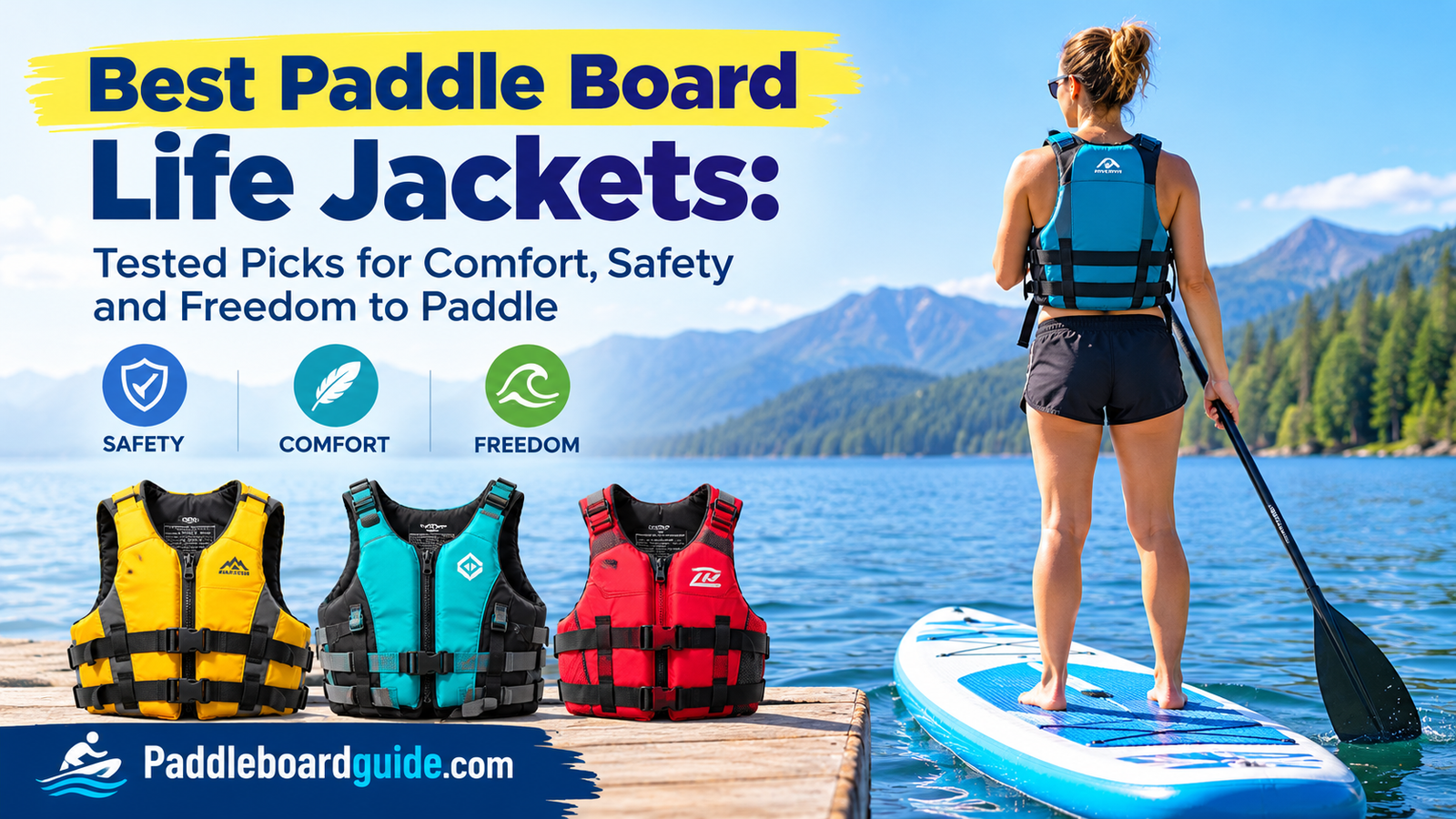
Best Paddle Board Life Jackets: Tested Picks for Comfort, Safety and Freedom to Paddle

Quick answer: for most paddlers, a low-profile foam vest with big armholes, such as the Onyx MoveVent Dynamic Paddle Vest, is the easiest life jacket to wear all day. If you want almost no bulk, an inflatable like the BLUESTORM Cirrus26 or the Onyx A/M-24 is the better call, as long as you actually wear it and keep it serviced. The rest of this guide explains how to decide.
1. Why Every Paddler Needs a Life Jacket
Nobody plans to fall in. That is exactly the point. Stand-up paddle boarding feels so calm and approachable that it is easy to forget you are standing on a floating platform, often in cold water, sometimes far from shore, and occasionally in conditions that change faster than the forecast suggested. A gust of wind, a boat wake, a fin that catches a weed bed or a sudden cramp is all it takes to end up swimming.
Most of the time, a fall is a laugh and a scramble back on the board. But the moments when it is not funny are the ones a life jacket exists for. Cold water shock can make even strong swimmers gasp and lose control of their breathing for the first minute or so. Fatigue sets in quickly when you are fighting wind and chop with a board drifting away from you. Injury, a bump on the head from a fall, or a medical event can leave you unable to swim at all. A properly fitted life jacket turns every one of those situations from an emergency into an inconvenience.
The common excuse is that you have a leash and a big floating board. It is a fair thought, but the board is not a rescue device. Leashes can snag, break or detach. On rivers and in surf, a leash can even be a hazard. And if you are separated from the board in wind, it can outpace you in seconds. Our own paddle board safety requirements guide covers the gear side of that conversation, but the short version is simple: the life jacket is the one piece of kit that works when everything else has failed.
The real reason people skip it
Be honest, the main reason paddlers leave their PFD on the beach is comfort. Old-style boxy foam jackets ride up, chafe your arms, trap heat and restrict the twisting motion you use on every stroke. That is a solved problem. The best paddle board life jackets in this guide were designed around the paddling motion, with large armholes, short torsos that clear a harness or seat, and breathable mesh that moves air. When a jacket is comfortable enough that you forget about it, you wear it every time, and that is what really keeps you safe.
What you will find in this guide
We rounded up fourteen popular options, from low-profile foam vests to belt-pack inflatables, and explain who each one suits, where it falls short and how to decide between them. Whether you paddle flat lakes, coastal bays or slow rivers, you should be able to narrow your choice quickly. If you are still shopping for the board itself, you may also like our best inflatable paddle boards roundup, and if you are brand new, start with whether inflatable boards suit beginners.
One more point worth making early: a life jacket only works if it is worn. A PFD strapped to the deck of your board is not a PFD, it is cargo. A foam vest stuffed in a bag in the car is the same. Every recommendation below leans on that single idea, because the safest jacket is the one you will actually put on every time you launch.
What actually goes wrong on the water
Experienced paddlers tend to describe the same handful of scenarios. The first is the unexpected fall in cold water, where the shock of immersion steals your breath and makes climbing back on much harder than it looks on a calm day. The second is the wind shift: you paddle out with the breeze at your back and discover on the return leg that you are paddling straight into it, tired and slowly losing ground. The third is the collision or wake, where a passing powerboat throws a wave you did not see coming. The fourth is the ordinary medical surprise, such as a cramp, a dizzy spell or a bump to the head, that has nothing to do with paddling skill at all.
In every one of these, the value of a life jacket is time. It keeps your airway above water while you recover, while someone reaches you, or while you work out what to do next. Skill helps you avoid problems. Flotation helps you survive the ones you could not avoid.
Safety is part of the fun
Wearing a life jacket does not make you a cautious paddler or take anything away from the experience. If anything, it frees you to push your skills, try a new route, practice a turn or paddle a little farther, because you know there is a margin built in. The paddlers who enjoy the sport longest are almost always the ones who treat safety as routine, the same way a cyclist wears a helmet without thinking about it.
Browse top-rated paddle board life jackets on Amazon.
Check Current Prices2. The Rules: What the Law Expects From Paddle Boarders
Rules vary by country, state and even by individual lake or river, so always check local regulations before you launch. That said, the broad picture in the United States is consistent enough to describe here. The Coast Guard treats stand-up paddle boards as vessels when they are used outside of designated swimming, surfing or bathing areas. That classification brings equipment requirements with it.
Wearable life jacket on board
Adult paddlers are generally expected to have a Coast Guard approved wearable life jacket on the board, sized correctly for them. Many waterways and event organizers go further and require the jacket to be worn, not just carried. Children under a certain age, which is thirteen under federal rules for vessels underway, must wear one. Local rules can set different ages, so check before you take kids out.
A sound signal
Paddlers are typically required to carry a sound-producing device, most often a whistle. The good news is that several jackets reviewed below have a whistle attached or a place to clip one on. Even if yours does not, a small whistle on a lanyard costs next to nothing.
Lights at night
If you paddle between sunset and sunrise, or in restricted visibility, you need a white light visible from all around. A headlamp or a clip-on LED works for most boards. Reflective trim on a PFD helps other boaters spot you, which is a bonus worth looking for.
Inflatables and the fine print
Inflatable PFDs are legal and popular among paddlers, but they come with conditions. Most are only approved for adults, usually sixteen and over, and some are only counted as meeting the requirement when they are worn and properly armed. A belt pack stashed in a dry bag does not meet the rule. Read the label inside the jacket, because it states the approved type, the user weight range and the conditions of use. If your jacket is not approved for the activity you are doing, it does not count.
For more on the broader checklist, see our guide to paddle board safety requirements. And if you are weighing how much gear you can carry on the board, how much weight a paddle board can hold explains the numbers.
Why “approved” matters more than “looks like a life jacket”
Plenty of products in sporting goods stores look like life jackets but are not approved flotation devices. Costume vests, swim-training aids and novelty jackets do not meet the standard. Look for a label that states the jacket is approved, lists the type and gives a size and weight range. If the label is faded, torn or missing, the jacket should not be counted toward your requirement.
It also pays to keep the label readable. Wash gently, avoid harsh solvents and never cover or remove it. In a routine check by a marine patrol officer, that label is how your jacket proves it is legitimate.
Local rules and events
Beyond national rules, many lakes, reservoirs, rivers, marinas and races add their own requirements. Some mandate that every paddler wears a PFD at all times, some ban inflatables for certain events, and some require specific lighting after dark. When you plan a trip to a new spot, take two minutes to read the posted rules or the local authority’s website. The rules exist because they reflect the real hazards of that particular piece of water.
Staying up to date
Regulations change over time and differ between regions. Make a habit of checking the official boating authority for your area at the start of each season, and ask at a local paddle shop about any recent changes. That small bit of homework keeps you legal and, more importantly, keeps you informed about the hazards other paddlers have already run into.
Make sure your gear meets the rules with an approved vest.
See Approved PFDs3. Foam vs Inflatable: Choosing a Style That Fits How You Paddle
This is the biggest decision you will make, and neither style is universally better. The right answer depends on your water, your temperature, your experience and how likely you are to wear it.
Foam paddle vests
A foam vest has buoyancy built in. There is nothing to arm, nothing to rearm, nothing to service. It floats the moment you hit the water, even if you are unconscious. That passive reliability is why foam is the default choice for beginners, kids, families, rental fleets and anyone paddling in cold water, whitewater or surf.
The trade-off is bulk and heat. A foam vest is warmer than an inflatable and sits on your torso like a layer of clothing. Modern paddle-specific designs minimize this with mesh panels, thinner foam and contoured armholes, but they still cannot match an inflatable for minimal feel.
Inflatable belt packs and vests
An inflatable PFD packs its flotation into a small pouch worn around the waist or over the shoulders. When you need it, you pull a cord, or on automatic models a water-activated mechanism fires a CO2 cylinder, and the bladder inflates around your neck. Until then it feels like almost nothing, which is why plenty of paddlers on warm, flat water prefer them.
The trade-offs are real, though. You have to maintain them, replace the cylinder and bobbin after use, check them regularly for leaks and understand how to rearm them. Manual versions only work if you are conscious and able to pull the cord. Automatic and hybrid versions can fire when you do not want them to, such as in heavy rain or surf, and you will need to deal with a deflating, then re-inflating process. They also are not a great choice for non-swimmers or children.
Quick comparison
| Feature | Foam vest | Inflatable PFD |
|---|---|---|
| Reliability | Always on, no activation needed | Needs inflation, depends on maintenance |
| Comfort in heat | Warmer, though mesh helps | Cooler and barely noticeable |
| Ease of use | Put it on and go | Requires checking, arming and rearming |
| Best for | Beginners, kids, cold water, surf, rivers | Experienced adults on calm water |
| Upkeep | Rinse and dry | Inspect, replace cylinder and bobbin after use |
| Typical cost | Lower to mid | Mid to higher |
If you are just beginning, a foam jacket is the safer starting point. Pair it with some practice using our how to paddle board guide and you will be comfortable well before you consider anything fancier.
Hybrid options and what about neoprene?
Some jackets blur the line. Neoprene-covered foam vests, like the Airhead Gnar, feel closer to a wetsuit top and are popular with surfers and younger paddlers. Hybrid inflatables combine a bit of foam with an inflatable chamber, offering a slimmer profile than a full foam vest with some guaranteed baseline buoyancy. They tend to cost more and are less common, but they are worth a look if you cannot decide.
A simple way to decide
Ask yourself three questions. First, how well do you swim, and how experienced are you? If you are a beginner or a weak swimmer, choose foam. Second, how cold or rough is your water? If it is cold, moving or choppy, choose foam. Third, will you honestly wear a bulky vest in summer heat? If the answer is no and your conditions are calm, a well-maintained inflatable may genuinely keep you safer, because a jacket in the car protects nobody.
Common myths about paddle board life jackets
- “I am a strong swimmer, so I do not need one.” Strong swimmers still get cramps, cold shock and injuries, and swimming in open water is nothing like swimming in a pool.
- “My board will keep me afloat.” Boards can drift away quickly in wind or current, and leashes can fail or detach.
- “Life jackets are too hot.” Modern paddle vests and inflatables are far cooler than older designs.
- “I will just keep it on the board.” A jacket you are not wearing cannot help you if you are separated from the board.
Compare foam and inflatable options side by side.
Shop Inflatable PFDs4. How to Pick the Right Fit and Features
A great life jacket that fits badly is a bad life jacket. Fit matters as much as the model, so spend time here before you click buy.
Measure your chest, not your shirt size
Life jackets are sized by chest measurement and weight, not by the letters on a T-shirt. Measure around the fullest part of your chest with a soft tape, then compare against the size chart on the product listing. If you are between sizes, think about what you will wear underneath. A rash guard or thin layer needs less room than a wetsuit or fleece.
The lift test
Once the jacket arrives, fasten every buckle and tighten every strap. Then ask someone to grab the shoulders and lift straight up. If the jacket rides up past your ears or chin, it is too loose. A properly fitted vest should only move a couple of inches, and should feel snug without limiting your breathing.
Armholes and torso length
Paddling involves a lot of reaching, twisting and rotation. Look for generous armholes, thin shoulder panels and a shorter torso that does not push into your hips or a seat. High-back designs that sit above a kayak seat are fine for kayaks, but on a board you want a clean low back so you can sit, kneel and climb back on without the jacket bunching up.
Pockets, whistle and visibility
Small front pockets hold a phone in a pouch, keys or snacks. A built-in whistle or attachment loop saves you a step. Bright colors and reflective trim help boats see you. A quick-release clip or D-ring can hold a leash or a small knife in some cases, which matters if you paddle rivers or moving water.
Buoyancy rating
Most recreational paddling vests are Type III, which are designed for conscious users in calm or near-shore water. They typically provide around 15.5 pounds of flotation, but check the label, because values vary with the model and size. Offshore, heavy conditions or non-swimmers may need more buoyancy than a minimal paddle vest provides.
Temperature and season
In summer you want ventilation. In shoulder seasons, a foam jacket over a layer doubles as insulation. If you paddle in cold water, remember that no life jacket can protect you from hypothermia alone. Dress for the water temperature, not the air temperature. For timing your outings sensibly, our piece on the best time to paddle board is worth a read.
Trying before buying
If you can, visit a local paddle shop and try on several models, because shapes differ more than the size charts suggest. Wear the sort of clothing you normally paddle in, then mimic the movements of the sport: reach forward, twist as you would for a forward stroke, kneel and sit. Notice any chafing under the arms, any pressure at the collarbones and any buckles that dig into your ribs. A jacket that feels fine standing in the shop can feel quite different after an hour of rotating your torso.
If you buy online, which is how most paddlers shop, order with an easy return policy in mind. Try the jacket on at home, then do the lift test and adjust every strap. It is far better to return a poor fit than to keep it and leave it in the garage.
Color and visibility
A bright jacket in orange, yellow or red can make the difference between being spotted quickly and being invisible against a glittering lake. Reflective patches help at dusk. Dark navy or gray might look sharp, but it disappears against the water, so pick a color that stands out.
Budget and value
Prices range widely, from simple foam vests at the lower end to premium paddle-specific and inflatable models at the higher end. It makes sense to spend a bit more on the jacket you will wear most often, since comfort is what gets it on your body. It is also fine to buy inexpensive spares for guests. Think of cost per outing, and a jacket you wear for years quickly pays for itself.
Find a paddle-specific vest with a low-profile cut.
View Paddle Vests5. Top Picks at a Glance
If you want the shortlist before the deep dive, here is how our favorites line up. Specs and sizing change, so always confirm the details on the listing before you order.
| Product | Style | Best for |
|---|---|---|
| Onyx MoveVent Dynamic Paddle Vest | Foam | All-round paddling comfort |
| Onyx MoveVent Torsion PFD | Foam | Active paddlers who twist and reach |
| Onyx A/M-24 Automatic/Manual Inflatable | Inflatable vest | Hands-off safety on calm water |
| Onyx M-16 Manual Inflatable Belt Pack | Inflatable belt | Minimal feel for strong swimmers |
| Onyx Universal Paddle Vest | Foam | Simple, budget-friendly fit |
| O’Neill SuperLite Life Vest | Foam | Watersports comfort and style |
| Stearns Adult Type III Life Vest | Foam | Value and family use |
| Airhead Gnar Neolite Kwik-Dry | Foam (neoprene) | Quick-drying, stretchy feel |
| BLUESTORM Cirrus26 Inflatable PFD | Inflatable | Lightweight, slim profile |
| BLUESTORM Stratus 35 Inflatable | Inflatable | Paddlers wanting extra lift |
| Stohlquist FIT Adult | Foam | Customizable, secure fit |
| Perception Hi-Fi | Foam | Paddling comfort with storage |
| HyperLite Elite | Foam | Everyday wear on warm days |
| Yukon Sport Paddle Vest | Foam | Entry-level paddle vest |
Our quick picks
- Best overall: Onyx MoveVent Dynamic Paddle Vest, for its paddle-specific cut and ventilation.
- Best low-profile inflatable: BLUESTORM Cirrus26, for paddlers who hate bulk.
- Best for hands-off safety: Onyx A/M-24, because it can inflate automatically.
- Best on a budget: Stearns Adult Type III or Yukon Sport, both simple and affordable.
- Best for adjustability: Stohlquist FIT, thanks to its multi-point fit system.
Keep in mind that these descriptions reflect each product’s general design and typical positioning. Features and approvals can vary by size and model version, so read the listing and the jacket’s label before you rely on it.
How we think about these recommendations
We weighed each jacket on a handful of practical criteria: how well it suits paddling motion, how likely a typical paddler is to wear it for a whole session, how forgiving it is for beginners, how much maintenance it demands and how it performs for the money. Because every body and every body of water is different, we avoid pretending there is a single winner. Use the table as a shortlist, then narrow it using the fit advice above and the situation guide further down.
Why we include both foam and inflatable models
A fair guide should not push you toward a single style. Foam vests offer dependable, always-on flotation, while inflatables offer unmatched comfort for suitable paddlers. By presenting both, we aim to help you choose what makes sense for your water, your experience and your habits.
Ready to compare prices on the top-rated options?
See Top Sellers6. Onyx Paddle Vests Reviewed
Onyx has built a loyal following among paddlers, and its MoveVent line is the reason. The designs were developed for paddling motion, with mesh backs and contoured shoulders that stay out of the way. Three foam options from the brand deserve a close look.
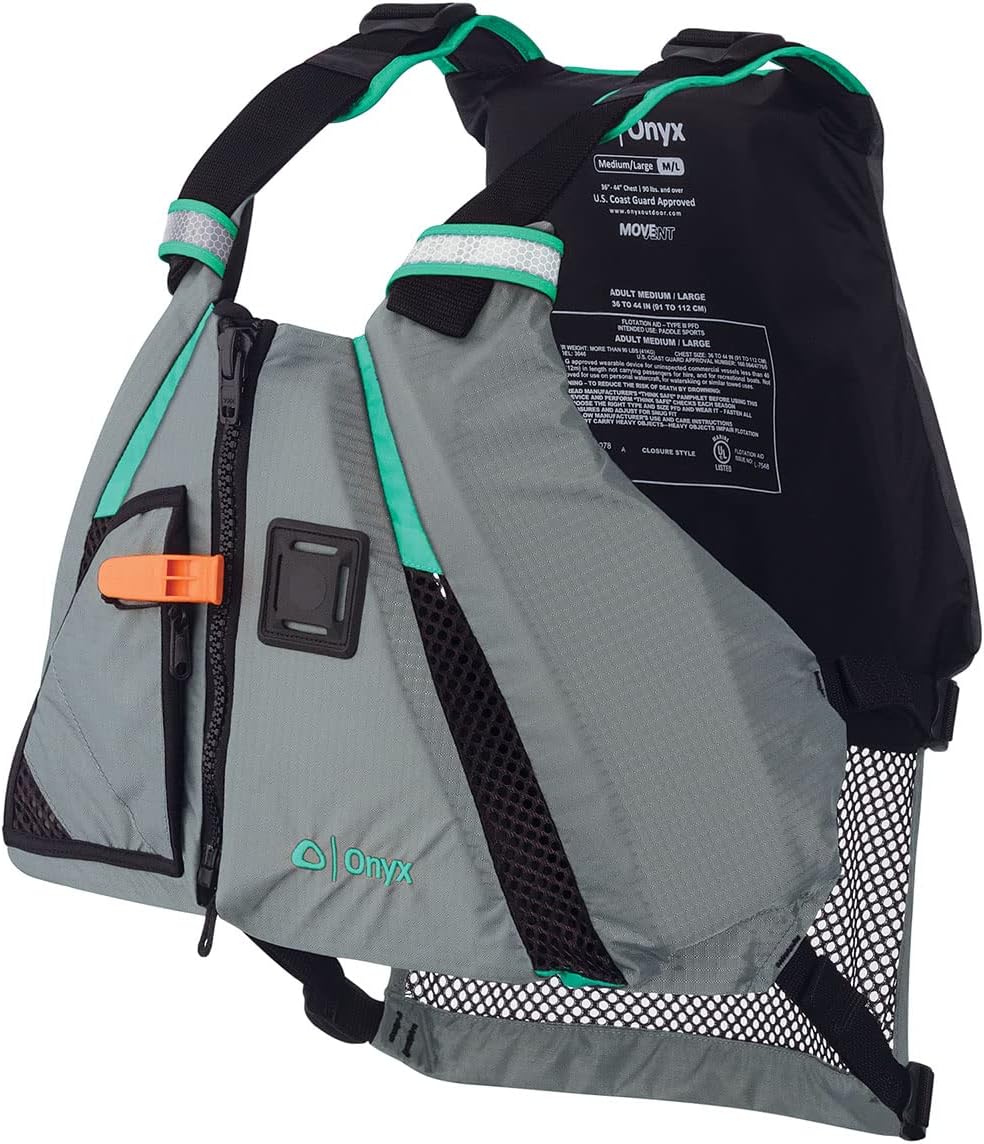
Onyx MoveVent Dynamic Paddle Vest
If you only read one review in this guide, make it this one. The MoveVent Dynamic is built around the motion of paddling, with a ventilated back panel and shoulders cut so your arms swing freely. It is the kind of vest you can wear for a three-hour paddle without constantly adjusting it.
Adjustability is good, so it should suit a range of body shapes. The foam sits slim against the torso, and the mesh on the lower back helps if you paddle in warm weather. For most people, this is the vest to beat.
- Paddle-specific cut for freedom of movement
- Breathable mesh back for warm days
- Slim profile that stays put when you climb back on
Onyx MoveVent Torsion PFD
The Torsion is the sibling for paddlers who put real rotation into every stroke. It is designed to flex and move with your torso, which matters on longer touring days and when you are working through chop. It keeps the same paddle-focused spirit as the Dynamic, with an emphasis on twist and reach.
If you paddle fast, do fitness sessions or cover distance, this style of vest can feel less like a jacket and more like a second layer. It is a smart pick when comfort over many hours is the top priority.
- Flexible construction suits long, rotational strokes
- Ventilated design for warm-weather paddling
- Good choice for touring and fitness paddling

Onyx Universal Paddle Vest
The Universal is the straightforward, no-fuss entry in the Onyx lineup. It brings paddle-friendly armholes and a simple adjustable fit that accommodates a wide range of paddlers, which also makes it handy for households or rental setups where one jacket needs to fit several people.
It is not as fancy as the MoveVent models, but it covers the essentials well and tends to be easier on the budget. For casual paddlers who want a dependable foam vest without extras, it is a sensible choice.
- Easy, adjustable fit for many body types
- Paddle-friendly armholes
- Practical choice for shared or casual use
Pros and cons of the Onyx paddle vests
Pros
- Designed with paddling motion in mind
- Passive foam flotation, nothing to maintain
- Good ventilation on the MoveVent range
- Wide size and fit options
Cons
- Foam is warmer than an inflatable
- Bulkier when packed for travel
- Fit can vary, so check the size chart carefully
If you plan to hit the water soon, a vest like this pairs nicely with a quality paddle. Our roundup of the best paddle board paddles is a useful next stop, and it is worth knowing whether paddle board paddles float before you let go of one.
How the three Onyx vests differ in daily use
Choosing between the Dynamic, the Torsion and the Universal comes down to how you paddle and how much you want to spend. The Dynamic is the balanced all-rounder, the one you would hand to a friend who asks for a single recommendation. The Torsion shines for paddlers who log long sessions and care most about rotational freedom. The Universal is the pragmatic, shareable choice that fits a range of people without fuss.
In practice, all three will feel noticeably different from an old-fashioned boxy jacket. The armholes are bigger, the shoulders are thinner and the back is cut to avoid bunching. That is why paddlers who dislike life jackets in general often change their minds after trying a vest designed for the sport. If you have been putting off wearing a PFD because past experiences felt clumsy, start here.
Fit tips for Onyx vests
Take your measurements and compare them with the chart on the listing. If you are between sizes, think about your normal layers. Adjust the side and shoulder straps until the vest sits snugly without squeezing your ribs, then try the lift test. Re-tighten once you are on the water, because straps can settle after a few minutes of movement.
Shop Onyx MoveVent paddle vests.
View Onyx Vests7. Onyx Inflatables Reviewed
Onyx also makes inflatable options for paddlers who prefer a slimmer feel. They are well known in the category and suit experienced, confident swimmers who are comfortable maintaining their gear.

Onyx A/M-24 Automatic/Manual Inflatable Life Jacket
The A/M-24 is an inflatable vest that can inflate automatically when it detects water, or manually if you pull the cord. That dual action is its biggest selling point. If you were knocked unconscious or too stunned to reach for the cord, the automatic mechanism is still ready to work.
It is far less bulky than a foam vest, which makes it an attractive pick on hot days. The catch is upkeep. You need to check the cylinder and indicator regularly, and replace the rearm kit after any inflation. Treat it like safety equipment, not a casual accessory.
- Automatic and manual inflation
- Much slimmer than foam in everyday wear
- Cooler for summer paddling
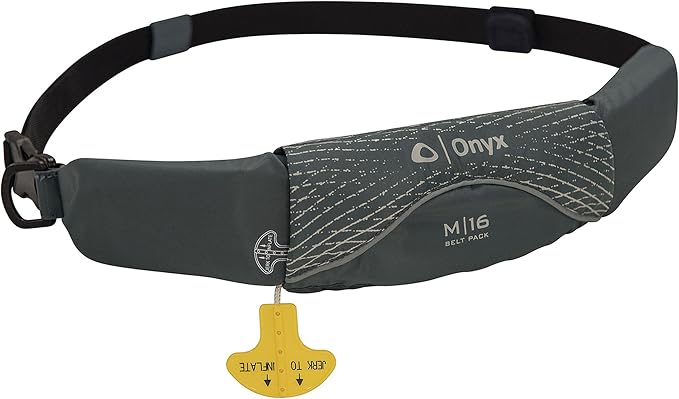
Onyx M-16 Manual Inflatable Belt Pack Life Jacket
The M-16 is a belt pack, a small pouch that clips around your waist. It is about as unobtrusive as a PFD gets. You will barely notice it while you paddle, and that is the whole appeal for people who find even slim vests restrictive.
It is manual only, so you have to be conscious and able to pull the activation cord to inflate it. That makes it best for confident swimmers on calm, familiar water. It is a poor fit for beginners, non-swimmers or situations where you might be incapacitated. Always check the label to confirm how it is approved and that it is worn, not stowed.
- Extremely low-profile and light
- Easy to wear on a hot day
- Manual activation, so you stay in control
Who should (and should not) choose an inflatable
Inflatables are a great match when you swim well, paddle in warm conditions and want a jacket you will happily wear all day. They are less ideal when you paddle in surf or heavy rain, when you are a beginner, or when you simply are not going to inspect the gear regularly. A foam vest will always be the more forgiving choice.
Pros
- Slim and cool compared with foam
- Compact enough to pack easily
- Easy to wear for long outings
Cons
- Requires regular inspection and rearm kits
- Manual versions depend on you being able to pull the cord
- Not generally suitable for children or non-swimmers
One more tip: practice inflating the jacket once in a safe spot, such as shallow water close to shore, so you know exactly how it behaves. Then rearm it properly and check the indicator before you head out again.
Practical advice for living with an inflatable
Treat the first outing like a drill. Put the jacket on in the garden, adjust the straps, and practice reaching for the activation cord with either hand. In the water, notice how the bladder feels when it inflates, how it sits around your neck and whether you can still see and breathe comfortably. Practicing once, in safe conditions, removes the panic from the real thing.
Keep a log of when you last checked the cylinder and indicator. A quick note on your phone or inside the gear bag is enough. After saltwater paddles, rinse the shell and let it dry thoroughly, but never submerge the cylinder or bobbin area unnecessarily. If the jacket has ever been inflated, assume it needs a new cylinder and bobbin before the next outing, and do not store a deployed jacket tucked away as if nothing happened.
Compare Onyx inflatable PFDs and rearm kits.
Shop Onyx Inflatables8. BLUESTORM Inflatables Reviewed
BLUESTORM has carved out a following among paddlers who want a slim inflatable without paying a premium. The two models below take slightly different approaches, so it is worth understanding the difference.

BLUESTORM Cirrus26 Inflatable PFD
The Cirrus26 is the sleeker of the pair. It is built to sit close to the body and stay out of the way, which makes it very appealing for stand-up paddlers who value freedom of movement above everything else. The slim cut leaves your shoulders and arms relatively free, so your stroke remains natural.
Like any inflatable, it rewards owners who stay on top of maintenance. Check the cylinder, inspect the bladder for wear and rinse it with fresh water after saltwater trips. Treat it that way and it should serve you well.
- Slim and light for everyday wear
- Suited to warm-weather and flat-water paddling
- Good value in the inflatable category

BLUESTORM Stratus 35 Inflatable Life Jacket
The Stratus 35 is aimed at paddlers who want a little more reassurance from an inflatable. As the name hints, it is designed with greater inflated buoyancy than a standard recreational vest, which can be a comfort if you paddle larger bodies of water or carry more gear.
The trade-off is a slightly bigger feel than the Cirrus26. It is still far lighter than most foam vests, though, and it makes sense if you want inflatable comfort with a bit more margin of safety. Confirm the exact buoyancy and approval details on the product page before purchase.
- Extra inflated buoyancy for added confidence
- Comfortable for long days on bigger water
- Easier to carry and store than foam
Cirrus26 vs Stratus 35: which should you choose?
| Question | Cirrus26 | Stratus 35 |
|---|---|---|
| Feel on the body | Slimmer, more minimal | Slightly more substantial |
| Best for | Flat water and fitness paddling | Bigger water and heavier loads |
| Priority | Freedom of movement | Extra buoyancy and reassurance |
If you use an inflatable board, you may enjoy knowing how long your gear should last. Our guide on how long inflatable paddle boards last goes into maintenance habits that apply to inflatable PFDs as well, and the best paddle board pumps guide helps with the board side of things.
Getting the best from a BLUESTORM jacket
Both BLUESTORM models reward a simple routine. Before each outing, check the status indicator, confirm the cylinder is secure and inspect the shell for damage. Make sure the straps are adjusted to sit comfortably and that the activation cord is easy to find. Wear the jacket as you would a lightweight vest, and keep it clear of sharp edges such as fins, buckles and tools that could snag the fabric.
After saltwater use, rinse the exterior with fresh water and let it dry in the shade. Fold or store the jacket according to the manual so that the bladder is not stressed or creased. Following these steps protects the investment and keeps the jacket ready when you need it.
Is an inflatable worth the extra effort?
For the right paddler, yes. If you tend to leave foam vests behind because of heat, an inflatable you actually wear is far safer than a foam vest you do not. The effort comes in the form of inspection and rearming, which takes a few minutes. If you know that you will skip that routine, stick with foam.
See BLUESTORM inflatable PFDs.
Shop BLUESTORM9. Foam Vests From Other Brands Worth Considering
Onyx and BLUESTORM are not the only names that matter. Several other brands make foam vests that work well on a paddle board, especially if you want a different style, a lower price or a design borrowed from kayaking and watersports. Here is how the rest of the field stacks up.

O’Neill SuperLite Life Vest
O’Neill brings its watersports heritage to this slim, flexible vest. It is designed to feel more like a wetsuit top than a traditional bulky jacket, with a soft, stretchy construction that hugs the body. That makes it a favorite for paddlers who want a casual, fashionable look and a close fit.
Because it is a snug design, fit is crucial. Measure carefully and compare against the size chart. Sizes can run closer to the body, so those between sizes should think about what they plan to wear underneath.
- Slim, flexible, wetsuit-like feel
- Stylish and comfortable for casual days
- Good for warm-weather paddling and general watersports

Stearns Adult Type III Life Vest
Stearns is a long-running name in recreational flotation, and this Type III vest is a classic example of a simple, reliable design. It is not built specifically around paddling the way the MoveVent range is, but it does the job at a friendly price and is easy to find in family-friendly sizes.
It is a sensible pick for occasional paddlers, guests, or a spare jacket to keep in the car. Expect a more traditional cut, which means you may notice it more during long paddling sessions than a purpose-built paddle vest.
- Straightforward, dependable Type III design
- Budget-friendly and widely available
- Great as a spare or guest jacket

Airhead Gnar Neolite Kwik-Dry Life Jacket
Airhead’s Neolite line uses a neoprene-style outer that stretches with you and dries faster than many traditional covers. The Gnar version adds a sportier look and a snug, flexible feel that appeals to younger or more active paddlers. If you like a vest that behaves a little like a wetsuit top, this is one to consider.
As with other close-fitting vests, take your time with the size chart. The stretchy material is forgiving, but a loose jacket will not perform as well in the water.
- Stretchy, quick-drying construction
- Sporty look and close fit
- Comfortable for active, casual paddling

Stohlquist FIT Adult Life Jacket
Stohlquist comes from the paddlesports world, and the FIT is designed to be adjusted for a secure, personalized feel. Multiple adjustment points let you dial in the shoulders and torso, which helps if you have a build that does not suit standard sizing. A more secure fit means the jacket stays put when you fall and climb back aboard.
It tends to appeal to paddlers who want a kayak-style jacket with solid flotation and a reliable fit. If you paddle rivers or enjoy a bit more adventure, it is a strong contender.
- Multi-point adjustment for a secure fit
- Paddlesports pedigree
- Good for rivers and varied conditions

Perception Hi-Fi Life Jacket
Perception is another kayak and paddling name, and the Hi-Fi is built with day-long comfort in mind. It leans on a higher-back design and practical features such as pockets and attachment points, which paddlers who like to carry small essentials on their person tend to appreciate.
Because the back sits higher than on some SUP-specific vests, it may feel a little different when you kneel or sit on a board. Try it on if you can, and make sure it does not bunch up when you move through the positions you commonly use.
- Pockets and attachment points for essentials
- Comfortable for long paddling days
- Reliable pedigree from a paddlesports brand

HyperLite Elite Life Jacket
The HyperLite Elite is designed to keep weight and heat down, aimed at paddlers who want a lighter feel in summer. It is a good match for fitness paddles, casual cruises and anyone who tends to overheat in bulkier jackets.
Because lighter foam designs can have slightly different flotation characteristics by size, read the label and confirm the approval type before you buy.
- Light feel for hot-weather paddling
- Easy to wear for extended sessions
- A sensible foam alternative to an inflatable

Yukon Sport Paddle Vest
Yukon’s Sport vest is a simple, paddle-oriented foam jacket that gets you onto the water without a big investment. It carries the basics: open armholes for easy paddling and a few adjustment points to snug things up.
It will not feel as refined as the premium MoveVent models, but for new paddlers, rental use or a second vest for guests, it is a practical, no-frills choice.
- Paddle-friendly design at an approachable price
- Simple and easy to adjust
- Good for beginners and guests
Pros and cons of budget foam vests
Pros
- Affordable, making it easy to outfit a group
- No maintenance beyond rinsing and drying
- Dependable flotation that works automatically
Cons
- Less ventilation than premium designs
- Cuts may restrict paddling more
- Can feel warm and bulky on long outings
Setting up a household or group? A mix of vests is perfectly fine. Pair them with a clear understanding of how SUP boards differ from standard paddle boards and the different types of paddle boards so that you choose gear that fits the way you paddle.
Choosing among the other brands
The brands in this section appeal to different personalities. O’Neill and Airhead suit people who want a sporty, close-fitting look. Stearns and Yukon suit people who want value and simplicity. Stohlquist and Perception suit people who come to paddle boarding from kayaking or river running and want a more technical feel. None of them is a bad choice, so let comfort, price and style guide you.
If you paddle with a group, remember that different bodies need different cuts. It is entirely fine, and often smarter, for each person to wear a different model that fits them properly rather than forcing everyone into the same jacket.
Compare foam vests from top brands.
Shop Foam Vests10. Best Life Jacket by Paddling Situation
The perfect life jacket depends on where and how you paddle. Here is a practical way to match gear to your normal outings.
Beginners and casual lake paddlers
If you are new to the sport or paddle a few times each summer, choose a foam vest. The Onyx Universal, Stearns Type III and Yukon Sport are all simple, forgiving and affordable. Passive flotation means one less thing to worry about while you are learning balance and technique. A beginner has enough to think about without remembering to rearm a cylinder. Build your skills with the basics in our how to paddle board article.
Fitness and distance paddlers
Long outings reward comfort above all. The Onyx MoveVent Dynamic and Torsion are the obvious picks because they move with you through thousands of strokes. Strong swimmers on warm, calm water may also like the BLUESTORM Cirrus26 for its minimal feel. Wear whichever you will keep on for the whole session.
Rivers and moving water
Moving water changes the equation. Foam is strongly preferred because it floats you immediately, without any activation. The Stohlquist FIT’s secure fit and paddlesports design make it a natural option. Inflatables are generally poorly suited to whitewater, and a leash can be a hazard in current, so research the rules for your specific river.
Coastal and ocean paddling
On bigger water, you want reliable buoyancy and visibility. The BLUESTORM Stratus 35 offers extra lift in an inflatable, while foam options deliver passive protection. Bright colors, reflective trim and a whistle matter more offshore. Check tides, wind and the forecast before you go, and tell someone your plan.
Surf and wave paddling
Surfing with a paddle board calls for a snug, low-profile foam vest that will not ride up when you get tumbled. Neoprene-style jackets like the O’Neill SuperLite or Airhead Gnar feel more natural in the surf zone. Avoid automatic inflatables, which could deploy unexpectedly in waves.
Cold water and shoulder seasons
Cold water adds risk that a life jacket alone cannot solve. Wear a wetsuit or drysuit suited to the water temperature, and keep a foam jacket as your outer layer for insulation and guaranteed flotation. Plan your outings around daylight and conditions, and use our guide on the best time to paddle board to make smarter choices.
Paddling with kids and family
Children should wear a properly sized, child-rated foam jacket. The adult vests in this guide are not intended for kids, and inflatables are typically not approved for young children. Size the jacket to the child’s weight and chest, and always run the lift test. Adults should lead by example and wear theirs too.
Paddling with a dog
Planning to bring your four-legged friend? Dogs need their own canine life jacket, and you should always keep your own on while managing a pet on the board. Think about total load as well, which our guide to how much weight a paddle board can hold can help you assess.
Travel and touring
If you fly or hike in to your launch point, an inflatable’s small packed size is a huge advantage. Just verify airline and cylinder rules before you travel, since CO2 cylinders are regulated. If you drive to the water and need to haul gear, our tips on how to transport a paddle board will help you load everything safely.
| Situation | Recommended style | Good starting point |
|---|---|---|
| Beginner, calm lake | Foam | Onyx Universal or Stearns Type III |
| Fitness or touring | Foam or slim inflatable | Onyx MoveVent Dynamic or BLUESTORM Cirrus26 |
| River | Foam | Stohlquist FIT |
| Coastal | Foam or higher-buoyancy inflatable | Onyx Torsion or BLUESTORM Stratus 35 |
| Surf | Snug foam | O’Neill SuperLite or Airhead Gnar |
| Hot weather, strong swimmer | Inflatable | Onyx A/M-24 or Onyx M-16 |
Matching the jacket to your confidence level
Skill and confidence change over time. Many paddlers start in a bulky borrowed vest, graduate to a paddle-specific foam jacket and later experiment with an inflatable on perfect summer days. That is a sensible progression. What matters is that you stay honest about your abilities, take a more protective jacket when conditions are challenging and avoid letting convenience beat caution.
A good rule of thumb is to choose the jacket for the worst realistic moment of your outing, not the average one. If that moment is a cold dunking in wind, you want foam. If it is a warm swim next to the dock, an inflatable may be fine.
Find the right jacket for your kind of paddling.
Browse Adult PFDs11. Care, Storage and Maintenance
A life jacket is safety equipment, which means it deserves a little care. Looking after it keeps it comfortable, extends its life and, importantly, makes sure it works when you need it.
Rinse after every use
Saltwater, chlorine and sunscreen break down fabric, webbing and zippers. Rinse your jacket in fresh water after each outing, paying attention to buckles and zippers. Gently work out any sand. Avoid harsh detergents, which can degrade materials, and never machine wash or dry-clean a PFD.
Dry it fully, out of the sun
Hang the jacket on a wide hanger or lay it flat in a ventilated spot to dry thoroughly. Direct sun for long periods fades fabric and weakens foam over time. Never dry a jacket on a radiator, heater or in a hot car. Mold and mildew love damp storage, so fully dry before you pack it away.
Store it loose
Do not crush foam vests under heavy gear, and do not use them as a seat cushion or a kneeling pad. Compression permanently reduces the flotation. Keep it somewhere cool, dry and out of the sun, like a closet or a gear shelf. If you also keep an inflatable board indoors, our inflatable paddle board storage ideas offer good ideas for making room for all your gear.
Inspect before every season
Before the first paddle of the season, check each jacket carefully:
- Look for tears, frayed straps and worn stitching.
- Test every buckle, zipper and adjustment strap.
- Squeeze the foam to feel for hardening, waterlogging or crumbling.
- Check that the label is legible and the jacket is still the right size.
If a jacket fails any of these checks, replace it. Safety gear is not the place to stretch a budget.
Extra care for inflatables
Inflatables need an extra routine. Check the inflation indicator and the cylinder regularly, confirm the cylinder is screwed in tightly and the bobbin on automatic models is intact and dry. Test oral inflation and the bladder for leaks by following the manufacturer’s instructions. After any inflation, replace the cylinder and bobbin with a proper rearm kit rather than reusing parts. Many manufacturers recommend periodic service checks, so follow the guidance in the manual.
If you are comfortable with DIY gear care, our guide on how to patch a paddle board is a handy reference for the board itself, though inflatable PFD bladders should be repaired or replaced according to the manufacturer’s directions, not with household glue.
When to retire a jacket
There is no universal expiry date for foam vests, but a jacket that has hardened, waterlogged, faded badly or lost buckles has done its job. Replace it. If you have had a close call or an inflatable has been inflated and left unserviced, retire or service it before it goes back on your body.
Traveling with your life jacket
When you travel, keep foam vests flat or loosely rolled in a duffel with the rest of your gear and avoid compressing them under heavy items. For inflatables, check airline rules about CO2 cylinders and rearm kits well ahead of time, because limits vary and rules can change. Many paddlers carry the jacket on board in a carry-on and cylinders according to airline instructions, but always confirm with the carrier directly.
A quick seasonal routine
At the start of the season, lay out every jacket you own, inspect it, try it on and replace anything that fails. Midseason, give each one a gentle wash and check. At the end of the season, rinse, dry and store everything properly. Three short checkpoints each year make sure your gear is ready when the weather turns warm again.
Need replacement cylinders or rearm kits?
Shop Rearm Kits12. Pairing Your Life Jacket With the Rest of Your Kit
A life jacket is the centerpiece of your safety kit, but it works best alongside other simple items. Here is how to think about the full setup.
Leash
A leash keeps your board within reach if you fall. Choose the type that matches your water: coiled leashes suit flat water, while straight leashes suit surf. On rivers, many paddlers avoid a standard ankle leash, or use a quick-release belt version, because entanglement in current can be dangerous. Know what suits your conditions before you attach anything.
Whistle and light
Attach a whistle to your jacket and carry a white light if you could paddle near dusk. They weigh almost nothing and satisfy common requirements. Many paddlers also add a small waterproof flashlight or headlamp.
Phone and communication
A phone in a waterproof pouch, clipped to your PFD or stowed in a pocket, can summon help. Consider a handheld VHF radio if you paddle larger bodies of water. File a quick float plan with a friend or family member so someone knows where you are and when to expect you.
Clothing and sun protection
Dress for the water temperature, not the air. A rash guard, wetsuit or quick-dry layers keep you comfortable and protect you from cold and sun. Wear a hat, sunglasses with a retainer and sunscreen, and rinse sunscreen residue from your jacket afterward.
Paddle, board and pump
Safety also starts with the right board and paddle for your size and skill. A stable board helps keep you out of the water in the first place. If you are shopping, check out the best inflatable paddle boards, and read reviews such as our iROCKER paddle board review, iROCKER Nautical review, BOTE inflatable paddle board review and Retrospec Weekender review. A reliable pump matters too, and our best paddle board pumps guide shows what to look for. New to the sport altogether? Start with the basics at our main paddle board page and learn how paddle boards are made if you like to know what is under your feet.
A simple pre-launch checklist
- Wear your life jacket and check every buckle.
- Confirm your whistle and light are attached.
- Check the weather, wind and water conditions.
- Attach the leash in the right style for your water.
- Tell someone where you are going and when you will be back.
- Carry a charged phone in a waterproof pouch.
These steps take two minutes and can make all the difference if something goes wrong.
Building habits that last
The best safety kit in the world fails if it lives in a closet. Make the routine automatic: keep the vest, whistle and light together in one bag, pack it in the car the night before and put the jacket on at the water’s edge before you even inflate the board. Once the habit is built, you will feel strangely exposed without it. Encourage friends and family to do the same, and be the paddler who makes wearing a life jacket look normal and easy.
Finally, keep learning. Take a paddling or safety course, practice getting back on your board from the water in calm conditions and talk with local paddlers about hazards at your usual spots. The more you know about your water, the more confident you will be in choosing the right gear and using it well.
Sharing the habit with other paddlers
Group paddles are a great opportunity to normalize safe habits. Before launching, do a quick check of each other’s jackets, whistles and leashes, and agree on a route and a turnaround time. A friendly, matter-of-fact approach makes safety feel like part of the plan instead of a lecture, and it means everyone heads home with good stories instead of close calls.
If you paddle with newer friends, offer to lend a properly fitted spare vest rather than letting them skip it. Having a stack of inexpensive foam spares in the trunk, in a mix of sizes, is one of the easiest ways to make your whole paddling circle safer.
Complete your kit with essential paddle safety gear.
Shop Safety GearFrequently Asked Questions
Do I really need a life jacket on a paddle board?
In most places, yes. Paddle boards are treated as vessels outside designated swimming and surfing areas, so you are generally required to have a properly sized, approved life jacket on board, and many areas require you to wear it. Beyond the rules, a life jacket is the one piece of gear that still works if you lose your board, get tired or hit your head. Check your local regulations before you launch.
What type of life jacket is best for stand-up paddle boarding?
For most people, a foam Type III vest designed for paddling, with large armholes and a ventilated back, is the best all-round choice. Strong swimmers on calm, warm water may prefer a slim inflatable. Pick whichever style you will wear every single time.
Are inflatable life jackets safe for paddle boarding?
They can be, when they are approved for your activity, worn correctly and maintained. Inflatables are best for adult, confident swimmers on calm water. They need regular inspection, correct rearming after use and a reliable activation method. Foam is more forgiving for beginners, children, rivers and surf.
Do I have to wear an inflatable PFD for it to count?
Generally yes. Many inflatable PFDs only satisfy the requirement when they are worn and properly armed. Stowing one in a dry bag or clipped to the board typically does not count. Read the label inside your jacket for the exact conditions of use.
Should I choose an automatic or manual inflatable?
Automatic or hybrid models inflate when they sense water, so they can work even if you cannot pull the cord. Manual models require you to be conscious and able to act. Automatics can sometimes fire in heavy rain or surf, so consider your conditions. Many paddlers like the added security of automatic or dual-action designs such as the Onyx A/M-24.
How should a paddle board life jacket fit?
It should be snug but comfortable, with all buckles and straps fastened. Grab the shoulders and lift: if the jacket rides up past your chin or ears, it is too loose. You should be able to breathe deeply, raise your arms and twist freely. Always size by chest measurement and weight, using the manufacturer’s chart.
Can I wear a kayak life jacket for paddle boarding?
Yes, many kayak jackets work well, such as the Stohlquist FIT or Perception Hi-Fi. Just check that the back does not bunch up when you kneel, sit or climb back on the board. Paddle-specific designs often sit lower in the back, which can feel better on a SUP.
Are children’s life jackets different from adult ones?
Yes. Children need jackets sized by weight and rated for their age, and adult vests are not designed for them. Inflatable PFDs are usually not approved for young children. Fit the jacket properly, perform the lift test and check local rules, which often require children to wear one at all times.
How often should I replace my life jacket?
There is no single expiration date, but you should replace a jacket when it shows tears, frayed straps, broken buckles, faded or hardened foam, or lost buoyancy. Inflatables should be inspected before each outing and serviced or rearmed according to the manufacturer’s instructions. If you are ever in doubt, replace it.
How do I clean and store a paddle board life jacket?
Rinse it in fresh water after every outing, particularly after salt or chlorine exposure. Dry it fully in the shade on a wide hanger or laid flat, then store it loose in a cool, dry place. Do not machine wash it, leave it in a hot car or squash it under heavy gear.
What else should I carry besides a life jacket?
A whistle, a white light if you could be out near dusk, a leash suited to your water, a phone in a waterproof pouch and clothing appropriate for the water temperature. It is also smart to tell someone where you are going and when you will be back.
Which life jacket would you pick if you could only choose one?
For most paddlers, the Onyx MoveVent Dynamic Paddle Vest is the safest bet, because it balances comfort, ventilation and reliable foam flotation. If you want a slimmer inflatable and you swim well, the BLUESTORM Cirrus26 is a great option. Either way, the best choice is the one you will wear every time.
Conclusion: Wear It Every Time
The best paddle board life jacket is not the most expensive, the slimmest or the one with the most features. It is the one that fits well, suits your water and stays on your body from launch to landing. For many paddlers, that means a paddle-specific foam vest like the Onyx MoveVent Dynamic or Torsion. For strong swimmers who want almost no bulk, the BLUESTORM Cirrus26 or the Onyx A/M-24 deliver a lighter feel, as long as you commit to maintaining them. Budget-conscious paddlers will find dependable options in the Stearns, Yukon and Onyx Universal, and those who paddle rivers or want a customizable fit should look closely at the Stohlquist FIT.
Whatever you choose, take a few minutes to size it properly, run the lift test, check the label and practice with it in shallow water. Then pair it with a whistle, a leash that suits your conditions and a quick float plan. Those small habits are what turn a fun day on the water into a safe one, every single time.
Ready to pick yours? Compare current prices and sizes below, and get out on the water with confidence.
Find your perfect paddle board life jacket today.
Shop Life Jackets on Amazon