
BOTE Inflatable Paddle Board Review: Is It Worth Paddling Home With?
A deep, no-fluff look at build quality, on-water feel, weight capacity, and value — so you know exactly what you’re getting before you inflate it in your backyard.

Should You Buy a BOTE Inflatable Paddle Board?
If you’ve spent any time scrolling through paddleboard forums or standing in the aisle of an outdoor retailer, you already know the inflatable stand-up paddleboard market is crowded. Dozens of brands promise “rock-solid rigidity” and “military-grade material,” and most of them blur together after the fifth listing. BOTE is one of the few names that consistently gets singled out by paddlers who’ve actually spent a season abusing their gear — not just unboxing it for a photo.
This review breaks down what it’s actually like to own, inflate, haul, and paddle a BOTE inflatable board over repeated outings: the construction underneath the deck pad, how it behaves in chop versus flat water, who it’s genuinely built for, and where it falls short compared to cheaper alternatives. We’ll also stack it directly against other popular inflatable SUPs so you can see where the value actually sits.
The Short Answer
The BOTE inflatable paddle board earns its price tag through rigidity, a genuinely stable stance, and a kit that doesn’t feel like an afterthought. It isn’t the cheapest board on the water, and it isn’t the lightest touring board either, but for everyday paddlers who want something that inflates fast, tracks straight, and survives years of car-topping and dock-dragging, it’s one of the more dependable choices you can make right now.
Curious how it stacks up against the wider market before committing? Our best inflatable paddle boards roundup is a useful companion read while you’re comparing options.
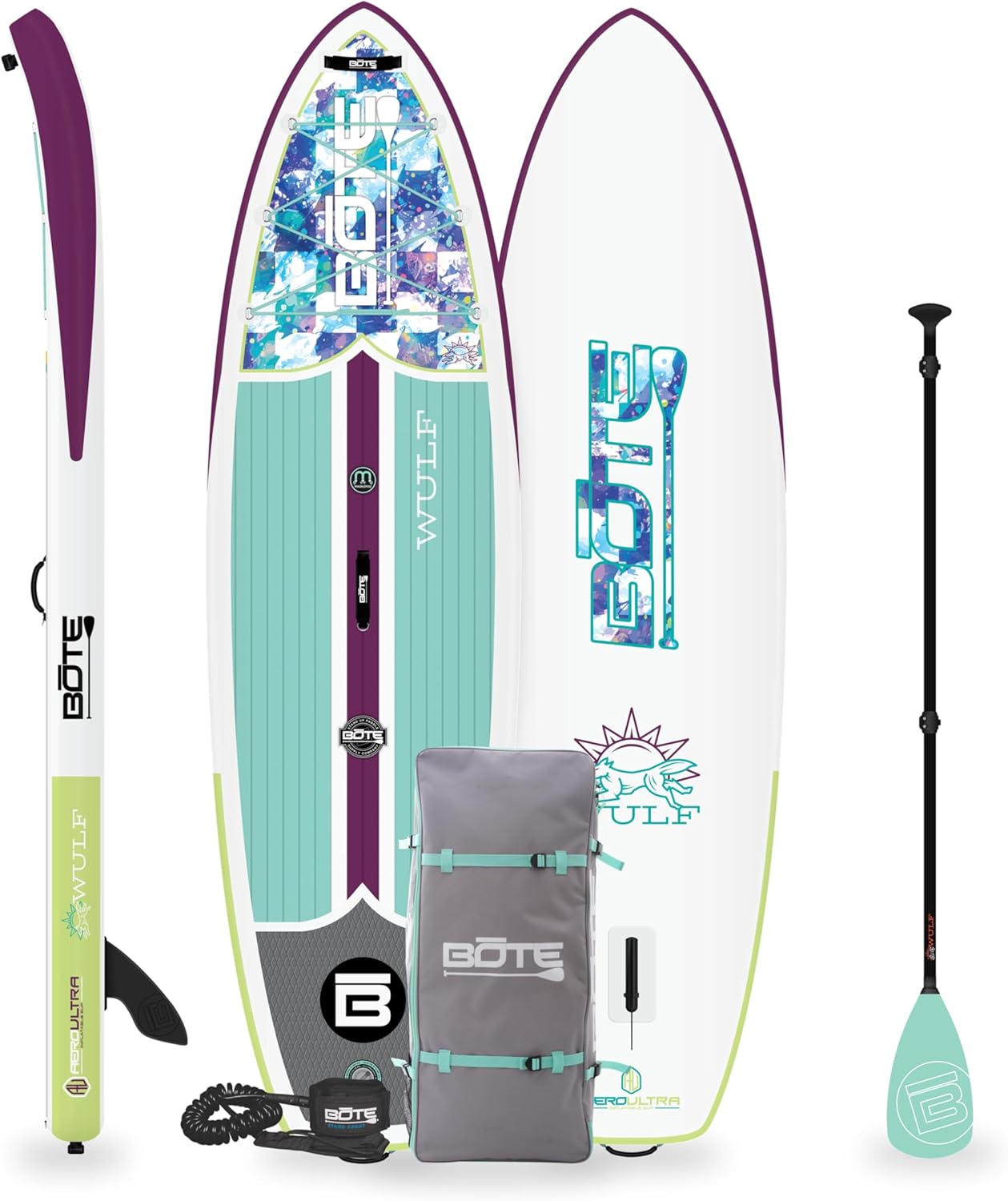
See real-time pricing, current color options, and buyer photos before you decide.
Check Price on Amazon →What Is a BOTE Paddle Board, Exactly?
BOTE (short for a play on “boat”) built its reputation on hard-shell fishing skiffs, kayaks, and coolers before it moved seriously into inflatable stand-up paddleboards. That lineage matters more than marketing copy suggests — a company that’s spent years designing hulls for anglers who stand, cast, and shift their weight constantly tends to understand stability in a way that boards designed purely for flatwater cruising sometimes miss.
One point of confusion worth clearing up early: people often use “SUP” and “paddle board” interchangeably, but they’re not always describing the same experience. If you want the full breakdown of where the terms overlap and where they diverge, our guide on SUP board vs paddle board is worth a quick read before you shop, since it changes what features actually matter to you.
BOTE’s inflatable lineup spans several personalities: compact, budget-conscious beginner boards; wide, cargo-friendly all-rounders aimed at families and casual paddlers; and longer, narrower touring shapes built for people who want to cover distance rather than just float around near the shore. What ties them together is a shared construction philosophy — dense drop-stitch cores, reinforced rail tape, and a deck layout that doesn’t feel like it was designed by someone who’s never actually stood on a paddleboard in open water.
That’s the context worth keeping in mind as we go section by section: a lot of what makes this board feel “premium” isn’t a single flashy feature, it’s the accumulation of small decisions that only become obvious once you’re twenty minutes into a paddle and realize your feet haven’t shifted once.
It also helps to understand how the brand’s naming conventions work, since it can be genuinely confusing when you’re comparing listings. Names like “Aero” generally refer to the inflatable construction line itself, while individual model names (think along the lines of a cruiser-style all-rounder versus a wide beginner board versus a longer touring shape) describe the hull profile underneath. Two boards can share the exact same AeroBOTE-style construction and materials while feeling completely different underfoot purely because of nose shape, rail thickness, and overall outline. That’s why reading the specific model description matters more than skimming the brand name alone — “a BOTE board” isn’t a single product, it’s a family of shapes built on a shared manufacturing philosophy.
There’s also a cultural angle worth mentioning. BOTE has leaned heavily into lifestyle marketing — beach days, sunset paddles, fishing trips — which sometimes gets dismissed as fluff by more technically-minded shoppers. But the lifestyle positioning and the engineering focus aren’t actually in tension here; a company selling an experience still has to deliver a product durable enough to survive that experience being repeated hundreds of times across a board’s lifespan, in salt spray, hot pavement, and the inside of a hot car trunk. The marketing may be aspirational, but the rail tape and drop-stitch density underneath it are not.

Browse available sizes and bundle options directly on the product listing.
View on Amazon →Key Features at a Glance
Before we get into the granular detail, here’s the feature set that shows up across most of the BOTE inflatable line and defines what the ownership experience actually feels like:
- Military-grade drop-stitch core — thousands of internal threads connect the top and bottom layers, letting the board hold a rigid, plank-like shape once fully inflated.
- Dual-layer or fusion-laminated rails — the side seams are where cheap boards fail first; BOTE reinforces this zone heavily.
- Full-length or ¾ EVA deck pad — soft, grippy foam underfoot that stays comfortable barefoot for hours.
- Bow and stern bungee cargo areas — enough tie-down space for a dry bag, cooler, or tackle box.
- Multiple grab handles — center carry handle plus nose and tail handles for two-person lifts.
- Removable fin system — typically a large center fin (sometimes with side bites) for tracking control.
- High-volume dual-action or electric pump options — depending on the kit you choose.
- Adjustable, often paddle-length-marked, aluminum or carbon-hybrid paddle — included in most complete kits.
- Backpack-style travel bag — deflated, the board rolls down small enough to check as luggage or store in a closet.
- Action mount / accessory compatibility — many models support camera mounts, coolers, or racks depending on generation.
Not every accessory ships with every kit — bundles vary by retailer and by which specific board in the range you choose, so it’s worth double-checking the listing’s included-items list before you buy, especially if you’re expecting an electric pump versus a manual one.

Confirm exactly what’s included with this specific kit before checkout.
See Included Accessories →Build Quality & Materials: What’s Actually Under the Deck Pad
Inflatable paddleboards live or die on two things: the drop-stitch core and the outer laminate that wraps it. BOTE uses a dense woven drop-stitch structure — thousands of polyester threads run vertically between the top and bottom PVC skins, which is what lets the board hold air at 12–15 PSI without ballooning into a banana shape. This is the same fundamental technology every serious inflatable SUP brand uses, but thread count, weave tightness, and skin thickness vary wildly between budget and premium boards, and that variance is exactly where the “why does this cost more” question gets answered.
If you’ve ever wondered how any of this actually comes together on a factory floor — the layering, the heat-welding, the way rails get bonded to the core — our explainer on how paddle boards are made walks through the process in more depth than most marketing pages bother to.
Where BOTE tends to differentiate itself is in rail construction. Cheaper boards often use a single PVC layer wrapped around the drop-stitch core and glued at the seam — a weak point that’s notorious for slow leaks after a season or two of hard use. BOTE’s construction typically doubles up material at the rail, sometimes with a fusion or thermobond process rather than pure adhesive, which is a meaningfully more durable approach even if it’s invisible from the outside.
The deck pad itself deserves a mention too. It’s not just there for comfort — a quality EVA foam pad diffuses pressure across your foot, reduces slipping when the deck gets wet, and protects the underlying PVC skin from UV degradation in the exact spot where you’ll be standing for hours. Cheaper boards sometimes use a thinner, harder foam that looks similar in photos but feels noticeably less forgiving after twenty minutes standing in one place.
Fit and finish also shows up in smaller details: how straight the stitching runs along the bungee mounts, whether the D-rings are reinforced with a patch instead of a single glued point, and how evenly the valve is seated. None of these are things you’ll notice in a product photo, but they’re exactly the things that separate a board that lasts five seasons from one that develops a slow leak by summer’s end.

Reinforced rail seams are one of the clearest tells of build quality on an inflatable SUP.
See buyer photos of the actual rail and seam construction in customer reviews.
Read Verified Reviews →On-Water Performance: Stability, Tracking & Speed
Stability is the first thing every new paddler notices, and it’s the metric BOTE’s wider boards are clearly optimized around. Most models in the range sit in the 32–36 inch width range, which puts them firmly in “confidence-inspiring” territory rather than “twitchy racer” territory. Standing up from your knees for the first time feels far less like a balancing act and more like stepping onto a dock that happens to move slightly with the water.
That stability doesn’t come free, though. Wider, thicker boards displace more water and catch more wind, which means they’re not going to feel fast in a straight-line sprint compared to a narrower touring shape. If your priority is covering miles efficiently rather than fishing, doing yoga, or paddling with a dog and a cooler strapped to the bow, a narrower BOTE touring model — or a different brand’s dedicated touring board — will out-glide the all-around shapes.
Tracking (the board’s tendency to go straight rather than wander) is handled by the fin setup. The large center fin most kits ship with does a solid job in calm conditions, but if you’re paddling in any real crosswind or current, adding side bites (where the mount system supports them) noticeably tightens up your line. Paddlers who’ve only ever used a cheap fin-less or single-fin budget board are often surprised at how much less correction stroke a properly finned setup requires.
In chop and light wind, the extra rigidity from the drop-stitch core and thicker rail construction pays off directly — a softer, under-inflated or poorly built board will visibly flex and “hinge” in the middle when a wake hits it broadside, which saps energy and confidence. A well-inflated BOTE board stays notably flatter and more plank-like across the same conditions, which is really the entire point of paying more for construction quality in the first place.
Wind deserves its own callout because it’s the single biggest performance variable paddlers underestimate before their first outing. Inflatable SUPs sit higher off the water than a hard board and present a larger side profile, which means a steady 12–15 mph crosswind can meaningfully push a wide, lightly-loaded board off its line. Paddlers who learn on a flat, calm morning and then head out on a breezier afternoon are often surprised at how much more corrective paddling is suddenly required. The practical takeaway: check wind forecasts before you commit to a route, paddle out into the wind first while you’re fresh so the return trip has it at your back, and don’t be afraid to add side-bite fins if your model supports them — the tracking improvement in gusty conditions is significant.
Current is a separate consideration entirely, and one that matters most if you paddle rivers, tidal inlets, or areas near boat channels. A board this stable in flat water can still get pushed sideways by moving current, and the wide, flat hull that makes it so forgiving to stand on doesn’t offer much resistance to lateral drift. If you’re paddling anywhere with meaningful current, staying close to shore, paddling upstream first, and keeping an eye on how quickly your position shifts relative to fixed landmarks are all simple habits that prevent the classic beginner mistake of drifting much farther than intended before realizing it.
See it in action across different water conditions in customer video reviews.
Check Availability →Sizing, Weight Capacity & Who This Board Is For
BOTE’s inflatable range spans roughly 10 to 12.5 feet in length depending on the model, with weight capacities generally landing somewhere between 250 and 450 pounds. That’s a wide enough spread to cover a solo lightweight paddler, a heavier adult paddling with a dog, or two people sharing one board for a short cruise — but capacity numbers deserve more scrutiny than most buyers give them.
A board rated for 300 pounds doesn’t perform the same at 290 pounds as it does at 150. As you approach the upper end of the stated capacity, the board sits lower in the water, becomes noticeably less responsive, and loses a chunk of the stability that made it appealing in the first place. For a genuinely accurate read on how these numbers actually translate to real-world performance — not just the marketing figure on the box — our guide on how much weight a paddle board can hold is essential reading before you buy, especially if you’re near the top of a board’s stated range or plan to paddle with a passenger or a dog regularly.
It’s also worth understanding where an inflatable all-around board like this fits in the broader category landscape. Paddleboards aren’t a single product — they split into touring, all-around, yoga/fitness, whitewater, and racing shapes, each with a distinct hull profile and rocker line. If you’re not sure which category actually matches how you plan to use the board, our breakdown of paddle board types will help you confirm you’re even shopping in the right category before falling in love with a specific model.
As a rough rule of thumb across the range: shorter, wider boards suit beginners, kids, dogs, and casual lake days; longer, narrower shapes suit fitness paddlers and people planning multi-mile outings; and anyone regularly paddling near or above 220 pounds should size up rather than default to the smallest model in a lineup, even if the smaller board is cheaper.
| Paddler Weight | Recommended Board Width | Expected Feel |
|---|---|---|
| Under 150 lbs | 30″–32″ | Nimble, easy to maneuver |
| 150–200 lbs | 32″–34″ | Balanced stability and glide |
| 200–250 lbs | 34″–35″ | Stable but a touch slower to turn |
| 250+ lbs / with gear or dog | 35″+ / high-capacity model | Prioritize capacity over speed |
Compare available lengths and capacity ratings for this exact listing.
Compare Sizes on Amazon →Models & Color Options: Picking the Right Version
One of the more overlooked parts of shopping for an inflatable paddleboard is realizing that “the BOTE board” you saw in a friend’s Instagram story might be a completely different length, width, and capacity than the one showing up first in your own search results. Listings frequently bundle several length options, several color patterns, and sometimes several pump configurations under a single product page, and it’s easy to click “buy” on the wrong variant if you’re not paying attention to the selector.
Color choice is mostly a personal preference matter, but it’s worth a brief practical note: darker deck colors absorb more heat in direct sun, which can make barefoot use genuinely uncomfortable on a hot afternoon, while lighter colors and busier graphic patterns tend to stay cooler underfoot and also show scuffs and dirt less obviously over time. If you plan to paddle midday in a hot climate, that’s a small but real consideration beyond aesthetics.
On length and width, resist the temptation to default to whatever looks best in the hero photo. A shorter, wider board in the 10–10.5 foot range is going to be the more forgiving, easier-to-store choice for most casual and beginner paddlers, while anything past 11.5 feet starts trading some of that forgiving stability for glide efficiency — a fair trade for fitness-focused paddlers, a poor one for someone whose priority is a lazy Saturday float with the family.
If a kit configuration lets you choose between a manual pump and an upgraded electric pump bundle, and the price difference is modest, it’s usually worth the upgrade unless you genuinely enjoy the physical effort of hand-pumping as part of the ritual. The time and energy saved compounds across every single outing for the life of the board.
See every available length, color, and pump bundle on the current listing.
Browse All Variants →What’s Actually in the Box
Complete kits typically include the board itself, a removable center fin (sometimes with side bites depending on the model), an adjustable multi-piece paddle, a dual-action hand pump or, on select bundles, an electric pump, a coiled ankle or calf leash, a repair kit with patch material and valve tool, and a wheeled or backpack-style carry bag sized to fit the rolled board plus accessories.
The carry bag deserves a specific callout because it’s an area where budget competitors frequently cut corners. A well-padded bag with proper backpack straps and a separate compartment for the pump and paddle makes an enormous difference when you’re the one hauling forty-plus pounds of gear from the parking lot to the shoreline. Thin, single-strap bags that dig into your shoulder aren’t just uncomfortable — they also tend to fail (torn seams, broken zippers) faster under repeated use.
Some bundles also throw in a small accessory kit: an action-mount attachment point, a bottle or phone dry pouch, or compatibility with BOTE’s broader rack ecosystem for anglers who want to add rod holders or a cooler mount later. None of these are essential to a good first experience, but they’re worth checking for if you already know you’ll want to expand your setup down the line rather than buying a second board.
One practical tip: inventory everything against the listing the moment it arrives, not weeks later. Inflatable boards are shipped compressed and it’s genuinely easy to overlook a small item like the valve tool or fin bolt buried in packing foam — and most sellers have a much easier return/replacement process within the first short window after delivery.
Confirm the exact kit contents and current bundle deals before you order.
View Full Kit Details →Setup, Inflation & Portability
Expect somewhere between eight and fifteen minutes to fully inflate the board with the included manual dual-action pump, depending on your fitness level and the model’s target PSI — most BOTE inflatables want to sit somewhere in the 12–15 PSI range for full rigidity, and that last two or three PSI is noticeably harder to push than the first ten. If your kit includes or supports an electric pump, that time drops dramatically and takes most of the physical effort out of the process, which matters more than it sounds like it should if you’re setting up solo on a hot afternoon.
Deflating and rolling the board back down is quicker than inflating it, but doing it well — squeezing out as much residual air as possible before rolling — makes a real difference in how compactly it packs, and a tightly rolled board is noticeably easier to wrestle back into the carry bag than one that’s rolled loosely.
On portability specifically: a fully-kitted board and bag typically lands somewhere in the 25–35 pound range depending on model and accessories, which is genuinely manageable for one person to carry a moderate distance, but isn’t “toss it over one shoulder without thinking about it” light the way some ultralight touring inflatables are. If you’re regularly hiking any real distance to reach water, or you have mobility considerations, it’s worth handling a board in person or watching an unboxing video before assuming portability numbers alone tell the full story.
Storage between trips is refreshingly simple compared to a hard board — deflated and rolled, it fits in a closet, trunk, or under a bed, which is a meaningful advantage for apartment dwellers or anyone without garage space.
Check current pump options (manual vs electric) available with this listing.
See Pump Options →Tips for Your First Time on the Water
Your first session sets the tone for whether paddleboarding feels like a natural, relaxing activity or a frustrating fight against the water — and almost all of that outcome comes down to a handful of small decisions made before you ever stand up.
Start on your knees. It sounds obvious, but plenty of first-timers try to stand immediately from a floating start, which is unnecessarily difficult even on a stable board. Paddle a short distance kneeling first to get a feel for balance and glide, then rise to standing one foot at a time, keeping your knees soft and your gaze on the horizon rather than down at your feet — looking down is one of the most common reasons beginners lose balance.
Foot placement matters more than most people expect. Stand roughly where the carry handle sits in the middle of the board, feet parallel and about hip-width apart, facing the nose. Standing too far forward buries the nose and makes the board feel unstable and hard to turn; standing too far back lifts the nose and makes tracking sloppy.
Choose your first location deliberately. A calm lake, a protected bay, or a slow-moving section of river on a low-wind morning is a dramatically easier learning environment than open coastline or anywhere with boat traffic. Save open water and choppier conditions for once you’ve built genuine confidence and balance reflexes.
Finally, don’t skip the leash, even for a “quick” first paddle in shallow water. New paddlers fall more often than experienced ones, and a board that drifts away in even a light breeze can turn a minor tumble into an unplanned swim to shore.
Get set up with the full beginner-friendly kit in one order.
Shop the Beginner Kit →Safety Considerations Every Buyer Should Know
A paddleboard is legally classified as a vessel in most jurisdictions once you’re beyond a swimming area, which comes with real requirements that a lot of first-time buyers simply don’t expect. Depending on where you paddle, you may need a properly fitted personal flotation device on board (not just nearby), a sound-producing device like a whistle, and in some areas, registration paperwork if the board exceeds certain length thresholds.
Rather than guessing at what applies to you, our full breakdown of paddle board safety requirements covers the practical checklist — leash use, PFD rules, and the situations where local Coast Guard or waterway authority rules actually get enforced — so you’re not caught out on your first outing.
A few habits are worth building in regardless of local law: always wear the ankle or calf leash, especially in moving water or wind, since a board that gets away from you in a stiff breeze can outrun a swimmer surprisingly fast. Check wind and weather before you launch rather than after, since inflatable boards’ large surface area catches wind more aggressively than a low-profile hard board. And never assume a fully inflated board is unsinkable cargo capacity — respect the rated weight limit, particularly if you’re paddling with a child, a dog, or gear strapped to the deck.
Pair your board with the right leash and PFD accessories from the same listing.
Shop the Listing →How the BOTE Inflatable Compares to Other Popular Boards
No review is complete without honest context on the alternatives, since “good” is relative to price point. Two boards that come up constantly in the same shopping searches are the Retrospec Weekender and the iRocker all-around lineup — both popular, both frequently discounted, and both aimed at slightly different corners of the market than BOTE.
We’ve reviewed both in depth separately: our Retrospec Weekender review covers a genuinely budget-friendly entry point that trades some rigidity and accessory quality for a noticeably lower price, while our iRocker paddle board review looks at a brand that competes much more directly with BOTE on build quality and sits in a similar mid-to-upper price bracket.
| Feature | BOTE Inflatable | Retrospec Weekender | iRocker All-Around |
|---|---|---|---|
| Typical Price Tier | Mid–Upper | Budget | Mid–Upper |
| Rail Construction | Reinforced / fusion | Single-layer glued | Reinforced / fusion |
| Deck Pad Comfort | Excellent | Good | Excellent |
| Kit Completeness | Strong | Basic | Strong |
| Brand Fishing/Utility Heritage | Strong | Limited | Moderate |
| Best For | All-around durability seekers | First-time, budget buyers | Feature-focused paddlers |
The honest takeaway: if your budget is genuinely tight and you’re not sure paddleboarding will stick as a hobby, the Weekender is a reasonable low-risk entry point. If you already know you’ll paddle regularly and want gear that survives years of car-topping, BOTE and iRocker are the more sensible long-term picks, with the final choice often coming down to which specific accessory kit and color option you prefer, since core construction quality between the two is closely matched.
Compare current pricing directly — deals shift often on bundle kits.
Check Today’s Price →Who Should Probably Skip This Board
A genuinely useful review points out who a product isn’t for, not just who it’s perfect for. If you’re purely chasing race-level speed or plan to train for competitive distance paddling, a dedicated narrow touring or racing shape — inflatable or hard — will out-glide any wide, stability-focused all-around board, BOTE included. The width that makes this board so forgiving for everyday use is the same width that caps its top-end efficiency.
If your budget is genuinely constrained and you’re not yet sure paddleboarding is a hobby you’ll stick with, it may make more sense to start with a cheaper entry-level board, get a season of use out of it, and reassess. Spending toward the upper end of the market before you know your own usage patterns is a common way to overspend on a hobby that doesn’t end up sticking.
Frequent long-distance hikers to remote put-in spots — think a mile or more of uneven trail — may also want to weigh the roughly 25–35 pound packed weight against dedicated ultralight touring inflatables built specifically to shave every possible ounce, sometimes at the cost of some rigidity and durability.
And if you specifically need a board rated for whitewater or aggressive surf use, that’s a different, more specialized hull category entirely — an all-around recreational board like this is built for lakes, calm rivers, and moderate coastal conditions, not rapids or breaking waves.
Still think it’s the right fit? Compare specs against your exact use case.
Review Full Specs →Pros and Cons
What We Like
- Genuinely rigid once fully inflated — minimal mid-board flex
- Reinforced rails hold up well to repeated car-topping and dock abuse
- Comfortable, grippy deck pad for barefoot use
- Stable enough for true beginners to stand confidently on the first try
- Well-organized, padded carry bag included in most kits
- Strong resale value thanks to brand recognition
Where It Falls Short
- Pricier than entry-level budget brands
- Not the fastest option for dedicated distance paddlers
- Manual pump inflation is a workout on hot days
- Some bundles skip the electric pump unless you upgrade
- At 30+ lbs packed, not the lightest for long hikes to water
Weigh the trade-offs yourself against current buyer photos and Q&A.
Read Buyer Feedback →Longevity & Maintenance: What to Expect Years Down the Line
With reasonable care, a quality inflatable SUP like this can realistically deliver several seasons of regular use, and it’s not unusual to hear from owners who’ve kept the same board going far longer than that. Longevity comes down to a handful of habits more than luck: rinsing off sand, salt, and sunscreen residue after every session, drying the board fully before rolling it for storage, and avoiding prolonged direct sun exposure when it’s not in use, since UV is the single biggest long-term threat to PVC material.
For a full breakdown of realistic lifespan expectations, the factors that shorten it, and warning signs that a board is nearing the end of its useful life, our dedicated guide on how long inflatable paddle boards last is worth bookmarking — it applies just as directly to a BOTE board as any other brand.
Routine maintenance is refreshingly low-effort: keep the valve free of sand and grit, check it periodically for slow air loss, and use the included repair kit at the first sign of a pinhole leak rather than letting it worsen. Storing the board loosely rolled (not folded sharply) also helps prevent stress creases in the PVC skin over time.
One underrated maintenance tip: top off the PSI before every single outing, not just when it “feels soft.” Boards lose a small amount of pressure naturally between sessions, especially in temperature swings, and paddling on a slightly under-inflated board doesn’t just feel worse — it also puts more repeated flex stress on the seams over time, which can shorten the board’s usable life.
Warranty coverage is another piece of the longevity picture that’s easy to overlook at checkout. Most complete kits come with a manufacturer’s limited warranty covering material and workmanship defects for a set period after purchase, though normal wear, UV fading, and damage from improper storage typically fall outside that coverage. Registering your board promptly after purchase and keeping a copy of your receipt is a small step that can save real frustration if you ever need to file a claim. It’s also worth noting that purchasing through an authorized retailer, rather than an unverified third-party reseller, is usually what keeps warranty coverage valid in the first place.
Check whether a repair kit and valve tool are included with your kit.
Confirm Kit Inclusions →Real Owner Feedback: Recurring Themes
Beyond spec sheets and lab-style breakdowns, it’s worth paying attention to the patterns that show up repeatedly across large numbers of verified owner reviews, since these tend to surface the small, lived-in details a single review can’t fully capture.
Stability is by far the most consistently praised attribute — new paddlers frequently mention being surprised at how quickly they felt confident standing, especially compared to a rental board or a friend’s older, softer inflatable. Build quality and “it feels sturdy” comments also appear often, typically alongside mentions of the board holding its shape and firmness trip after trip without needing constant topping off.
On the customer service side, owners who’ve needed to use a warranty claim or ask a fit question frequently mention responsive, helpful support — a detail that matters more than it might seem, since gear failures are inevitable with enough use, and how a brand handles that moment says a lot about long-term ownership experience.
The most common critical feedback centers on two things: the physical effort of manual pump inflation on hot days, and occasional confusion over which specific kit or bundle was ordered when multiple similar-looking listings exist. Both are avoidable — the first by budgeting for an electric pump upgrade if it matters to you, the second by carefully checking the exact variant, length, and included accessories before completing a purchase.
Read the latest verified owner reviews and star ratings for yourself.
Read Owner Reviews →Pricing & Value: Is It Worth the Premium?
BOTE inflatable paddle boards generally sit in the mid-to-upper price tier of the inflatable SUP market — noticeably more expensive than bargain-bin options you’ll find during flash sales, but priced in line with (or occasionally below) other well-known premium inflatable brands once you account for kit completeness.
Whether that premium is “worth it” really depends on how you plan to use the board. An occasional paddler who takes the board out three or four times a summer may genuinely be fine with a cheaper alternative, since the wear-and-tear differences between brands take repeated seasons of hard use to show up. A frequent paddler — someone who’s out weekly, transports the board regularly, or uses it in less forgiving conditions like moving water or ocean chop — will feel the difference in rigidity and durability much sooner, and that’s exactly the buyer this board is built for.
It’s also worth factoring in resale value, which is a genuinely underrated part of the value equation. Recognizable, well-reviewed brands hold their value noticeably better on the secondhand market than generic or lesser-known alternatives, which softens the effective cost if you ever decide to upgrade or sell.
Pricing on Amazon fluctuates with seasonal promotions, so it’s worth checking current availability rather than relying on any number quoted here — bundle configurations (manual vs. electric pump, accessory kits, color options) also shift the final price meaningfully.
Check today’s price, active discounts, and available bundle options.
Check Current Price →Frequently Asked Questions
How much PSI should I inflate a BOTE paddle board to?
Most models perform best fully inflated to somewhere between 12 and 15 PSI. Check the specific recommendation printed near the valve or in your included manual, since it can vary slightly by model and board thickness.
Is a BOTE inflatable paddle board good for beginners?
Yes. The wider, all-around shapes in the lineup are specifically designed with stability in mind, which makes standing up and finding balance considerably easier than on a narrower touring board.
How long does it take to inflate?
Expect roughly 8–15 minutes with the included manual dual-action pump, depending on fitness level and target PSI. An electric pump, where included or purchased separately, cuts that time down significantly.
Can two people ride one board at the same time?
Some higher-capacity models can technically support two riders within the rated weight limit, but stability and control drop noticeably compared to solo paddling. It works best for short, calm-water cruising rather than active paddling.
How do I patch a leak if one develops?
Most kits include a basic repair kit with patch material and a valve tool. For a pinhole leak, clean and dry the area thoroughly, apply the patch per the included instructions, and allow full curing time before re-inflating.
What’s the weight capacity of a typical BOTE inflatable?
Capacity varies by model, generally ranging from around 250 lbs on compact boards up to 450 lbs on wider, high-capacity shapes. Always check the specific listing, and avoid paddling consistently near the very top of the rated limit.
Do I need a life jacket to use one?
In most jurisdictions, yes — a paddleboard is legally treated as a vessel once you leave a designated swimming area, which typically requires a properly fitted PFD on board. Requirements vary by location, so check local rules before heading out.
How much does the board weigh once packed?
A fully-kitted board including bag, pump, and paddle typically lands somewhere between 25 and 35 pounds depending on the specific model and included accessories.
Is it suitable for use with a dog on board?
Yes, particularly on the wider, higher-capacity all-around models, which offer enough stable deck space and cargo capacity for a dog plus your own weight, provided you stay within the total rated limit.
How does it compare to a hard (solid) paddle board?
A quality inflatable like this gives up a small amount of glide and top-end speed compared to a hard board, but gains enormous advantages in storage, transport, and durability against dock or rock impacts — a fair trade for most recreational paddlers.
Can it be used in saltwater?
Yes, but rinse the board thoroughly with fresh water after every saltwater session, paying particular attention to the valve and fin mount, since salt residue accelerates wear on hardware and seams over time.
What’s the realistic lifespan of one of these boards?
With proper care — regular rinsing, full drying before storage, and avoiding prolonged UV exposure — several seasons of reliable use is a realistic expectation, with many well-maintained boards lasting considerably longer.
Do I need previous paddling experience to use one?
No. The wider, stability-focused shapes in the lineup are specifically designed to be approachable for complete beginners. Most first-time paddlers are able to stand and paddle comfortably within their first ten to fifteen minutes on the water.
Can I use a BOTE inflatable board for yoga or fitness workouts?
Yes, particularly the wider all-around models. The full-length deck pad and flat, stable stance make it a reasonable platform for on-water yoga or light fitness routines, though a dedicated yoga-specific SUP shape will offer slightly more usable flat deck space if that’s your primary use case.
What size air pump do I need if I want to upgrade from manual to electric?
Look for an electric SUP pump rated to reach at least the maximum recommended PSI for your specific board model, typically in the 15–20 PSI range, with a hose and valve adapter compatible with a standard Halkey-Roberts style valve, which is the industry-common valve type used across most inflatable paddleboards.
Will the color fade over time?
Some gradual fading is normal with any PVC-based inflatable exposed to regular sun, especially darker colors. Storing the board out of direct sunlight when not in use and rinsing off salt or chlorine residue promptly will noticeably slow this process.
Final Verdict: A Board Built for People Who Actually Use It
Plenty of inflatable paddleboards look nearly identical in a product photo — same rough shape, same drop-stitch buzzwords, same glossy deck pad shot from a flattering angle. The difference between a board that disappoints by its second summer and one that’s still going strong five years later almost never shows up in the marketing copy; it shows up in rail construction, valve quality, and the small manufacturing decisions that only reveal themselves with real use.
Based on everything covered in this review — the reinforced build, the confident stability, the genuinely usable kit, and the brand’s track record built on hard-use fishing and paddling gear — the BOTE inflatable paddle board earns its spot as a dependable, long-haul choice rather than a one-season novelty. It isn’t the cheapest option on the shelf, and it’s not the lightest board for long portages, but for paddlers who want gear that keeps performing after the honeymoon phase wears off, it’s a genuinely sound investment.
If you’ve read this far, you already know more about what you’re buying than most shoppers do at checkout. The next step is simple.
Check today’s price, colors in stock, and current bundle deals before they change.
View BOTE Paddle Board on Amazon →
Pingback: Paddle Board: Complete Guide to Choosing & Using It
Pingback: iRocker Nautical Paddle Board Review