Is Paddle Boarding Good Exercise? What It Really Does for Your Body
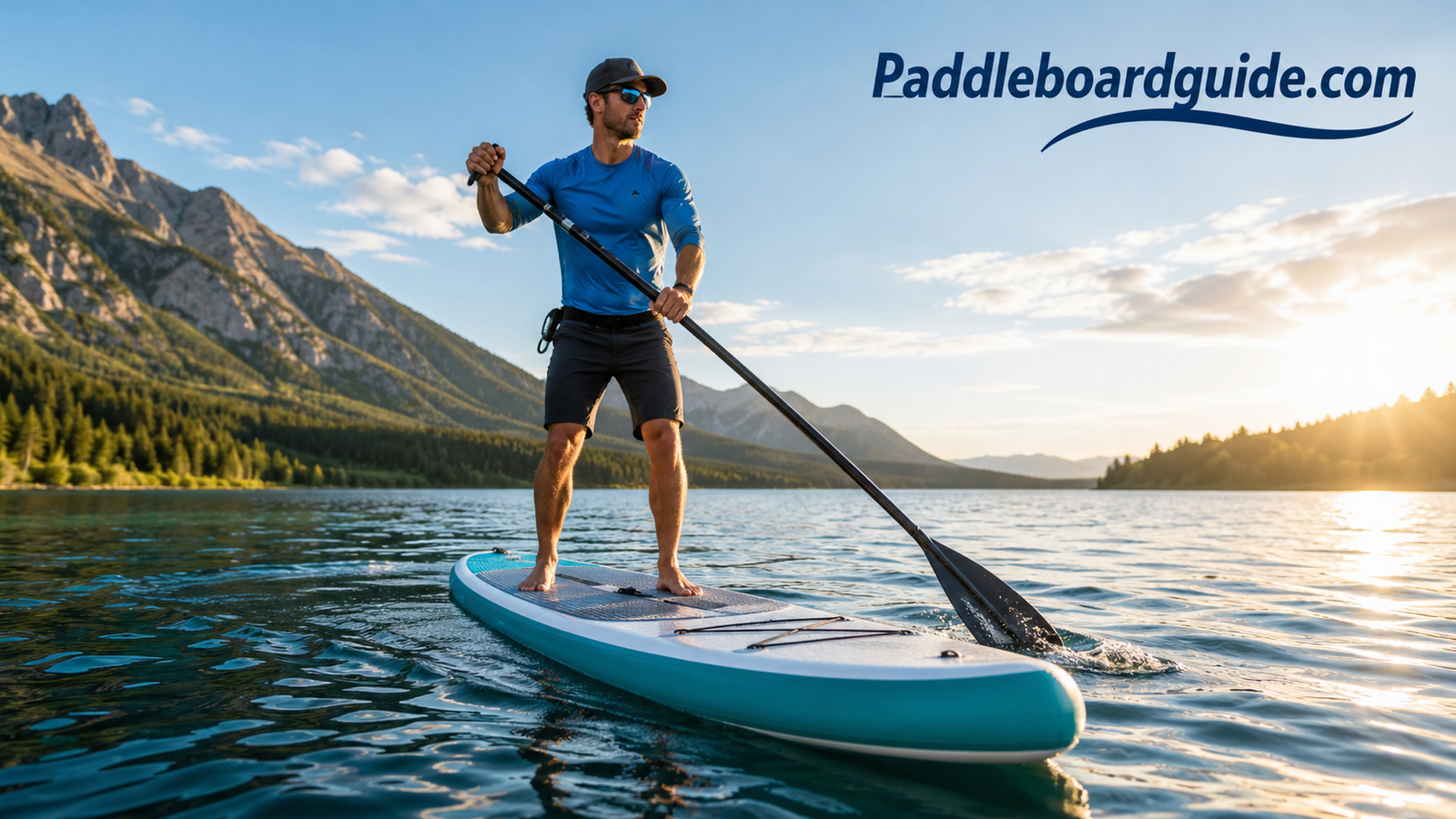
Picture the usual gym session: fluorescent lights, a row of treadmills, a playlist you stopped hearing months ago. Now picture gliding across a quiet lake with the sun on your shoulders and a paddle in your hands. Here is the surprise: the second scene can be just as demanding as the first, and a lot more likely to get you out the door. So, is paddle boarding good exercise? Yes, and in some ways it beats the things we normally call workouts.
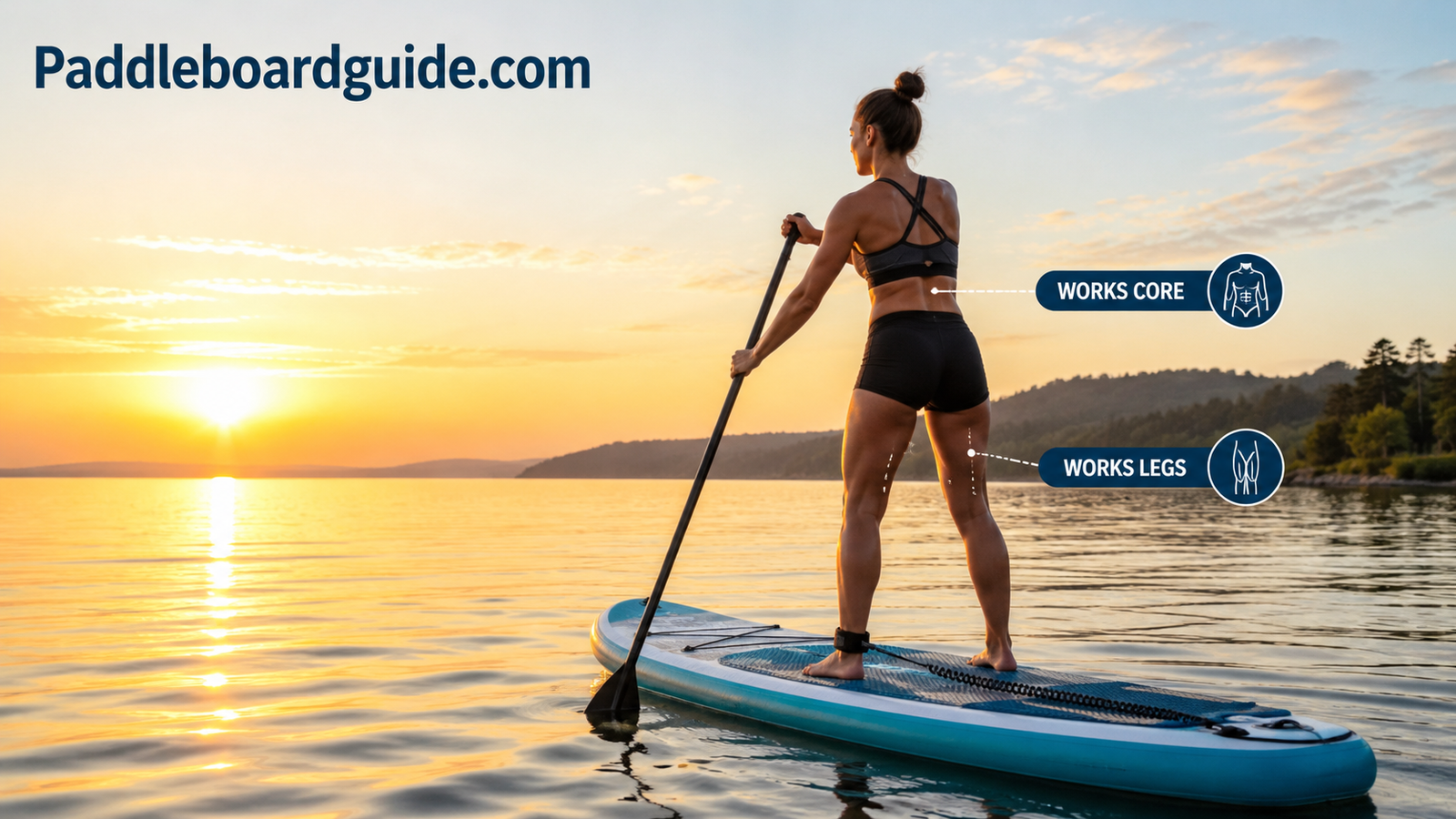
Stand-up paddle boarding (SUP) asks your legs, hips, core, back, shoulders, and arms to work as one connected system while the water keeps shifting underneath you. There is no machine guiding the movement and no bench holding your spine. You provide the stability yourself, one tiny correction at a time. That is why a relaxed hour on the water can leave your abs and feet pleasantly tired the next morning.
This guide walks through what paddle boarding actually does for your body and mind, how hard it really works your heart, how it compares with running, swimming, and yoga, and how to build a simple routine that fits a normal life. If you are still choosing your first board, our complete paddle board overview is a friendly place to start before you dive into the details below.
1. The Short Answer: Yes, and Here Is Why
Paddle boarding is good exercise because it combines three things most fitness routines treat separately: cardiovascular work, muscular endurance, and balance training. You get all three in a single session without needing to think of it as “training.” The effort is spread across your entire body instead of being parked in one muscle group.
It is also unusually adjustable. A calm, leisurely paddle with a friend might feel like a walk with better scenery. Paddle into a headwind at a steady clip, or add intervals, and the same board becomes a serious cardio session. You decide the intensity, and the water adds its own variables for free: wind, chop, current, and even your own tiredness near the end of the session.
What the research and real-world experience agree on
Exercise scientists generally group activities by how much energy they demand relative to rest. Casual paddling lands in the light-to-moderate range, while brisk paddling and racing styles climb into vigorous territory. Individual results depend on your weight, fitness, technique, and conditions, so treat any number you read as a ballpark rather than a promise. If you want to see how the numbers play out in detail, we break them down in our guide on whether paddle boarding burns calories.
Quick takeaway: If you can paddle for 45 to 60 minutes a few times a week at a pace where you can talk but not sing, you are getting meaningful cardio, a stronger core, better balance, and a mood lift all at once.
Who benefits most
- People who hate the gym: Because it feels like play, adherence tends to be high.
- Desk workers: Standing tall, rotating through the torso, and opening the chest counter a lot of sitting.
- Runners and cyclists: It is a gentle cross-training option that works the stabilizers they usually neglect.
- Anyone returning to activity: The pace is yours to set, and the water forgives mistakes.
- Families and friend groups: Exercise becomes a shared outing instead of a chore.
If you are curious how demanding it feels in the first few outings, our honest take on how hard paddle boarding actually is will set realistic expectations.
How paddle boarding fits the official activity guidelines
Public health guidance for adults generally points toward about two and a half hours of moderate activity each week, plus muscle-strengthening work on two or more days. Paddle boarding can contribute to both. Three sessions of fifty minutes at a steady pace gets you there on aerobic time alone, and the constant leg, core, and back effort counts toward your strengthening goals as well. That is a rare two-for-one, and it is one reason so many fitness coaches now recommend paddling as a lifestyle activity rather than a seasonal novelty.
The “it does not feel like exercise” advantage
Perceived effort is a quirky thing. When you are enjoying yourself, the same physical workload feels easier. Scenery, sunlight, wildlife, and good company all pull your attention away from effort and toward experience. Psychologists call this dissociation, and it explains why people will happily paddle for ninety minutes yet dread twenty on a stationary bike. If your biggest barrier to fitness is boredom, a board may be the most effective piece of equipment you can own.
What it will not do
To keep things honest: paddle boarding is not a complete fitness program by itself. It builds endurance, balance, and a strong trunk, but it does not load your bones the way jumping or lifting does, and it will not maximize muscle size. Think of it as the backbone of an active lifestyle that you can supplement with a little strength training. Understanding that limit helps you use the sport smartly instead of expecting it to be magic.
Seasonality matters too. In regions with cold winters, the water may be off-limits for months, so it helps to have a backup plan for indoor activity. That is not a flaw; it is simply realistic planning, and it keeps your fitness from disappearing each autumn.
Ready to start moving on the water? Browse popular inflatable paddle board kits on Amazon.
Shop Paddle Boards on Amazon2. A Full-Body Workout on Water
People often assume paddle boarding is an arm workout. Spend one afternoon doing it properly and you will learn the truth: the arms are mostly connectors. The real power comes from your torso, hips, and legs, and the muscles that keep you upright do a surprising share of the work.
Legs and glutes: the quiet foundation
Your legs never get to switch off on a board. Your quads, hamstrings, glutes, and calves make constant micro-adjustments to hold your stance, absorbing ripples and wake like built-in shock absorbers. When you shift your weight to turn or brace against a gust, those muscles fire harder. Paddle for an hour and you have effectively done a long set of tiny isometric holds, the kind that build endurance without bulk.
Your feet and ankles get a particularly good workout. Barefoot on a soft deck, the small stabilizing muscles in your feet grip, release, and rebalance hundreds of times per session. Many paddlers notice stronger, more responsive ankles after a few weeks, which carries over to hiking, running, and everyday walking.
The torso: where the stroke really comes from
A good paddle stroke begins at the hips and rotates through the trunk. You reach forward, plant the blade, and then pull the board past the paddle rather than pulling the paddle through the water. That rotation recruits the obliques, the lats, and the muscles along your spine. The arms stay relatively straight and act like cables, transferring power from the big muscles to the blade.
If you feel your biceps burning after ten minutes, that is usually a sign you are muscling the stroke with your arms. Rotating from the torso will make you faster, more efficient, and far less likely to wake up sore in the shoulders.
Shoulders, arms, and upper back
The shoulders do work, of course. The deltoids, rotator cuff, and upper back muscles stabilize the paddle and guide the blade. The triceps extend the top arm as it pushes forward, while the lats and rhomboids pull everything back. Because you alternate sides, the work is distributed fairly evenly, and the open, upright posture counters the forward slump many people carry from phones and keyboards.
| Body area | Main muscles involved | What they do on the board |
|---|---|---|
| Legs | Quads, hamstrings, calves | Absorb movement and hold your stance |
| Hips and glutes | Glute max, glute med, hip flexors | Power the rotation and steady your base |
| Core | Obliques, transverse abdominis, erector spinae | Transfer force and keep your spine stacked |
| Back | Lats, rhomboids, traps | Pull the board past the planted blade |
| Shoulders and arms | Deltoids, rotator cuff, triceps, biceps | Guide and stabilize the paddle |
| Feet and ankles | Intrinsic foot muscles, tibialis | Make constant balance corrections |
Technique matters a great deal here, and the beginner basics in our guide on how to paddle board are worth a quick read so you build the habit of rotating instead of pulling with your arms.
The kinetic chain: how power travels through your body
Exercise scientists use the phrase “kinetic chain” to describe how force moves from the ground up through the legs, hips, torso, and arms. On a paddle board, that chain is on full display. You press your feet into the deck, drive through the hips, rotate the torso, and finish with the arms. When every link works together, each stroke feels smooth and surprisingly powerful. When one link is weak or lazy, you feel it immediately as wobble or fatigue.
Training this chain is valuable well beyond the water. Throwing a ball, swinging a golf club, shoveling snow, and lifting a heavy box all rely on the same pattern. Paddling quietly rehearses that coordinated, ground-up movement for an hour at a time.
Hip mobility and rotation
Many adults lose rotational range through the hips and mid-back from years of sitting. A proper stroke gently asks for that range again. Reaching forward with the top shoulder while keeping your hips square encourages your thoracic spine to rotate, and driving the stroke back with your hips opens them. Over weeks, many people notice they twist more comfortably when they check a blind spot in the car or reach for something behind them.
Left-right balance
Because you switch sides regularly, paddling gives both sides of your body similar work, in contrast to some sports that favor a dominant hand or leg. If you notice one side feels weaker or less coordinated, the board will make that obvious, which is useful feedback. You can then pay extra attention to technique or add targeted exercises on land.
Breathing and rhythm
Paddlers often fall into a natural breathing pattern synchronized with their stroke, such as inhaling on the reach and exhaling on the pull. That rhythm lowers perceived effort and makes longer sessions feel smoother. It is a subtle skill, but one that carries over into running, cycling, and swimming too.
The right paddle changes the whole workout. Compare lightweight adjustable paddles.
Shop SUP Paddles on Amazon3. Core Strength and Balance: The Hidden Superpower
If there is one benefit paddle boarding delivers better than almost any other mainstream activity, it is core engagement. Not the crunch-and-sit-up kind, but the deep, functional kind that protects your spine and makes everyday movement feel easier.
Why an unstable surface changes everything
On solid ground, your body can lean on the floor. On a board, the floor moves. Your deep core muscles, especially the transverse abdominis and the multifidus along your spine, switch on automatically to keep your trunk steady. Physical therapists use wobble boards and balance pads for exactly this reason: unstable surfaces train your nervous system to coordinate muscles quickly. A paddle board is simply a large, scenic wobble board.
Every time a boat passes and sends a ripple your way, your body practices the same reflexes that stop you from tripping on a curb. Those reflexes are a use-it-or-lose-it skill, and they tend to fade with age if we never challenge them.
Balance as a trainable skill
Balance depends on three inputs: your eyes, your inner ear, and the sensors in your muscles and joints. Paddling stresses all three together. Fixing your gaze on the horizon helps your eyes and inner ear agree, while the sensors in your feet and ankles feed constant data to your brain. Over weeks, most people find they stand taller, feel steadier, and fall in the water less often, a visible and satisfying measure of progress.
Better balance is not only a nicety. It is one of the best predictors of staying independent and injury-free as we get older, which makes board time a smart long-term investment, not just a summer hobby.
Posture and the spine
Standing paddlers naturally stack their ribs over their hips and lift their chest, because slouching makes the board feel unstable. That upright position, repeated for an hour, can feel like a rolling posture reset. Many people with desk jobs report that their lower back feels looser after a session, though anyone with a back condition should check with a clinician first.
Try this: On your next paddle, pause every ten minutes, soften your knees, and hold still for ten seconds with your eyes on the horizon. You will feel your core and ankles doing real work.
Core strength you can actually feel in daily life
Classic ab exercises tend to train the front of the trunk in a single direction. Paddling trains the core in three dimensions: resisting tipping side to side, resisting twisting, and resisting bending forward or back. That breadth is what protects your spine when you carry a heavy bag on one shoulder, pick up a toddler, or reach for something on a high shelf. People often describe feeling “more solid” after several weeks on the water, and that sensation is real.
Reaction time and fall prevention
Your body learns to detect a wobble and correct it faster. Good reaction time is a protective skill that helps prevent falls on stairs, icy sidewalks, or uneven trails. While no one can promise a specific injury-prevention effect from a hobby, regular balance challenges are a well-supported part of healthy aging, and paddling delivers them in a form people truly enjoy.
Simple balance drills to try
- Stance shifts: Gently move your weight from heel to toe, then side to side, to feel where your center of mass lives.
- One-foot lifts: In calm water on a wide board, lift one heel briefly while holding the paddle for support.
- Paddle-free hold: Place the paddle across the board and stand with soft knees for thirty seconds.
- Slow turns: Practice sweeping the paddle in a wide arc to turn without moving your feet.
Take these slowly and always on water deep enough to avoid hitting the bottom when you fall, which you will, and that is part of the fun.
A stable board makes balance practice easier. Explore wide, beginner-friendly boards.
Find a Stable Board on Amazon4. Calories and Cardio: How Hard Does Your Heart Work?
This is the question most people really want answered. Does paddle boarding raise your heart rate enough to count as cardio, and how much energy does it burn? The honest answer is that it depends on how you paddle, but the range is wider than most beginners expect.
Three intensity levels
Leisurely paddling. Cruising along a calm shoreline with frequent breaks and conversation is closer to a brisk walk in effort. Your heart rate rises modestly, and you can chat easily. It still counts as movement, and for people new to exercise it is a gentle starting point.
Steady fitness paddling. Hold a consistent cadence for 45 to 60 minutes, keep your rotation crisp, and your breathing deepens. You can still talk in short sentences, but you would not want to sing. This is the sweet spot for aerobic conditioning, and it is where most regular paddlers settle for their weekly sessions.
Interval and race-style paddling. Alternate hard efforts of one to three minutes with easy recovery paddling, or paddle into a headwind, and your heart rate can reach levels comparable to running or rowing. Because the work is spread across large muscle groups, the cardiovascular demand is genuine.
| Paddling style | Effort feel | Best for |
|---|---|---|
| Leisurely cruise | Light, conversational | Beginners, recovery days, social outings |
| Steady fitness pace | Moderate, short sentences only | General cardio and endurance |
| Intervals or headwind | Hard, breathing heavy | Fat-burning goals, fitness gains, racing prep |
| Surf or touring sessions | Variable, long duration | Adventure plus endurance building |
What affects the energy you burn
Body weight, session length, wind, water conditions, board type, and technique all move the needle. A heavier paddler burns more energy for the same effort, a longer board that glides well can let you go farther per stroke, and a choppy day makes your stabilizers work overtime. Rather than chasing a single number, track what you can control: how long you paddled, how hard it felt, and how consistent you were over several weeks.
For a deeper look at the numbers and what influences them, read our breakdown of how many calories paddle boarding burns. It pairs nicely with this section if you are working toward a weight goal.
Making it work for weight management
Paddling alone will not melt weight off if your eating habits push the other way, but it is an enjoyable way to add regular, sustainable movement. Because people tend to stay on the water longer than they would stay on a treadmill, total weekly activity often climbs without feeling like punishment. Add a short interval block, such as six rounds of two hard minutes and two easy minutes, once a week and you have a time-efficient fat-burning session.
Heart rate tip: A simple talk test works well. If you can speak a full sentence comfortably, you are at an easy pace. If you can speak only a few words, you are working hard. If you can not speak, back off.
Heart health and endurance
Aerobic exercise strengthens the heart, improves circulation, and helps manage blood pressure and cholesterol over time. Regular steady paddling contributes to those benefits the same way brisk walking, cycling, or swimming does. The key ingredient is consistency: a heart that is challenged moderately several times a week adapts and becomes more efficient. If you have a heart or blood pressure concern, talk with your clinician before beginning and ask what intensity range is right for you.
Sample interval sessions
Beginner pyramid. After a five-minute warm-up, paddle hard for 30 seconds, easy for 90 seconds. Repeat eight times, then cool down for five minutes.
Intermediate ladder. Paddle hard for one, two, three, two, then one minute, resting for equal time between efforts. Finish with a gentle ten-minute paddle.
Distance goal. Pick a landmark about a mile away, paddle to it at a steady pace, and then return, trying to match or beat your outbound time.
Wind as a free training tool
Headwinds make every stroke work harder, while tailwinds let you rest and practice technique. A simple strategy is to start into the wind when you are fresh and finish with it at your back. That keeps you safe, since you will not be fighting a headwind when you are tired, and it turns weather into a built-in interval workout.
Recovery and fueling
Bring water on every paddle, and for sessions longer than an hour, a small snack with carbohydrates and a little protein helps maintain energy. Water can mask how much you are sweating, so drink before you feel thirsty. Afterward, a balanced meal supports recovery and keeps your next session strong.
Want to track effort on the water? See waterproof fitness trackers and heart rate monitors.
Shop Waterproof Trackers on Amazon5. Strength and Muscular Endurance
Paddle boarding will not turn you into a powerlifter, but it builds something arguably more useful for daily life: endurance strength. That is the ability to keep muscles working for a long time without tiring, the quality that makes carrying groceries, hiking a trail, or playing with kids feel manageable.
Resistance from water
Every stroke pulls against the resistance of water, which is far denser than air. The harder and faster you paddle, the greater the load. A strong headwind or current multiplies it. Unlike a gym machine, the resistance adapts to your effort automatically, so beginners work gently while experienced paddlers can push close to their limits.
Isometric strength in your legs and core
Holding a stable stance for an hour is a long isometric workout. Your legs and core brace against movement continuously, building strength through sustained tension. Many paddlers discover that squats and planks feel easier after a month or two of regular paddling.
Grip, forearms, and posture muscles
Your grip and forearms also work harder than you might expect, especially in wind. The posterior chain, which includes your glutes, hamstrings, and the muscles along your spine, gets steady use as well. That matters because modern life weakens exactly those muscles. If you are not sure which paddle suits your strength level, our guide to the best paddle board paddles covers weight, shaft type, and blade size so your gear supports your goals.
Adding strength extras on the board
Once you feel steady, you can layer in light bodyweight work. Calm water is a good place for squats, lunges, and plank holds on the deck, all of which magnify the stability challenge. Keep these gentle at first, stay in shallow water, and always wear a leash. The next section covers why the low-impact nature of the sport makes this kind of experimenting safer than it would be on solid ground.
Strength pros
- Builds endurance in legs, core, and back
- Resistance scales to your effort
- Improves posture muscles
- Light enough to do multiple times a week
Strength limits
- Not ideal for maximal strength or muscle size
- Upper body load is moderate
- Best paired with occasional resistance training
Posture, shoulders, and the desk-worker fix
Hours at a keyboard shorten the chest, round the shoulders, and weaken the upper back. Paddling does the reverse. Each stroke pulls the shoulder blades back and down, opens the chest, and strengthens the muscles that hold the head over the spine. Many desk workers notice that they sit and stand taller after a few weeks of regular paddling, and some report fewer tension headaches. While results vary, the postural benefits are a common theme among regular paddlers.
Technique tweaks that build more strength
- Plant the paddle fully: Bury the blade before you pull, so you move the board, not just the water.
- Keep a vertical shaft: A near-vertical paddle gives the cleanest, strongest pull.
- Stack your shoulders: Top hand over bottom hand, with your rotation driving the stroke.
- Exit at the hip: Lift the blade near your feet rather than dragging it behind you.
Pairing paddling with land-based strength
Two short strength sessions a week amplify your gains on the water. Focus on movements that mirror paddling: bent-over rows, single-arm cable or band pulls, rotational chops, deadlifts, squats, and planks. These build the pulling and trunk strength you use every stroke, and they help protect the shoulders and back. Keep each session to thirty or forty minutes, and you will notice stronger, more efficient paddling within a month or two.
Why endurance strength matters
Everyday life rarely demands a one-time maximum effort. It demands sustained, moderate effort: carrying shopping bags, gardening, walking hills, playing with children. That is exactly the kind of strength paddling builds, which is why people often say they feel more capable in daily life even if the gym numbers have not changed.
Boost your routine with extras. Browse resistance bands and balance accessories for off-water training.
Shop Resistance Bands on Amazon6. Joint-Friendly, Low-Impact Training
Running pounds your knees, hips, and spine with several times your body weight at every step. Paddle boarding, by contrast, asks your joints to bend and rotate smoothly without any impact at all. That makes it one of the friendliest ways to build fitness, especially if you are returning from injury, carrying extra weight, or simply tired of aching knees.
Why low impact matters
Impact is not bad in itself. Bones need loading to stay dense. But repeated high impact is a common source of overuse injuries, particularly for people who ramp up too fast. Paddle boarding lets you train frequently with much less wear on the joints, so you can build a base of fitness while giving connective tissue time to adapt. It also pairs well with higher-impact activities because it adds volume without adding pounding.
Supportive for a wide range of ages
You will see teenagers and seventy-year-olds on the same stretch of water. Because you control the speed, a gentle outing is available to nearly anyone who can stand and balance. Board stability matters a lot for confidence, and our article on how much weight a paddle board can hold will help you pick a board that supports you, your gear, and even a dog or child.
Falls are softer than you think
The worst-case scenario on a board is usually a splash. Falling into water is far gentler than landing on pavement or a gym floor. That lower consequence helps many people try new moves with less fear. Still, safety basics apply: wear a personal flotation device, use a leash, and know the conditions. Our picks for the best paddle board life jackets are a useful starting point, and you can review local rules in our paddle board safety requirements guide.
Note: If you have a specific injury, joint condition, or heart concern, talk with a healthcare professional before starting a new exercise routine. Low impact does not mean no risk.
Recovery and cross-training value
Because paddling is gentle on joints, it works beautifully as an active recovery day between harder workouts. Runners, cyclists, lifters, and skiers often use it to keep blood flowing and muscles loose without adding fatigue. A relaxed forty-five-minute paddle can leave you feeling refreshed rather than drained, which is the ideal recovery experience.
Returning after injury or a long break
Anyone coming back from time off knows the frustration of losing fitness and the fear of reinjury. Paddling offers a gentle ramp: the water supports you, intensity is adjustable, and falls are soft. Always follow the advice of your healthcare provider or physical therapist, and begin with short sessions on calm water. Many people find the sport gives them a reason to move again and rebuilds confidence along with fitness.
Paddling with extra body weight
Larger paddlers sometimes worry that the sport is not for them. In truth, with a board of adequate volume and stability, many find paddling more comfortable than activities that load the knees and ankles. The board does need to match your weight and gear, so check the capacity before buying, and consider a wider, thicker model for added stability. Water also keeps you cool, which makes longer sessions more tolerable.
Cold water and weather considerations
Low-impact does not mean low-risk when conditions turn. Cold water can sap strength quickly and shock the body, so dress for immersion when temperatures drop, such as wearing a wetsuit or drysuit. Check forecasts and let someone know your plans. Prepared paddlers get to stay on the water longer and enjoy more sessions across the year.
Safety first, fun second. Shop comfortable, coast-guard-approved life jackets.
Shop Life Jackets on Amazon7. Mental Health Benefits: The Part No Calorie Counter Measures
Ask regular paddlers why they keep showing up and fewer than half will mention muscles or calories. Most talk about how they feel afterward: calmer, clearer, lighter. That is not a coincidence, and it is a big reason paddle boarding earns its place as a genuinely good form of exercise.
Movement plus nature is a powerful combination
Researchers studying “green space” and “blue space” have repeatedly found that time near water is linked with lower stress and better mood. Combine that with rhythmic, aerobic movement and you get a double dose. The repetitive paddle stroke has a meditative quality, and the gentle sounds of water tend to quiet mental chatter in a way a crowded gym rarely can.
Mindfulness without trying
Staying upright requires attention. You notice the board, the wind, your feet, your breath. There is no room left for scrolling through worries, so your mind settles into the present almost by default. Many people describe the experience as moving meditation. If you struggle to sit still and meditate, a paddle can deliver a similar benefit.
Sunlight, vitamin D, and sleep
Morning or daytime paddling exposes you to natural light, which helps anchor your body clock. Regular outdoor activity is often associated with better sleep, and many paddlers report falling asleep faster after a day on the water. Always protect your skin with sunscreen, a hat, and sun-protective clothing, since reflection off the water intensifies exposure.
Confidence and accomplishment
Few feelings beat standing up for the first time, then paddling a full loop without falling. Those small wins stack up. Learning a new skill, conquering a bit of fear, and exploring a place you could not reach on foot all feed self-confidence in a way that carries beyond the water.
Social connection
Paddling is easy to share. Friends can chat side by side, families can raft up for a floating picnic, and local paddling groups welcome newcomers. Social connection is itself one of the strongest predictors of long-term wellbeing, so a hobby that nudges you to see people regularly is doing double duty.
Good to know: Exercise supports mental wellbeing, but it is not a replacement for professional care. If you are struggling, please reach out to a qualified professional.
The best time of day can shape the experience a lot, from glassy sunrise water to golden evening light. Our guide to the best time to paddle board will help you choose conditions that feel calm and safe.
A simple “reset” routine you can do on the water
Paddle out until you reach a calm patch of water. Stop and take five slow breaths, inhaling for four counts and exhaling for six. Notice three things you can see, two you can hear, and one you can feel, like the sun on your shoulders. Then begin paddling again with a slow, deliberate stroke. This tiny ritual takes two minutes and can reset a stressful day.
Why routine matters for mood
Regular exercise is consistently linked with better mood and lower anxiety, and routines amplify those effects. Booking a standing weekly paddle, even a short one, gives you something to look forward to. Anticipation itself is a mood booster, and having a predictable outlet makes busy weeks feel more manageable.
Solo time versus shared time
Some paddlers love solitude, relishing quiet mornings alone. Others thrive on company. Both are valid, and you can mix them. Solo paddles are good for reflection and focus, while group outings build connection and accountability. Whenever you paddle alone, tell someone your plan, carry a phone in a waterproof pouch, and stay within your abilities.
Digital detox bonus
Because phones and water do not mix well, a paddle becomes a natural break from notifications. That hour of unplugged time may be one of the most restful parts of your week. Even if you carry a phone for safety, keep it sealed and out of reach so you can simply be where you are.
Protect your skin on the water. Browse reef-safe sunscreen and UV-protective rash guards.
Shop Sun Protection on Amazon8. Styles That Change the Workout
One of paddle boarding’s best features is how many different workouts hide inside it. The same board can serve a calm recovery day, a heart-pounding interval session, a core-focused yoga flow, or a long-distance endurance trip. Here is how the main styles stack up.
Recreational and touring paddling
Recreational paddling is the classic: cruise along a shoreline, explore coves, and enjoy the scenery. Touring takes the same idea farther, with longer distances, steadier pacing, and often a sleeker board that tracks straight. Touring builds aerobic endurance and is a great way to log long, low-stress minutes. If you are shopping for something that handles both, our overview of paddle board types explains how shape and size affect performance.
Fitness and interval paddling
Fitness paddlers treat the board like a rowing machine with better views. They hold a steady, strong cadence, use their core to drive each stroke, and sometimes pair it with timed intervals. This style delivers the biggest cardio return in the shortest time.
SUP yoga and Pilates
Yoga on a board turns familiar poses into balance challenges. A simple downward dog becomes a core workout, and tree pose suddenly demands your full attention. Even if you have never practiced yoga, a calm bay and a stable board make it surprisingly approachable. A wider, thicker board gives you more room to move.
Surf and whitewater SUP
Riding waves or river rapids adds bursts of explosive effort, quick balance corrections, and plenty of adrenaline. These styles demand more skill and more safety awareness, so build your basics first.
Racing
Competitive paddlers train hard on long, narrow boards. If you like measurable goals, entering a local race can add structure and motivation, and plenty of events have relaxed “fun” divisions for newcomers.
| Style | Intensity | Skill level | Main benefit |
|---|---|---|---|
| Recreational | Low to moderate | Beginner | Easy movement and enjoyment |
| Touring | Moderate | Beginner to intermediate | Endurance |
| Fitness or intervals | Moderate to high | Intermediate | Cardio and calorie burn |
| SUP yoga | Low to moderate | Beginner to intermediate | Core, flexibility, balance |
| Surf or whitewater | Variable, bursts | Advanced | Agility and power |
| Racing | High | Advanced | Speed and performance |
Inflatable or hard board?
For most people building a fitness habit, an inflatable board is the practical choice. It stores in a closet, travels easily, and is surprisingly rigid when fully pumped. Our roundup of the best inflatable paddle boards and our explainer on whether inflatable paddle boards are good for beginners go into the trade-offs. If you are curious how they hold up over time, check how long inflatable paddle boards last.
Matching a style to your goal
If your goal is general health and stress relief, recreational and touring paddling will serve you beautifully. If you want to lose weight or boost cardio fitness, lean toward fitness paddling and intervals. If you crave flexibility and calm, SUP yoga is a lovely complement. If you thrive on challenge and adventure, surf or downwind paddling can keep your motivation high. You do not have to choose just one: many paddlers rotate through several styles across a season.
Equipment differences by style
Wider, thicker boards of ten to eleven feet suit most beginners and yoga fans because they are forgiving and stable. Longer, narrower touring boards of twelve feet and beyond glide farther per stroke and track straighter. Compact boards with rounded noses suit surf and playful sessions. The paddle matters too: lighter paddles with smaller blades reduce shoulder fatigue on long outings, while larger blades give more power for sprints.
Trying before you buy
Many shops and outfitters offer rentals or demos. A single session on a rental board can teach you more about what you like than hours of reading. Take the chance to try different widths and lengths, and note how stable, fast, and comfortable each feels before you commit to a purchase.
Find the board that fits your workout style. Compare inflatable boards for fitness and touring.
Shop Touring Boards on Amazon9. Paddle Boarding vs Other Workouts
How does paddle boarding really stack up against the activities people usually choose for fitness? Each has strengths, and the best answer depends on your goals, joints, and personality. Here is an honest comparison.
Paddle boarding vs running
Running typically burns more energy per minute and builds bone density through impact. But it is hard on joints and easy to overdo. Paddling is gentler, builds the upper body and core much more, and for many people feels more enjoyable, which means they actually do it. For runners, paddling makes an excellent cross-training day because it trains stabilizers without pounding.
Paddle boarding vs swimming
Both are low impact, but swimming demands more technique and a pool or safe open water. Swimming is superb for lung capacity and full-body conditioning. Paddling is easier to start, keeps you upright, and builds balance in a way swimming does not.
Paddle boarding vs yoga
Yoga excels at flexibility, mobility, and mindfulness. Paddle boarding brings more cardio and endurance, though SUP yoga can combine the two. Many people use both: yoga to stay supple, paddling to build stamina.
Paddle boarding vs gym machines
Machines isolate muscles and let you track precise numbers. A paddle board does the opposite: it coordinates muscles together in a natural pattern, which carries over to real-life movement. The tradeoff is less precise measurement. Paddlers who like data can rely on time, distance, and a waterproof tracker.
Paddle boarding vs kayaking
Kayaking is seated, so it focuses on the upper body and trunk. Standing on a paddle board recruits your legs and balance muscles too, and you get a better view. Some people prefer the stability of a kayak; others love the freedom of standing. For a closer look at the board itself, see our comparison of SUP boards vs paddle boards.
| Activity | Impact on joints | Core and balance | Cardio potential | Fun factor |
|---|---|---|---|---|
| Paddle boarding | Very low | Excellent | Moderate to high | Very high |
| Running | High | Moderate | High | Varies |
| Swimming | Very low | Moderate | High | Moderate |
| Yoga | Low | High | Low | Moderate |
| Kayaking | Low | Moderate | Moderate | High |
| Gym cardio | Low to high | Low to moderate | High | Low to moderate |
The honest verdict: The best exercise is the one you will actually keep doing. Paddle boarding wins on enjoyment, joint friendliness, and core engagement. It is not the single most efficient calorie burner, but it is easy to stack with other activities.
Combining paddling with other activities
The smartest fitness plans mix activities. A sample week might include two paddle sessions, one strength workout, one yoga or mobility class, and one hike or bike ride. This blend gives you endurance, strength, flexibility, and variety, while keeping any single joint or muscle group from being overworked. Paddling slots in easily because it is low impact and adjustable, so it pairs with nearly anything.
What about time efficiency?
If you are short on time, a high-intensity treadmill or cycling session may deliver more cardio per minute. But paddling has a hidden efficiency: you do not need to drive to a gym, change in a locker room, or wait for a machine if you live near water. For people who keep a board at home, a twenty-minute evening paddle can be done almost as easily as a walk around the block.
Cost and convenience
Gym memberships are a recurring expense, while a paddle board is a one-time purchase that can last for years with good care. Add a few accessories and you have a workout you can take almost anywhere with water. The convenience of an inflatable board that fits in a closet makes ownership manageable even in small apartments.
Round out your fitness gear. Browse paddle board accessories and carry bags.
Shop Accessories on Amazon10. A Beginner Plan to Turn Paddling into Real Exercise
Knowing paddle boarding is good exercise and actually getting those benefits are two different things. A simple plan keeps you progressing without burning out or straining your shoulders. Here is a four-week approach that works for most healthy adults. Adjust it to your comfort, and check with a professional if you have health concerns.
Week 1: Learn the board
Aim for two sessions of 20 to 30 minutes on calm, flat water. Start on your knees, stand when you feel steady, and focus on a relaxed stance: feet hip-width apart, knees slightly bent, eyes on the horizon. Do not worry about speed. If technique is new to you, spend a few minutes with our guide on how to paddle board before you head out.
Week 2: Build rhythm
Go for two or three sessions of 30 to 40 minutes. Practice rotating from your torso, keeping your top hand over the paddle handle and your arms fairly straight. Switch sides every 5 to 8 strokes to keep the board tracking straight and work both sides evenly.
Week 3: Add steady effort
Move to three sessions of 40 to 50 minutes. Hold a steady pace at which you can speak in short sentences. Add one short block of faster paddling: three rounds of one minute hard, two minutes easy.
Week 4: Mix in variety
Try one longer, easy session of 60 minutes or more, one interval session of six rounds of two minutes hard and two easy, and one skills-and-balance day with gentle turns, a few squats on a stable board, or a short SUP yoga flow.
| Week | Sessions | Length | Focus |
|---|---|---|---|
| 1 | 2 | 20 to 30 min | Balance and comfort |
| 2 | 2 to 3 | 30 to 40 min | Torso rotation and rhythm |
| 3 | 3 | 40 to 50 min | Steady pace and short intervals |
| 4 | 3 | 45 to 60+ min | Variety: long, interval, and skills days |
Warm-up and cool-down
Spend five minutes before you launch with arm circles, torso twists, hip hinges, and gentle squats. Afterward, stretch your hips, hamstrings, chest, and shoulders. A little attention here pays off in fewer aches the next day.
Common beginner mistakes
- Looking down at your feet. Look ahead and your balance improves immediately.
- Standing too close to the edge. Keep your feet near the center handle.
- Pulling with the arms. Rotate from the hips and let your core drive.
- Gripping too tightly. Relax your hands and shoulders to save energy.
- Skipping the leash. It keeps your board within reach.
Sample session structure
A well-built forty-five-minute session might look like this: five minutes of warm-up on land, five minutes of easy paddling to settle in, twenty-five minutes at your steady pace, five minutes of gentle cool-down paddling, and five minutes of stretching on shore. Having a structure takes the guesswork out and helps you build good habits.
What to do if you keep falling
Falling is part of learning. Fall away from the board rather than onto it, keep hold of the paddle if you can, and use your leash to pull the board back. Climb on from the side, near the center, and get back on your knees before standing. Most beginners fall several times in their first outings, and the frequency drops quickly with practice. Treat every splash as a free dip.
Setting realistic goals
Good goals are specific and kind. Aim for “paddle three times this week for thirty minutes” rather than “get fit.” Celebrate wins like completing a loop, standing for ten minutes, or trying a new route. Over a couple of months, those small steps add up to visible fitness, confidence, and a habit that sticks.
Gear up for week one. Find a board leash, dry bag, and a good set of accessories.
Shop Leashes and Dry Bags on Amazon11. Gear and Safety: Setting Yourself Up to Succeed
Good exercise is sustainable exercise, and sustainability on the water depends on safe, comfortable gear. You do not need a mountain of equipment, but a few well-chosen items make every session more enjoyable.
The essentials
- Board: Wide and stable for beginners, with enough volume for your weight.
- Paddle: Adjustable, lightweight, and sized so the handle reaches your wrist when held overhead.
- Leash: Keeps the board attached to you if you fall.
- Personal flotation device: Worn or carried according to local rules.
- Pump: A good one makes inflating easier, and our list of the best paddle board pumps can save your arms before you even launch.
Understanding how boards are built also helps you pick one wisely. Our look at how paddle boards are made explains why construction affects stiffness and durability. And if you ever wonder about your paddle, the answer to whether paddle board paddles float may save you a lost paddle.
Clothing and sun protection
Wear quick-dry clothing that moves freely. Consider water shoes if the bottom is rocky, a hat with a chin strap, and sunglasses with a retainer. In cool water, dress for the temperature of the water, not the air, since a fall is always possible.
Weather and water awareness
Check the wind, tide, and current before you go. Offshore winds can push you away from shore faster than you can paddle back. Avoid paddling during thunderstorms, and stay close to shore until your skills improve. Our safety requirements guide offers more detail.
Transport and storage
The easier it is to get your board to the water, the more you will paddle. Inflatables fit in a trunk or a bag, while hard boards usually need a rack. See our tips on how to transport a paddle board, our picks for the best paddle board roof racks, and our best paddle board bags roundup. At home, a few inflatable paddle board storage ideas keep your gear tidy and protected.
Care and repairs
A small puncture does not have to end your season. Knowing how to patch a paddle board keeps your gear on the water and your routine on track.
Brands worth a look
If you are comparing specific models, read our detailed reviews of the iROCKER paddle board, the iROCKER Nautical, the BOTE inflatable board, and the Retrospec Weekender.
Choosing the right board size for fitness
Volume, width, and length determine stability and speed. For beginners and weight-conscious paddlers, wider boards around thirty-two to thirty-six inches feel steadier. If you want speed and distance, a longer, narrower board improves glide. Always check the manufacturer’s capacity and choose a board that comfortably exceeds your weight plus gear for better performance and stability.
Safety checklist before every paddle
- Check the weather, wind, and water temperature.
- Tell someone where you are going and when you expect to return.
- Wear a personal flotation device and attach your leash properly.
- Carry a whistle or signaling device and a phone in a waterproof pouch.
- Bring water, sun protection, and a small snack.
- Know your limits and stay close to shore until you are confident.
Etiquette and awareness
Share the water. Give anglers, swimmers, and larger vessels plenty of room, watch for boat wakes, and learn local right-of-way rules. Leave no trace by packing out your trash and respecting wildlife. Being a courteous paddler keeps access open for everyone.
Complete your setup. Explore paddle board bundles with pump, leash, and bag included.
Shop Paddle Board Bundles on Amazon12. Progressing and Staying Consistent
The biggest gains in fitness come not from one heroic session but from repeating good ones week after week. Here is how to keep progressing while staying injured-free and motivated.
Use progressive overload, gently
Increase either distance, duration, or intensity, not all three at once. Add five to ten minutes to a session, or one extra interval, every week or two. Your body adapts when you nudge it, not when you shock it.
Track what matters
Keep a simple log: date, minutes, route, and how it felt. Over time you will see your distance grow, your recovery speed up, and your balance steady. A waterproof tracker is optional but handy for pace and heart rate.
Protect your shoulders and back
If you feel pinching in your shoulder or aching in your lower back, shorten your session and check your technique. Make sure your paddle length is right, rotate from your torso, and keep your knees slightly bent. A short break and some gentle stretching often solve small issues before they become real ones.
Cross-train for balance
Add a little strength work, such as squats, rows, planks, and rotational core moves, two days a week. Pair it with mobility work for hips and thoracic spine. Paddling is an excellent base, but it is not perfect for everything. Some weight-bearing exercise helps your bones, too.
Make it social and seasonal
Join a local paddle group, schedule regular outings with friends, or sign up for a charity paddle. Accountability keeps you consistent. When water gets cold, adapt: dress appropriately, paddle shorter sessions, or shift to indoor strength and mobility training until the weather returns.
Listen to your body
Rest days matter. Soreness is normal, but sharp or lasting pain is not. Stay hydrated, eat enough to fuel your sessions, and sleep well. Consistency over months is far more valuable than intensity over days.
A sample long-term roadmap
Months one to two: Build comfort and technique. Aim for two or three sessions a week and focus on balance, rotation, and enjoyment.
Months three to four: Add structure. Introduce one interval session a week and one longer endurance paddle, while keeping a relaxed outing for fun.
Months five to six: Set a challenge. Try a longer distance, a new location, a local fun race, or a SUP yoga class. Variety keeps motivation fresh and training diverse.
Beyond six months: Maintain consistency, add seasonal goals, and keep exploring new styles. The most successful paddlers treat the sport as a lifelong habit rather than a short-term project.
Dealing with plateaus and motivation dips
Every routine has slow weeks. When progress stalls, change a variable: try a new route, paddle with a friend, switch style for a session, or revisit your technique. Small tweaks reawaken interest. Remember also that busy weeks happen. Even a short twenty-minute paddle keeps the habit alive, and an imperfect routine you maintain beats a perfect one you abandon.
Keep the momentum going. Find hydration packs and dry bags for longer paddles.
Shop Hydration Gear on AmazonFrequently Asked Questions
Is paddle boarding a good workout for beginners?
Yes. Beginners can control the intensity, start on calm water, and build gradually. Even gentle sessions engage the core, legs, and balance system, and the effort scales up as you improve.
Does paddle boarding help you lose weight?
It can support weight loss as part of a routine that includes regular activity and sensible eating. Longer or interval sessions raise energy use, and because many people enjoy it, they tend to stay consistent. See our guide on calories burned while paddle boarding for more.
What muscles does paddle boarding work?
It works the core, obliques, lower back, glutes, quads, hamstrings, calves, shoulders, lats, and arms, plus the small stabilizing muscles in the feet and ankles.
Is paddle boarding a good cardio exercise?
It can be. At a steady fitness pace or with intervals, your heart rate climbs into a range that improves aerobic fitness. Gentle cruising is lighter but still beneficial.
Is paddle boarding hard on the body?
It is generally low impact and easy on the joints. Overuse of the shoulders or lower back is possible with poor technique, so rotate from the torso and increase time gradually. Our article on how hard paddle boarding is covers the learning curve.
How often should I paddle board for fitness?
Two to four sessions a week of 30 to 60 minutes works well for most people. Start with fewer, shorter sessions and build up gradually.
Is paddle boarding better than running?
Neither is universally better. Running burns more per minute and builds bone density through impact, while paddling is gentler on joints and trains core and balance more. Many people do both.
Can paddle boarding strengthen the core?
Yes. Staying balanced on a moving surface and rotating through each stroke engages deep and surface core muscles continuously.
Is paddle boarding good for people with bad knees or backs?
Many people find it more comfortable than high-impact options, but it depends on the condition. Speak with a healthcare professional first, start slowly, and choose a stable board.
Do I need to be fit to start paddle boarding?
No. You need basic balance and comfort in the water. Fitness grows with practice. Always wear a flotation device and a leash.
Are inflatable boards good enough for a workout?
Yes. A quality inflatable inflated to the right pressure is stiff enough for fitness paddling. Check our guide on the best inflatable paddle boards.
How long should a paddle board session last?
Beginners can start with 20 to 30 minutes. As endurance improves, 45 to 90 minutes is common. Stop sooner if you feel pain or fatigue that affects your balance.
Conclusion: So, Is Paddle Boarding Good Exercise?
Absolutely. Paddle boarding trains your core, legs, back, and shoulders together, builds balance that carries into daily life, delivers real cardio when you want it, and does all of it with very little impact on your joints. Just as important, it is enjoyable enough that you will want to keep doing it. Pair a stable board, a few safety basics, and a simple weekly plan, and you have a workout you can stick with for years.
Start small, stay consistent, and let the water do its part. Your first sessions may be wobbly, but the progress comes quickly and the views make every minute worthwhile.
Final thoughts: turning knowledge into a habit
Reading about the benefits of exercise is easy. Turning them into a lasting habit is the real work, and the secret is to lower every barrier you can. Keep your gear in one spot so it is ready to grab. Choose a launch point close to home so the trip does not eat your motivation. Pick a regular day and time, and treat it like an appointment with yourself. Invite a friend so you have someone to answer to, and keep a few easy routes in mind for days when energy is low.
Also remember that the goal is not perfection. Some outings will be sunny and smooth, while others will be windy, short, or rescheduled. What matters is the long run: dozens of ordinary sessions that add up to better balance, a stronger core, a healthier heart, and a calmer mind. People who stick with paddling for a season often say the same thing: they did not set out to transform their fitness, they simply started enjoying the water, and the fitness followed.
If you are still on the fence, borrow a board, rent one for an afternoon, or join a beginner session at a local outfitter. One hour on the water will tell you more than any article can. Bring a friend, wear your flotation device, and give yourself permission to wobble. Paddle boarding rewards curiosity, patience, and a sense of humor, and it quietly gives you a workout in return.
Finally, keep learning as you go. Each season brings new skills to try, from smoother turns and sharper strokes to exploring a new stretch of shoreline. The more you paddle, the more you will notice small improvements: standing taller, breathing easier, finishing routes you once found daunting. Those quiet wins are the real evidence that the sport works, and they are the best reason to keep returning to the water week after week, year after year.
Whatever your starting point, you can begin today. Pick a calm morning, check the forecast, tell someone your plan, and launch. Your body, and your mood, will thank you for it. Have fun, stay safe, and enjoy every stroke.
Ready to make your first paddle? See top-rated paddle boards and gear on Amazon.
Start Shopping on Amazon