Craft Comparison · Paddling Gear Guide
Paddle Board vs Kayak: Which Craft Actually Fits the Way You Paddle?
Standing tall on a paddle board or sitting low in a kayak changes almost everything — balance, speed, comfort, storage, transport, and the kind of workout you get. Here is a plain-English breakdown of paddle board vs kayak, plus a close look at four inflatable paddle boards and eight kayaks worth considering.
Ask ten paddlers which is better — a paddle board or a kayak — and you will get ten confident answers. That is because the honest reply depends less on the water and more on you: how you like to sit, how far you want to go, what you want to carry, how much space you have at home, and whether you would rather train your core or cruise in comfort.
The paddle board vs kayak debate is one of the most searched questions in paddling for a good reason. Both crafts get you out on the water, both come in inflatable versions that fit in a closet, and both can be picked up without a trailer or a truck. But they solve the problem of “how do I move across water” in genuinely different ways.
A paddle board puts you upright, standing tall with a single-blade paddle, reading the water with your whole body. A kayak seats you close to the surface with a double-blade paddle that alternates left and right, keeping your center of gravity low and your rhythm steady. Neither approach is a gimmick — each has been refined over decades of real use.
If you have heard the terms used interchangeably, it is worth clarifying the vocabulary first. Stand up paddle boarding (SUP) is a specific discipline, and our guide to SUP board vs paddle board explains how the naming evolved and where the lines blur. For this comparison, “paddle board” means the boards you stand, kneel, or sit on with a single-blade paddle — the craft most people picture when they think of a day on a lake.
What follows is a deep dive across the categories that actually decide the question: stability, speed, comfort, portability, versatility, safety, fitness, and long-term ownership. Then we get specific, with a full review of four inflatable paddle boards and eight kayaks that represent the range of what is available today.

Quick Comparison: Our Top Picks
Every paddle board and kayak in this guide is listed below so you can scan the essentials in one place. Capacity and dimensions shown are the figures stated in each product’s name; where a detail is not certain, we describe it in general terms rather than guessing.
| # | Image | Product | Key Specs | Verdict | Check Price |
|---|---|---|---|---|---|
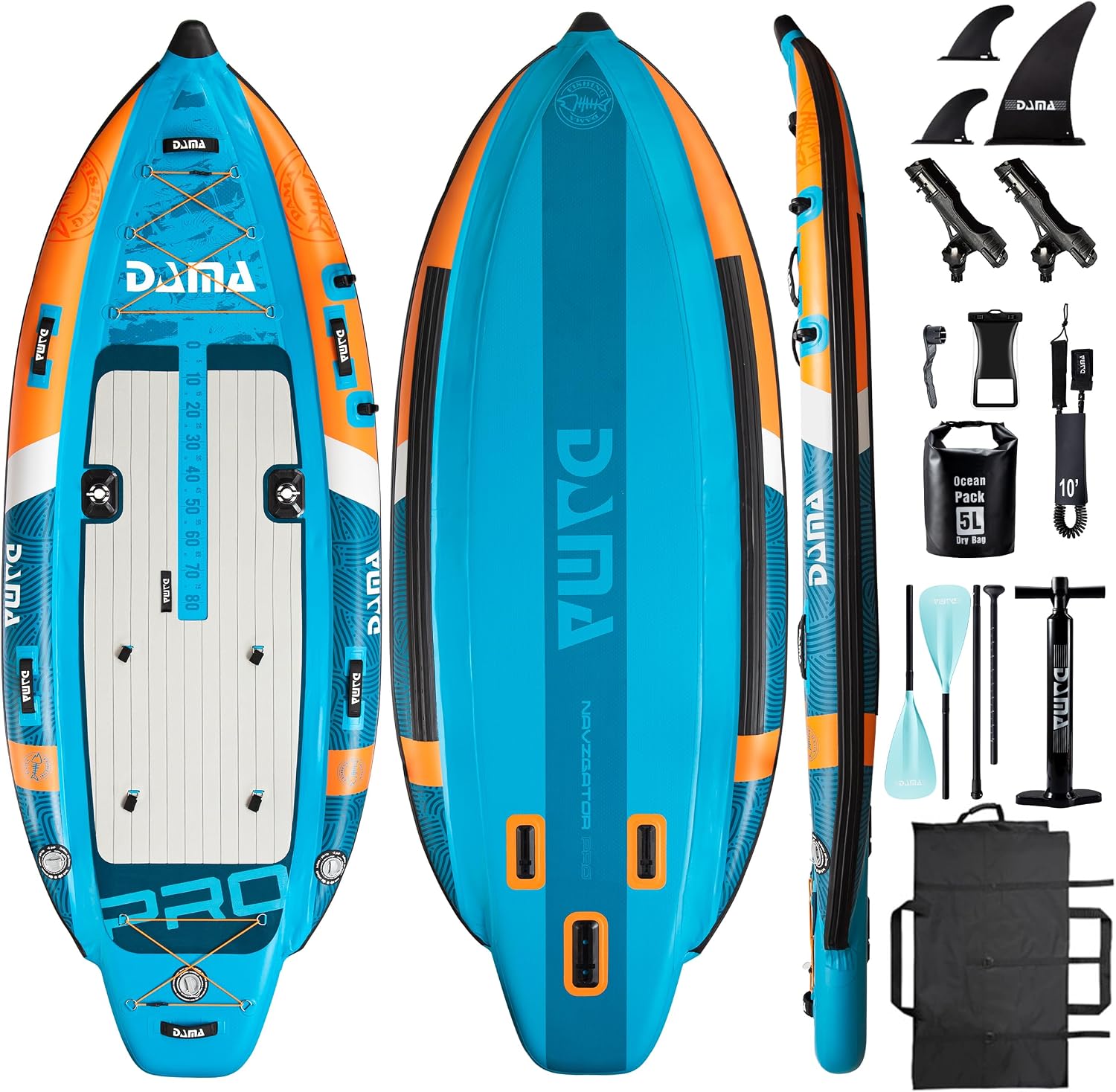
| 1 |  |
Top PickSkatinger 11’6” Super Wide Inflatable SUPBest for Stability & Capacity |
|
The most planted board here for bigger paddlers, pets, and gear. | Check Price on Amazon |
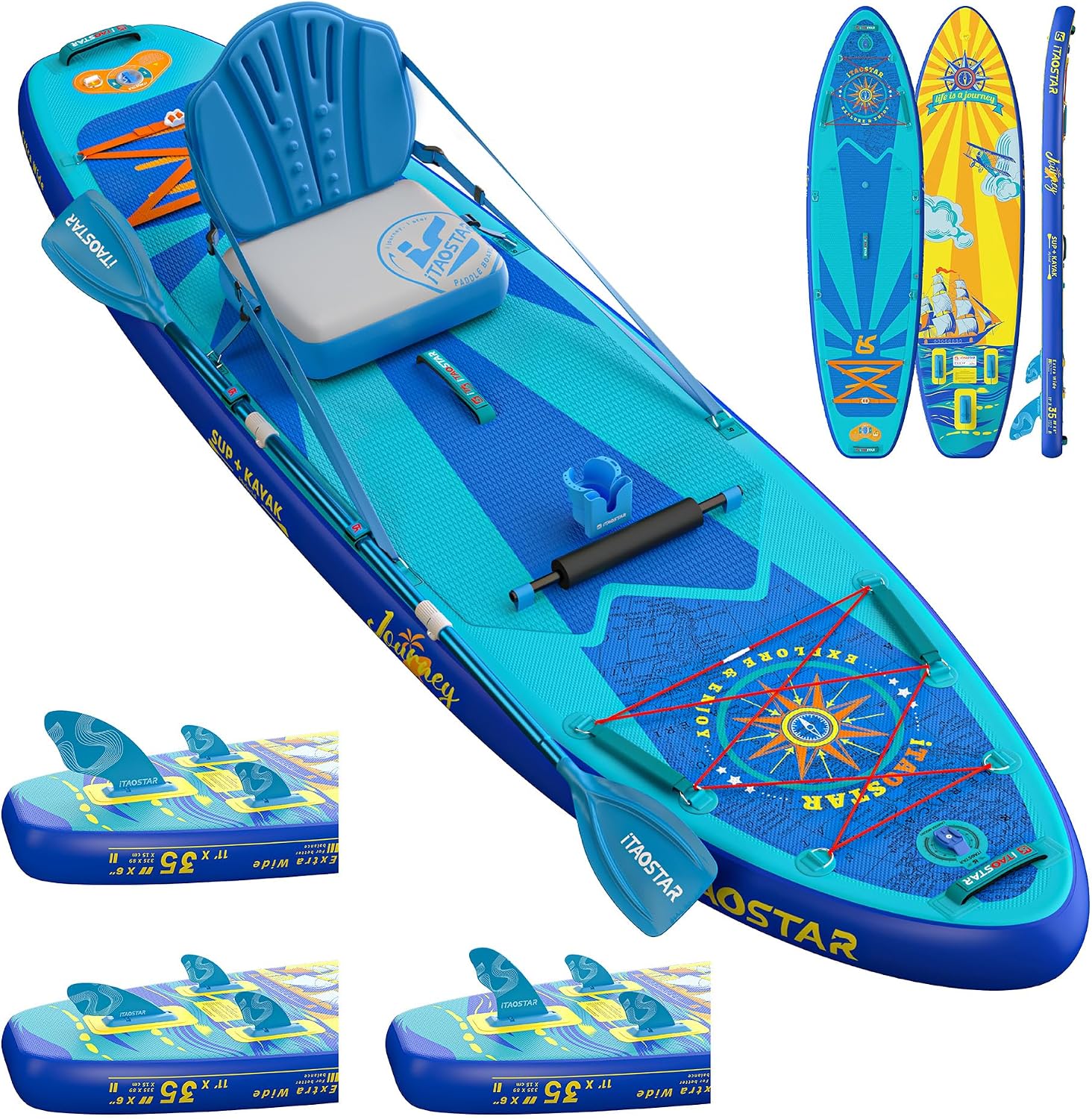
| 2 |  |
ATPROSS 11’6” x 35” Inflatable Paddle BoardBest Hybrid — SUP and Kayak Mode |
|
Answers the paddle board vs kayak question by refusing to choose. | Check Price on Amazon |
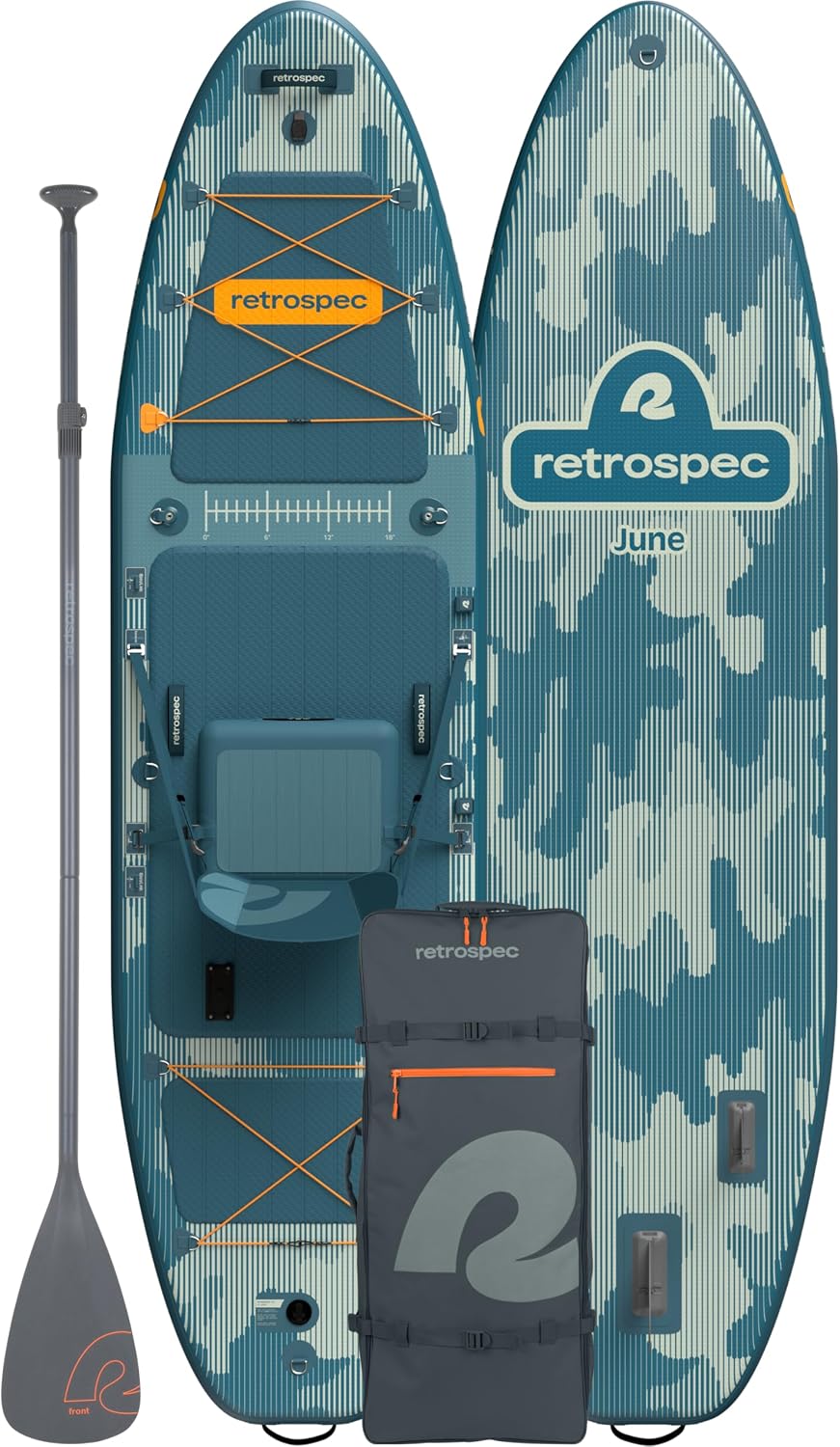
| 3 |  |
Roc Inflatable Stand Up Paddle Board 10’6”Best Compact All-Around SUP |
|
Easy to handle, easy to store, and comfortable on flat water. | Check Price on Amazon |
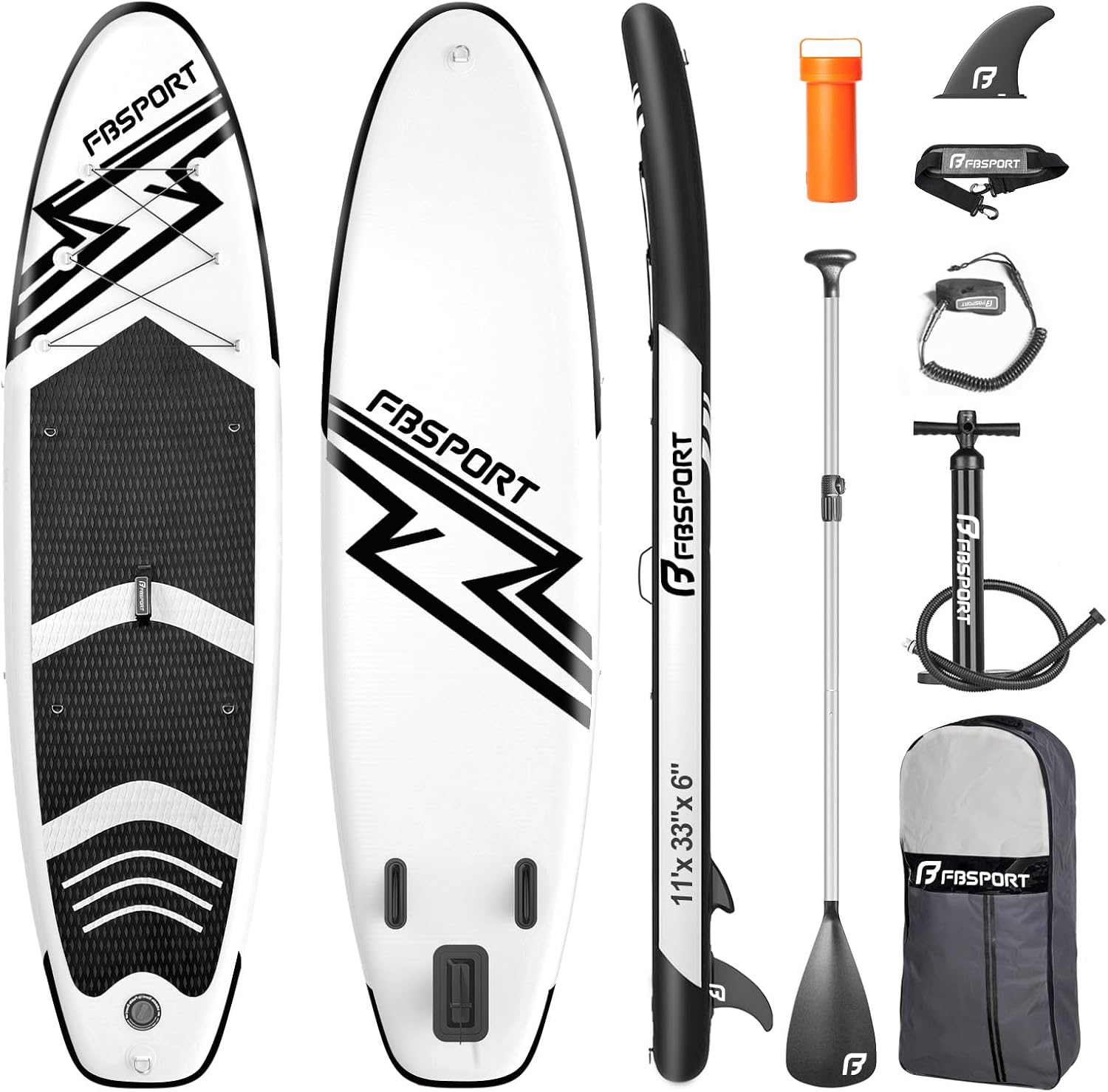
| 4 | 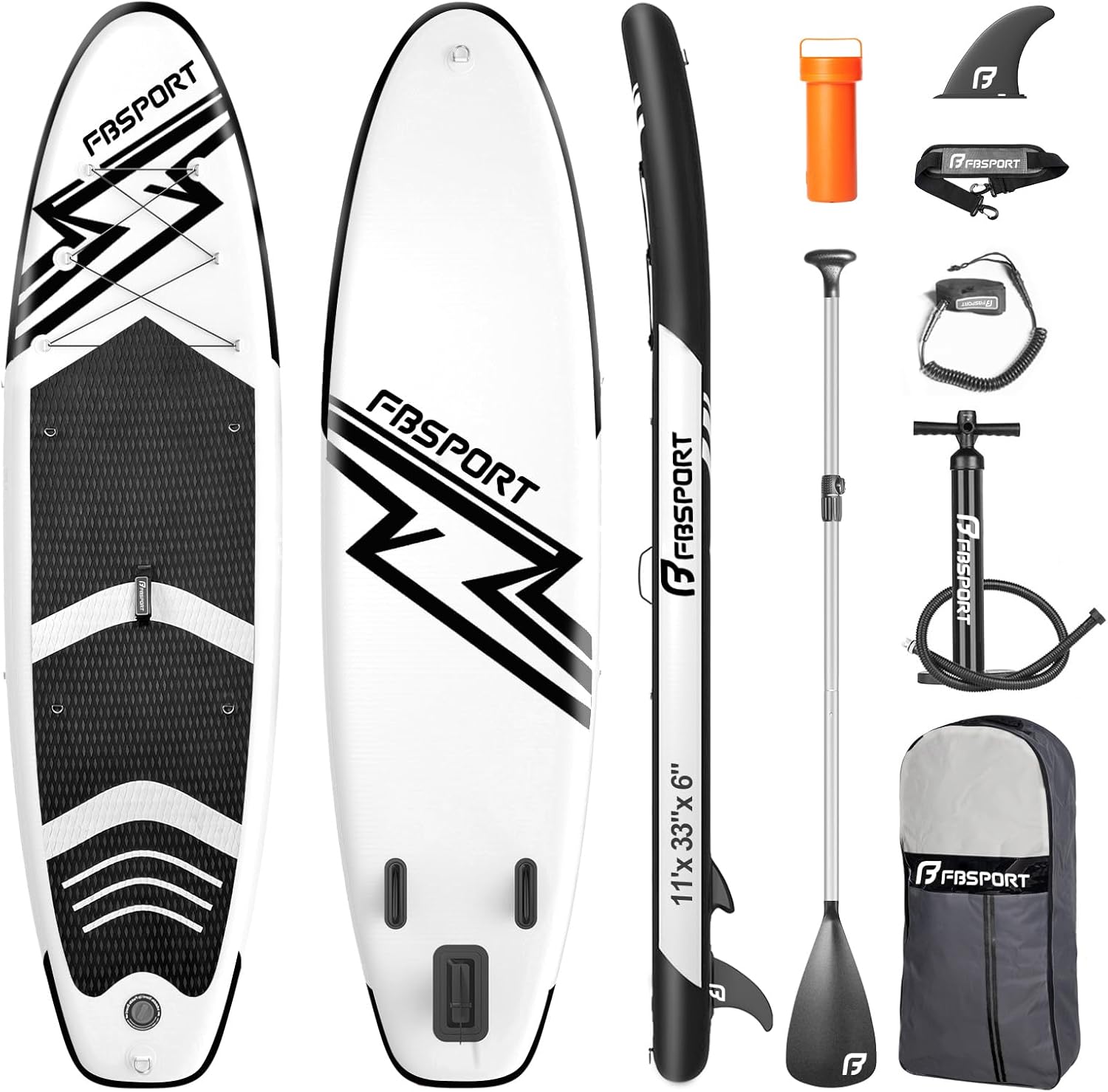 |
FBSPORT 11’ Premium Stand Up Paddle BoardBest All-Rounder for Mixed Water |
|
A balanced middle length that suits a wide range of paddlers. | Check Price on Amazon |
| 5 |  |
Pelican Argo 100X Sit-In KayakBest Lightweight Sit-In Kayak |
|
Light enough for one person to load and launch without help. | Check Price on Amazon |
| 6 | |
Intex Explorer K2 Inflatable Kayak SetBest Tandem Starter Kit |
|
A complete two-person setup that stores in very little space. | Check Price on Amazon |
| 7 |  |
Perception Joyride 10 Sit-Inside KayakBest Sit-In for Comfort & Storage |
|
Thoughtful storage and day-trip comfort in a manageable size. | Check Price on Amazon |
| 8 |  |
Sea Eagle SE370 Inflatable KayakBest Packable All-Water Kayak |
|
Serious portability for paddlers without storage or a roof rack. | Check Price on Amazon |
| 9 |  |
Lifetime Lotus Sit-On-Top KayakBest Compact Sit-On-Top |
|
Simple, self-draining, and easy for a solo paddler to manage. | Check Price on Amazon |
| 10 |  |
Sevylor QuickPak K1 Inflatable KayakBest Backpack-to-Seat Kayak |
|
Carries like a backpack and paddles like a kayak — the ultimate grab-and-go. | Check Price on Amazon |
| 11 |  |
Old Town Malibu 9.5 Sit-On-Top KayakBest Open-Deck Recreational Kayak |
|
Easy on and off the water for relaxed shoreline paddling. | Check Price on Amazon |
| 12 |  |
iRocker NAUTICAL Inflatable KayakBest Kayak-Style Inflatable |
|
A seated, double-blade option from a well-known paddle board stable. | Check Price on Amazon |
1. Paddle Board vs Kayak: Two Different Ways to Move Across Water
Strip away the marketing and the difference between these two crafts comes down to geometry. A paddle board is a wide, buoyant platform you ride on top of. A kayak is a narrow hull you sit inside or on top of. That single change in posture reshapes everything else.
Standing on a paddle board raises your eye level, which changes how you read the water. You can see submerged rocks, weed beds, sandbars, and fish long before you reach them. It also raises your profile, which means a breeze pushes you more than it would push a low-slung kayak. Kneeling or sitting on a board is always an option when the wind picks up — and once you learn that trick, the board becomes surprisingly adaptable.
A kayak, by contrast, keeps you close to the waterline with a double-bladed paddle that sweeps left and right in a continuous rhythm. That rhythm is the kayak’s superpower: it is efficient, symmetrical, and easy to maintain over hours. Your legs sit in front of you, your hips are locked into the seat, and the hull does most of the balancing work.
Board shapes versus hull shapes
Paddle boards generally fall into all-around, touring, and specialty shapes. If you want the full breakdown of those categories, our guide to types of paddle boards walks through each one. All-around boards — like several in this guide — sit in the middle: wide enough to be forgiving, long enough to glide.
Kayaks split along a different line: sit-inside versus sit-on-top. A sit-inside kayak wraps the hull around your lower body, protecting your legs from wind and splash and giving you a lower center of gravity. A sit-on-top kayak leaves you on an open deck that drains on its own, making it effortless to get on and off, especially at a beach.
Where each craft naturally wins
- Quiet, shallow, wildlife-rich water: a paddle board glides over skinny water where a deeper hull might touch bottom.
- Longer point-to-point paddles: the kayak’s seated posture and double-blade rhythm reduce fatigue over distance.
- Wind and chop: the lower profile of a kayak handles a stiff breeze with less effort.
- Active days, yoga, swimming stops: the flat deck of a paddle board is a portable platform.
- Cold or splashy conditions: a sit-inside kayak keeps you drier and warmer.
| Factor | Paddle Board | Kayak |
|---|---|---|
| Posture | Standing, kneeling, sitting, or prone | Seated, with legs extended |
| Paddle | Single blade, one side at a time | Double blade, alternating sides |
| Balance | Active — you are the stabilizer | Passive — the hull stabilizes you |
| Visibility | Excellent standing height | Low, closer to the waterline |
| Getting wet | Expected — falling is part of learning | Less, especially in a sit-inside |
| Deck space | Open platform for gear, pets, yoga | Cockpit, tank well, and hatches |
| Best water | Lakes, bays, slow rivers, calm surf | Lakes, rivers, coastline, choppy water |
The takeaway from the table is simple: neither craft is objectively better. A paddle board trades stability and dryness for freedom of movement and visibility. A kayak trades that freedom for efficiency and comfort over long hours. Everything else in this guide is a detail beneath that headline.
Ready to Compare Craft in Person?
Browse the full range of boards and kayaks before you decide.
Check Kayak Options on Amazon2. Stability, Balance, and the Real Learning Curve
This is the question that stops most beginners: “Will I fall off?” The short answer is that you will fall off a paddle board a few times early on and almost never fall out of a recreational kayak. The longer answer is that stability is a design choice, not a fixed trait.
On a paddle board, width is the primary stabilizer. The boards in this guide run from 33 inches to 35 inches wide, which is firmly in the forgiving range. A wider deck resists tipping, supports more weight, and gives you room to shift your feet without unsettling the board. The trade-off is that wider boards move more water and take slightly more effort to turn.
Capacity matters too, and it is one of the most misunderstood specs in paddling. A board rated for 350 lb or 450 lb is not just about whether you fit — it is about how the board rides when it is loaded with you, a dry bag, a cooler, and a dog. If you want the detailed math, we break it down in how much weight can a paddle board hold.
Why the first hour on a paddle board feels wobbly
Standing on water engages muscles you rarely use on land. Your ankles, calves, hips, and core are all making constant micro-adjustments. Within a session or two, those adjustments become automatic — and that is when paddle boarding starts to feel effortless. Most new paddlers are surprised by how quickly this happens.
The technique matters more than the gear. Starting on your knees, using a wide stance, keeping your eyes on the horizon rather than your feet, and bending at the knees rather than the waist will get most beginners standing within their first outing. Our walkthrough on how to paddle board covers the whole progression step by step, and if you are still weighing the difficulty, the honest answer is in how hard is paddle boarding.
Why kayaks feel instantly stable
A recreational kayak places your weight low and centered between two points of buoyancy. That is why a sit-inside kayak feels rock-solid the moment you slide in. Sit-on-top kayaks are equally reassuring because they are designed to be impossible to get trapped in — if you do tip, you simply slide off and climb back on.
Where kayaks demand a different skill is in edging. Lean too far in a narrow boat and it will roll; learn to shift your weight with the water and it becomes an extension of your body. For casual flat-water paddling, though, this rarely becomes an issue.
Beginner Shortcuts That Actually Work
- Choose the widest craft you can comfortably handle — width equals confidence.
- Pick a warm, shallow, calm launch site for your first session.
- On a paddle board, learn to fall away from the board and keep a leash attached.
- In a sit-inside kayak, practice a wet exit in shallow water before you need it.
- Go out when the wind is light. Calm mornings are forgiving teachers.
Confused about whether an inflatable is a wise first board? Our look at whether inflatable paddle boards are good for beginners covers the topic directly, and our roundup of the best paddle boards for beginners narrows the field. If you have read that paddle boards are difficult to use, are paddle boards hard to use sets the record straight.
Starting Out? Begin With Forgiving Gear
A wide, stable craft makes the first sessions fun instead of frustrating.
Check Beginner Boards on Amazon3. Speed, Tracking, and Efficiency on the Water
Ask which craft is faster and the answer depends entirely on the paddler, the water, and the distance. Still, there are real, consistent differences in how each one converts effort into forward motion.
A kayak paddle gives you a stroke on every side, every half-second of your rhythm. That continuous cadence keeps the hull moving smoothly and makes it easier to hold a steady pace over miles. The low profile also means a headwind slows you less dramatically than it slows a standing paddler.
A paddle board, powered by one blade, requires a switch of sides every few strokes. Beginners often zig-zag as a result, but once your stroke is clean — catch, pull past your feet, release, switch — a paddle board tracks remarkably well. Longer boards hold a line better, while shorter boards turn more willingly.
What actually controls speed
- Waterline length: a longer hull covers distance more efficiently than a short one.
- Width: stability and speed trade against each other; wider means more drag.
- Hull shape: rounded noses turn easily, pointed noses cut through water.
- Paddle quality: a stiff, lightweight paddle wastes far less energy than a heavy one.
- Your technique: the biggest variable of all.
That last point deserves emphasis. The paddle is the single most underrated upgrade in paddling. A well-matched paddle changes how far you get before your shoulders complain. Our guide to the best paddle board paddles explains length, blade shape, and materials, and yes — we also answer the panicked shoreline question in do paddle board paddles float.
Tracking aids and trim
Paddle boards track with fins mounted underneath; moving or removing fins changes how straight the board runs. Kayaks track with their hull shape and, in many designs, a skeg or tracking keel. In both cases, how you load the craft matters: weight too far back in a kayak lifts the bow and makes it wander, while gear piled behind you on a board lifts the nose and adds swing.
Trim is one of those small details that separates a pleasant paddle from a frustrating one. Distribute weight evenly and low, keep the heavy items centered, and both craft will behave the way the designer intended.
Upgrade Your Stroke
A better paddle does more for your speed than a faster hull.
Check Paddles on Amazon4. Comfort and Ergonomics Over Long Hours
Anyone can feel good for twenty minutes. The craft that wins the comfort argument is the one still comfortable at hour three, and this is where the paddle board vs kayak comparison gets genuinely interesting.
Sitting in a kayak for hours asks a lot of your lower back and hip flexors. Sit-inside kayaks give your legs a fixed position; if the seat is well shaped and the foot pegs are adjusted correctly, you can cruise all day. Sit-on-top kayaks free your legs and make stretching easy, and many paddlers find the more open position more comfortable in warm weather.
Standing on a paddle board avoids all of that. There is no seat to stiffen up against, and you can shift between standing, kneeling, and sitting at will. The flip side is that standing for a long time taxes your feet, calves, and lower back until your balance muscles adapt — which they do.
The hybrid middle ground
Increasingly, the two worlds meet in the middle. Add a kayak seat to a paddle board and clip on a double-bladed paddle, and you have a craft that paddles like a kayak when you are tired and stands like a board when you want the view. Several boards in this guide are designed with that conversion in mind. If you want to explore the accessory side, our picks for the best paddle board seats cover what to look for in terms of mounting points, padding, and back support.
| Comfort Factor | Paddle Board | Kayak |
|---|---|---|
| Leg position | Free — stand, kneel, sit, stretch | Fixed forward position in the seat |
| Back support | None unless you add a seat | Seat back supports the spine |
| Temperature | Airflow keeps you cool in heat | Sit-inside hull stays warmer |
| Getting on and off | Easy from a beach or dock | Sit-on-top easiest; sit-inside trickier |
| Rest breaks | Sit anywhere, swim, float | Stay seated, stretch in the cockpit |
One practical note on comfort: a comfortable craft is one that fits you. Seat height, cockpit width, and leg length all matter in a kayak; board length, deck pad texture, and handle placement matter on a paddle board. Try to sit in or stand on a craft before committing if you can.
Add a Seat to Your Setup
Turn a paddle board into a hybrid without buying a second craft.
Check Kayak Seats on Amazon5. Portability, Storage, and Transport
For many paddlers, this category decides the purchase. A craft you cannot store or move is a craft you will not use, and the difference between a paddle board and a kayak in this respect is larger than most people expect.
An inflatable paddle board deflates and rolls into a backpack. You can keep it in a closet, throw it in a small car, check it on a trip, or carry it down a trail to a hidden launch. That convenience is the single biggest reason inflatable paddle boards have exploded in popularity. The same logic applies to inflatable kayaks, which typically pack into a bag or, in one notable case here, into a backpack that becomes the seat.
Hardshell kayaks are a different proposition. The models in this guide are on the lighter end of the scale, with weights in the range stated in their names, but they still need a garage corner, a wall rack, or a yard — and a way to get to the water.
Getting a craft to the water
Roof racks are the classic solution, and they work beautifully with the right setup. A soft rack, a hard bar system, or a dedicated carrier all change how easy loading feels. If that is your route, our guide to the best paddle board roof racks covers the options, and how to transport a paddle board covers straps, bow and stern lines, and the small details that keep a board from becoming a hazard on the highway.
Protection matters too. A carry bag keeps an inflatable free of abrasion and UV while it lives in your trunk, and our picks for the best paddle board bags cover sizes and strap layouts. And once you get home, drying and rolling technique is what keeps an inflatable healthy for years — inflatable paddle board storage ideas has a full list of space-saving options.
| Logistics | Inflatable Paddle Board | Kayak (Hard or Inflatable) |
|---|---|---|
| Home storage | Closet or shelf in a bag | Inflatable bags easily; hardshell needs space |
| Small car | Fits in the trunk or back seat | Inflatable fits; hardshell needs a rack |
| Setup at the water | Inflate, fin on, go | Inflatable needs inflating; hardshell is instant |
| Walking to a launch | Backpack carry is comfortable | Bag or shoulder carry, depending on design |
| Travel | Excellent — packs into luggage | Inflatables travel well; hardshells do not |
One more piece of gear matters more than people expect: the pump. A good pump makes setup quick and gets a board properly rigid, which directly affects how stable it feels. Our guide to the best paddle board pumps covers manual and electric options.
Make Transport Effortless
Grab a bag or rack setup that fits your vehicle and your routine.
Check Carry Bags on Amazon6. Versatility: Fishing, Yoga, Fitness, Pets, and Family Days
Some people want one craft for everything. That is a reasonable request, and it is worth knowing where each platform bends and where it breaks.
A paddle board is an open deck. That makes it a surprisingly capable yoga platform — the slight instability turns every pose into balance training — and a superb swimming and snorkeling base. Kids sit on the nose, dogs learn to ride the middle, and a cooler straps down behind you. For yoga specifically, board width and deck pad coverage matter enormously; our guide to the best paddle boards for yoga covers what to look for.
Fishing is where the argument gets competitive. A paddle board gives you sight-casting visibility that no seated craft can match, and it drifts quietly. A kayak gives you rod holders, dry storage, and a stable platform you can sit in for hours without thinking about balance. Both are legitimate fishing craft; it comes down to whether you want to stand and spot fish or sit and work structure. Our guide to the best paddle boards for fishing covers the board side in depth.
Family and multi-person outings
For shared days, a tandem kayak is hard to beat — two paddlers, one craft, shared effort. A large paddle board can also carry a passenger or a child, and boards with higher capacity handle that load more gracefully. If you plan to paddle with kids regularly, think about how quickly you can get everyone back on board after an unexpected swim.
Seasons and conditions
Both crafts reward choosing the right day. Light wind, warm water, and a calm surface turn a mediocre paddler into a good one. If you want to plan your outings, our notes on the best time to paddle board cover time of day, season, and weather windows.
- Yoga and fitness: paddle board, without question.
- Sight fishing: paddle board. Long stationary sessions: kayak.
- Tandem outings: kayak. Solo exploration: either.
- Swimming stops: paddle board, for the platform.
- Cold, choppy, or windy days: kayak.
Set Up for the Way You Actually Paddle
Match the craft to your favorite activity, not the other way around.
Check Fishing Craft on Amazon7. Safety: What Each Craft Demands From You
Safety is not a footnote in the paddle board vs kayak debate — it is one of the clearest points of difference, and it deserves honest treatment.
Paddle boards put you in the water more often, especially while learning. That is not a flaw; it is simply the nature of standing on a floating platform. The mitigation is straightforward: wear a leash, wear a life jacket, start in calm shallow water, and never paddle further from shore than you are willing to swim back. A leash keeps the board — your flotation — within reach if you fall in wind or current.
Kayaks keep you out of the water but introduce a different risk: entrapment. In a sit-inside kayak, learning to exit a capsized boat before you need to is essential. Sit-on-top kayaks eliminate that concern entirely, which is a large part of their popularity with casual and rental paddlers.
Non-negotiables for both crafts
- A properly fitted life jacket, worn — not stowed. See our picks for the best paddle board life jackets for models that allow free arm movement while paddling.
- A whistle and a light if you are out near dusk or on busy water.
- A weather check before you leave. Wind is the single most common cause of paddling trouble.
- Cold-water awareness. Immersion in cold water is dangerous regardless of craft.
- A float plan. Tell someone where you are going and when you will return.
Rules vary by location, so it is worth checking your local requirements. Our overview of paddle board safety requirements covers the common legal and practical baseline that applies in many places.
Visibility on Shared Water
A standing paddler is easier for boaters to see than a seated kayaker — a genuine safety advantage of the paddle board. Kayakers can compensate with bright hull colors and, in busy channels, a small flag or light. Either way, assume you are invisible to powered traffic and paddle defensively.
Do Not Skip the Safety Gear
A comfortable, well-fitted PFD is the one purchase with no downside.
Check Life Jackets on Amazon8. Fitness: What Each Craft Does to Your Body
Both are excellent exercise, but they load the body very differently. If fitness is a deciding factor in your paddle board vs kayak choice, this section is the one to read closely.
Paddle boarding is a full-body, balance-driven workout. Standing engages your feet, ankles, calves, quads, glutes, and deep core stabilizers continuously — not just during the stroke, but the entire time you are upright. The paddle stroke then recruits your lats, shoulders, and obliques. It is one of the few activities that trains balance, stability, and cardio in the same session, all with genuinely low impact on the joints.
Kayaking concentrates the work in the upper body and core. The rotational component is significant: power comes from torso rotation rather than arm strength, which is why good kayaking technique protects your shoulders. Your hip flexors and lower back hold a static position for long stretches, which is worth stretching afterward.
| Area Trained | Paddle Board | Kayak |
|---|---|---|
| Core | Constant stabilizing demand | Strong rotational engagement |
| Legs | Actively worked while standing | Mostly static, bracing the hull |
| Shoulders & back | Single-blade pulling power | Continuous alternating strokes |
| Balance | Trained throughout the session | Minimal — hull provides stability |
| Joint impact | Very low | Very low |
Which one burns more energy? It depends on intensity, conditions, and body weight — and we would rather not quote numbers we cannot stand behind. What we can say is that both are effective, sustainable forms of exercise that people stick with because they happen outdoors. Our fuller look at whether paddle boarding is good exercise covers the training effect in detail, and does paddle boarding burn calories addresses the calorie question directly.
For cross-training, the combination is ideal: paddle board on calm days for balance and core, kayak on windy days for sustained cardio and rotational strength. Many paddlers own both eventually — and inflatable versions of each make that more realistic than it used to be.
Turn Your Water Time Into Training
Both crafts deliver a serious workout with almost no joint impact.
Check Paddle Boards on Amazon9. Cost, Durability, and Long-Term Maintenance
Ownership is where the paddle board vs kayak question turns from excitement into routine. Both craft types are built to last if treated well, but the maintenance habits differ.
Inflatables — boards and kayaks alike — are tougher than their reputation suggests. Modern inflatable construction uses dense woven internal layers that, once inflated to pressure, create a genuinely rigid structure that shrugs off rocks, docks, and shallow scrapes. The parts that need care are seams, valves, and the outer fabric, and the biggest enemies are prolonged sun exposure and long-term storage while damp.
Hardshell kayaks are even simpler: rinse, dry, store out of the sun. Their vulnerability is cosmetic — scratches and hull abrasion accumulate over seasons — and structural damage from dragging across rough ground.
The maintenance habits that matter
- Rinse and dry after every session. Fresh water and shade extend the life of any craft.
- Store inflatables loosely rolled or hung, not folded tightly for months.
- Check valve and seam condition before each trip, not after a problem appears.
- Keep out of direct sun when not in use. UV is the slow, silent wear factor.
- Repair promptly. Small fixes are quick; neglected ones grow.
If something does go wrong, the fix is usually straightforward. Our walkthrough on how to patch a paddle board covers locating a leak, prepping the surface, and getting a durable repair. And if you are wondering how long you can expect a craft to serve you, how long do inflatable paddle boards last covers the variables that determine lifespan.
For the curious, the construction side is genuinely fascinating. How paddle boards are made explains how the internal structure creates that rigid feel from something you can roll up.
Value beyond the sticker
When comparing cost, count the accessories honestly. A kayak that needs a rack, straps, and a cart may cost more to own than one that folds into a bag. A paddle board that includes a pump, paddle, and bag removes the surprise purchases that inflate a budget. Read the bundle contents carefully before deciding which craft is the better value for your situation.
Keep Your Craft in Service for Years
Small maintenance habits are the cheapest insurance in paddling.
Check Maintenance Gear on Amazon10. Inflatable vs Hard — and How to Actually Choose
Before you choose between a paddle board and a kayak, there is a second decision waiting: inflatable or hardshell. The two questions interact, because the portability advantage of an inflatable changes how often you will realistically get on the water.
The trade-off is familiar. Inflatables win on storage, transport, travel, and forgiveness when they bump a rock. Hardshells win on rigidity, glide, and the zero-setup instant launch. The gap has narrowed dramatically — a properly inflated board is stiff enough that most recreational paddlers cannot tell the difference on flat water — but it has not closed entirely.
Our full comparison of inflatable vs hard paddle boards covers the nuances, including how hull shape and construction affect performance.
A simple decision framework
- Where will you store it? No garage, apartment, small closet → inflatable.
- How will you get it to the water? No rack, small car, public transit → inflatable.
- What water will you paddle? Protected lakes and bays → either. Open, windy, or cold → lean kayak.
- How long are your outings? All-day touring → kayak. Mixed active days → paddle board.
- Do you want a workout or relaxation? Fitness and balance → paddle board. Comfort and distance → kayak.
- Will you paddle with others? Tandem → kayak. Flexible solo + passenger → large paddle board.
Where each group of products fits
The inflatable paddle boards in this guide represent the versatility end of the market — wide, high-capacity, and designed for everything from yoga to casual touring. The kayaks cover both hardshell simplicity and inflatable portability.
| # | Image | Product | Key Specs | Verdict | Check Price |
|---|---|---|---|---|---|
| 1 | |
Skatinger 11’6” Super Wide SUPMost Stable Platform |
|
Maximum stability for gear, pets, and bigger paddlers. | Check Price |
| 2 | |
ATPROSS 11’6” x 35” SUPBest Two-Craft-in-One |
|
Sit, stand, or kneel depending on the day and the wind. | Check Price |
| 3 | |
Roc 10’6” Inflatable SUPBest for Easy Handling |
|
Compact and manageable without giving up usable deck. | Check Price |
| 4 | |
FBSPORT 11’ Premium SUPBest All-Round Length |
|
Balances glide and stability for mixed-water paddling. | Check Price |
If you want to see the wider inflatable market before committing, our roundup of the best inflatable paddle boards is the natural next read.
Still Deciding? Start With the Category
See what the current inflatable lineup offers before narrowing to a model.
Browse Inflatable Boards on Amazon11. Top Paddle Boards Reviewed
Four inflatable paddle boards, each representing a different answer to the paddle board vs kayak question. Between them they cover the range from compact and quick to handle, through balanced all-rounders, to wide hybrid platforms that can paddle like a kayak when you want them to.
Best for Stability & Capacity
Skatinger 11’6” Super Wide Inflatable SUP
The Skatinger is built around one idea: remove the balance question from the equation. With an 11’6” length and a 35-inch-wide deck, it is one of the most planted inflatable platforms in this group, and the stated 450 lb capacity leaves real room for a paddler plus gear, a child, or a dog.
That width changes the character of the board. Where narrower boards demand constant attention to foot placement, this one invites you to move around the deck, shift your stance, and reach for a water bottle without unsettling anything. For anyone who has tried paddle boarding once and found the wobble intimidating, this is the design that makes the difference.
Key Features
- 11’6” length — long enough to hold a line comfortably across open water.
- 35” wide deck — the widest board in this guide, maximizing stability.
- 450 lb capacity — generous load allowance for gear, pets, or a second rider.
- Inflatable construction — packs down for storage and transport like every board here.
Pros
- Exceptionally stable platform for new paddlers
- High capacity supports gear-heavy outings
- Comfortable deck space for pets and kids
- Still portable despite the larger footprint
Cons
- Wider boards take more effort to turn
- Bulkier to carry when inflated
- Not the choice for pure speed runs
Who it is best for: Larger paddlers, families with kids or dogs, anglers who want room for gear, and anyone who prioritizes confidence over speed. If stability is your number one requirement, this is the board to look at first.
Best Hybrid — SUP and Kayak Mode
ATPROSS 11’6” x 35” Inflatable Paddle Board
The ATPROSS is the most direct answer to the paddle board vs kayak debate: it declines to pick a side. Built at 11’6” by 35” with a stated 450 lb capacity, it is a wide, confident stand up platform that also supports a kayak-style setup — seat and double-blade paddle — when you would rather sit.
That flexibility is genuinely useful in the real world. Calm morning? Stand up and get the balance workout. Afternoon headwind or tired legs? Clip in the seat and paddle it like a kayak. For households where one craft has to suit several people and several moods, this is a sensible design.
Key Features
- 11’6” x 35” dimensions — a stable, roomy platform in either paddling mode.
- 450 lb capacity — plenty of margin for paddler, seat, and gear.
- Kayak mode compatible — convert from standing to seated paddling.
- Inflatable build — stores and travels like a standard iSUP.
Pros
- Two paddling styles in one craft
- Seated mode is ideal in wind or on longer trips
- Wide, reassuring deck for all skill levels
- Great value for multi-person households
Cons
- More components to keep track of
- Setup changes take a few minutes
- Wide platform trades away some speed
Who it is best for: Paddlers who cannot decide, couples who want different things from the same craft, and anyone who loves standing up but wants a comfortable fallback when conditions turn breezy.
Best Compact All-Around SUP
Roc Inflatable Stand Up Paddle Board 10’6”
The Roc hits the classic all-around proportions: 10’6” long, 33 inches wide, and rated to 350 lb. That combination is popular for a reason — it is long enough to glide, narrow enough to turn, and compact enough that a smaller paddler never feels like they are wrestling a barge.
If you are new to paddle boarding and want a board that will not feel like a chore to carry from the car, the smaller footprint is a real advantage. It inflates, deflates, and packs away quickly, and the capacity is honest about what most solo recreational paddlers actually carry.
Key Features
- 10’6” length — the classic do-everything size for recreational paddling.
- 33” width — stable underfoot without feeling sluggish.
- 350 lb capacity — suitable for a solo paddler plus day gear.
- Compact inflatable design — easy to handle alone.
Pros
- Easy to carry, inflate, and store
- Maneuverable size for exploring shorelines
- Approachable for first-time paddlers
- Fits smaller vehicles without any rack
Cons
- Less deck room than super-wide boards
- Shorter length covers distance more slowly
- Lower capacity limits heavy gear loads
Who it is best for: Solo paddlers who want one uncomplicated board for lake days, gentle rivers, and easy travel — and anyone who values a manageable package over maximum deck space.
Best All-Rounder for Mixed Water
FBSPORT 11’ Premium Stand Up Paddle Board
At 11 feet, the FBSPORT sits in the sweet spot between compact all-rounders and long touring boards. It is a premium-positioned inflatable built for paddlers who want one board that behaves well on a glassy lake in the morning and a light chop in the afternoon.
The middle length is the story here. Long enough to hold a straighter line than shorter boards and short enough to still turn without a fight, it suits paddlers who intend to cover a little distance without committing to a dedicated touring shape. If you want the full picture of how sizes behave, our look at Isle paddle boards and the wider discussion of Bote inflatable paddle boards shows how premium brands approach the same balance.
Key Features
- 11’ length — balanced proportions for mixed-water paddling.
- All-around shape — designed for versatility rather than one specialty.
- Premium inflatable construction — rigid feel when properly inflated.
- Travel-friendly format — rolls down for storage and transport.
Pros
- Versatile length suits many water types
- Tracks well for an all-around board
- Comfortable for longer outings
- Strong choice for progressing paddlers
Cons
- Not as ultra-stable as super-wide boards
- Longer than the most compact options
- Best suited to paddlers with basic balance skills
Who it is best for: Intermediate paddlers or confident beginners who want one board for lakes, bays, and light coastal water — and who expect to keep improving.
Looking for More Board Options?
Compare the wider inflatable market and find your ideal size.
Check Paddle Boards on Amazon12. Top Kayaks Reviewed
Eight kayaks covering three categories: lightweight sit-inside models, open sit-on-top designs, and inflatable kayaks that pack away completely. Together they show just how wide the “kayak” half of the paddle board vs kayak comparison really is.
Sit-inside and sit-on-top kayaks
| # | Image | Product | Key Specs | Verdict | Check Price |
|---|---|---|---|---|---|
| 1 | |
Pelican Argo 100X Sit-In KayakBest Lightweight Sit-In |
|
Light, protected, and easy for one person to manage. | Check Price |
| 2 | |
Perception Joyride 10 Sit-Inside KayakBest for Day-Trip Comfort |
|
Thoughtful storage and comfort for all-day exploring. | Check Price |
| 3 | |
Lifetime Lotus Sit-On-Top KayakBest Compact Sit-On-Top |
|
Simple, self-draining, and easy to store at home. | Check Price |
| 4 | |
Old Town Malibu 9.5 Sit-On-Top KayakBest Open-Deck Recreational |
|
Effortless beach launches and relaxed shoreline paddling. | Check Price |
Best Lightweight Sit-In Kayak
Pelican Argo 100X Sit-In Kayak
The Argo 100X makes the strongest case for the traditional hardshell kayak: a 10 ft hull, a stated weight of 36 lb, and a stated capacity of 275 lb. That low weight is the headline feature — it is a boat most people can lift onto a car, carry down a path, and launch solo without asking for help.
As a sit-inside design, it wraps your lower body in the hull, keeping splash and wind off your legs and lowering your center of gravity. For paddlers who find standing on a paddle board tiring or unappealing, this is the classic alternative: stable, dry, and instantly comfortable.
Key Features
- 10 ft length — compact enough for storage, long enough to track well.
- 36 lb weight — among the easiest hardshell kayaks to move alone.
- 275 lb capacity — sized for a solo recreational paddler.
- Sit-inside cockpit — shelter from wind, splash, and cooler air.
Pros
- Very manageable weight for solo handling
- Protected, comfortable seated position
- No inflation or setup required
- Simple to rinse and store
Cons
- Sit-inside cockpits feel snug to some paddlers
- Still needs a vehicle or rack for transport
- Capacity suits one paddler and light gear
Who it is best for: Paddlers who want the comfort and dryness of a sit-inside kayak without wrestling a heavy boat — and anyone who values grab-and-go simplicity over portability.
Best Tandem Starter Kit
Intex Explorer K2 Inflatable Kayak Set
The Explorer K2 answers a question no paddle board can: “Can we go together?” This is a two-person inflatable kayak with a stated 400 lb capacity, and the set includes the paddles and pump you need to get on the water. That completeness makes it a natural first purchase for couples and families.
Sharing a craft changes the day. Two paddlers can cover real distance, one can rest while the other keeps moving, and conversation is part of the experience rather than shouted across the water. When you arrive home, the whole thing deflates into a fraction of the space a hardshell tandem would demand.
Key Features
- 2-person design — a genuine shared paddling experience.
- 400 lb capacity — room for two paddlers and light gear.
- Paddles and pump included — ready to use out of the bag.
- Inflatable construction — stores in a small space at home.
Pros
- Tandem paddling at a fraction of the storage space
- Complete kit with minimal extra purchases
- Great for couples and family outings
- Travels easily in a car trunk
Cons
- Inflating and drying adds time at each end
- Inflatables sit higher in wind than hardshells
- Coordination takes practice with two paddlers
Who it is best for: Couples, friends, and families who want to paddle together without giving up a garage — and anyone who wants a complete setup in one box.
Best Sit-In for Comfort & Storage
Perception Joyride 10 Sit-Inside Kayak
The Joyride 10 is designed around the details that make a day on the water pleasant rather than merely possible. At 10 ft with a selfie slot and bulkhead storage, it is a sit-inside kayak that treats comfort and organization as core features.
Bulkhead storage is the standout here. It gives you a genuinely dry compartment for a phone, keys, snacks, and a layer — the things that ruin a trip when they get wet or soak up sun in an open tank well. Combined with the sheltered sit-inside position, this is a kayak built for long, relaxed outings.
Key Features
- 10 ft length — a versatile recreational size.
- Selfie slot — a small, thoughtful touch for capturing the day.
- Bulkhead storage — dry, protected space for essentials.
- Sit-inside comfort — sheltered legs and a supportive seat position.
Pros
- Dry storage that keeps valuables protected
- Comfortable for long sessions
- Practical details designed for real outings
- Good balance of size and handling
Cons
- Sit-inside cockpits take practice in a capsize
- Less open deck space than a sit-on-top
- Requires transport and storage space
Who it is best for: Day-trippers who carry gear, value dry storage, and want a comfortable seated craft for hours of exploring.
Best Compact Sit-On-Top
Lifetime Lotus Sit-On-Top Kayak
The Lotus takes the sit-on-top formula down to its most manageable form: 96 inches by 30 inches, a stated weight of 39 lb, and a stated capacity of 250 lb. It is a compact, open-deck kayak that is easy to store, easy to carry, and easy to climb back onto after a swim.
Sit-on-top kayaks are the most approachable category in paddling. There is no cockpit to escape from, water drains through the deck on its own, and getting on from a beach is a matter of stepping over the side. That simplicity is why so many rental fleets and family households choose this style.
Key Features
- 96” x 30” — compact footprint for easy storage.
- 39 lb weight — liftable for most adults on their own.
- 250 lb capacity — sized for a solo recreational paddler.
- Self-draining sit-on-top deck — no bailing, no entrapment risk.
Pros
- Simplest possible on-and-off experience
- Compact enough for small storage spaces
- No skill needed to sit safely
- Ideal for warm-weather play and swimming stops
Cons
- Shorter hull covers distance more slowly
- Open deck means more splash in chop
- Capacity suits one paddler and light gear
Who it is best for: Warm-water paddlers, families with older kids, and anyone who wants the lowest-friction introduction to kayaking.
Best Open-Deck Recreational Kayak
Old Town Malibu 9.5 Sit-On-Top Kayak
The Malibu 9.5 is a sit-on-top recreational kayak from a brand with deep roots in paddle craft design. At 9.5 ft, it prioritizes easy handling and an open, accessible deck — the kind of boat you can launch from a beach, paddle along a shoreline, and step off of at any moment.
Sit-on-tops like this one suit a relaxed style of paddling. You are never enclosed, you can slide into the water to cool off and climb back aboard, and the deck gives you freedom to shift position. It is the closest kayak equivalent to the casual, anything-goes spirit of a paddle board.
Key Features
- 9.5 ft length — nimble and easy to steer around shoreline features.
- Sit-on-top layout — open, self-draining, and easy to mount.
- Open deck access — room to stretch, reposition, and stow gear.
- Recreational design — built for relaxed, everyday paddling.
Pros
- Effortless beach and dock launching
- Open deck suits warm days and swimming breaks
- Nimble handling in tight water
- Very low stress for beginners and kids
Cons
- More exposed to wind and splash
- Shorter hull is less efficient over distance
- Hardshell storage still required
Who it is best for: Casual paddlers who want maximum ease of use and plan most of their time on sheltered lakes, bays, and calm coastlines.
Inflatable kayaks
| # | Image | Product | Key Specs | Verdict | Check Price |
|---|---|---|---|---|---|
| 1 | |
Sevylor QuickPak K1 Inflatable KayakBest Backpack Kayak |
|
Carries on your back and paddles like a proper kayak. | Check Price |
| 2 | |
Sea Eagle SE370 Inflatable KayakBest Packable All-Water Kayak |
|
Serious capability for paddlers with no storage space. | Check Price |
| 3 | |
iRocker NAUTICAL Inflatable KayakBest Kayak-Style Inflatable |
|
Seated, double-blade comfort from a paddle board specialist. | Check Price |
| 4 | |
Intex Explorer K2 Inflatable Kayak SetBest Tandem Value |
|
Two paddlers, one bag, very little storage required. | Check Price |
Best Backpack-to-Seat Kayak
Sevylor QuickPak K1 Inflatable Kayak
The QuickPak K1 is the most portable idea in this entire guide. It is an inflatable kayak with a stated 400 lb capacity whose carrying system doubles as the seat — pack it on your back, walk to the water, unfold it, and paddle. Nothing else here travels with less friction.
This is the craft for hikers, apartment dwellers, public-transit paddlers, and anyone who has to walk a distance to reach their launch. It closes the gap between “I wish I could paddle there” and “I can”, which is exactly what the best portable gear should do.
Key Features
- Backpack-to-seat design — the carry system becomes part of the boat.
- 400 lb capacity — generous allowance for a solo paddler and gear.
- Single-paddler inflatable — sized and shaped for one.
- Ultra-portable format — walks to the water on your back.
Pros
- Most portable craft in this guide
- No vehicle or rack needed
- Comfortable seated paddling position
- Excellent for travel and remote launches
Cons
- Inflation and packing take time
- Lightweight construction needs careful handling
- Less rigid than a hardshell kayak
Who it is best for: Paddlers without a car, garage, or rack — and anyone who wants to hike into a lake and paddle it the same afternoon.
Best Packable All-Water Kayak
Sea Eagle SE370 Inflatable Kayak
Sea Eagle has been building inflatable boats for decades, and the SE370 is a well-established design in the inflatable kayak world. It is a roomy, open inflatable that packs down for transport and storage, giving paddlers a real kayak experience without any of the space requirements.
The open layout makes it flexible. It suits calm lakes and slow rivers, handles a bit of chop better than most inflatables thanks to its buoyant tubes, and gives you room to bring gear along. If you want the paddling feel of a kayak but your living situation says “inflatable only”, this is a proven starting point.
Key Features
- Inflatable build — deflates down for storage in a small space.
- Packs down for transport — fits in a trunk or closet.
- Roomy open design — space for gear and easy movement.
- Established inflatable design — a long-running model in its category.
Pros
- Real kayak performance in a packable format
- Roomy layout suits longer outings
- Stable and confidence-inspiring
- No roof rack or storage space needed
Cons
- Setup and pack-down take time
- Lighter craft are affected by strong wind
- Requires a pump and dry storage at home
Who it is best for: Paddlers who want a capable, roomy inflatable kayak for calm and moderate water without committing storage space to a hardshell.
Best Kayak-Style Inflatable
iRocker NAUTICAL Inflatable Kayak
The NAUTICAL line is iRocker’s entry point into accessible inflatable paddling, and this inflatable kayak carries the same philosophy: a seated, double-blade craft that packs down small and gets people on the water without barriers. It is worth noting that the brand has serious pedigree in inflatable boards — our iRocker NAUTICAL review covers the board side of the range in detail.
Choosing a kayak-style inflatable from a paddle board specialist makes sense if you have already decided that sitting down suits you better but still want inflatable convenience. You get the low, stable seated position and the efficient double-blade rhythm, plus a craft that stores like an iSUP.
Key Features
- Inflatable build — rolls up for storage and transport.
- Kayak-style paddling — seated position with a double-blade paddle.
- Compact storage footprint — fits apartments and small cars.
- Accessible design — aimed at getting new paddlers onto the water.
Pros
- Comfortable seated paddling with low storage demands
- From a brand focused on inflatable paddle craft
- Easy to transport without a rack
- Approachable for beginners
Cons
- Inflating and drying required each outing
- Less rigid than a hardshell kayak
- Not designed for standing like a paddle board
Who it is best for: Paddlers who prefer the seated kayak position but want the same easy storage and transport that inflatable paddle boards offer.
Prefer Sitting Down?
Compare inflatable kayaks and find one that fits your storage space.
Check Inflatable Kayaks on AmazonFrequently Asked Questions: Paddle Board vs Kayak
These are the questions paddlers ask most often when they are standing in a shop — or scrolling late at night — trying to choose between the two crafts.
Is a paddle board or a kayak better for beginners?
Both work well for beginners, but they teach different things. A recreational kayak feels stable immediately and lets you focus on paddling technique from the first minute. A paddle board asks more of your balance early on but rewards you with a full-body workout and a higher viewpoint. If your priority is confidence on day one, a wide sit-on-top kayak or a wide inflatable paddle board are equally good starting points.
Which is more stable, a paddle board or a kayak?
A kayak is inherently more stable because your center of gravity sits low and the hull does the balancing. Paddle boards vary enormously with width: a 35-inch-wide board is far more stable than a 30-inch one, and the boards in this guide sit at the forgiving end of that range. Once your balance adapts, most paddlers find a wide paddle board stable enough for everything short of rough water.
Can you use a paddle board like a kayak?
Yes — and several boards in this guide are designed to do exactly that. Adding a clip-on seat and a double-bladed paddle converts a paddle board into a seated, kayak-style craft. This is a popular option for windy days, longer distances, and anyone who wants two paddling styles without owning two boats.
Which is faster, a stand up paddle board or a kayak?
For most paddlers over most distances, a kayak is faster. The double-blade stroke delivers power continuously and efficiently, and the low profile sheds wind. A paddle board can be quick in the right hands and holds a good line in calm conditions, but standing paddlers lose more energy to wind and to the mechanics of switching sides.
Is paddle boarding harder than kayaking?
Learning to stand is harder than learning to sit. That said, the basic paddle boarding skill — standing comfortably on flat water — typically comes within one or two sessions on a wide board. After that point, neither craft is difficult. The difference is really about how much balance practice you want to build into your paddling.
Which is better for fishing, a paddle board or a kayak?
It depends on how you fish. A paddle board gives you unmatched sight-casting visibility and a quiet, low-impact drift. A kayak gives you a stable seated platform, rod holders, and dry storage for tackle. Many anglers eventually choose both: a board for clear, shallow water and a kayak for longer sessions and heavier gear.
Are inflatable paddle boards or inflatable kayaks easier to store?
Both pack down to a fraction of a hardshell’s size, and either will fit in a closet. Inflatable paddle boards are generally quicker to roll and unroll, while inflatable kayaks can have more chambers and components to manage. If absolute portability is the priority, backpack-style inflatable kayaks and compact boards are the standouts.
Do I need a life jacket for both a paddle board and a kayak?
In most jurisdictions a life jacket is required for both, and it is a sensible idea regardless of the law. On a paddle board, a leash is equally important — it keeps your flotation close if you fall. Look for a paddling-specific PFD that allows free arm movement, and always wear it rather than stowing it.
Which burns more calories, paddle boarding or kayaking?
Both are genuine workouts, and the answer shifts with intensity, conditions, and how hard you paddle. Paddle boarding tends to engage more total muscle because you are stabilizing constantly; kayaking delivers sustained upper-body and core effort. The best choice is whichever one you will do consistently — and often the answer is both.
Can a paddle board hold as much weight as a kayak?
The wide inflatable paddle boards in this guide carry stated capacities of 350 lb and 450 lb, which is comparable to or higher than many recreational kayaks. The difference is in how the load behaves: a kayak stows gear in a cockpit or hatch, while a paddle board carries it openly on deck. Distribution and securing matter on both.
Which is better for paddling with dogs and kids?
Wide, high-capacity paddle boards are excellent for dogs and small children because the open deck gives everyone room and the standing position lets you keep an eye on them. Tandem kayaks suit older kids who can help paddle. In either case, choose calm water, make sure everyone wears a properly fitted life jacket, and keep the first outing short and fun.
How do I choose between a sit-inside and a sit-on-top kayak?
Choose a sit-inside if you paddle in cooler weather, want to stay dry, and value dry storage for gear. Choose a sit-on-top if you paddle in warm conditions, want the easiest possible getting on and off, and like the freedom to swim and climb back aboard. Sit-on-tops are generally the more carefree option for casual recreation.
Still Have Questions?
Compare the full range of craft and read what other paddlers choose.
Browse Kayaks on AmazonConclusion: Choose the Craft That Matches Your Days on the Water
The paddle board vs kayak question has no universal winner, and that is genuinely good news. It means you get to match the craft to your body, your water, your space, and your idea of a good afternoon.
Choose a paddle board if you want a full-body workout, an open platform for yoga, swimming, and fishing, a standing view of the water, and a craft that rolls into a backpack. The wide inflatable boards here — especially the Skatinger and ATPROSS models — make the balance challenge far smaller than it used to be.
Choose a kayak if you value comfort over long hours, efficiency in wind, dry storage for your gear, and a craft you can sit in and simply go. From the featherlight Pelican Argo 100X to packable inflatables like the Sea Eagle SE370 and Sevylor QuickPak K1, there is a kayak for every storage situation.
And if you truly cannot decide, the hybrid route is real: an inflatable paddle board with kayak mode gives you both postures in one bag. Whatever you pick, get out on calm water first, wear your life jacket, and let the craft teach you the rest.
Ready to Get on the Water?
Pick your craft and start planning your first outing.
Check Price on Amazon