There is a particular kind of quiet that only happens on the water. The board rises and falls beneath you, the horizon softens, and every muscle you own starts paying attention. That is the appeal of paddle board yoga: it takes a practice built on focus and balance and hands it a surface that refuses to sit still. The reward is a stronger core, sharper proprioception, and a session that feels far more restorative than the same sequence on a studio floor.
The catch is simple — not every paddle board belongs in a yoga class. A narrow touring board that glides beautifully in a straight line can feel twitchy the moment you move into a low lunge. A board built purely for speed gives up the deck space you need for a full sun salutation. The boards that shine for yoga share a handful of traits: generous width, a comfortable and expansive traction pad, a stable platform that shrugs off weight shifts, and enough length to keep the nose from diving when you move toward the front.
Over the last few seasons, inflatable boards have quietly taken over this category, and it is easy to see why. A drop-stitch inflatable that inflates to a firm, rigid feel can be rolled into a backpack, tossed in a trunk, and stored in a closet between sessions. That portability matters more than people expect, because the boards you actually use are the ones you can actually get to the water. If you are new to the whole idea, our complete paddle board guide walks through the fundamentals before you spend a cent.
In this roundup we look at thirteen inflatable boards that make credible yoga platforms, from wide-body stability specialists to crossover designs that convert into a kayak when you want to paddle home. We rank them by how they behave when you are standing on one leg, not by how fast they move between buoys. Along the way we cover what actually matters in a yoga board, how to set one up for practice, and how to keep it in good shape season after season. If you want the short version, start with the comparison table directly below; if you want the reasoning, keep reading.
A wide, flat deck is the single biggest difference between a board you paddle and a board you can practice on.
Quick Comparison: Our Top Picks
Every board in this roundup appears below with the dimensions and capacity figures listed for each model. Read the “Best For” line first if you are in a hurry — that label captures what each board does better than the rest.
| # | Image | Product | Key Specs | Verdict | Check Price |
|---|---|---|---|---|---|
| 1 |  |
Top PickSkatinger 11’6″ Super Wide Inflatable SUPBest Overall for Yoga |
|
The widest, most planted platform here — built for balance work. | Check Price on Amazon |
| 2 |  |
FLYPARK Yoga Stand Up Paddle BoardBest Dedicated Yoga Board |
|
Designed around the mat, not around the paddle stroke. | Check Price on Amazon |
| 3 |  |
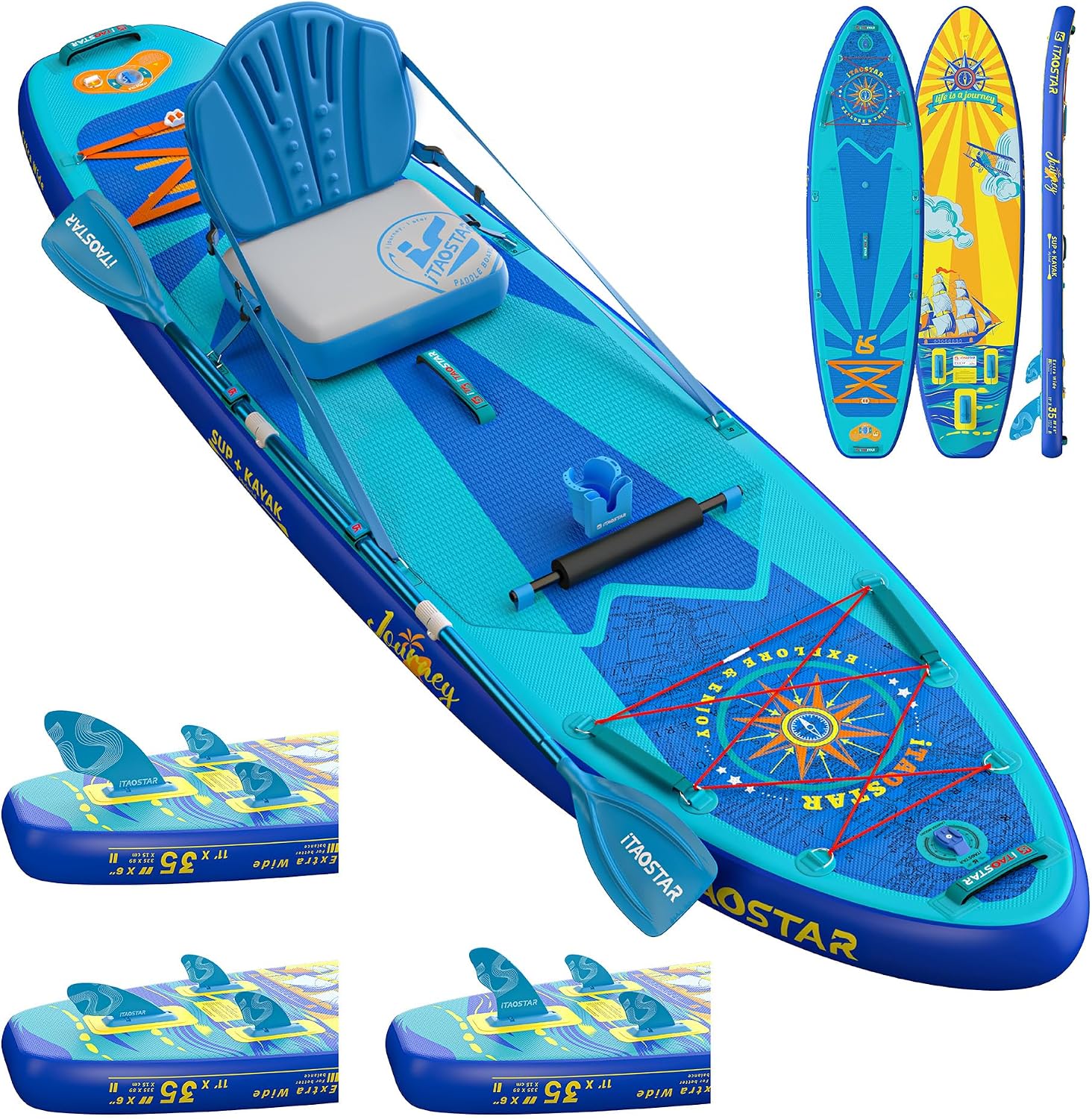
ATPROSS 11’6″ x 35″ Inflatable Paddle BoardBest Yoga + Kayak Hybrid |
|
Yoga platform in the morning, seated cruiser in the afternoon. | Check Price on Amazon |
| 4 |  |
Highpi Inflatable Stand Up Paddle BoardBest for Taller Yogis |
|
Extra length gives tall practitioners room to fully extend. | Check Price on Amazon |
| 5 |  |
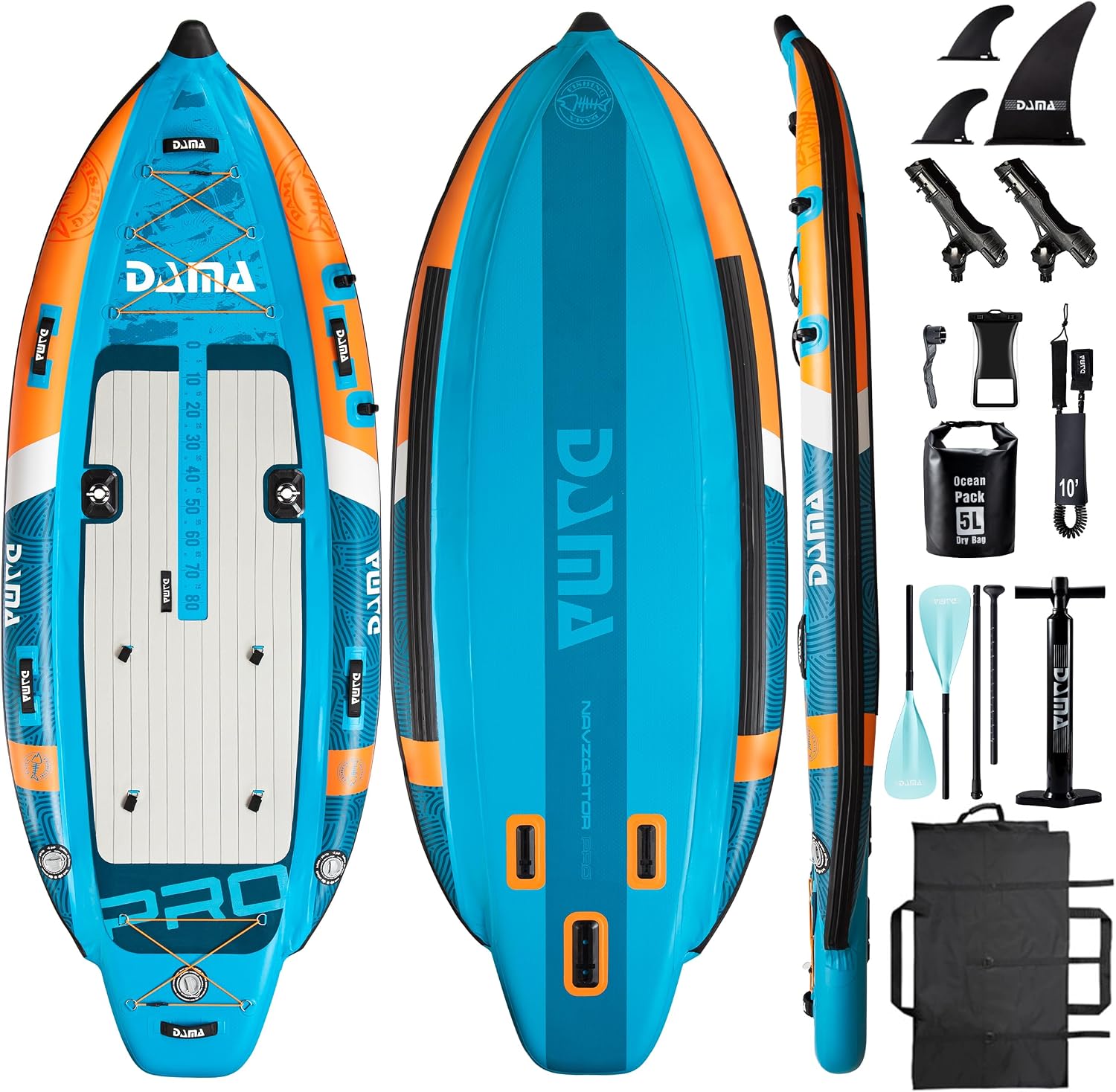
DAMA Yoga Board (11′ x 33″)Best Yoga-Focused Value |
|
A board made for the mat at a sensible price point. | Check Price on Amazon |
| 6 |  |
Roc Inflatable Stand Up Paddle Board 10’6″Best Compact All-Rounder |
|
Easy to carry, easy to store, genuinely stable underfoot. | Check Price on Amazon |
| 7 |  |
Nhean Inflatable Paddle Board (126″ x 33″)Best for Transport & Storage |
|
A sensible all-rounder that still leaves room for a flow. | Check Price on Amazon |
| 8 |  |
Hydro Force Oceana Inflatable Paddle BoardBest Crossover with Kayak Seat |
|
Practise standing, then clip the seat in and cruise home. | Check Price on Amazon |
| 9 | 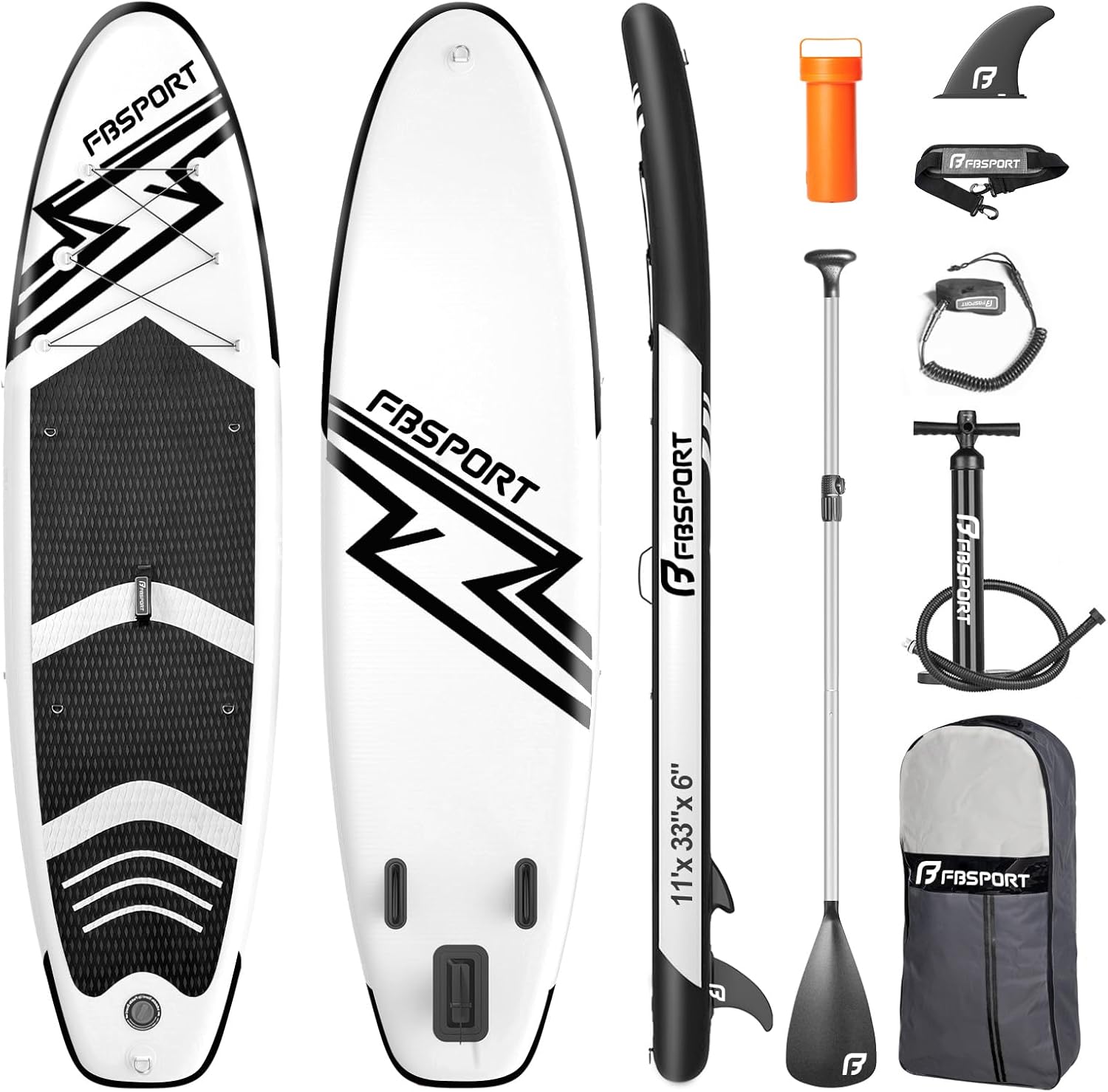 |
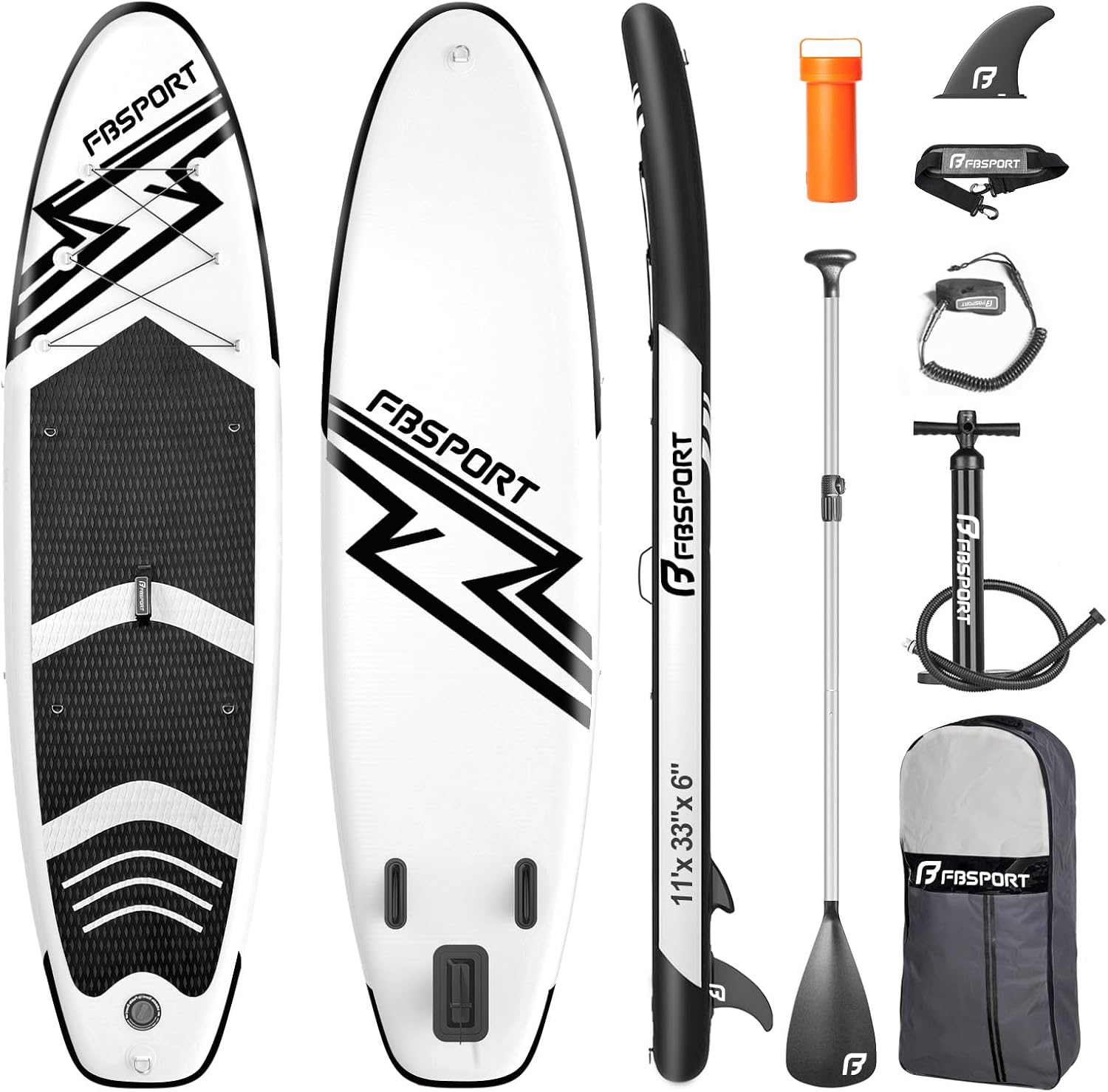
FBSPORT 11′ Premium Stand Up Paddle BoardBest Budget All-Rounder |
|
A do-everything board that handles slow flows comfortably. | Check Price on Amazon |
| 10 |  |
SereneLife 10’6″ Inflatable Stand Up Paddle BoardBest for Beginners |
|
Forgiving underfoot for first wobbles and first flows. | Check Price on Amazon |
| 11 |  |
FunWater 10’6″ Inflatable SUP with Beginner AccessoriesBest Starter Bundle |
|
Everything you need to start without a second shopping trip. | Check Price on Amazon |
| 12 | 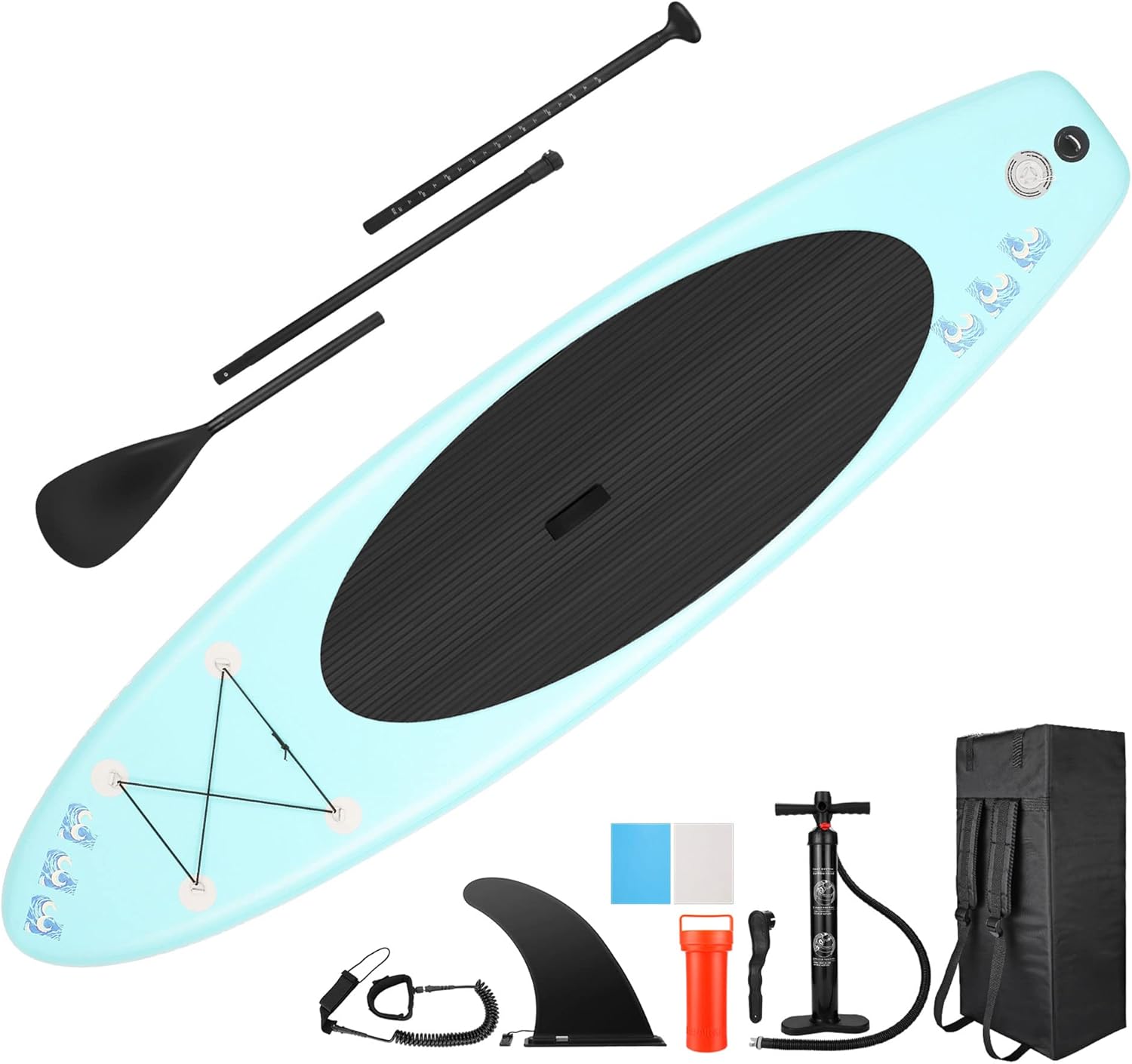 |
ANCHEER Inflatable Stand Up Paddle BoardBest for Mixed Fitness |
|
Quicker between poses when you blend cardio and yoga. | Check Price on Amazon |
| 13 |  |
Swonder Inflatable Paddle BoardBest for Casual Flow Sessions |
|
A relaxed, friendly board for slow flows close to shore. | Check Price on Amazon |
1. Why Paddle Board Yoga Is Worth the Wobble
If you have only ever rolled out a mat on a wooden floor, the idea of a moving surface sounds like a gimmick. It is not. The instability of a board on water recruits the small stabilising muscles around your ankles, knees, hips and spine in a way that a solid floor simply cannot. You are not just holding a pose — you are continuously correcting it.
Think about what happens in a basic tree pose on land. Once you find the position, the challenge is mostly over; your body settles and the work becomes passive. On a board, the water keeps sending tiny inputs through the hull. Your feet adjust, your glutes fire, your core keeps the ribcage stacked over the pelvis, and your breathing stays deliberate because it has to. The pose becomes an active negotiation rather than a static shape. Practitioners consistently describe the effect as “the same practice, more awake.”
There is a mental component too. Falling in is part of the deal, and that is strangely liberating. When the possibility of a splash is on the table, the ego quiets down. You stop chasing the deepest expression of a pose and start chasing the steadiest one, which is exactly the trade that yoga has been asking for all along. Many people who struggle to stay present in a studio find that the water does the focusing for them — there is simply no room in your attention for a to-do list when the board is tilting.
Physically, the benefits stack up quickly. Balance training on an unstable surface is a well-established way to improve proprioception and joint stability. Core engagement is constant rather than intermittent. Shoulders and hips open gradually because you move more conservatively, which reduces the risk of overstretching in a cold outdoor environment. And because you are outside, you get the recovery benefits of fresh air, daylight and natural scenery that no indoor class can replicate. If you have ever wondered whether paddle boarding counts as a real workout, our look at whether paddle boarding is good exercise covers the physiology in detail.
There is also the social and lifestyle angle. A board turns any calm bay, lake or slow river into a studio with an unbeatable view. It gives families a shared activity, gives solo paddlers a reason to be on the water at sunrise, and gives travellers a practice they can pack into a bag. And when the flow is done, you still have a paddle board — which means you can paddle out to a swimming spot, drift with the current, or teach your kids to stand up. Compare that with a single-use piece of gym equipment and the value equation shifts quickly.
The learning curve is gentler than most people expect. You do not need gymnastic balance to start; you need a stable board and calm water. Our guide to how hard paddle boarding actually is puts the difficulty in honest terms, and the short version is that most beginners find their feet within the first session. From there, yoga on the board is simply a matter of starting low, starting slow, and letting the water teach you.
Start Your Floating Practice
Browse stable, yoga-friendly inflatable SUPs on Amazon.
Browse Yoga SUPs on Amazon2. Anatomy of a Yoga-Ready Board: What Actually Matters
Marketing copy will tell you every board is “stable.” Physics disagrees. When you are standing on one leg with your arms overhead, a few inches of width and a few litres of volume decide whether you are practising or swimming. Here is what separates a genuine yoga platform from a board that merely floats.
Width is the headline spec
Width determines how far you can move your centre of gravity before the rail digs in. Boards in this roundup run from narrower all-round outlines up to genuinely generous platforms in the mid-thirty-inch range. As a rule of thumb, more width equals more forgiveness — it simply takes a bigger error to flip the board over. The trade-off is speed and tracking: a wide board feels slower and turns more lazily, which is fine if your primary goal is to practise and irrelevant if you are racing.
Length sets your working deck
Length gives you room to move. A longer board lets you step the feet wide in a warrior sequence, gives you a proper platform for savasana, and keeps the nose above water when you shift forward. It also tracks better between poses if you plan to paddle to a quiet spot before you begin. The flip side is transport: longer boards are heavier to carry and take up more space in a bag or on a roof rack. If you have a small car or a long walk to the water, check our advice on transporting a paddle board before you commit to the biggest platform in the shop.
Thickness, volume and rigidity
Thickness drives volume, and volume drives how much weight the board supports before it flexes. A board that sags in the middle when you stand on it will feel spongy in every pose — unpleasant at best, destabilising at worst. Rigid inflatable construction with dense drop-stitch core material is what gives a modern inflatable its near-hard-board feel. Weight capacity figures are useful, but they are not the whole story; how the board behaves at the top of its range matters more than the number on the box. Our breakdown of how much weight a paddle board can hold explains the difference between theoretical capacity and comfortable capacity.
The deck pad is your studio floor
Traction is everything when you are barefoot and slightly damp. You want a soft, grippy pad with enough coverage for a full mat-length stance, comfortable under heels and knees during kneeling postures. Cushioning matters more for yoga than for touring because you spend more time on the deck in contact with it. We go deeper on this in the deck pads and traction section below.
Fin setup and tracking
Fins keep the board going where you point it. For yoga, the fin setup is less critical than for touring, but a board that drifts in a slow current will creep away from your launch point while you are in downward dog. A straightforward fin arrangement that is easy to fit and remove makes life simpler, especially when you are packing up on a gravel bank in the wind.
Rigging, handles and the small things
Grab handles at the nose and tail make launching and landing much easier. A place to clip a water bottle or a dry bag keeps the deck clear. D-rings matter if you want to add a seat later — something several boards in this roundup support, which turns a yoga platform into a genuine hybrid. If that crossover idea appeals, our guide to the best paddle board seats shows what to look for.
| Feature | What It Does for Yoga | What to Look For |
|---|---|---|
| Width | Determines how far you can lean before the rail catches. | Mid-thirty-inch range for maximum forgiveness in balance poses. |
| Length | Gives room for wide stances, lunges and full savasana. | Longer boards suit taller practitioners and longer flows. |
| Deck pad coverage | Cushions knees and heels and keeps bare feet planted. | Soft, grippy foam with generous coverage front to back. |
| Rigidity | Stops mid-deck flex that makes poses feel unstable. | Dense drop-stitch construction that feels firm at full pressure. |
| Capacity | Keeps the board riding high with gear on deck. | Comfortable headroom above your body weight plus gear. |
Practical Tip
Stand on a board before you buy if you can. Two boards with identical published dimensions can feel completely different underfoot depending on how stiff the hull is and how the deck pad is shaped. If you are buying online, buy from a retailer with a straightforward return policy and use the first session to confirm the feel matches your expectations.
3. The Stability Leaders: Boards Built for Balance Work
These four boards share one trait: they give up a little speed to give you a lot of platform. If your priority is holding a pose without thinking about the water underneath you, start here.
| Board | Platform | Why It Stands Out | Check Price |
|---|---|---|---|
| Skatinger 11’6″ Super Wide | 35″ wide, 450 lb capacity | Maximum width for confident single-leg work. | Check Price |
| ATPROSS 11’6″ x 35″ | 35″ wide, 450 lb capacity | Wide platform with kayak mode versatility. | Check Price |
| FLYPARK Yoga Board | 132″ x 34″, 420 lb capacity | Deck layout designed around the practice itself. | Check Price |
| Highpi 132″ x 33″ | 132″ x 33″, 350 lb capacity | Long deck that suits tall, long-limbed practitioners. | Check Price |
Skatinger 11’6″ Super Wide Inflatable SUP (35″ wide, 450 lb)
The Skatinger is the board in this roundup that most obviously solves the yoga problem. Where many all-round boards trim width in favour of glide, this one commits to a broad, generous platform and a high weight capacity, then builds everything else around that decision. The result is a board that feels planted from the moment you step on, and stays planted when you move through a sequence.
Key Features
- 35-inch wide deck — the widest platform in this group, which translates directly into stability for standing balances and transitions.
- 450 lb capacity — comfortable headroom for larger paddlers or for anyone who shares the board with a child, a dog or a pile of gear.
- Super-wide outline — the shape stays broad through the middle of the board rather than tapering early, so the working area feels larger than the numbers alone suggest.
- 11’6″ length — long enough for tall practitioners to stretch out, short enough to remain manageable on land.
What We Like
- Exceptional side-to-side stability for balance work
- Generous capacity leaves room for gear and extra passengers
- Wide platform builds confidence quickly for nervous beginners
- Long deck accommodates full-body poses comfortably
Keep in Mind
- Wide boards move more slowly between launch points
- Bigger platform means more to carry to the water
- Tracking is adequate rather than exceptional in crosswinds
Best for: Anyone who wants the most forgiving surface possible — larger paddlers, dedicated yoga practitioners, and instructors who need a board that stays steady while they demonstrate.
ATPROSS 11’6″ x 35″ Inflatable Paddle Board (450 lb, Kayak Mode)
The ATPROSS takes the wide-platform formula and adds a genuinely useful second act: kayak mode. That matters more than it sounds. After a long flow session, legs can be pleasantly tired, and paddling home seated turns the trip back into part of the recovery rather than a chore. For couples and families who disagree about how they want to use the water, this is the board that ends the argument.
Key Features
- 11’6″ x 35″ platform — the same generous width as our top pick, giving you a stable stage for balances and floor work.
- 450 lb capacity — plenty of margin for a paddler plus gear, or two people sitting in kayak configuration.
- Kayak mode conversion — designed to accept a seated setup, which extends the day beyond your practice.
- Stable all-round proportions — a shape that behaves predictably whether you are kneeling, standing or seated.
What We Like
- Wide deck is forgiving for beginners and balance work
- Kayak mode adds real versatility for tired legs
- High capacity suits bigger paddlers and shared use
- Good choice for all-day outings with mixed activities
Keep in Mind
- Adding a seat is an accessory decision worth planning for
- Wide hull prioritises stability over speed
- More features means slightly more to set up at the water
Best for: Paddlers who want one board for morning yoga, an afternoon paddle and an evening drift — especially couples who share equipment.
FLYPARK Yoga Stand Up Paddle Board (132″ x 34″, 420 lb)
Some boards in this list are all-rounders that happen to work well for yoga. The FLYPARK reads the other way around: it is a yoga board that happens to paddle. The proportions are unmistakable — a broad, generous working area, a strong weight rating and a layout that puts the mat at the centre of the design. For practitioners who already know they will spend more time in poses than in transit, that focus is a genuine advantage.
Key Features
- 132″ x 34″ — long and wide, giving you room for wide stances and full-body rest poses.
- 420 lb capacity — substantial headroom that keeps the deck riding high and firm.
- Yoga-focused design — proportions chosen for the practice rather than for racing between points.
- Generous deck footprint — enough working area to move through a sequence without stepping off the pad.
What We Like
- Purpose-built proportions for yoga and fitness work
- Strong capacity keeps the platform firm and high
- Long deck suits taller practitioners and rest poses
- Wide stance area supports transitions between postures
Keep in Mind
- Yoga-first design means less emphasis on paddling speed
- Large platform needs a reasonable storage spot at home
- Bigger boards take a little longer to inflate and deflate
Best for: Dedicated yoga practitioners who want a board that treats the practice as the main event and paddling as the commute.
Highpi Inflatable Stand Up Paddle Board (132″ x 33″, 350 lb)
Tall paddlers have a specific problem on yoga boards: they run out of deck. A board that feels spacious to someone of average height can feel like a tightrope once you are over six feet and stretching into a full warrior. The Highpi answers that with length. At 132 inches, it gives long-limbed practitioners the working room they need while keeping a sensible width that does not turn the board into a barge.
Key Features
- 132″ length — plenty of deck for tall riders, wide stances and savasana.
- 33″ width — a balanced middle ground between stability and paddling efficiency.
- 350 lb capacity — solid support for a single practitioner and their gear.
- Long-deck outline — the working area extends further forward and back than on shorter boards.
What We Like
- Extra length suits tall practitioners and long poses
- Balanced width keeps it usable for regular paddling
- Good all-round proportions for mixed use
- Comfortable capacity for solo sessions with gear
Keep in Mind
- Narrower than the widest boards here for side-to-side stability
- Longer boards need more space to store and transport
- Best suited to calm water rather than choppy conditions
Best for: Taller yogis and anyone who feels cramped on standard-length boards but still wants a board that paddles properly.
4. The Versatile All-Rounders: Yoga, Paddling and Everything Else
Not everyone wants a single-purpose board. If you plan to paddle to a quiet cove, practise, swim, and then explore on the way back, an all-rounder is the smarter buy. These four boards balance stability and glide well enough to handle both halves of the day.
| Board | Platform | Why It Stands Out | Check Price |
|---|---|---|---|
| Roc 10’6″ | 33″ wide, 350 lb capacity | Compact, carry-friendly and genuinely stable. | Check Price |
| Nhean 126″ x 33″ | 126″ x 33″ | Practical proportions for transport and storage. | Check Price |
| SereneLife 10’6″ | 10’6″ all-round | Approachable shape for first-time paddlers. | Check Price |
| FunWater 10’6″ | 10’6″ with beginner kit | Starter accessories remove the guesswork. | Check Price |
Roc Inflatable Stand Up Paddle Board 10’6″ (33″ wide, 350 lb)
The Roc is the board most likely to get used, and that is a compliment. At 10’6″ it is compact enough that one person can carry it to the water without a second pair of hands, and 33 inches of width gives it the kind of steady, reassuring feel that makes beginners relax. For yoga, that combination matters: a board you can handle easily is a board you will actually take out on a weekday morning.
Key Features
- 10’6″ length — manageable in a car boot, on a shoulder, and in a small storage space.
- 33″ width — a proven all-round width that stays stable during slow flows.
- 350 lb capacity — dependable support for a solo practitioner and their kit.
- Compact all-round outline — paddles predictably and turns without a fight.
What We Like
- Easy to carry, inflate and store
- Stable enough for beginner balances and floor work
- Works as a genuine everyday paddle board too
- Compact size suits apartment living and small cars
Keep in Mind
- Shorter deck gives tall practitioners less room to stretch
- Narrower than the widest yoga boards here
- Best for calm water rather than wind and chop
Best for: Paddlers who want one easy, honest board for short paddles, casual flows and everyday water time without a big storage footprint.
Nhean Inflatable Paddle Board (126″ x 33″)
The Nhean occupies the sensible middle of the market: long enough to paddle properly, wide enough to practise on, and shaped to pack down without a fight. If you have a modest car, a shared garage or a long carry from the parking area, practical dimensions matter as much as performance — and this board is designed with that reality in mind.
Key Features
- 126″ x 33″ — a classic all-round proportion that balances deck space and handling.
- Standard all-round shape — predictable behaviour for paddling, kneeling and standing work.
- Pack-down friendly — inflatable convenience that fits in a bag rather than on a roof.
- Roomy working deck — enough space for a compact flow sequence.
What We Like
- Balanced proportions suit mixed paddling and yoga
- Packs down for easy transport and closet storage
- Straightforward design keeps setup simple
- Good deck area for a board of this class
Keep in Mind
- Not as wide as the dedicated stability specialists
- Modest length suits average-height riders best
- Plan for calm conditions when you want to flow
Best for: Practical paddlers who need a do-everything board that stores easily and still supports a proper practice.
SereneLife 10’6″ Inflatable Stand Up Paddle Board
Beginners do not need the biggest board in the shop; they need one that forgives mistakes. The SereneLife’s 10’6″ all-round proportions sit right in that sweet spot — short enough to feel manageable when you are learning to carry and steer it, stable enough that the first standing attempt does not end in a soaking. For someone combining their first paddle strokes with their first water-based flow, that forgiving character is the whole ballgame.
Key Features
- 10’6″ length — a beginner-friendly size that is simple to handle on land and on water.
- All-round outline — designed for relaxed cruising and gentle balance work.
- Approachable proportions — nothing intimidating about the shape or the learning curve.
- Compact footprint — easy to store in a flat, a garage or the boot of a car.
What We Like
- Very approachable for first-time paddlers
- Light enough for solo handling and setup
- Stable feel encourages confidence early
- Compact size simplifies storage and transport
Keep in Mind
- Smaller deck limits very wide yoga stances
- Best for light use and calm water
- Not aimed at heavy gear loads or long touring
Best for: First-time paddlers who want a gentle introduction to both SUP and water-based yoga without overspending on a specialist board.
FunWater 10’6″ Inflatable SUP with Beginner Accessories
One of the quiet frustrations of buying a first board is realising you still need half a dozen things before you can use it. The FunWater sidesteps that by arriving as a beginner-ready package, so the first session does not require a second shopping trip. The board itself follows the classic beginner formula: compact, light and stable, with proportions that make learning feel less like a test.
Key Features
- 10’6″ length — compact and easy to manage while you learn.
- Beginner accessory kit — the essentials come with the board, so you can get on the water sooner.
- Lightweight feel — easier to carry to the launch and back to the car.
- Beginner-friendly shape — designed for stability and confidence rather than speed.
What We Like
- Starter kit removes the guesswork for new owners
- Light and manageable for solo setup
- Stable proportions suit early balance work
- Convenient package for gifting or first purchases
Keep in Mind
- You may upgrade accessories as your practice develops
- Compact deck is better for compact flows
- Aimed at recreational rather than intensive use
Best for: New paddlers who want a complete, ready-to-go setup and a board that grows with their first season on the water.
Want One Board for Everything?
See all-round inflatable SUPs rated for mixed use.
Check Price on Amazon5. Yoga-Specific Designs and Smart Crossovers
The last group covers boards that either put yoga at the centre of their design or add a clever twist that makes them more than a single-purpose platform. If you want a board that does something specific well — or does two things well — this is the group to study.
| Board | Platform | Why It Stands Out | Check Price |
|---|---|---|---|
| DAMA Yoga Board | 11′ x 33″ | Yoga-first design at sensible proportions. | Check Price |
| Hydro Force Oceana | Crossover with kayak seat | Practise standing, then paddle home seated. | Check Price |
| FBSPORT 11′ | 11′ premium all-round | Honest all-round value for casual flows. | Check Price |
| ANCHEER 11′ x 32″ | 11′ x 32″ | Nimble outline for cardio-plus-yoga sessions. | Check Price |
| Swonder Inflatable SUP | All-round inflatable | Relaxed feel for slow, gentle sessions. | Check Price |
DAMA Yoga Board (11′ x 33″)
The DAMA wears its intentions on its sleeve: this is a yoga board, not a touring board that someone stuck a mat on. Eleven feet of length paired with 33 inches of width is a thoughtful compromise — wide enough for balance work, narrow enough to still paddle somewhere worth practising. For buyers who know their routine is the priority but who still want to move around the lake, it lands in a comfortable middle.
Key Features
- 11′ x 33″ proportions — a balanced footprint that supports poses without becoming unwieldy.
- Yoga board design — layout and shape chosen with the practice in mind.
- Ample deck area — room to step, lunge and stretch without constantly hunting for grip.
- All-round capability — still a competent board for casual paddling between sessions.
What We Like
- Purpose-built for yoga and floor work
- Balanced dimensions keep it easy to paddle
- Good deck coverage for barefoot practice
- Sensible choice for regular weekly sessions
Keep in Mind
- Less width than the widest stability boards here
- Not designed for speed or long-distance touring
- Yoga-first buyers benefit most from this design
Best for: Practitioners who want a board designed around yoga first and paddling second, without paying for features they will not use.
Hydro Force Oceana Inflatable Paddle Board (Kayak Seat)
The Oceana’s trick is the included kayak seat, and it is a better idea than it first appears. A long yoga session leaves the legs pleasantly tired and the core nicely switched on — which is exactly when a seated paddle home feels great. The board works as a standing platform for your flow, then converts for the trip back. For families especially, that flexibility means one board serves several moods in a single afternoon.
Key Features
- Includes a kayak seat — a built-in second mode for resting, fishing or paddling home seated.
- Inflatable construction — portable and forgiving when it bumps a dock or a rock.
- Crossover layout — designed to work standing, kneeling or seated.
- Practical all-round shape — stable enough for gentle flows and relaxed cruising.
What We Like
- Kayak seat adds genuine second-mode versatility
- Great for mixed sessions and tired legs
- Inflatable build is travel- and storage-friendly
- Family-friendly board for varied activities
Keep in Mind
- Crossover focus means fewer yoga-specific touches
- Seat hardware adds a little setup time
- Best suited to relaxed rather than intensive practice
Best for: Families and casual paddlers who want a board that covers yoga, cruising and seated paddling without buying two separate craft.
FBSPORT 11′ Premium Stand Up Paddle Board
There is real value in a board that simply does the everyday job well. The FBSPORT’s 11-foot all-round shape is one of the most proven formulas in recreational paddle boarding: long enough to glide, wide enough to stand on comfortably, and straightforward enough that you never have to think about it. For gentle flows close to shore, that predictability is exactly what you want underfoot.
Key Features
- 11′ length — a classic all-round length that paddles better than shorter beginner boards.
- Premium all-round build — intended for regular recreational use across flat water.
- Stable everyday shape — easy to stand on, easy to trust while you move through poses.
- Versatile use — equally suited to a paddle, a swim platform or a slow flow.
What We Like
- Proven all-round proportions handle most tasks
- Stable enough for beginner and intermediate flows
- Good value for a regularly used board
- Simple, no-fuss ownership experience
Keep in Mind
- Not as wide as dedicated yoga platforms
- Deck space suits compact sequences
- General-purpose rather than specialised
Best for: Value-focused buyers who want one reliable board for paddling, swimming and gentle yoga rather than a specialist platform.
ANCHEER Inflatable Stand Up Paddle Board (11′ x 32″)
If your sessions blend strength work, paddling intervals and a closing stretch, the ANCHEER’s slightly trimmer outline earns its keep. Thirty-two inches of width keeps things reasonably stable, while the shape stays lively enough that paddling between sets feels engaging rather than sluggish. It is a good match for anyone using the water as a fitness venue rather than a meditation platform.
Key Features
- 11′ x 32″ — a nimble all-round proportion that balances stability and responsiveness.
- Fitness-friendly deck — suitable for a mix of standing, kneeling and floor work.
- All-round outline — handles casual paddling and fitness drills comfortably.
- Manageable size — straightforward to carry and set up alone.
What We Like
- Livelier feel suits fitness-style sessions
- Still stable enough for slower balance work
- Manageable size for solo handling
- Good all-round choice for active users
Keep in Mind
- Narrower than the widest yoga boards here
- Less forgiving for very slow, static balances
- Best on calm water for floor-based work
Best for: Fitness-minded paddlers who want to combine cardio intervals with a closing flow on one responsive board.
Swonder Inflatable Paddle Board
Not every session needs to be an achievement. Sometimes you want a board you can inflate, launch and drift on while you move gently through a few familiar poses. The Swonder suits that mood: an easy-going inflatable with an all-round outline and a friendly character that rewards slow, unhurried practice close to shore.
Key Features
- Inflatable construction — packs down small and shrugs off the occasional knock.
- All-round outline — versatile enough for paddling, drifting and gentle flows.
- Easy handling — simple to carry, set up and manage on your own.
- Relaxed character — designed for enjoyable rather than intensive sessions.
What We Like
- Approachable and unintimidating for casual users
- Easy to transport and set up alone
- Comfortable for slow, restorative flows
- Good fit for occasional, relaxed use
Keep in Mind
- Not aimed at advanced or intensive practice
- All-round shape rather than a yoga-specific layout
- Suits calm, sheltered water best
Best for: Casual paddlers who want a relaxed, easy board for slow flows and unhurried time on sheltered water.
6. How to Choose the Right Yoga SUP for You
Spec sheets are useful, but they are not the same as knowing which board suits your body, your water and your lifestyle. Here is the decision framework we would use, in the order that actually matters.
Start with your body, not the board
Your weight and height decide how much platform you need. A heavier paddler needs more volume and width to keep the board riding high and firm, while a taller practitioner needs length to fit their stance. Capacity figures give you a rough idea, but the practical test is simple: the board should feel firm under your feet, not spongy, with the deck riding above the water rather than sitting in it. If you are shopping close to the upper end of a board’s range, size up — you will enjoy the extra stability every single session.
Be honest about your water
Where you practise changes everything. A sheltered lake, a protected bay or a slow-moving river rewards wide, stable boards and lets you get away with shorter lengths. Open water with boat wake, wind chop or tidal current demands more board under you and a more experienced approach. Check local guidance before you go — our summary of paddle board safety requirements is a solid starting point — and remember that calm morning water is the yoga studio you want.
Decide how much board you can realistically own
The best board is the one you use, and that is partly a logistics question. Measure your storage space before you buy. Measure your car boot. Walk the route from your front door to the water and time it. If a large board is going to live unloved in a garage while a compact one gets used three times a week, the compact one is the better purchase. Our guide to inflatable paddle board storage ideas covers real-world setups for small spaces.
Think about the whole kit, not just the board
A yoga setup needs more than a hull. A reliable pump matters because getting to firm pressure is what gives an inflatable its rigidity — see our roundup of the best paddle board pumps if yours is slow or tiring. A comfortable carry bag matters more than people expect; our pick of the best paddle board bags covers what to look for. And if you are driving to the water, a proper rack system saves your car and your back — the best paddle board roof racks explains the options.
Set a realistic budget and buy once
Boards at the value end of the market are perfectly capable, and several in this roundup prove it. Where cheap boards tend to disappoint is longevity and accessory quality — the paddle, the pump and the bag are often the first things owners upgrade. If you can, spend a little more on the board itself and upgrade accessories later rather than buying the cheapest complete package and replacing it within a season. Our comparison of the best inflatable paddle boards shows what the next price tier typically adds.
Decision Shortcut
If yoga is your main goal and paddling is secondary, prioritise width and deck pad coverage over everything else. If paddling is the main event and yoga is a bonus, buy for the paddling and accept a slightly less stable platform. Most people end up happier with a board that matches how they actually spend their time on the water.
It is also worth knowing how these boards are put together, because construction explains why some boards feel rigid and others feel soft. Our explainer on how paddle boards are made covers the layering and drop-stitch process in plain language.
7. Deck Pads, Traction and Underfoot Comfort
If the hull is the floor of your studio, the deck pad is the mat — and it deserves the same attention you would give a real one. Barefoot, slightly damp, and shifting your weight through a sequence, you are completely dependent on what is under your feet.
What good traction actually feels like
Good deck foam grips without gripping too hard. You want your feet to stay put when you press into a standing pose, and to release easily when you step back to the top of the mat. Overly slick foam sends you sliding at the worst moment; overly aggressive texture rubs the skin on your soles during longer sessions. The best pads balance the two with a soft, textured surface that stays comfortable in contact with skin.
Coverage matters more than thickness
For yoga, coverage beats thickness every time. A thin pad that covers the whole deck is more useful than a thick pad that stops halfway, because your hands, knees and feet will land across a wide area during a flow. Kneeling postures in particular punish boards with short pads — a knee on bare PVC is uncomfortable enough to break your focus.
Cushioning and the kneeling question
If your practice includes lunges, camel pose, hero pose or anything else that loads the knees, cushioning stops being a luxury. Softer foam reduces pressure and lets you hold kneeling positions longer. Some practitioners add a thin travel mat on top of the deck pad for extra comfort; that works well, though it does introduce something that can slide if it gets wet underneath.
Keeping your grip clean
Deck pads lose grip as they collect sunscreen, algae, sand and dust. A quick rinse after each session and an occasional scrub with mild soap keeps the surface performing as designed. Let the board dry fully before you roll it up, particularly along the edges of the pad where moisture hides. If you are unsure how to clean and dry an inflatable properly, our guide on how long inflatable paddle boards last includes the care habits that make the biggest difference.
Small details that help more than you expect
- Central alignment markings: subtle cues in the pad texture help you line up your mat and stay centred on the board.
- Flat hardware placement: anything raised underfoot becomes a distraction; well-designed boards keep fittings out of the working area.
- Edge grip: when you do lose balance, being able to grab the rail confidently is the difference between a stumble and a swim.
- Colour contrast: a pad that contrasts with the board makes it easier to place your feet without looking down constantly.
8. Inflatable vs Hard Boards for Yoga
This is the debate that comes up in every yoga SUP conversation, and the honest answer is that both work — but they work differently. Here is how the trade-offs actually play out on the water.
The case for inflatables
Inflatables win on logistics, and logistics decide how often you practise. A board that rolls into a backpack fits in a small car, rides a train, travels on a plane and lives in a cupboard. That is a transformative difference for anyone without a garage or a roof rack. Modern inflatable construction also has a hidden benefit for yoga: a firm, inflated hull is slightly more forgiving underfoot than a rigid board, which beginners tend to appreciate during their first few balance drills.
There is a safety angle too. A fully inflated board is soft enough to be kind when you fall on it — and you will fall on it at some point. Compare that with a hard shell edge during a tumble and the inflatable becomes the friendlier training partner while you are learning. Our full breakdown of inflatable versus hard paddle boards goes deeper on the performance differences.
The case for hard boards
Hard boards are rigid in a way inflatables approach but do not quite match. They sit lower in the water, which can feel more connected and stable in chop, and they glide efficiently between launch points. For a practitioner who lives steps from the water and paddles daily, that efficiency and the immediacy of grabbing a board off a rack without inflating is genuinely appealing.
The trade-offs are all logistical. Hard boards need a roof rack, a storage wall and a vehicle that can carry them. They are heavier to move alone, and they suffer more from dings and transport damage. For travelling yogis or apartment dwellers, those are not minor objections — they are the whole decision.
Which is better for yoga specifically?
For most people, an inflatable designed with a wide, flat deck is the better yoga platform. The portability advantage turns into more sessions, more sessions turn into better balance, and better balance is the point. Hard boards make the most sense if you live on the water, paddle every day, and value the connected feel more than the convenience. If you are still weighing it up, our look at whether inflatable paddle boards are good for beginners is worth a read.
Real-World Note
Whichever you choose, rigidity is what you are really buying. A well-inflated drop-stitch board at proper pressure feels dramatically different from one pumped to a lower level. If your board feels soft or bouncy in a pose, check your pressure before you blame the design.
9. Setting Up Your Floating Studio: Location, Launch and Anchoring
Half of a good session is decided before you get on the water. Choose the right spot, set up correctly, and everything that follows feels easier.
Pick water that behaves
Sheltered water is the foundation of SUP yoga. Look for a protected bay, a quiet lake edge or a slow stretch of river, away from boat channels, jet ski traffic and wind funnelling between buildings. Early morning is ideal: the water is usually glassier, the light is softer, and the temperature is kinder. Our guide to the best time to paddle board covers how conditions change through the day.
Inflate fully, every time
Give yourself five extra minutes with the pump. A firm board tracks better, feels more stable and makes every pose more predictable. If you find pumping tiring, a better pump transforms the experience — see the best paddle board pumps for options that do the hard work for you. Check that the fin is seated properly and the valve is tight before you launch.
Staying in one place
The least meditative part of SUP yoga is drifting into the reeds mid-flow. A small anchor or a simple tie-off keeps you positioned while you practise. If you anchor, use light gear you can release quickly, and never attach anything to your body or your leash. Practising near shore in shallow, calm water is often simpler than anchoring in deeper water — you can simply step off and reposition.
What to bring on deck
- A well-fitted personal flotation device: see the best paddle board life jackets for comfortable options you can wear while moving.
- A leash suited to your water: quick-release options are the norm in moving water; calm-water practitioners often prefer a straightforward coiled leash.
- Water and sunscreen: reflection off the water intensifies sun exposure more than most people expect.
- A dry bag for keys and a phone: keep the deck clear and your essentials protected.
- The right paddle: a paddle that floats is non-negotiable once you set it down mid-session — our look at whether paddle board paddles float explains why, and the best paddle board paddles covers what to buy.
Getting to the water in the first place
Transport is where enthusiasm goes to die. If carrying your board is awkward, you will skip sessions. Practice the carry at home, use a proper bag, and if you are driving with a board on the roof, invest in a decent rack — the best paddle board roof racks covers safe options. The full carrying and loading process is covered in our guide to transporting a paddle board.
10. Poses and Progression: Building a Water Practice
The single biggest mistake beginners make is treating a board like a floor. On the water, everything starts lower, slower and simpler — and that is not a limitation, it is the practice.
Start seated and get your bearings
Before you attempt anything standing, sit on the board and feel how it moves. Notice the roll when you shift your weight, the tilt when a wake passes, the way it settles again. Rock gently side to side and forward and back. This sounds elementary, but it recalibrates your balance system faster than any amount of land-based preparation.
Move to kneeling before you stand
Kneeling raises your centre of gravity slightly while keeping a wide, stable base. It is the natural bridge between sitting and standing, and it gives you a safe platform for arm movements, twists and gentle backbends. From kneeling, try a modified cat-cow, a gentle twist to each side, and a few breaths in a tall kneeling position with your hands at your heart.
Your first standing sequence
When standing feels natural, keep the sequence short. A simple mountain pose with your feet hip-width apart and your gaze on the horizon is far more valuable on a board than a complicated flow on land. From there, add a gentle forward fold, a low lunge with the back knee down, and a supported warrior with a shortened stance. Save single-leg balances for a session where you already feel steady.
Progression principles that keep you safe
- Shorten your stance: a slightly narrower, more centred stance is more stable than a long one.
- Keep a soft bend in the knees: locked knees make every correction abrupt; bent knees absorb movement.
- Look at the horizon: fixed visual focus is the most powerful stabiliser you have.
- Move with the water: resisting every sway is exhausting; riding it is efficient.
- Finish with stillness: a few minutes of quiet sitting or lying down closes the practice and settles your balance system.
Land practice pays off on the water
You do not need to wait for a calm day to get better. Balance drills, core work and hip mobility on land translate directly to the board. If you are curious about the fitness side of things, our articles on whether paddle boarding burns calories and whether it counts as good exercise cover the training benefits in detail. And if you are still building confidence, our guide to how to paddle board covers the fundamentals of standing, turning and stopping.
Wondering how your board compares to other craft while you learn? Our comparison of SUP boards versus paddle boards and the broader paddle board versus kayak breakdown both help clarify what you are actually standing on.
11. Safety, Stability and the Art of Falling Well
Water is a wonderful training partner and an unforgiving one. A few straightforward habits keep sessions safe, and one of them is learning to fall properly.
Dress for the water, not the weather
Warm air does not mean warm water. If the water temperature is cool, wear appropriate thermal protection and keep sessions shorter than you think you need. Hypothermia is a real risk even on sunny days, and it creeps up gradually. When in doubt, stay closer to shore and finish before you are cold.
Wear a flotation device that you can move in
A personal flotation device is not optional equipment for most paddlers — it is the single most important safety item you own. Choose one designed for paddle sports that allows full shoulder movement, so it does not interfere with your practice. Our guide to the best paddle board life jackets covers comfortable, movement-friendly options. Full local requirements are summarised in our paddle board safety requirements guide.
Leash choice is a safety decision
A leash keeps you connected to your board, which is your largest flotation device. In calm water, a coiled leash is convenient and out of the way. In moving water or currents, a quick-release system that can be detached from the waist is essential — a standard ankle leash can become a hazard in flow. Choose the right type for your environment and check it before every session.
How to fall safely
You will fall, and that is fine. The goal is to fall away from the board and to protect your head and hands. Try to land feet first in clear water, keep your arms relaxed, and surface calmly before you gather your board. Avoid diving head-first in unfamiliar water, and never let go of awareness of where the board is once you are in — an unattended board in wind travels faster than you can swim.
Read conditions honestly
Wind is the enemy of SUP yoga. What starts as a gentle breeze can build quickly and turn a calm session into a long paddle home. Check the forecast, watch the water before you launch, and be willing to call it early. Boat wake deserves the same respect: a wake arriving mid-pose is one of the most common causes of unexpected swims. And if you are new to the sport altogether, our guide to how hard paddle boarding is and whether paddle boards are hard to use set sensible expectations.
Safety Mantra
Calmer water, closer to shore, shorter session, better equipment. Beginners who follow those four rules almost never have a bad day on the board.
Stay Safe on the Water
Find a comfortable, movement-friendly flotation device.
Check Price on Amazon12. Care, Storage and Making Your Board Last
Inflatable boards are remarkably durable for something that folds into a bag — but “durable” is not the same as “indestructible.” A few habits between sessions keep a board feeling new for years.
Rinse, dry, then pack
Salt, sand and sunscreen are the quiet enemies of inflatable gear. Rinse the board with fresh water after every session, especially around the valve, the seams and the deck pad edges. Then let it dry completely before rolling. Rolling a damp board is the fastest route to mildew and unpleasant smells that never fully leave the fabric.
Store out of the heat
Heat and UV degrade inflatable materials over time. A board stored in a hot car boot or baking in direct sun on a balcony will age faster than one kept in a cool, shaded spot. If you must leave it inflated on the water for a while, keep it partly shaded and check the pressure periodically, since heat causes air to expand. Plenty of clever storage setups exist for tight spaces — our inflatable storage ideas covers wall mounts, ceiling hoists and closet-friendly methods.
Pressure: the habit that matters most
Over-inflating in hot weather stresses seams; under-inflating makes the board feel soft and slow to paddle. Follow the pressure guidance for your board, check it before you launch, and release a little air on very hot days if the board is sitting in direct sun. If you are still using a slow hand pump, upgrading is one of the best quality-of-life improvements you can make — the best paddle board pumps covers fast, low-effort options.
Fixing dings and punctures
Small punctures happen — a sharp shell, a stray twig, a rough dock edge. Most are straightforward to repair with a proper patch kit, and fixing them early prevents them from becoming bigger problems. Our step-by-step guide to patching a paddle board walks through the process. Keep a repair kit in your carry bag so you are never caught without one.
Protect the board in transit
Most damage occurs between the house and the water. Use a proper bag rather than dragging the board over gravel, secure it properly on a roof rack, and avoid leaving it strapped in direct sun while you stop for coffee. The best paddle board bags and best paddle board roof racks cover equipment that makes transport safer for both board and car.
How long should a board last?
With reasonable care, an inflatable board used regularly should give you many seasons of service. The biggest factors are storage conditions, sun exposure, how consistently it is dried before packing, and how carefully it is transported. Our detailed look at how long inflatable paddle boards last covers realistic expectations and the maintenance that extends their life.
Frequently Asked Questions
What makes a paddle board good for yoga?
Three things dominate: width, deck pad coverage and rigidity. Width gives you forgiveness when your balance shifts, a generous and comfortable deck pad lets you work barefoot across the whole board, and a stiff hull keeps the platform from flexing under you. Length matters too — longer boards give taller practitioners room to stretch out. Boards like the wide-platform options in this roundup are designed around exactly those priorities.
Can beginners do yoga on a paddle board?
Absolutely, provided you start on calm, sheltered water with a stable board and keep the first sessions simple. Most people are surprised by how quickly their balance adapts. Begin seated, move to kneeling, then progress to standing with short, centred stances. If you are brand new to paddle sports, read our guide on whether paddle boards are hard to use before your first outing.
Is an inflatable board stable enough for yoga?
Yes — and for most people, an inflatable is the better yoga board. Fully inflated drop-stitch construction is genuinely rigid, while the slight give underfoot is more forgiving than a hard shell when you are learning. Portability is the deciding advantage: a board that fits in a closet gets used far more often. See our full comparison of inflatable versus hard paddle boards for the detail.
How wide should a yoga paddle board be?
Wider is generally better for yoga. Boards in this roundup range up to the mid-thirty-inch range, and the wider options are noticeably more forgiving for balance work. The trade-off is that wide boards paddle more slowly and feel less agile, so if you plan to cover distance before your practice, consider a slightly narrower all-round shape instead.
Do I need a special mat on top of the deck pad?
Usually not. A good deck pad provides enough grip and cushioning for most practices. A thin travel mat can add comfort for kneeling postures, though it introduces a layer that can slide when wet underneath. If your knees are sensitive, the simplest fix is choosing a board with a soft, generously sized deck pad rather than adding equipment.
What should I wear for paddle board yoga?
Wear what you would wear to swim, plus layers if the water or air is cool. Quick-drying, close-fitting clothing avoids fabric catching on your feet during transitions. Always consider the water temperature, not just the air temperature, and bring a personal flotation device that allows full shoulder movement — the best paddle board life jackets covers paddle-friendly designs.
How do I keep the board from drifting during practice?
Choose sheltered water with minimal current, and either use a light anchor or practise close enough to shore that you can simply step off and reposition. A fin that tracks well helps the board hold position in a light breeze. Never attach an anchor line to your body or your leash.
Can I use a regular touring or racing board for yoga?
You can, but it is a compromise. Narrow boards are fast and track beautifully, yet they demand much more from your balance the moment you move into a pose. If yoga is your main activity, a wide all-round or yoga-specific board will give you a far more enjoyable practice. Our overview of the different types of paddle boards explains where each shape sits.
How do I transport a yoga paddle board?
Inflatables pack into a carry bag that fits in most car boots, which is their biggest practical advantage. If you own a hard board or prefer to keep an inflatable inflated, a proper roof rack makes loading far easier and safer — see the best paddle board roof racks. Full carrying technique is covered in our guide to transporting a paddle board.
How much weight can these boards hold?
Weight capacity varies by board, and several models in this roundup carry substantial ratings — figures like 350 lb, 420 lb and 450 lb appear in the specifications listed for individual boards. As a rule, choose a board with comfortable headroom above your body weight plus any gear or passengers. Our explainer on how much weight a paddle board can hold covers the difference between maximum and comfortable capacity.
What accessories do I actually need to start?
A reliable pump, a leash, a flotation device, a dry bag and sun protection cover the essentials. Boards sold as beginner bundles handle most of that list at once, which is convenient for first purchases. From there, upgrades usually start with a better paddle and a better pump — the best paddle board paddles and best paddle board pumps are good places to look.
Is paddle board yoga good exercise?
It is excellent exercise that feels deceptively gentle. Constant micro-adjustments build core strength and joint stability, while the outdoor setting adds the recovery benefits of fresh air and daylight. Because the surface moves, you engage more muscles than the same sequence on land. If you are curious about the broader fitness picture, see our article on whether paddle boarding is good exercise.
Final Verdict: Which Yoga SUP Should You Buy?
After working through every board in this roundup, the pattern is clear: width and rigidity do most of the work, and everything else is refinement. If you want the most stable, confidence-building platform available here, the Skatinger 11’6″ Super Wide delivers the widest deck and the most generous capacity in the group, which is exactly what balance work demands. For practitioners who want a board designed around yoga from the ground up, the FLYPARK Yoga Board is purpose-built for the mat. And for anyone who wants one board to do everything, the ATPROSS 11’6″ x 35″ pairs a yoga-friendly platform with genuine kayak-mode versatility.
Whichever you choose, the habits matter as much as the hardware. Practise on sheltered water, inflate your board fully, wear appropriate safety gear, start low and slow, and keep sessions short enough that you look forward to the next one. The boards in this list are tools; the practice is yours.
Ready to get on the water? Start with the board that matches how you will actually use it — and if you are still weighing up your options, our complete paddle board guide and the best inflatable paddle boards roundup will round out the picture.
Take the First Step Onto the Water
Check today’s prices on our top-rated yoga SUPs.
Check Price on Amazon