Gear Guide · Paddle Board Accessories
Best Paddle Board Seats: 12 Comfortable Upgrades That Turn Your SUP Into a Kayak
A seat is the single cheapest way to make a paddle board feel like an entirely different watercraft. Here is how the top detachable, inflatable, high-back, and cushion-style options compare — and which one actually suits the way you paddle.
Editorial Guide
A Good Seat Turns One Board Into Two Boats
Stand up paddle boarding is wonderful right up until the moment your legs disagree with you. Wind picks up, the water gets choppy, your feet start tingling, and suddenly an hour feels like a workout you did not sign up for. That is exactly the moment a paddle board seat earns its keep.
Strap one to the deck of a compatible board and you instantly have a second way to enjoy the same craft: seated, low center of gravity, legs stretched forward, double-bladed paddle in hand. Paddlers use this setup for fishing, for long touring runs, for taking kids or dogs along, for paddling when their balance is not cooperating, and simply for floating around on a calm evening with a drink in the cup holder that somehow always ends up in the water.
The market for these seats is crowded and confusing in a way that surprises most people. Nearly every listing uses the same words — universal, deluxe, detachable, ergonomic — and the photos all look broadly similar. In practice, the differences are enormous. A seat that feels supportive on a 30-minute drift can turn into a lower-back complaint on a three-hour paddle. Straps that hold firm on a calm lake can creep loose the first time you hit boat wake. Padding that seems generous in a photo can bottom out against a hard shell the moment you sit on it.
This guide breaks down twelve of the most popular paddle board seats on the market, grouped by the job they actually do best. If you are still building out your whole setup, our broader look at paddle boards is a useful companion read, and if the terminology around these craft still feels slippery, our explainer on SUP boards vs paddle boards clears up the naming confusion fast.
What This Guide Covers
- Twelve real seats, each reviewed individually with pros, cons, and who it suits.
- How attachment systems, backrest height, and padding styles actually differ on the water.
- A compatibility checklist so you do not buy a seat your board cannot take.
- Setup, safety, care, and the technique side of seated paddling.
Ready to Browse the Full Category?
See every paddle board seat currently available in one place.
Check Price on AmazonAt a Glance
Quick Comparison: Our Top Picks
Every seat in this guide is listed below with the details that matter most when you are choosing between them. Use the “Best For” label to shortlist, then jump to the full review block further down for the longer verdict.
| # | Image | Product | Key Specs | Verdict | Check Price |
|---|---|---|---|---|---|
| 1 | |
Top PickSereneLife Detachable Universal Paddle-Board Seat (SLSUPST15)Best Overall |
|
The do-everything seat most paddlers should start with. | Check Price on Amazon |
| 2 |  |
Thurso Surf Inflatable SUP Kayak SeatBest Inflatable |
|
Packs tiny and adds kayak seating in minutes. | Check Price on Amazon |
| 3 |  |
Leader Accessories Deluxe Kayak/SUP Seat with Back SupportBest Value |
|
Straightforward comfort without overthinking it. | Check Price on Amazon |
| 4 | 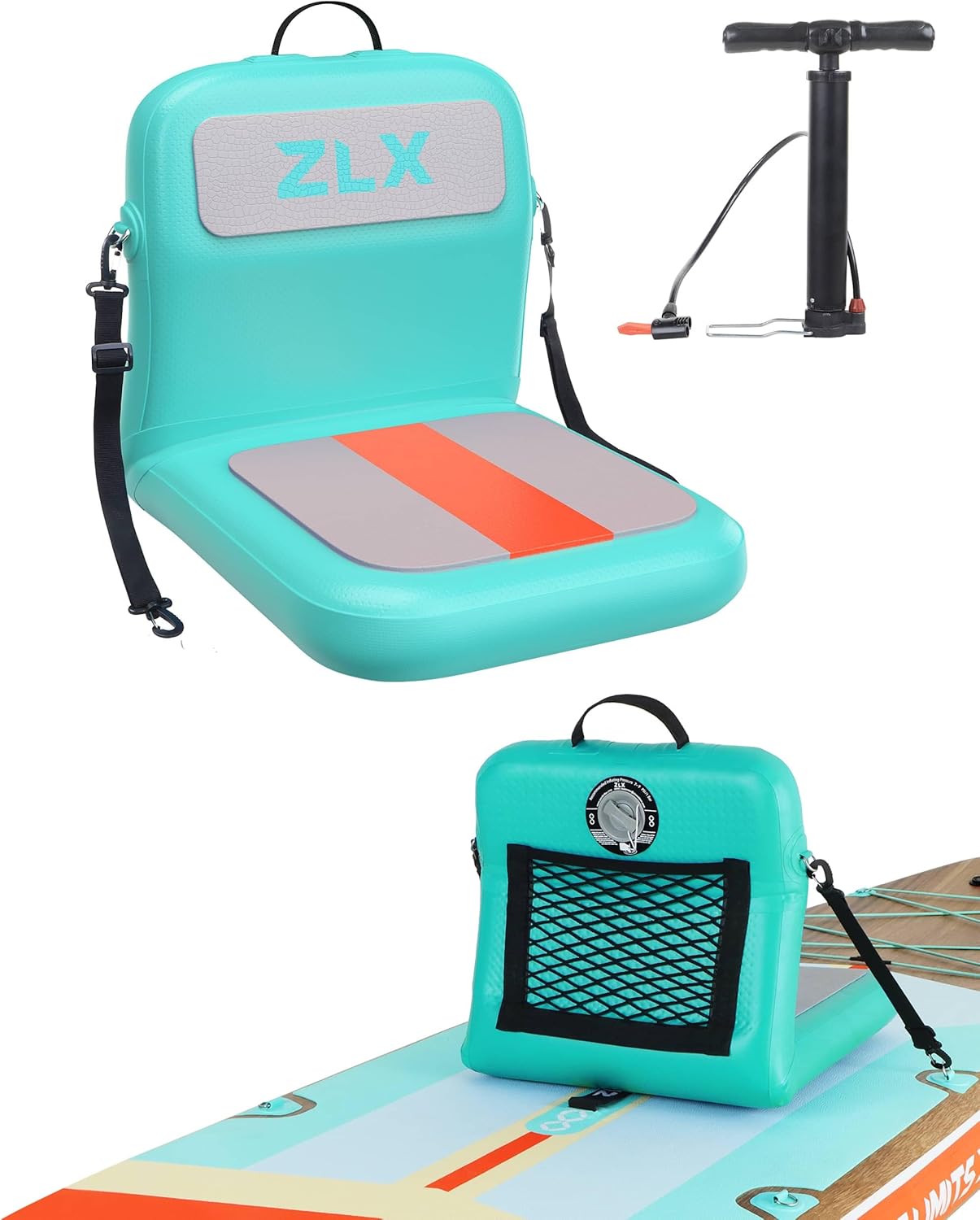 |
ZLX Paddle Board Seat with Back Support (air pump included)Best Bundle |
|
Everything you need arrives in a single box. | Check Price on Amazon |
| 5 |  |
Niphean Inflatable Kayak Seat with Back SupportBest for Travel |
|
Inflates when needed, disappears when not. | Check Price on Amazon |
| 6 |  |
VEVOR Kayak Seat, Universal Paddle Board Seat (2.6″ thick)Best Cushion Thickness |
|
Thick padding for long, slow, unhurried days. | Check Price on Amazon |
| 7 |  |
KOETSU Detachable Paddle-Board Seat with Back SupportMost Versatile |
|
Comes off cleanly when you want to stand. | Check Price on Amazon |
| 8 | 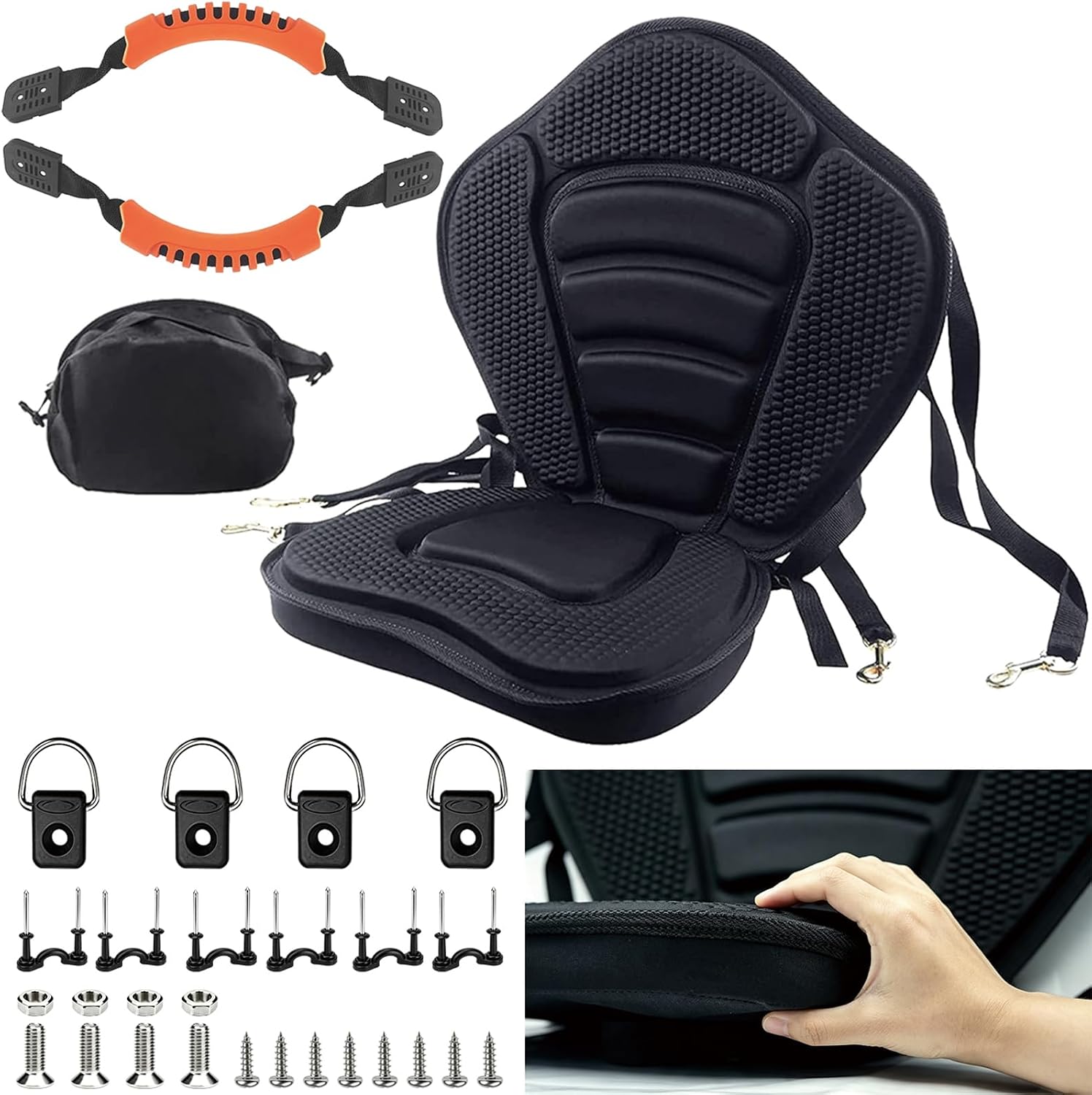 |
HLOGREE Kayak Thicken Seat Deluxe Plus (high back)Best High Back |
|
Tall support for all-day touring comfort. | Check Price on Amazon |
| 9 |  |
PenBan Universal Deluxe Kayak Seat Cushion with Storage BagBest With Storage |
|
A tidy home for small essentials. | Check Price on Amazon |
| 10 |  |
WOOWAVE Padded Deluxe Kayak Seat (memory foam)Best for Long Sessions |
|
Foam that settles into you on long floats. | Check Price on Amazon |
| 11 |  |
NEW-Vi Gel Kayak Seat CushionBest Seat Cushion |
|
A drop-in comfort upgrade for tired seats. | Check Price on Amazon |
| 12 |  |
Two Bare Feet High Back SUP SeatBest SUP-Specific High Back |
|
Kayak-style support built for SUP decks. | Check Price on Amazon |
Product names, model numbers, and headline features are shown as listed by the manufacturer. Check the live listing for current specifications before ordering.
Section 01
What a Paddle Board Seat Actually Does — and Why You Want One
It helps to think of a paddle board seat less as furniture and more as a change of stance. Standing on a SUP puts you at the top of a very long lever. Every wobble in the water becomes a wobble in your ankles, your knees, your hips. That is the challenge and, for a lot of people, the appeal. But it is also fatiguing, and fatigue is what ends most sessions early.
Sit down and the physics change completely. Your center of gravity drops to deck level. Your legs become a stable outrigger rather than a balance problem. The board stops being a balance trainer and becomes a small, quiet boat. Most paddlers are surprised by how much longer they stay on the water once they have a seat available as an option — not because standing is bad, but because having a fallback means you can keep going when your legs would otherwise call it.
Four Real-World Situations Where a Seat Earns Its Space
- Wind and chop. Standing in a headwind is a full-body fight. Seated, you can power through with your torso and finish the run instead of turning back.
- Fishing. A seat turns a casting platform into a stable base you can sit in for hours, hands free. Plenty of anglers pair one of these with a board from our best paddle boards for fishing roundup.
- Long touring days. Distance paddling punishes the feet and lower back. A seat lets you alternate between standing and sitting so neither one dominates.
- Teaching, towing, and passengers. When you are supervising kids or paddling with a dog, staying low and stable is simply the smarter move.
It Also Changes the Paddle, Not Just the Seat
The moment you sit down, a single-bladed SUP paddle becomes awkward. The natural upgrade is a double-bladed kayak paddle, which turns seated paddling into a smooth, alternating stroke rather than a side-to-side switch. If you have never tried it, the difference in rhythm is startling. Our guide to the best paddle board paddles covers both styles and how to choose between them.
There is also a practical knock-on benefit that rarely gets mentioned. When a seat lives on your board, the board stops being a single-purpose toy. It becomes a platform: paddle standing in the morning, sit down with a coffee in the afternoon, take a friend out who has never balanced on a board in their life. That versatility is the real reason people keep buying these things.
Key Takeaway
A seat is not a replacement for standing — it is a second mode. The best setups let you switch between the two in under a minute so that neither fatigue nor conditions end your session early.
Build Out Your Full Setup
Seats, paddles, pumps and accessories in one search.
Check Price on AmazonSection 02
How to Choose the Right Paddle Board Seat
Most seat listings look identical from the outside. The differences that actually matter live in five places: how the seat attaches, how tall and firm the backrest is, what the padding is made of, how the whole thing behaves when you are not using it, and whether it adds any storage. Walk through those five and you will know within a few minutes which seat is yours.
1. Attachment System
Almost every paddle board seat uses adjustable webbing straps with clips or hooks at the ends. Those clips attach to D-rings on your board, or to a mounting kit you add yourself. What varies is how many straps there are, how far they reach, and how the tension is adjusted.
Four-point attachment — two straps forward, two back — is the gold standard. It resists twisting when you lean into a stroke. Two-strap seats work, but they tend to rotate under load and need re-tightening. Look closely at clip style too: metal clips are stronger but can scratch a deck; plastic clips are gentler but can become brittle over time.
2. Backrest Height and Support
Backrest height is where personal preference and paddling style collide. A low backrest leaves your upper body free and keeps weight centered, which is great for active paddling and fishing where you turn around a lot. A high backrest supports the shoulder blades and is a relief on long, lazy floats, but it can feel restrictive when you want to twist and reach.
If you have a history of lower-back discomfort, err toward a taller backrest with a defined lumbar curve. If you are athletic and want to move, a shorter backrest is less in the way.
3. Padding and Cover Material
Seat padding generally falls into three families. Standard closed-cell foam is firm, quick to dry, and holds its shape. Memory foam softens beautifully on long sits but takes longer to dry and can feel warm. Gel cushioning spreads pressure across a wider area and is the usual fix for paddlers who get numb or sore after an hour.
The outer cover matters just as much as the foam inside. Textured synthetic fabrics dry faster and grip wet board decks better than smooth ones. Seams and stitching are the usual failure point, so a seat with reinforced seam lines will outlast a cheaper-looking one even when both feel similar in the shop.
4. Portability and Pack-Down
If your board travels in a backpack, the seat needs to travel too. Foam seats compress but stay bulky. Inflatable seats fold to roughly the size of a rolled towel and are the clear winners for hikers, travelers, and anyone with limited car space. That trade-off is why inflatable designs keep gaining ground — for the full picture on travel-friendly boards, see our guide to the best inflatable paddle boards.
5. Storage and Extras
Some seats add a rear pocket or a detachable storage bag. That sounds minor until you need somewhere to put a phone pouch, sunscreen, or a snack that is not rolling around the deck. A few bundles also include a pump, which removes one more thing from your shopping list.
Buying Checklist
- Four-point strap attachment with enough reach for your deck layout.
- Backrest height matched to how active you plan to be.
- Padding type matched to how long you sit and how hot your climate is.
- Pack-down size matched to how you transport your gear.
- Storage pocket or bundle extras if you paddle away from shore.
New to all of this? Two reads will save you time: our honest look at how hard paddle boarding actually is, and whether inflatable paddle boards are good for beginners. Both give useful context for how much support you will really want.
Compare Seats Side by Side
Filter by backrest height, padding and attachment style.
Check Price on AmazonSection 03
Types of Paddle Board Seats
Almost every seat on the market belongs to one of four families. Knowing which family you are shopping in makes the shortlist dramatically shorter. Board construction itself plays a role here too, and if you are still deciding between hull types, our comparison of inflatable vs hard paddle boards explains how each deck behaves.
| Seat Type | Best Suited To | Strengths | Trade-Offs |
|---|---|---|---|
| Strap-on foam seat | All-rounders who switch between standing and sitting | Rigid support, quick to clip on and off, no inflation needed | Bulky to pack, can feel warm in strong sun |
| Inflatable seat | Travelers, backpack paddlers, small storage spaces | Packs tiny, adjustable firmness, lightweight | Needs inflation, less rigid under hard leaning |
| High-back deluxe seat | Long tours, calm water, back-support needs | Tall support, generous padding, stable posture | Heavier, more in the way when standing |
| Seat cushion / add-on | Anyone upgrading an existing seat or paddling long hours | Cheap comfort boost, adds no bulk to the deck | No backrest, no attachment on its own |
Strap-On Foam Seats
This is the classic shape: a padded seat base with a foam backrest and four webbing straps. They are simple, they work on almost anything with D-rings, and they take about a minute to rig. The main decision is how much padding and how tall a backrest you want, which is where brands differentiate heavily.
Inflatable Seats
Inflatable seats trade rigidity for portability. You inflate the seat base and backrest, clip the straps, and go. Because firmness is adjustable, they suit paddlers who want to tune how soft or firm the seat feels on a given day. They are also the easiest to bring as a backup on a trip where you are not sure you will want it. Board construction matters here — our overview of paddle board types explains which decks take accessories most gracefully.
High-Back Deluxe Seats
High-back designs are built for staying put. The backrest reaches higher up the torso, the padding tends to be thicker, and the overall footprint is bigger. They are the right answer for paddlers who expect to be seated for hours and who value posture over mobility.
Seat Cushions and Gel Pads
These are not seats on their own. They sit on top of an existing seat — or directly on the deck — and change how pressure feels. If your only complaint is that you get sore rather than unsupported, a gel or memory-foam cushion solves it for a fraction of the cost of a new seat.
Section 04 · Reviews
Best Detachable & Universal Seats
These are the seats most paddlers buy first. They clip on in a minute, come off just as fast, and work across a wide range of boards. If you want one seat that handles fishing, touring, casual floats and the odd passenger, start here.
| # | Image | Product | Why It Stands Out | Best For |
|---|---|---|---|---|
| 1 | |
SereneLife Detachable Universal Paddle-Board Seat (SLSUPST15) | Balanced support, genuine detachability, broad compatibility | Most paddlers, most boards |
| 2 | |
KOETSU Detachable Paddle-Board Seat with Back Support | Quick to strip off when you want to stand | Mixed standing and seated sessions |
| 3 | |
Leader Accessories Deluxe Kayak/SUP Seat with Back Support | No-nonsense comfort at a friendly price | Value-focused buyers |
SereneLife Detachable Universal Paddle-Board Seat (SLSUPST15)
This is the seat we point most people toward, and the reason is simple: it does the fundamentals properly. The SLSUPST15 is designed around a detachable, universal mounting concept, which means it clips to the deck hardware most boards already carry and comes off again without leaving anything behind.
- Detachable build
- Universal fit
- Backrest included
- Adjustable straps
What separates it from the crowded middle of the market is balance. The backrest is supportive without being a rigid wall behind you, so you can still twist to reach a cooler or cast a line. The seat base gives enough cushion that a long float does not turn into a numb-leg situation, and the strap layout pulls the whole thing down flat against the deck rather than letting it wobble.
- Detachable design that removes in seconds when you want a clean deck for standing.
- Universal strap-and-clip mounting intended to work across a wide range of boards.
- Backrest sized for real support on longer paddles without restricting movement.
- Packs flat enough to live in a board bag or the boot of a small car.
Pros
- Genuinely quick to attach and remove.
- Supportive without feeling stiff.
- Works across most standard deck layouts.
- Sensible, unfussy design.
Cons
- Foam builds hold warmth in direct sun.
- Not the lightest option to carry far.
KOETSU Detachable Paddle-Board Seat with Back Support
The KOETSU is aimed at paddlers who genuinely split their time between standing and sitting. Everything about it is designed to come apart cleanly: straps unclip, the seat lifts away, and you are left with a bare deck and nothing to step around.
- Detachable design
- Back support
- Multi-strap mounting
That focus on removal is underrated. A lot of seats claim to be detachable but leave straps trailing across the deck once unbuckled, which is exactly how you end up tripping on a wet board. The KOETSU approach keeps the switching cost low, so you actually use both modes instead of picking one and living with it.
- Multi-strap attachment spreads load across several deck points for a planted feel.
- Backrest gives real lumbar contact rather than a token lip.
- Removes quickly and packs away without leaving hardware on the deck.
Pros
- Fastest on-and-off of the foam seats here.
- Stable when you lean into a stroke.
- Good choice for mixed sessions.
Cons
- Less plush than the high-back touring seats.
- Strap length can need trimming on narrow decks.
Leader Accessories Deluxe Kayak/SUP Seat with Back Support
Not everyone needs a specialist seat. Plenty of paddlers want something padded, strapped on, supportive, and done. The Leader Accessories Deluxe is exactly that, and it is the one we recommend when someone tells us they want comfort without a research project.
- Universal fit
- Padded shell
- Adjustable back support
The design is conventional in the best sense. Webbing straps at four points, a padded base, and a backrest you can angle to suit your posture. There is nothing clever here, and that is precisely the appeal — fewer parts, fewer things to get wrong, and a shape that works whether you are fishing, drifting, or towing a tired child back to the launch.
- Universal strap layout designed for kayak and paddle board decks alike.
- Padded seat shell that holds its shape through repeated wet-dry cycles.
- Adjustable backrest angle so you can sit upright or recline slightly.
Pros
- Approachable price for a first seat.
- Simple, proven design.
- Adjustable to different postures.
Cons
- Padding is firm rather than plush.
- Fewer frills than premium rivals.
Check the Leader Accessories Seat
Straightforward comfort at a sensible price.
Check Price on AmazonMore Detachable Seats to Compare
See every universal strap-on seat on the market.
Check Price on AmazonSection 05 · Reviews
Best Inflatable Paddle Board Seats
Inflatable seats solve a problem foam seats cannot: packing. If your board travels in a bag, gets hiked to a lake, or shares boot space with camping gear, a seat that folds down to almost nothing is worth a great deal. The three below represent the strongest options in this category. If you are pairing one with a travel board, our BOTE inflatable paddle board review is worth a look alongside.
| # | Image | Product | Why It Stands Out | Best For |
|---|---|---|---|---|
| 1 | |
Thurso Surf Inflatable SUP Kayak Seat | Purpose-built for SUP decks and packs small | Kayak conversions |
| 2 | |
ZLX Paddle Board Seat with Back Support (air pump included) | Ships with the pump you would otherwise buy separately | First-time buyers |
| 3 | |
Niphean Inflatable Kayak Seat with Back Support | Light, compact, easy to bring as a spare | Travel and backpack paddling |
Thurso Surf Inflatable SUP Kayak Seat
Thurso Surf builds paddle board gear specifically, and that shows in the details. This seat is designed around the deck hardware and strap geometry of an inflatable SUP rather than adapted from a kayak catalogue, which is why it sits so naturally on a board.
- Inflatable seat
- SUP-specific
- Adjustable straps
- Compact pack-down
Being inflatable gives it a second advantage beyond weight: tuneability. Add a little air and it feels soft and forgiving. Pump it firmer and you get a more supportive, active seat for longer paddles. That ability to change the feel day to day is something no foam seat can offer.
- Inflatable seat base and backrest that fold down for travel.
- Adjustable strap system shaped around SUP deck attachment points.
- Variable firmness so you can tune support to the day’s conditions.
Pros
- Extremely packable.
- Firmness is adjustable.
- Designed with SUP decks in mind.
Cons
- Needs inflation before every outing.
- Less rigid than foam when leaning hard.
ZLX Paddle Board Seat with Back Support (air pump included)
The ZLX earns its place on convenience. It arrives with an air pump in the box, which removes the single most common annoyance of inflatable seating — owning a seat and then discovering you have no practical way to inflate it at the water’s edge.
- Air pump included
- Back support
- Inflatable build
That bundle matters more than it sounds. Inflatable seats live or die on getting the pressure right, and having a pump that is the correct fit means you will actually set the seat up properly rather than blowing into a valve and hoping. If you are also shopping for board inflation, our roundup of the best paddle board pumps covers what separates a good pump from a frustrating one.
- Seat and air pump supplied together as a complete starter set.
- Back support designed for an upright, comfortable seated posture.
- Compact inflatable construction that stows easily between outings.
Pros
- No extra purchases needed.
- Ready to use out of the box.
- Good entry point into inflatable seating.
Cons
- Bulkier to store than the seat alone.
- Pump is a basic, everyday-use item.
Niphean Inflatable Kayak Seat with Back Support
The Niphean is the one to throw in the bag “just in case.” It is light, it folds small, and it costs you almost nothing in space or effort to bring along on a trip where you are not certain you will want to sit.
- Inflatable
- Back support
- Travel friendly
That use case — the spare seat — is genuinely valuable. Conditions change, plans extend, someone in the group gets tired, and having a seat available turns a retreat into another hour on the water. Because it is inflatable, it also makes an excellent loaner for friends who are trying seated paddling for the first time.
- Lightweight inflatable construction that stows in a board bag.
- Backrest support for a comfortable upright paddling posture.
- Quick to set up once you are at the water.
Pros
- Minimal space and weight penalty.
- Excellent as a backup seat.
- Easy to lend to friends.
Cons
- Support is lighter than a full foam seat.
- Requires inflation on arrival.
Section 06 · Reviews
Best High-Back & Deluxe Paddle Board Seats
If your idea of a perfect session is three hours on flat water with no particular destination, this is your category. High-back seats trade some mobility for genuine torso support and thicker padding, and for a certain kind of paddler that trade is the best deal on this page.
| # | Image | Product | Why It Stands Out | Best For |
|---|---|---|---|---|
| 1 | |
HLOGREE Kayak Thicken Seat Deluxe Plus (high back) | Tall backrest and thickened padding together | All-day touring |
| 2 | |
Two Bare Feet High Back SUP Seat | High back built specifically for SUP decks | Seated SUP cruising |
| 3 | |
VEVOR Kayak Seat, Universal Paddle Board Seat (2.6″ thick) | Serious cushion thickness for long sits | Comfort priority |
HLOGREE Kayak Thicken Seat Deluxe Plus (high back)
The HLOGREE Deluxe Plus is built for hours. Its high backrest reaches further up the torso than most, and the thickened padding underneath keeps pressure off your seat bones when the session runs long.
- High backrest
- Thickened padding
- Multi-strap fit
This is the shape to choose if you know your lower back complains. The taller backrest changes your posture from a slight forward hunch into something closer to a supported recline, and that alone is often the difference between a good afternoon and a stiff evening. It pairs well with calm-water touring and slow exploration.
- High backrest profile supporting the mid and upper back.
- Thickened padding designed to resist bottoming out over long sessions.
- Multi-strap attachment for a secure, low-wobble mount.
Pros
- Excellent long-duration support.
- Generous, comfortable padding.
- Stable once strapped down.
Cons
- Heavier and bulkier than compact seats.
- More to remove when standing.
Two Bare Feet High Back SUP Seat
Two Bare Feet designs around stand up paddle boards rather than kayaks, and that distinction shows in the strap geometry and the overall footprint. The result is a high-back seat that sits properly on a SUP deck instead of looking like it was borrowed from another sport.
- High backrest
- SUP-specific design
- Padded base
Deck space is the constraint on any board. A kayak seat that is too wide or too long eats the area you need for a dry bag or a dog. This one is shaped to leave room around it, which makes it a smarter choice for boards that are already carrying gear.
- High backrest for genuine torso support on longer cruises.
- Strap layout designed around standard SUP deck hardware.
- Padded base sized to leave usable deck space around it.
Pros
- Proportions suit paddle board decks.
- Strong upper-back support.
- Leaves room for gear.
Cons
- Availability varies by region.
- Not the cheapest in its class.
VEVOR Kayak Seat, Universal Paddle Board Seat (2.6″ thick)
Padding thickness is the spec people fixate on, and for once it is the headline here. The VEVOR carries 2.6 inches of cushioning under you, which is meaningfully more than the standard seat and immediately noticeable on a long, slow day.
- 2.6 in padding
- Universal fit
- Back support
Thicker padding helps in two ways. It spreads your weight across a larger area, and it keeps you insulated from a hard deck on cold water. If you paddle in spring or autumn, or if you simply find thin seats uncomfortable after an hour, this is the direction to look.
- Generous 2.6-inch cushioning under the seat base.
- Universal strap-and-clip mounting for broad board compatibility.
- Back support designed to stay upright through long sessions.
Pros
- Noticeably plush underfoot.
- Good insulation from a cold deck.
- Universal mounting.
Cons
- Thicker profile adds bulk.
- Takes longer to dry after soaking.
Section 07 · Reviews
Best Seat Cushions & Add-On Comfort Upgrades
Sometimes you do not need a new seat. Sometimes you need a better one — and the fastest route is an add-on cushion or a seat with genuinely upgraded foam. The three below cover both paths: one with handy storage, one with memory foam, and one that is purely a cushion you can drop onto anything.
| # | Image | Product | Why It Stands Out | Best For |
|---|---|---|---|---|
| 1 | |
PenBan Universal Deluxe Kayak Seat Cushion with Storage Bag | Storage bag included for small essentials | Organised paddlers |
| 2 | |
WOOWAVE Padded Deluxe Kayak Seat (memory foam) | Memory foam that moulds to your shape | Long, relaxed sessions |
| 3 | |
NEW-Vi Gel Kayak Seat Cushion | Drop-in pressure relief for any seat | Sore-seat fixes |
PenBan Universal Deluxe Kayak Seat Cushion with Storage Bag
Small problems sink good sessions. Where does the phone go? The keys? The sunscreen? The PenBan addresses this directly by adding a storage bag to an otherwise standard deluxe seat, and once you have used a seat with storage you will not go back.
- Storage bag
- Padded seat
- Universal straps
It is also a quietly good value play. A seat plus a small dry-style storage solution in one purchase is more useful than either alone, and it saves you strapping a separate bag to the deck. For wider gear organisation on a trip, our look at the best paddle board bags is a natural follow-up read.
- Detachable storage bag sized for small, frequently used items.
- Padded seat surface for everyday comfort.
- Universal strap attachment for kayak and paddle board decks.
Pros
- Solves the “where does my stuff go” problem.
- Comfortable everyday padding.
- Good value as a bundle.
Cons
- Storage is small — not a dry bag replacement.
- Added pocket needs emptying to dry.
WOOWAVE Padded Deluxe Kayak Seat (memory foam)
Memory foam changes the feel of a seat in a way standard foam cannot. Instead of pushing back against you uniformly, it settles around your shape and spreads pressure across more surface area. On a long, slow float, that difference accumulates.
- Memory foam
- Deluxe backrest
- Universal fit
The trade-off is drying time. Memory foam holds more water than closed-cell alternatives, so this is the seat to hang properly after every use rather than throwing it in a bag. Treat it well and it stays comfortable for a very long time. If your paddling leans toward the restorative end — think calm evenings and slow river runs — this is a genuinely lovely upgrade.
- Memory foam padding that conforms to the paddler’s shape.
- Deluxe backrest for supported, relaxed posture.
- Universal strap-and-clip mounting system.
Pros
- Exceptional long-sit comfort.
- Pressure distributes evenly.
- Supportive deluxe backrest.
Cons
- Dries slower than closed-cell foam.
- Heats up in direct sun.
NEW-Vi Gel Kayak Seat Cushion
This is not a seat — and that is the point. The NEW-Vi is a gel cushion you place on top of whatever you are already sitting on, and it solves a very specific problem: discomfort caused by pressure concentration rather than lack of support.
- Gel cushion
- Low profile
- Universal use
Gel works differently to foam. It displaces rather than compresses, which means the pressure that would otherwise build under your sit bones gets spread across a wider patch. For paddlers who find themselves shifting around after forty minutes, that is often the missing piece. It also costs far less than replacing a seat, and it works in a kayak, a canoe, or on a stadium bench as well.
- Gel cushioning core designed to relieve pressure points.
- Low-profile shape that adds comfort without raising your seat height.
- Works on existing seats, decks and other hard seating surfaces.
Pros
- Immediate, noticeable comfort gain.
- Works with any existing seat.
- Affordable upgrade path.
Cons
- No backrest — it is a cushion only.
- Needs to be kept with the seat to stay put.
Section 08
Fit & Compatibility: Will It Work on Your Board?
This is the section that saves people from returns. A seat can be excellent and still be wrong for your board, and the reason is almost always the same: attachment points. Before you buy anything, look at your deck and answer three questions.
Question 1: Do You Have D-Rings?
Most inflatable paddle boards carry stainless D-rings along the deck, and those are what seats clip to. Count them and note their positions. A typical layout gives you four points toward the middle of the board, which is ideal. If your board has only two, you will either need an adapter kit or a seat that tolerates a two-point mount.
Hard boards and epoxy boards vary enormously. Some carry deck hardware; many carry none at all. On those, paddlers either add adhesive D-ring patches or use a seat with a strap system that wraps around the board. It works, but it is worth planning before you buy.
Question 2: How Much Deck Space Do You Have?
A high-back seat needs room behind it to recline into. A wide seat on a narrow board crowds your legs. Measure roughly where the seat would sit and check that your knees will still clear the front of the deck. Touring boards are usually generous here; all-round boards are tighter. If you are unsure what category your board falls into, our guide to paddle board types lays out the main shapes.
Question 3: What About Weight and Balance?
Sitting shifts weight toward the middle and back of the board. On most boards this is fine and actually improves stability. On very small or very short boards it can push the tail down and lift the nose, which makes the board wander. Adding gear adds to the effect, so it is worth knowing what your board is rated to carry — see our breakdown of how much weight a paddle board can hold before loading up.
Compatibility Quick-Check
- Four attachment points available and correctly spaced for the seat’s straps.
- Enough deck length behind the seating position for the backrest to angle.
- Board capacity comfortably above paddler plus gear.
- Seat width appropriate for the board’s deck width.
Boards from established accessory-friendly brands tend to be the easiest to outfit. Reviews like our iRocker paddle board review and ISLE paddle board review show the kind of deck hardware layouts that make seat mounting painless. If you are choosing a board specifically to carry a seat, our guide to the best paddle boards for beginners is a sensible starting point.
Find a Seat That Fits Your Deck
Check strap length and clip style before you order.
Check Price on AmazonSection 09
Comfort & Ergonomics: Padding, Backrest Height, and Leg Angle
Comfort on a paddle board is not luxury. It is the thing that determines whether you paddle for forty minutes or four hours, and there is real biomechanics behind why some seats feel wonderful at minute ten and awful at minute ninety.
Pressure: Why Your Legs Go Numb
Sitting on a hard deck concentrates load under the sit bones. Over time that compresses soft tissue and restricts circulation, which is the familiar tingling sensation. The fixes are thicker padding, wider pressure distribution, or both. This is precisely why gel and memory-foam options exist, and why the VEVOR’s thicker profile makes such a visible difference on long sits.
Posture: What the Backrest Actually Changes
A backrest does two jobs. It supports your torso so your core does not have to hold you upright all day, and it sets the angle of your hips relative to your shoulders. A slight recline is generally more sustainable than a rigid upright posture, because it lets your spine share the load with the seat rather than doing all the work.
The height matters too. A backrest that stops at the lower back helps with lumbar support but leaves the upper body free. A tall backrest supports the shoulder blades and is better for relaxed cruising. There is no universal right answer — it depends on whether you are paddling actively or drifting.
Leg Angle: The Overlooked Detail
Where you sit relative to the deck changes the angle of your knees and hips. Sitting too high with legs steeply bent pins your hips forward. Sitting flat with legs extended opens the hip angle and is usually more comfortable over distance. If your seat feels wrong despite good padding, adjusting your position on the deck often fixes it.
Temperature and Drying
Dense foams feel great when wet and horrible when they bake in the sun. If you paddle in a hot climate, a seat with a textured, quick-drying cover will serve you better than the plushest option on the shelf. Nothing about paddling is improved by sitting on a sponge full of warm water.
Ergonomic Rule of Thumb
Choose padding for pressure relief, backrest height for posture, and seat position for leg angle. Fix those three and almost every comfort complaint disappears. If you are paddling for fitness, the seated option also changes the workout profile — see is paddle boarding good exercise and does paddle boarding burn calories for the honest numbers.
Section 10
Setup, Straps & Adjustment: Getting It Right the First Time
A well-made seat mounted badly will feel worse than a cheap seat mounted well. Fortunately, the technique is simple and takes about two minutes once you have done it twice.
Step One: Position Before You Clip
Set the seat on the deck and sit on it before attaching anything. Check where your legs land, where the backrest sits, and how much room you have to move the paddle on both sides. Mark the spot mentally or with a piece of tape. This single step prevents the vast majority of post-purchase complaints.
Step Two: Attach the Forward Straps First
Clipping the front straps first pulls the seat into the correct position and prevents the backrest from sliding backward under load. Then clip the rear straps and tension everything evenly. Even tension matters more than tight tension — one tight strap and one loose strap will twist the seat.
Step Three: Set the Backrest Angle
Most seats adjust by shortening or lengthening the rear straps. Shorter pulls the backrest upright for active paddling; longer lets it recline for relaxed cruising. Set it in the middle for your first outing and adjust from there.
Step Four: Do a Shore Test
Before you launch, sit on the board on dry land and shift your weight side to side and forward and back. Anything that creeps, twists or creaks on land will be worse on the water. Two minutes of testing here is worth twenty minutes of fiddling while drifting toward a rocky shoreline.
Common Setup Mistakes
- Over-tightening. Straps that are cranked down hard distort the seat shape and can stress clips.
- Uneven tension. Produces a twisted seat that pulls to one side.
- Ignoring strap tails. Loose webbing ends catch on paddles and feet. Roll or tuck them.
- Wrong position on the deck. Sitting too far back lifts the nose and makes tracking difficult.
If you want a broader refresher on basic technique before you add a seat, our how to paddle board walkthrough covers the fundamentals, and are paddle boards hard to use answers the beginner nerves honestly.
Upgrade Your Mounting Hardware
Clips, straps and D-ring kits for a secure fit.
Check Price on AmazonSection 11
Care, Storage, and Safety on the Water
Seats are simple gear, but the ones that last are the ones that get rinsed and dried. Salt water and sand are the two things that quietly destroy clips, webbing and zippers over a season, and both take about ninety seconds to deal with.
Rinse, Dry, Store
Fresh water after every saltwater outing. Hang the seat somewhere shaded and ventilated with air able to reach both sides of the padding — never leave it balled up in a bag while wet, because that is how foam develops smells that never fully leave. For broader storage thinking, our inflatable paddle board storage ideas cover space-saving setups that work in flats and garages alike.
Looking After Inflatable Seats
Keep them out of prolonged direct sun when inflated, avoid over-pressurising on hot days, and store them loosely folded rather than compressed. If an inflatable item ever does suffer damage, our guide to how to patch a paddle board explains the same repair principles that apply to inflatable seats.
Webbing, Clips and Hardware
Check straps for fraying at the clip ends and check clips for hairline cracks before every trip. A clip that fails mid-session is a genuine nuisance, and a strap that snaps can leave you without backrest support in the middle of a crossing. It takes thirty seconds to inspect.
Safety Essentials
A seat changes your paddling position but not your obligations. A properly fitted personal flotation device remains non-negotiable — see our guide to the best paddle board life jackets for options that work well in a seated position. And before you head out, a quick scan of the rules in your area is always worthwhile: our overview of paddle board safety requirements covers what is generally expected.
Conditions matter just as much. Picking the right window for a calm, enjoyable paddle is half the battle, and our guide to the best time to paddle board explains why early and late sessions tend to be the most pleasant. If you are loading gear into a vehicle for a longer trip, how to transport a paddle board and our roundup of the best paddle board roof racks will save you scratched paint.
Safety Checklist Before Every Launch
- PFD fitted and worn — seated position included.
- Leash attached and appropriate for the conditions.
- Seat straps, clips and webbing inspected for wear.
- Weather and water conditions checked for the session window.
- Phone or communication device protected in a dry bag.
Complete Your Safety Kit
Life jackets, leashes and dry bags for seated paddling.
Check Price on AmazonSection 12
Kayak Conversion: Paddles, Technique, and Getting More From Your Seat
Once the seat is on, the paddle becomes the next question. A single-bladed SUP paddle is designed for a standing stroke. Sit down and the geometry stops working — you end up reaching awkwardly across your body and switching hands constantly. A double-bladed kayak paddle solves it immediately and is the single biggest upgrade you can make alongside a seat.
Choosing a Paddle for Seated Use
Length is the main variable. Seated paddling needs a shorter paddle than standing paddling, and many adjustable paddles cover both ranges so you can switch between modes with one piece of gear. Our guide to the best paddle board paddles covers adjustable models, and for the common worry about losing one, do paddle board paddles float has the practical answer.
Basic Seated Stroke
Keep your hands shoulder-width apart on the shaft, rotate from the torso rather than pulling with the arms, and let the blade exit the water at your hip. A smooth seated stroke is about rhythm, not power. Most beginners over-pull and end up zig-zagging; a quieter, quicker cadence tracks much straighter.
Trim and Balance
Once you are seated, your weight distribution determines how the board tracks. Sitting too far back lifts the nose and lets the wind push you around. Sitting too far forward buries the nose and creates drag. Adjust in small increments until the board glides flat between strokes — you will feel the difference instantly.
Standing vs Seated: When to Use Each
Standing is better for spotting submerged obstacles, for core workout, and for active paddling into wind. Seated is better for distance, for stability in chop, for fishing, and for anyone whose balance is not cooperating that day. The best setups use both and let the conditions decide.
The conversation about which craft is “better” comes up constantly, and our comparison of paddle boards vs kayaks lays out the real differences. For more specific matchups, see SUP board vs paddle board. And if you are curious how these boards are constructed in the first place, how paddle boards are made is a surprisingly interesting read.
Getting the Most From a Seat
- Pair it with a double-bladed paddle sized for seated use.
- Adjust seat position until the board glides flat between strokes.
- Alternate standing and seated to stay fresh over distance.
- Keep the deck clear so the seat and your legs both have room.
Pair Your Seat With the Right Paddle
Double-bladed and adjustable paddles for seated paddling.
Check Price on AmazonAnswers
Frequently Asked Questions About Paddle Board Seats
Do paddle board seats fit any board?
Not automatically. Most seats attach via webbing straps and clips to D-rings on the deck. If your board has four reasonably spaced D-rings, a universal seat will almost certainly work. Hard boards without deck hardware need either adhesive D-ring patches or a strap system that wraps around the hull. Always check your deck layout before ordering.
Can I use a regular kayak seat on a paddle board?
Often, yes. Many paddle board seats are adapted from kayak seat designs and use the same strap-and-clip system. The main difference is that kayak seats are sometimes sized for a narrower cockpit, so check the strap reach and seat footprint against your deck width. Seats labelled for both kayak and SUP use are the safest bet.
Do I need D-rings to attach a seat?
D-rings are the cleanest attachment method, but they are not the only one. Adhesive D-ring patches can be added to hard or smooth decks, and some strap configurations can be looped around existing deck hardware. Adhesive patches need a properly prepared, clean surface to bond well, so take your time with installation.
Are inflatable seats as comfortable as foam seats?
Comfort is different rather than better or worse. Inflatable seats let you adjust firmness and pack down tiny, but they flex more under aggressive leaning. Foam seats are more rigid and consistent but bulkier to carry. If you want maximum support for hours of paddling, foam tends to feel more substantial; if portability is the priority, inflatable wins.
Will a seat make my paddle board slower or less stable?
Seated paddling generally increases stability because your center of gravity drops. Speed depends more on your paddle and technique than on the seat itself. The main consideration is weight distribution — sitting too far back can lift the nose and hurt tracking. Adjust your position until the board glides flat and you will be fine.
Can I stand up with a seat attached?
You can, but it is rarely comfortable. A seat becomes an obstacle you have to step around, and wet straps underfoot are a genuine tripping hazard. Detachable designs solve this neatly: unclip the seat, stow it, and stand with a clear deck. If you switch modes frequently, prioritise quick-release straps.
How do I stop the seat from sliding around?
Even tension on all four straps is the answer, along with seating the seat on a textured deck surface rather than a slick one. Uneven tension twists the seat under load and makes it creep. Also check that strap length is appropriate — straps that are far too long will cinch down unevenly and leave slack in the system.
What is the difference between a seat and a seat cushion?
A seat has a base, a backrest and an attachment system. A seat cushion is simply padding you place on top of an existing seat or directly on the deck. Cushions solve pressure and soreness; they do not provide back support or attach to anything on their own. If your only complaint is discomfort after an hour, a gel or memory-foam cushion is a cheap fix.
Do I need a special paddle to use a seat?
You can technically use any paddle, but a double-bladed kayak paddle is dramatically more comfortable and efficient when seated. Single-bladed SUP paddles are designed for a standing stroke and become awkward at deck level. Many paddlers keep one adjustable double-bladed paddle specifically for seated sessions.
How do I clean and store a paddle board seat?
Rinse with fresh water after saltwater use, then hang to dry in the shade with airflow on both sides of the padding. Never store a seat wet or compressed in a bag — that is how foam develops permanent odours and how metal clips corrode. Inspect webbing and clips each season for wear.
Are paddle board seats suitable for children or beginners?
They can be a genuine help. Seated paddling is lower and more stable, which is reassuring for anyone still building confidence on the water. Children should always wear a properly fitted flotation device, and an adult should manage the session. For new paddlers generally, a stable board matters more than the seat itself.
Can I leave the seat attached when I deflate or store the board?
For inflatable boards it is far better to unclip and remove the seat before rolling the board up. Leaving it attached distorts the seat, traps moisture against the deck, and makes the roll bulky. Removing it takes seconds and adds years to both the seat and the board.
Conclusion
Final Verdict: Which Paddle Board Seat Should You Buy?
After working through all twelve seats, the pattern is clear: there is no single best seat, only the best seat for how you actually paddle. But if you want a straightforward answer, it is this — the SereneLife Detachable Universal Paddle-Board Seat (SLSUPST15) is the right choice for most people. It balances support, portability and detachability better than anything else here, and it works across the widest range of boards.
From there, the decision follows your priorities. If pack-down size matters most, go inflatable: the Thurso Surf is the standout, with the ZLX as the smart buy for anyone who wants a pump included and the Niphean as the ideal travel spare. If long-session comfort is the goal, the HLOGREE Deluxe Plus and the Two Bare Feet High Back give genuine torso support, while the VEVOR delivers the thickest padding of the group. If you want comfort upgraded rather than replaced, the WOOWAVE memory foam and the NEW-Vi gel cushion solve specific problems at sensible cost, and the PenBan adds useful storage to an otherwise standard seat.
Whichever you choose, three habits will make the difference: attach it properly with even strap tension, pair it with a double-bladed paddle for seated sessions, and rinse and dry it after every outing. Do that and a seat becomes one of the most-used accessories you will ever put on a board.
If you are still assembling the rest of your kit, our guide to the best inflatable paddle boards and the Retrospec Weekender paddle board review are useful next reads.
Ready to Upgrade Your Board?
Start with our top pick and paddle seated this week.
Check Price on AmazonWant Maximum Portability?
Compare inflatable seats that pack into a board bag.
Check Price on AmazonKeep Reading
You May Also Like
More from our paddle board gear guides, board reviews and technique explainers.
Build the Complete Paddle Board Kit
Boards, seats, paddles, pumps and safety gear in one place.
Check Price on Amazon